


 Náhled
 Sdílet
 Sdílet
 Podrobnosti o díle

 Stáhnout
 Podobné položky
 Rentgenové snímky
 Slideshow
Shock Troops Advance under Gas


 Zobrazit více
Giclée / Umělecký tisk
Giclée nebo plátěný tisk muzeální kvality s rychlou výrobou a flexibilními možnostmi povrchové úpravy. ( Koupit ručně malovaný obraz Koupit obrázek)




P118B $10

P118H $10

P118W $10

P438Z $10

P508JH $12

P508YH $12

P805H $10

P805Z $10

P919BZ $10

P919G $10

P919XJ $10

P959ZH $10

P968JZ $12

W106C $8

W218G $10

W218JH $8

W218Y $10

W307PJ $10

W316G $10

W316PJ $8

W316Y $10

W398PJ $8

W4111J $10

W500HY $15

W500JH $15

W692G $12

W849H $8

W940BG $15

W953PJ $8




Vyberte si z našich přednastavených velikostí, které odpovídají původním proporcím díla.

Můžete zadat vlastní rozměry tak, aby výtvor odpovídal konkrétnímu rámu nebo prostoru. Pokud zvolená velikost nebude odpovídat poměru stran původního obrazu, dílo buď ořížeme, nebo obraz rozšíříme pomocí zrcadlového efektu či jednobarevného okraje. Před zahájením výroby vám bude zaslán digitální náhled k schválení.
Mějte prosím na paměti, že náhled na obrazovce neodráží skutečné oříznutí nebo rozšíření. Pouze digitální náhled přesně zobrazí finální kompozici.
Ačkoliv jsou k dispozici i vlastní rozměry, pro zachování původních proporcí doporučujeme vybrat si rozměr z předdefinovaného seznamu.
Celosvětové doručení () do 2 týdnů namísto standardních 4/5 týdnů. (22 srpen)

Zdarma celosvětová expresní doprava

Vysoce kvalitní lněné plátno

Kompletní přepravní pojištění

Záruka vrácení celního poplatku

Záruka přesného barevného shodu

60denní lhůta pro vrácení zboží (pouze při vadách výroby)

100% garance vrácení peněz

Sleva při hromadné objednávce
 Skleněná varianta je dostupná pouze u rozměrů menších než 110 cm

Shock Troops Advance under Gas
Giclée / Umělecký tisk
Rozměry reprodukce
-


Celková cena za výběr
$ 62
Popis sběratelského kousku
Otto Dix’s “Shock Troops Advance under Gas” – A Chronicle of Trauma and Modernity
Otto Dix's "Shock Troops Advance under Gas," painted in 1924, isn’t merely a depiction of war; it’s a visceral scream rendered in stark black and white. This arresting work, currently housed at The Art Institute of Chicago, serves as a brutal indictment of the First World War and its enduring psychological scars. Dix, deeply affected by his own experiences as an artillery gunner on both the Western and Eastern fronts, channeled his trauma into a style he termed “Neue Sachlichkeit” – New Objectivity – characterized by unflinching realism and a deliberate rejection of romanticized depictions of conflict.
The painting immediately assaults the viewer with its chaotic composition. A dense mass of soldiers, their faces obscured by gas masks, surges forward across a desolate landscape. The figures are not heroic or valiant; they’re distorted, grotesque even, reduced to anonymous masses consumed by a horrifying ordeal. Dix masterfully employs a limited palette – primarily black, white, and shades of gray – to amplify the sense of despair and decay. This monochromatic approach isn't simply stylistic; it mirrors the bleakness of the battlefield and the emotional numbness experienced by those who fought there. The use of drypoint etching technique, combined with aquatint, creates a remarkable textural quality, emphasizing the rough surfaces of uniforms, the crumbling earth, and the suffocating gas itself.
The Anatomy of Horror: Technique and Symbolism
Dix’s technical prowess is evident in his meticulous rendering of detail, juxtaposed against the overall sense of chaos. Notice how he meticulously depicts the individual gas masks, highlighting their uncomfortable angles and the grim determination etched on the soldiers' faces. The figures are not uniformly rendered; some appear to be collapsing, others staggering forward with a vacant stare, while still others seem lost in a detached nightmare. This deliberate lack of clarity contributes to the painting’s unsettling effect, mirroring the disorientation and psychological trauma experienced by soldiers exposed to gas attacks.
Symbolism permeates every aspect of “Shock Troops Advance under Gas.” The gas itself represents not just chemical warfare but also the insidious corruption of the human spirit. It obscures vision, both literal and metaphorical, blinding soldiers to reason and morality. The desolate landscape – a barren wasteland punctuated by shattered buildings – symbolizes the destruction wrought by war and the loss of innocence. The positioning of the figures, seemingly trapped in an endless forward march, speaks to the futility and relentless nature of conflict. Even the composition itself—a tightly packed mass with no clear focal point—reflects the overwhelming sense of chaos and disorientation experienced on the front lines.
Historical Context: Weimar Germany and the Shadow of War
To fully appreciate “Shock Troops Advance under Gas,” it’s crucial to understand its historical context. Painted in the aftermath of World War I, the painting reflects the profound disillusionment and social upheaval gripping Weimar Germany. The country was grappling with economic instability, political extremism, and a deep sense of national shame following the devastating conflict. Dix's unflinching portrayal of war directly challenged the prevailing patriotic narratives and exposed the brutal realities that had been deliberately obscured by official propaganda.
Dix’s work aligned him with the broader movement of “Neue Sachlichkeit,” which sought to depict reality without sentimentality or romanticism. However, unlike many of his contemporaries, Dix didn't shy away from confronting uncomfortable truths about German society and its role in the war. His paintings served as a powerful critique of militarism, nationalism, and the moral bankruptcy of the ruling elite.
Emotional Resonance: A Timeless Testament to Human Suffering
"Shock Troops Advance under Gas" is more than just a historical document; it’s a profoundly moving work of art that continues to resonate with viewers today. Dix's masterful use of composition, technique, and symbolism creates an intensely unsettling experience, forcing us to confront the horrors of war and its lasting impact on individuals and societies. The painting’s stark imagery and emotional honesty serve as a timeless reminder of the human cost of conflict – a message that remains tragically relevant in our own turbulent times.
Podobná umělecká díla


Biografie umělce
Early Life and the Shadow of War
Wilhelm Heinrich Otto Dix, born in 1891 in Untermhaus, Germany – a small village now part of Gera – emerged from a world defined by industrial labor and a quiet yearning for artistic expression. His father, Franz Dix, was an iron foundry worker, providing a grounding in the realities of manual labor, while his mother, Louise, possessed a poetic spirit, creating a domestic environment that subtly nurtured young Otto’s creative inclinations. Crucially, it was the influence of his cousin, Fritz Amann – a painter – that truly ignited Otto's ambition. Hours spent in Amann’s studio weren’t merely lessons in technique; they were an immersion into a world where artistic expression held tangible power and significance. This early exposure fostered a deep desire to create, shaping his future trajectory as an artist. Otto began his formal art training at the local school, but it was his time with Amann that truly awakened his creative spirit. Following this formative period, Otto continued his studies at the Kunstgewerbeschule in Dresden, initially focusing on applied arts and crafts – a practical approach to design. However, the eruption of World War I dramatically altered the course of his life. Driven by patriotic fervor, he volunteered for military service, an experience that would irrevocably transform him from a promising landscape painter into a searing chronicler of war’s horrors. The brutal realities of trench warfare—the mud, the constant shelling, the unimaginable loss—left an indelible mark on his psyche and profoundly influenced his artistic vision. Battles like those at the Somme and in Flanders instilled within him a deep sense of disillusionment and a profound understanding of human suffering.The Weimar Republic and Neue Sachlichkeit
Returning from the war, Otto Dix was no longer the aspiring landscape painter he once had been. The trauma he’d witnessed had fundamentally reshaped his perspective, leading him to reject the emotional excesses of Expressionism in favor of a new aesthetic—*Neue Sachlichkeit*, or New Objectivity. This movement, emerging in the aftermath of World War I, sought to depict reality with unflinching honesty and critical social commentary, rejecting romanticized notions of heroism and glorifying instead the stark truths of the era. Dix quickly became one of its leading figures, alongside artists like George Grosz and Max Beckmann. His early post-war works reflected this new approach, often depicting the physical and psychological wounds inflicted upon soldiers – a subject he tackled with brutal realism. Paintings such as *The Trench* (1923) caused considerable public outrage due to their graphic depictions of dismembered bodies, forcing museums to temporarily hide them from view. This wasn’t merely shock value; it was a deliberate attempt to confront viewers with the uncomfortable realities of war and challenge prevailing societal attitudes towards conflict. Dix's *Neue Sachlichkeit* extended beyond simply portraying the horrors of war. He turned his attention to the social and moral decay he observed in Weimar Germany – a period marked by economic instability, political extremism, and rampant consumerism. His paintings often depicted scenes of debauchery, prostitution, and social alienation, offering a scathing critique of the era’s excesses. *Metropolis* (1928), for example, is a particularly powerful indictment of urban life, filled with unsettling imagery and a sense of moral emptiness. Dix's portraits from this period are equally unflinching, capturing the cynicism and disillusionment prevalent among Germany’s intellectual elite.Influences and Artistic Style
Otto Dix’s artistic style was remarkably eclectic, drawing inspiration from a diverse range of sources. Initially influenced by Expressionism – particularly its emphasis on emotional intensity – he quickly moved towards *Neue Sachlichkeit*, characterized by its stark realism, precise lines, and rejection of subjective interpretation. He also drew heavily from the work of Northern Renaissance masters such as Lucas Cranach, Hans Baldung Grien, and Albrecht Dürer, incorporating their compositional techniques and attention to detail into his own paintings. Furthermore, he was deeply affected by the ideas of Friedrich Nietzsche, whose philosophy encouraged a rejection of bourgeois morality and an embrace of intense experiences – including war and suffering. This philosophical influence is evident in the raw emotionality and often unsettling imagery found throughout his oeuvre. Dix’s use of color was also notable; he frequently employed muted tones and stark contrasts to create a sense of unease and drama. Dix's ability to seamlessly blend technical skill with emotional depth set him apart from many of his contemporaries. He wasn’t simply documenting reality; he was interpreting it through the lens of profound empathy and moral outrage. His exploration of themes such as war, trauma, social injustice, and the human condition continues to resonate powerfully today.Later Years and Legacy
As the Nazi Party rose to power in Germany during the 1930s, Otto Dix found himself increasingly targeted by the regime’s repressive policies. His art was deemed “degenerate” – a label used to denounce works that were considered politically or morally objectionable. Forced into exile, he continued to paint, shifting his focus away from overtly political themes and towards landscapes and religious subjects—a strategic move designed to avoid persecution. Despite this shift, his work retained an underlying sense of tension and unease, reflecting the turbulent times in which he lived. Following World War II, Dix experienced a resurgence of recognition and acclaim, though the scars of both wars remained deeply etched within him. He became a respected figure in post-war Germany, but never fully escaped the shadow of his traumatic past. Otto Dix died in 1969, leaving behind a body of work that remains profoundly unsettling, powerfully evocative, and undeniably significant. His art serves as a stark reminder of the horrors of war and the fragility of human existence—a testament to his courage, vision, and enduring commitment to truth.- Dix’s works are displayed in major museums worldwide, including the Museum of Modern Art in New York and the Suermondt-Ludwig-Museum in Germany.
- His etchings, particularly *The War*, are considered masterpieces of graphic art.
- He remains a pivotal figure in understanding the artistic and social landscape of Weimar Germany.

Otto Dix
1891 - 1969 , Německo
Rychlé fakta
- Artistic Movement Or Style: Neue Sachlichkeit
- Artists Or Movements Influenced By This Artist: ['George Grosz']
- Date Of Birth: 2. prosince 1891
- Date Of Death: 25. července 1969
- Full Name: Wilhelm Heinrich Otto Dix
- Nationality: Němec
- Notable Artworks:
- The Trench
- Metropolis
- War Cripples
- Place Of Birth: Untermhaus, Německo
Související články
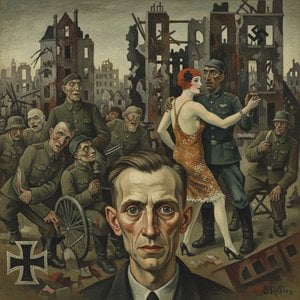
Otto Dix: Trauma, Society & Artistic Rebellion in Weimar Germany
Explore the powerful and unsettling art of Otto Dix, a key figure of Neue Sachlichkeit. Discover his unflinching depictions of Weimar Germany's trauma, society, and war through insightful analysis & iconic masterpieces.

Top 10 slavných obrazů s dominantní černou barvou | ArtsDot.cz
Prozkoumejte 10 nejslavnějších obrazů s dominantní černou barvou od Van Gogha, Muncha a dalších mistrů. Objevte příběhy za uměleckými díly, techniky a inspiraci. Reprodukce obrazů nejvyšší kvality na ArtsDot.com.

Echoes of Trauma & Hope: Representing Transformation in Artworks of 1918
Explore the profound artistic responses to World War I's trauma & hope. Discover Expressionist masterpieces by Bacon, de Kooning & more. Expert insights for collectors & art enthusiasts at ArtsDot.
Top 10 slavných obrazů v odstínech černé – Umění a dekor s ArtsDot
Prozkoumejte 10 nejslavnějších obrazů ovládaných odstíny černé. Objevte příběhy za uměleckými díly, techniky a inspiraci ikonických mistrů. Reprodukce obrazů s ArtsDot – luxusní dekorace pro váš domov. Prohlédněte si celou kolekci online!

Top 10 mistrovských děl abstraktního expresionismu | Umění a dekorace s ArtsDot.com
Prozkoumejte 10 ikonických děl abstraktního expresionismu od Pollocka, Rothka a dalších. Objevte příběhy za obrazy, techniky a barevné palety tohoto revolučního uměleckého hnutí. Reprodukce obrazů s ArtsDot.com – luxusní dekorace pro váš interiér. Prozkoumejte celou kolekci online!



