

 Sdílet
 Sdílet
 Podrobnosti o díle
 Průvodce

 Stáhnout
 Podobné položky
 Slideshow
 Q&A
Q&A Statistiky
Apollo


 Zobrazit více
Giclée / Umělecký tisk
Giclée nebo plátěný tisk muzeální kvality s rychlou výrobou a širokou nabídkou povrchových úprav. ( Koupit ručně malovaný obraz Přepnout na digitální obraz)




































Vyberte si z našich přednastavených velikostí, které odpovídají původním proporcím díla.

Zadejte šířku a výšku, které potřebujete pro váš rám nebo stěnu. Tisk lze pouze oříznout, nikdy však nelze zvětšit obraz nad jeho původní rozměr, proto při výběru jiného formátu dochází ke ztrátě části obrazu. Před samotným tiskem vám zašleme digitální náhled k schválení. Obraz zobrazený na této stránce nenabízí skutečný výřez — ten uvidíte pouze v náhledu.
Celosvětové doručení () do 2 týdnů namísto standardních 4/5 týdnů. (3 listopad)

Zdarma celosvětová expresní doprava

Vysoce kvalitní lněné plátno

Kompletní pojištění přepravy

Záruka vrácení celního poplatku

Záruka věrného barevného souladu

100dení lhůta pro vrácení zboží (pouze při vadách výroby)

100% záruka vrácení peněz

Sleva při více objednávkách
 Skleněná varianta je dostupná pouze u rozměrů menších než 110 cm

Apollo
Giclée / Umělecký tisk
Rozměry reprodukce
-


Celková cena za vybrané možnosti reprodukcí
Kč 1346
The Dynamic Apollo: A Baroque Masterpiece by Nicolas Coustou
Nicolas Coustou’s “Apollo,” crafted in 1711, is more than just a sculpture; it's a vibrant embodiment of the dynamism and theatricality characteristic of French Baroque art. This remarkable piece, currently housed within the esteemed collections of the Louvre Museum in Paris, captures the Greek god Apollo in a moment of arresting movement – seemingly mid-stride, poised for action, yet radiating an almost serene power. The photograph itself offers a compelling glimpse into Coustou’s meticulous technique and his profound understanding of classical form.
Coustou, born in Lyon in 1658 and tragically passing away in Paris in 1733, was deeply rooted in the artistic traditions of his family. His lineage included woodcarvers and sculptors, providing him with an invaluable foundation in craftsmanship. He honed his skills under Charles Antoine Coysevox, a pivotal figure in establishing the Académie Royale de Peinture et de Sculpture, immersing himself within the heart of Parisian artistic innovation. This environment fostered a deep appreciation for idealized human anatomy, flowing drapery, and dramatic composition – elements that are exquisitely realized in “Apollo.”
A Study in Classical Idealism and Baroque Drama
The sculpture immediately draws the eye with its masterful depiction of Apollo’s physique. Coustou adheres to the classical ideal, rendering the god's musculature with a remarkable degree of realism while simultaneously imbuing him with an almost superhuman grace. The short tunic clings to his form, subtly revealing the strength and power beneath, while the flowing drapery cascades around him, suggesting both movement and the weightlessness of divine presence. Note the deliberate contrapposto stance – a subtle shift in weight that creates a sense of balance and dynamism, crucial for conveying motion within a static medium.
However, “Apollo” is far from a mere revival of classical forms. Coustou infuses the sculpture with the hallmarks of Baroque art: a heightened sense of drama, theatrical lighting (though simulated in the photograph), and an emphasis on emotional expression. The raised arm, though not explicitly holding a lyre or bow – details often associated with Apollo – suggests a gesture of command, a declaration of his authority over the arts and the heavens. The overall effect is one of intense energy and captivating presence.
Technique and Materials: A Bronze Revelation
While the photograph presents a monochrome view, it’s widely believed that “Apollo” was originally executed in bronze or terracotta – materials favored by Coustou for their ability to capture detail and texture. The subtle gradations of tone visible in the image highlight the sculptor's skillful modeling, revealing the three-dimensionality of the form with remarkable precision. The surface treatment is particularly noteworthy; it’s not a polished, reflective finish but rather a slightly rougher texture that lends a sense of immediacy and vitality to the sculpture.
Coustou’s technique demonstrates a deep understanding of material properties. He expertly manipulated the clay or bronze to create subtle variations in surface – wrinkles in the drapery, the contours of muscles, and the play of light and shadow – all contributing to the sculpture's remarkable realism and expressive power. The photograph provides a valuable insight into how this artistry was achieved, revealing the sculptor’s dedication to capturing not just the form but also the *feeling* of Apollo’s movement.
Symbolism and Legacy
Beyond its technical brilliance, “Apollo” is rich in symbolic meaning. As the god of music, poetry, and light, Apollo represents intellectual and artistic pursuits. His dynamic pose suggests his active role in inspiring creativity and illuminating the world. Furthermore, Apollo’s association with prophecy and divination links him to a deeper understanding of fate and destiny – themes that resonated powerfully within Baroque art.
Nicolas Coustou's “Apollo” stands as a testament to the enduring power of classical ideals combined with the dramatic flair of the Baroque period. A reproduction captures not only the sculpture’s visual beauty but also its historical significance and artistic merit, offering a captivating glimpse into the world of 18th-century French art.
Otázky a odpovědi
Jaká je vnímaná jasnost díla „Apollo“ od Nicolas Coustou?
Z hlediska vnímané jasnosti je dílo „Apollo“ od Nicolas Coustou bright.
Kdo prodává ručně malované kopie díla „Apollo“ od Nicolas Coustou?
„Apollo“ je dostupná jako ručně malovaná olejová reprodukce na lněném plátně. Objednávku můžete zadat na její stránce Ručně malovaná reprodukce, kde si můžete vybrat z různých rozměrů.
Jakou barvu v kompozici díla „Apollo“ od Nicolas Coustou dominuje?
Hlavní barvou díla „Apollo“ od Nicolas Coustou je Espresso (#2f2f2f).
Podobná díla


Biografie umělce
A Legacy in Stone: The Life and Art of Nicolas Coustou
Nicolas Coustou, a name synonymous with the grandeur of French Baroque sculpture, emerged from the artistic heart of Lyon in 1658. His journey was one deeply interwoven with family, patronage, and an unwavering dedication to mastering his craft. Born into a lineage of artisans—his father, François Coustou, being a skilled woodcarver—the young Nicolas received his earliest training within the intimate setting of his family’s workshop. This foundational experience instilled in him not only technical proficiency but also a profound respect for the transformative power of artistic creation. A pivotal moment arrived with his relocation to Paris at the age of eighteen, where he entered the studio of his maternal uncle, the esteemed sculptor Charles Antoine Coysevox. Coysevox, then president of the newly established Académie royale de peinture et de sculpture, provided Coustou with access to the epicenter of French artistic innovation and a rigorous academic framework that would shape his future trajectory. This familial connection proved invaluable, opening doors to commissions and fostering an environment conducive to growth.Rome and the Synthesis of Classical Ideals
Coustou’s burgeoning talent did not go unnoticed. In 1681, he was awarded the prestigious Colbert Prize—the Prix de Rome—a distinction that granted him a four-year sojourn at the French Academy in Rome. This period proved transformative. Immersed in the world of classical antiquity, Coustou meticulously studied the masterpieces of Michelangelo and Algardi, absorbing their distinct approaches to form and expression. He sought not merely to imitate these masters but to synthesize their strengths—Michelangelo’s dynamic energy and Algardi’s refined classicism—into a style uniquely his own. The Roman experience instilled in him a deep appreciation for anatomical accuracy, dramatic composition, and the power of sculpture to convey narrative and emotion. It was here that Coustou began to forge the artistic identity that would define his career, blending Baroque exuberance with the timeless elegance of classical ideals.Royal Commissions and Collaborative Triumph
Upon his return to France, Coustou quickly established himself as a leading sculptor of the era. From 1700 onwards, he embarked on an extended period of collaboration with Coysevox, working on ambitious projects at the palaces of Marly and Versailles—symbols of royal power and artistic magnificence. These commissions demanded not only exceptional technical skill but also an ability to translate the opulent vision of Louis XIV into tangible form. Coustou’s contributions to these grand residences were significant, encompassing allegorical figures, mythological scenes, and portrait busts that adorned the palace gardens and interiors. He rose through the ranks of the Académie royale de peinture et de sculpture, eventually becoming rector and chancellor, solidifying his position as a central figure in the French art world. His collaborative spirit extended to his younger brother, Guillaume Coustou, also a renowned sculptor; their partnership often blurred the lines of authorship, resulting in works that showcased a harmonious blend of individual talents. Notable examples include *Apollo pursuing Daphne*, a dynamic group embodying the Baroque pursuit of emotional intensity and dramatic movement.Enduring Masterpieces and Lasting Influence
Despite the ravages of time and the destruction wrought by the French Revolution, several of Coustou’s masterpieces continue to inspire awe and admiration. *La Seine et la Marne*, a captivating allegorical sculpture representing two vital French rivers, stands as a testament to his ability to imbue stone with life and movement. The monumental *Descent from the Cross*, located behind the choir altar of Notre Dame de Paris, showcases his dramatic flair and technical prowess. *Le Passage du Rhin*, a bas-relief housed in the Louvre, demonstrates his skill in narrative sculpture, capturing a pivotal moment in French history with compelling detail. His portraits of Julius Caesar and Louis XV, also residing in the Louvre, reveal his ability to capture both physical likeness and regal authority. Nicolas Coustou’s legacy extends beyond these individual works; he played a crucial role in shaping the aesthetic landscape of Baroque sculpture in France, leaving an indelible mark on generations of artists who followed. He died in Paris on May 1st, 1733, having secured his place as one of the most celebrated sculptors of his time—a master whose artistry continues to resonate with viewers centuries later.
Nicolas Coustou
1658 - 1733 , France
Rychlé informace o umělci
- Full Name: Nicolas Coustou
- Nationality: French
- Date Of Birth: 1658
- Date Of Death: 1733
- Place Of Birth: Lyon, France
- Notable Artworks:
- La Seine et la Marne
- Descent from the Cross
- Apollo pursuing Daphne
- Le Passage du Rhin
- Artistic Movement Or Style: Baroque
- Artists Who Influenced This Artist:
- Michelangelo
- Algardi
Související články

10 legendárních bronzových soch, které změnily umění | ArtsDot
Objevte 10 legendárních bronzových soch od Michelangela, Rodina a dalších mistrů! Ponořte se do historie umění, technik a příběhů za těmito nadčasovými díly. Najděte inspiraci pro váš interiér s ArtsDot.com – repliky nejvyšší kvality.

The Enduring Legacy of Marble: A Comprehensive Exploration of Technique, Symbolism & Artistic Expression
Explore the rich history of marble sculpture from antiquity to the Renaissance! Discover key techniques, influential artists & enduring themes in classical art. Expert insights for collectors and enthusiasts at ArtsDot.

The Enduring Form: Sculpture Across History, Technique & Emotional Resonance
Explore the rich history of sculpture with ArtsDot. Discover key techniques, influential artists & investment potential for discerning collectors. Expert insights into valuing and collecting timeless masterpieces.

The Enduring Form: Exploring Themes & Techniques in Sculpture Across Historical Periods
Explore the rich history of sculpture from ancient masterpieces to contemporary innovations. Discover key techniques, influential artists & investment potential for discerning art collectors.
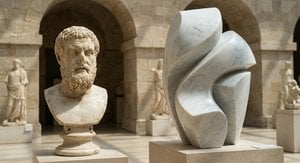
The Enduring Allure of Marble in Art History: From Classical Sculpture to Modern Abstraction
Explore the captivating history of marble sculpture from ancient Greece to modern art. Discover renowned artists like Canova & Michelangelo, carving techniques, and investment insights at ArtsDot.