

 Náhled v interiéru
 Sdílet
 Sdílet
 Podrobnosti o díle
 Průvodce

 Stáhnout
 Podobné položky
 Rentgenové snímky
 Slideshow
 Q&A
Q&A Statistiky
Three Acrobates

- 117.0 x 89.0 cm


 Zobrazit více
Získejte soubor připravený k tisku, který svou kvalitou výrazně převyšuje webový náhled. Každý prodávaný digitální obraz pochází z vysokorozlišeného originálu v naší databázi – obvykle o šířce 5 000 až 15 000 pixelů – díky čemuž můžete tisknout ve velkém formátu, provádět těsný střih nebo si s jistotou užít i ty nejjemnější detaily.
Žádný soubor neopustí naše studio bez úprav. Digitální expert kontroluje barvy v porovnání s původním malířským dílem a v případě potřeby je upravuje, poté pomocí profesionálních nástrojů pro retuš zvyšuje ostrost a detailnost — přičemž vždy zůstává věrný tahům štětcem a stylu umělce. Výsledkem je obraz, který vypadá jako malba, nikoliv jako naskenovaný snímek s filtrem.
Schvalování před dokončením: náš expert vám do 72 hodin zašle obraz e-mailem k revizi. Nejsste spokojeni? Můžete požádat o úpravy či opravy, nebo si můžete vyžádat vrácení peněz, pokud kvalita neodpovídá vašim očekáváním.
Tuto kvalitu využívají vydavatelství, designová studia, galerie i tiskárny.
Digitální obrazy
Stáhněte si soubor ve vysokém rozlišení pro osobní prohlížení, tisk nebo kreativní projekty. ( Přepnout na tisk Koupit ručně malovaný obraz)
Součást každé objednávky digitálního obrazu
Profesionální digitální doručení, zaručené
Když si vyberete ArtsDot.com, nezískáváte pouze obrázek – získáváte digitální umělecké dílo s profesionálně vylepšenými detaily, zpracované s precizností a podpořené zárukou za spokojenost. Zde je vše, co vaše objednávka automaticky obsahuje:

Rychlé doručení e-mailem
Váš digitální obraz ve vysokém rozlišení vám bude zaslán e-mailem do 72 hodin od objednávky – připraven k okamžitému použití.

Digitální soubor s využitím AI
Vaše umělecké dílo je profesionálně optimalizováno pomocí pokročilých nástrojů umělé inteligence a manuální úpravy, což zajišťuje maximální úroveň detailu, ostrosti a přesnosti barev.

Doživotní bezplatné znovuodeslání digitálních obrazů
Soubor jste omylem smazali nebo ztratili? Žádný problém – kdykoliv vám ho znovu zašleme zcela zdarma.

Bez poplatků za dovoz – navždy
Užijte si své umělecké dílo okamžitě bez celních poplatků, daní nebo nákladů na dopravu – digitální stažení je vždy bez daňových povinností.

Záruka přesnosti barev
Díky profesionálním nástrojům a správě barev zajišťujeme, aby váš digitální obraz odrážel původní barvy co nejvěrněji.

100dená záruka spokojenosti
Pokud nebudete s digitálním obrázkem spokojeni, provedeme jeho revizi nebo vám vrátíme 100% platby do 100 dnů – bez jakýchkoliv dotazů.

100% záruka vrácení peněz
Nespokojeni? Získejte plnou náhradu peněz do 100 dnů od obdržení digitálního souboru – bez zbytečných dotazů.

Slevy při hromadných objednávkách
Koupě 3 obrazů ušetří 10% – Koupě 5 obrazů ušetří 15% – Koupě 10+ obrazů ušetří 20%. Ideální pro kreativní projekty, galerie a agentury.
Marc Chagall’s “The Acrobats”: A Symphony of Movement and Memory
This exquisite hand-painted reproduction captures Marc Chagall's iconic 1926 painting, "The Acrobats," a work that transcends mere representation to become a deeply evocative exploration of memory, folklore, and the human spirit. Measuring 117 x 89 cm, this piece isn’t simply a depiction; it’s an immersion into Chagall's uniquely personal world – one where reality blends seamlessly with dream and where the everyday is imbued with profound symbolic weight.
Chagall created “The Acrobats” during his time in Vitebsk, Belarus, a city that profoundly shaped his artistic vision. The painting’s genesis lies within the vibrant Jewish community of Liozna, a town steeped in tradition and brimming with stories passed down through generations. This backdrop informs every element of the composition: the acrobats themselves, reminiscent of Hasidic figures known for their daring performances and communal gatherings; the stage, a stylized representation of Vitebsk’s bustling marketplace; and even the pink ground – a color frequently associated with Jewish identity and spirituality.
A Style Defined by Fluidity and Symbolism
Chagall's style at this period is characterized by its loose brushwork, vibrant colors, and an almost dreamlike quality. He rejected academic realism in favor of a highly subjective approach, prioritizing emotional expression over precise detail. Notice the fluidity of the figures – they seem to float rather than stand firmly on the ground, reflecting Chagall’s fascination with movement and his desire to capture fleeting moments of beauty. The use of color is particularly striking; bold reds, blues, and yellows are applied in broad strokes, creating a sense of energy and dynamism that draws the viewer into the scene.
Technically, the reproduction utilizes meticulous hand-painting techniques, employing archival quality pigments to faithfully recreate Chagall’s original palette. Each brushstroke is carefully executed to capture the nuances of light and shadow, ensuring an astonishing level of detail and vibrancy. The texture achieved through this process adds a layer of depth and authenticity that cannot be replicated by digital methods.
Decoding the Symbolism: A Tapestry of Meaning
“The Acrobats” is rich in symbolism, inviting multiple interpretations. The acrobats themselves represent resilience, skill, and the ability to overcome obstacles – qualities deeply valued within the Hasidic tradition. Their poses are not merely athletic; they convey a sense of joyous abandon and spiritual transcendence. The presence of the two onlookers, one on the left and another near the bottom right, suggests a connection between the performers and their audience, highlighting the communal nature of Jewish life. The pink ground, as mentioned earlier, carries significant religious meaning within Judaism, representing both divine grace and the blood of sacrifice.
Furthermore, the recurring motif of flying figures in Chagall’s work symbolizes aspiration, freedom, and a yearning for spiritual elevation. The acrobats' upward movements reinforce this theme, suggesting a desire to break free from earthly constraints and reach towards the heavens.
Emotional Impact and Artistic Legacy
"The Acrobats" is more than just a beautiful painting; it’s an emotional experience. Chagall masterfully evokes a sense of wonder, joy, and nostalgia, transporting the viewer to another time and place. This reproduction offers a unique opportunity to own a piece of art history – a tangible connection to one of the 20th century's most influential artists. Its vibrant colors and dynamic composition make it an ideal addition to any interior space, capable of sparking conversation and inspiring contemplation.
This hand-painted reproduction is not merely a copy; it’s a testament to Chagall’s genius and a window into his soul – a timeless masterpiece that continues to resonate with audiences around the world.
Otázky a odpovědi
Kde mohu najít statistiky k dílu „Three Acrobates“ od Marc Chagall?
Stránka Statistiky díla „Three Acrobates“ od Marc Chagall zobrazuje statistiky veřejných návštěv: měsíční návštěvnost tohoto díla, srovnání s nejvíce prohlíženými díly daného umělce a původ jeho návštěvníků.
Jaké je umětrovědné postavení díla „Three Acrobates“ od Marc Chagall?
Dílo „Three Acrobates“ od Marc Chagall patří k období Modern a směru Folk Expressionism. Tyto prvky společně zasazují dílo do historie umění.
Jakou atmosféru by do místnosti vnesla reprodukce díla „Three Acrobates“ od Marc Chagall?
Ethereal atmosféra díla „Three Acrobates“ od Marc Chagall skvěle ladí s doporučeným prostorem: jako Living Room.
Podobná díla


Biografie umělce
A Life Painted in Dreams: The World of Marc Chagall
Marc Chagall, born Moishe Shagal in 1887 in the small Belarussian town of Liozna near Vitebsk, wasn’t merely a painter; he was a poet of color, a weaver of dreams, and a chronicler of memory. His life, spanning nearly a century, mirrored the tumultuous currents of the 20th century, yet his art remained steadfastly rooted in a deeply personal vision—one infused with the folklore of his Hasidic Jewish upbringing and an unwavering belief in the power of imagination. Vitebsk itself was more than just a birthplace; it became the emotional core of his artistic universe, a recurring motif populated by flying figures, whimsical animals, and the vibrant hues of remembered landscapes. The town’s unique blend of cultures—Russian Orthodox churches alongside bustling Jewish marketplaces—forged an aesthetic sensibility that would defy easy categorization throughout his long career. Though he sought formal training first with a local sign painter and later in St. Petersburg under Léon Bakst, and then in Paris at the Académie de la Grande Chaumière, Chagall never fully embraced any single artistic movement. He absorbed elements of Cubism, Symbolism, and Fauvism, but always filtered them through his own intensely personal lens, creating a style that was uniquely, unmistakably Chagall.Early Years and Artistic Beginnings
Chagall’s formative years were marked by hardship and displacement. Born into a Jewish family in Vitebsk, he experienced the trauma of pogroms—violent anti-Jewish riots—which instilled in him a profound awareness of persecution and loss. Despite these challenges, Chagall possessed an innate talent for drawing and painting from a young age. He initially studied at Vitebsk Art School, where he honed his skills under Bakst’s guidance, experimenting with theatrical design alongside visual art. This early exposure to the stage would profoundly influence his later work, particularly his use of stylized figures and dramatic compositions. His artistic explorations continued in St. Petersburg, where he developed a distinctive style characterized by bold colors and expressive brushstrokes—a stylistic approach that foreshadowed his groundbreaking achievements to come.The Symbolist Influence and Early Paintings
Chagall’s artistic development was significantly shaped by the Symbolist movement, which championed emotion and imagination over realistic representation. Artists like Gustave Moreau and Edvard Munch served as important inspirations, encouraging him to delve into psychological landscapes and explore themes of spirituality and mythology. His early paintings—such as *I and the Village* (1911)—demonstrate this influence vividly. The village isn’t rendered realistically but as a fragmented collection of recollections, imbued with symbolic meaning. Recurring motifs like birds, apples, and windows reflect Chagall's preoccupation with themes of flight, fertility, and transcendence—concepts central to Jewish mysticism and folklore. These images are not merely decorative; they convey profound emotional resonance, capturing the essence of memory and experience.Cubism and Surrealism: Bridging Formal Movements
While Chagall resisted categorization into any single artistic movement, he skillfully incorporated elements of Cubism and Surrealism into his oeuvre. He embraced Picasso’s pioneering approach to fractured perspectives and geometric abstraction, adapting it to his own expressive style. Simultaneously, he explored the dreamlike imagery and irrational juxtapositions characteristic of Surrealist art—influenced by artists like Dalí and Magritte. This fusion of styles resulted in canvases that defy conventional logic while retaining a palpable sense of emotional intensity. Works like *Over Vitebsk* (1920-1922) exemplify this synthesis, presenting a fantastical depiction of his hometown bathed in luminous colors—a testament to Chagall’s ability to transform personal experience into universal themes.Mature Years and International Recognition
The 1930s witnessed Chagall's ascent to international fame. He established himself as a celebrated artist in Paris, where he continued to produce monumental paintings that captivated audiences worldwide. The outbreak of World War II forced him to flee occupied France for the United States, seeking refuge in New York City—a period marked by profound emotional upheaval and artistic experimentation. During his time in America, Chagall created some of his most iconic works, including *White Crucifixion* (1938), a haunting meditation on suffering and faith that powerfully captured the anxieties of the era. He returned to France after the war, receiving numerous prestigious commissions—including the ceiling of the Paris Opera—and cementing his legacy as one of the greatest artists of the 20th century. His stained glass windows for Jerusalem’s Hadassah Hebrew University Medical Center synagogue stand as a testament to his enduring vision and artistic prowess. Chagall's influence on subsequent generations of artists is undeniable; he bridged the gap between European modernism and Jewish cultural identity, becoming known as “the quintessential Jewish artist of the twentieth century.” His ability to synthesize personal experience, folklore, and universal themes continues to resonate with audiences worldwide. He left behind a body of work that is both deeply personal and universally accessible, inviting viewers to lose themselves in a world painted with dreams and illuminated by hope.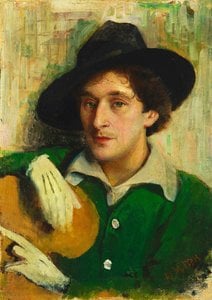
Marc Chagall
1887 - 1985 , Belorusko
Stručné informace
- Artistic Movement Or Style: Modernismus, Kubismus
- Artists Or Movements Influenced By This Artist:
- Surrealismus
- Moderní umělci
- Artists Who Influenced This Artist:
- Bakst
- Delaunay
- Borovikovsky
- Date Of Birth: 6 července 1887
- Date Of Death: 28. března 1985
- Full Name: Marc Chagall
- Nationality: Rusko (nyní Bělorus)
- Notable Artworks:
- I a vesnice
- Nad Vitebskem
- Bílá křížová cesta
- Place Of Birth: Liozna, Belarus