

 Náhled v interiéru
 Sdílet
 Sdílet
 Podrobnosti o díle
 Průvodce

 Stáhnout
 Podobné položky
 Rentgenové snímky
 Slideshow
 Otázky a odpovědi
 Statistiky
Me, She


 Zobrazit více
Umělecké dílo zobrazené na této stránce je chráněno autorským zákonem, což znamená, že nemůžeme legálně vytvářet ani prodávat jeho identickou reprodukci. Tato ochrana je vymáhána na základě mezinárodních dohod, jako například Berberská úmluva a národními zákony, včetně těch stanovených v Americký autorský zákon – Díl 17. Všechna práva vyhrazena.
Tato metoda je plně v souladu s autorským právem, protože nezahrnuje kopírování ani duplikování chráněného díla. Jde o kreativní reinterpretaci – nový obraz, který je inspirován originálem, ale není s ním identický.
Giclée / Umělecký tisk
Giclée nebo plátěný tisk muzeální kvality s rychlou výrobou a širokou nabídkou povrchových úprav. ( Koupit ručně malovaný obraz Přepnout na digitální obraz)




































Vyberte si z našich přednastavených velikostí, které odpovídají původním proporcím díla.

Zadejte šířku a výšku, které potřebujete pro váš rám nebo stěnu. Tisk lze pouze oříznout, nikdy však nelze zvětšit obraz nad jeho původní rozměr, proto při výběru jiného formátu dochází ke ztrátě části obrazu. Před samotným tiskem vám zašleme digitální náhled k schválení. Obraz zobrazený na této stránce nenabízí skutečný výřez — ten uvidíte pouze v náhledu.
Celosvětové doručení () do 2 týdnů namísto standardních 4/5 týdnů. (10 listopad)

Zdarma celosvětová expresní doprava

Vysoce kvalitní lněné plátno

Kompletní pojištění přepravy

Záruka vrácení celního poplatku

Záruka věrného barevného souladu

100dení lhůta pro vrácení zboží (pouze při vadách výroby)

100% záruka vrácení peněz

Sleva při více objednávkách
 Skleněná varianta je dostupná pouze u rozměrů menších než 110 cm

Me, She
Giclée / Umělecký tisk
Rozměry reprodukce
-


Celková cena za vybrané možnosti reprodukcí
Kč 1375
A Surreal Encounter: Exploring Man Ray's "Me, She"
Man Ray’s “Me, She,” created in 1934, is a captivating example of surrealist photography that continues to intrigue and inspire. This black and white rayograph presents an unexpected juxtaposition of objects, defying logical arrangement and inviting viewers into the realm of dreams and subconscious exploration. The artwork's power lies not just in its visual composition but also in its ability to evoke a sense of mystery and symbolic resonance, characteristic of the surrealist movement that sought to liberate art from rational constraints.Technique & Composition: The Art of the Rayograph
The photograph’s unique aesthetic stems from Man Ray's innovative use of the rayograph technique – also known as a photogram. Unlike traditional photography, which relies on a lens, the rayograph involves placing objects directly onto photosensitive paper and exposing it to light. This process eliminates the camera entirely, allowing for direct manipulation of photographic materials and resulting in ethereal, often abstract compositions. In "Me, She," this technique is brilliantly employed. A small sculpted figure of a woman appears suspended in mid-air, seemingly supported by a hand emerging from the bottom of the frame. Scattered around her are playing cards, their geometric shapes contrasting with the organic form of the sculpture. The grainy texture of the photographic paper and the soft shadows further enhance the image's dreamlike quality, flattening perspective and creating a graphic aesthetic that is both striking and unsettling.Symbolism & Interpretation: Chance, Relationships, and the Subconscious
The symbolism within "Me, She" remains open to interpretation, a hallmark of surrealist art. The sculpted female figure could represent various concepts – femininity, vulnerability, or perhaps even an idealized representation of the subconscious mind. The playing cards introduce elements of chance, fate, and gamesmanship, suggesting themes of relationships and unpredictable life events. Their scattered arrangement further disrupts any sense of order, reinforcing the surreal nature of the scene. Man Ray was deeply interested in exploring the unconscious, and this work can be seen as a visual manifestation of those explorations – a glimpse into the illogical yet compelling world of dreams and hidden desires. The absence of a clear narrative encourages viewers to project their own interpretations onto the image, making it a profoundly personal experience.Historical Context & Man Ray's Legacy
Created in 1934, "Me, She" reflects the broader artistic climate of the interwar period. The surrealist movement, born out of Dadaism’s rejection of logic and reason following World War I, sought to challenge conventional notions of art and reality. Man Ray was a pivotal figure within this movement, alongside artists like Salvador Dalí and René Magritte. His experimental photographic techniques and his ability to create evocative imagery cemented his place as a pioneer of surrealist photography. "Me, She" exemplifies his signature style – unexpected juxtapositions, dreamlike imagery, and a playful disregard for traditional artistic boundaries. It stands as a testament to Man Ray’s enduring influence on the art world and continues to inspire contemporary artists and photographers today.Otázky a odpovědi
Mohu využít rozšířenou realitu k tomu, abych si prohlédl(a) „Me, She“ od Man Ray ve své místnosti?
Stránka Náhled v rozšířené realitě pro dílo „Me, She“ od Man Ray využívá rozšířenou realitu k tomu, abyste si toto umělecké dílo mohli pomocí kompatibilního zařízení prohlédnout přímo ve svém vlastním prostoru.
V jakém formátu je dílo „Me, She"?
Formát díla „Me, She“ je Portrait. Tato informace vám pomůže při plánování umístění reprodukce.
Kolik lidí si prohlíží „Me, She"?
Stránka Statistiky díla „Me, She“ od Man Ray zobrazuje statistiky veřejných návštěv: měsíční návštěvnost tohoto díla, srovnání s nejvíce prohlíženými díly daného umělce a původ jeho návštěvníků.


Biografie umělce
A Life Illuminated by Shadows
Emmanuel Radnitzky, a name forever intertwined with the enigmatic “Man Ray,” was more than just an artist; he was a restless spirit who defied easy categorization and relentlessly pursued the boundaries of perception. Born in Philadelphia in 1890 to Russian Jewish immigrant parents, his journey from aspiring painter to pioneering photographer and filmmaker encapsulates the radical artistic ferment of the early 20th century – a period defined by both immense upheaval and exhilarating creative experimentation. The shift from “Manny” Radnitzky to the iconic Man Ray wasn’t merely a stylistic choice; it represented a deliberate assertion of identity, a rejection of conventional labels in favor of an artistic persona unbound by expectation. His family's move to New York City proved to be a pivotal moment, plunging him directly into the heart of the burgeoning modernist scene and instilling within him a lifelong fascination with innovation and challenging established norms. Early influences – the European avant-garde showcased at Alfred Stieglitz’s 291 gallery, and the gritty realism of the Ashcan School – subtly shaped his artistic sensibilities, creating a unique blend that would inform his later work. Though initially dedicated to painting, it was photography that ultimately became his most potent medium for exploring the very nature of seeing and representation. Man Ray wasn't simply capturing images; he was inventing new ways to *perceive* the world around him.Dada, Surrealism, and the Pursuit of the Impossible
Man Ray’s artistic trajectory took a dramatic turn with his encounter with Marcel Duchamp in New York around 1915. This meeting sparked a shared fascination with dismantling traditional notions of art, leading to explorations of “ready-mades” – ordinary manufactured objects elevated to the status of artwork. This rebellious spirit propelled him directly into the heart of the Dada movement, an anti-art protest born from the disillusionment following World War I. Dada artists sought to expose the absurdity and irrationality of modern life, rejecting established values and embracing chance, humor, and provocation. Man Ray’s involvement with Dada wasn't merely a fleeting association; he became a key figure in the movement, collaborating on numerous projects and contributing significantly to its aesthetic and philosophical core. Simultaneously, he was drawn to the burgeoning Surrealist movement, led by André Breton, which sought to unlock the power of the unconscious mind, dreams, and irrationality. Man Ray’s work during this period reflects a fascinating synthesis of these two influential movements – a willingness to embrace chance and spontaneity while simultaneously exploring the hidden depths of the human psyche. He wasn't interested in creating realistic representations; instead, he aimed to capture the *feeling* of reality—its fragmented nature, its underlying anxieties, and its potential for transformation.Rayographs and the Alchemy of Light
Perhaps Man Ray is most famously recognized for his invention of the “rayograph,” a groundbreaking technique that fundamentally altered the possibilities of photography. This serendipitous discovery occurred almost accidentally in 1922 when he began experimenting with placing objects directly onto light-sensitive paper and exposing them to light – without using a camera lens. The resulting images—ethereal, ghostly compositions often imbued with an otherworldly quality—were unlike anything seen before. Rayographs weren’t simply alternative photographic methods; they represented a profound philosophical shift in the way photography was conceived. By eliminating the traditional camera lens, Man Ray stripped away the illusion of objectivity, revealing the inherent subjectivity of the medium itself. These images weren't representations *of* things; they were direct imprints *from* them—capturing not just their physical appearance but also their essence and atmosphere. The process was a form of alchemy, transforming ordinary objects into extraordinary visual experiences. Beyond rayographs, his photographic portraits – particularly those of artists like Lee Miller (who would become both his muse and collaborator) – are renowned for their striking compositions and psychological depth. He experimented relentlessly with solarization—a technique that reverses the tones in an image—multiple exposures, and darkroom manipulation, pushing the boundaries of what photography could achieve and creating a distinctive visual language.Beyond Stillness: Film and a Lasting Legacy
Man Ray’s artistic curiosity extended far beyond still images into the realm of filmmaking. His experimental films, such as *Le Retour à la Raison* (1923) and *L'Étoile de Mer* (1928), were characterized by their surreal imagery, unconventional editing techniques, and a deliberate rejection of traditional narrative structures. These weren’t stories told in a linear fashion; they were visual poems— explorations of form, rhythm, and the subconscious. He employed innovative techniques like stop-motion animation and superimposition to create disorienting and dreamlike effects, often blurring the lines between reality and illusion. While his film work remained relatively small in volume compared to his photography, it was profoundly influential on subsequent generations of avant-garde filmmakers—demonstrating a willingness to challenge cinematic conventions and explore new forms of visual expression. Throughout his long career, Man Ray continued to defy categorization, refusing to be confined by labels or expectations. He died in Paris in 1976, leaving behind a remarkably diverse body of work that continues to inspire and provoke debate. His legacy isn’t simply defined by his technical innovations but also by his unwavering commitment to artistic freedom—a true pioneer who fundamentally altered our understanding of art and its potential.A Continuing Influence
- Photography: Man Ray's techniques, particularly rayography and solarization, continue to be explored and emulated by contemporary photographers seeking innovative ways to capture light and form.
- Surrealism: His contributions significantly shaped the visual language of Surrealism, influencing countless artists across various disciplines.
- Experimental Film: His pioneering work in film laid a crucial foundation for future generations of avant-garde filmmakers who sought to break free from traditional narrative constraints.
- Fashion Photography: Man Ray’s innovative approach to portraiture and composition profoundly influenced the development of modern fashion photography, emphasizing mood, atmosphere, and psychological depth.

Man Ray
1890 - 1976 , Spojené státy americké
Rychlé informace o umělci
- Artistic Movement Or Style: Dada, Surrealismus
- Artists Or Movements Influenced By This Artist: ['Surrealismus']
- Artists Who Influenced This Artist: ['Marcel Duchamp']
- Date Of Birth: 27. srpna 1890
- Date Of Death: 18. listopadu 1976
- Full Name: Emmanuel Radnitzky
- Nationality: Američan
- Notable Artworks:
- Rayography
- Le Retour à la raison
- L'Étoile de Mer
- Place Of Birth: Philadelphia, USA
Související články

Top 10 slavných obrazů s dominantní černou barvou | ArtsDot.cz
Prozkoumejte 10 nejslavnějších obrazů s dominantní černou barvou od Van Gogha, Muncha a dalších mistrů. Objevte příběhy za uměleckými díly, techniky a inspiraci. Reprodukce obrazů nejvyšší kvality na ArtsDot.com.

Monochrome Visions: Exploring the Aesthetic & Historical Significance of Black & White Photography
Explore the rich history & artistic power of black and white photography. From early techniques to iconic masters like Ansel Adams, discover why monochrome continues to captivate art lovers today. Expert insights for collectors.

Beyond the Lens: Photography's Enduring Influence on Modern & Contemporary Art
Explore photography's pivotal role in shaping modern & contemporary art. Discover key movements, influential artists like Stieglitz, and expert collecting advice from ArtsDot.

Pictorialism: A Search for Artistic Photography's Soul – Aesthetics, Techniques & Legacy
Explore the captivating world of Pictorialism – a pivotal movement that transformed photography into fine art. Discover key artists like Stieglitz & Käsebier, techniques, and collecting tips from experts.
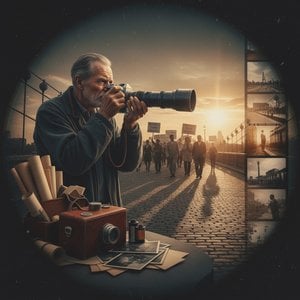
Witnessing History Through Lens & Light: Documentary Photography's Enduring Legacy
Explore the powerful history of documentary photography – from its origins to contemporary masters like Gordon Parks & W. Eugene Smith. Discover how this art form shapes our understanding of society and witness pivotal moments in time.
