


 Odeslat
 Sdílet
 Podrobnosti
 Průvodce

 Stáhnout obrázek
 Podobné kousky
 Slideshow
 Statistiky
Dora Maar


 Přečíst si více
Umělecké dílo zobrazené na této stránce je chráněno autorským zákonem, což znamená, že nemůžeme legálně vytvářet ani prodávat jeho identickou reprodukci. Tato ochrana je vymáhána na základě mezinárodních dohod, jako například Berberská úmluva a národními zákony, včetně těch stanovených v Americký autorský zákon – Díl 17. Všechna práva vyhrazena.
Tato metoda je plně v souladu s autorským právem, protože nezahrnuje kopírování ani duplikování chráněného díla. Jde o kreativní reinterpretaci – nový obraz, který je inspirován originálem, ale není s ním identický.
Giclée / Umělecký tisk
Giclée nebo plátěný tisk muzeální kvality s rychlou výrobou a širokou nabídkou povrchových úprav. ( Objednat ručně malovanou reprodukci Přepnout na digitální verzi obrazu)




































Vyberte si z našich přednastavených velikostí, které odpovídají původním proporcím díla.

Můžete zadat vlastní rozměry tak, aby výtvor odpovídal konkrétnímu rámu nebo prostoru. Pokud zvolená velikost nebude odpovídat poměru stran původního obrazu, dílo buď ořížeme, nebo obraz rozšíříme pomocí zrcadlového efektu či jednobarevného okraje. Před zahájením výroby vám bude zaslán digitální náhled k schválení.
Mějte prosím na paměti, že náhled na obrazovce neodráží skutečné oříznutí nebo rozšíření. Pouze digitální náhled přesně zobrazí finální kompozici.
Ačkoliv jsou k dispozici i vlastní rozměry, pro zachování původních proporcí doporučujeme vybrat si rozměr z předdefinovaného seznamu.
Celosvětové doručení () do 2 týdnů namísto standardních 4/5 týdnů. (11 říjen)

Zdarma celosvětová expresní doprava

Vysoce kvalitní lněné plátno

Úplné pojištění přepravy

Záruka vrácení celního poplatku

Záruka věrného barevného shodu

100dení lhůta pro vrácení zboží (pouze při vadách výroby)

100% garance vrácení peněz

Sleva při více objednávkách
 Skleněná varianta je dostupná pouze u rozměrů menších než 110 cm

Dora Maar
Giclée / Umělecký tisk
Velikost reprodukce
-


Celková cena
Kč 1294
Man Ray’s Dora Maar: A Portrait of Surrealist Intensity
Dora Maar, Picasso's muse and enigmatic collaborator, occupies a singular place in the canon of 20th-century art. Man Ray’s photograph captures not merely her likeness but an essence—a palpable stillness punctuated by fleeting glances that hint at unspoken emotions. This image transcends simple representation; it embodies the spirit of Surrealism itself, demonstrating how photography could be elevated to artistic expression beyond mere documentation.- The Context: Picasso and Surrealism Pablo Picasso’s relationship with Dora Maar was turbulent yet profoundly influential. Their affair unfolded against the backdrop of Surrealist fervor—a movement dedicated to exploring the subconscious mind and challenging rational thought. Man Ray, deeply immersed in Dada and Surrealist circles, recognized Maar's significance as a subject for artistic investigation.
- Technical Innovation: Rayographs Ray’s technique – rayographs – represents a radical departure from conventional photography. Instead of relying on light to capture an image, he employed photograms—images created by placing objects directly onto photographic paper and exposing it to sunlight. This process deliberately disrupts the illusion of reality, mirroring the Surrealist preoccupation with dreams and irrationality.
Composition and Symbolism: Capturing Emotion Through Stillness
The photograph’s composition is deceptively simple yet meticulously crafted. Maar sits rigidly upright, her gaze averted from the camera—a posture that conveys both vulnerability and defiance. The hat she wears adds a layer of visual intrigue, concealing her eyes and subtly framing her face. These deliberate choices contribute to an atmosphere of contemplative melancholy, reflecting the complexities of Maar’s inner life and Picasso's tumultuous emotions during their collaboration.- Color Palette: Monochrome Elegance The photograph utilizes a stark monochrome palette—primarily shades of gray—which amplifies its emotional impact. Absence of color lends an air of timelessness, emphasizing the psychological portrait rather than superficial visual details.
- Light and Shadow: Dramatic Contrast Ray skillfully employs dramatic lighting to sculpt Maar’s face and heighten the sense of drama. Shadows accentuate her features, creating a chiaroscuro effect that draws attention to her expression and reinforces the photograph's mood.
Emotional Resonance: Beyond Representation
More than just a likeness, Man Ray’s Dora Maar is an embodiment of Surrealist ideals. It speaks to the anxieties and desires inherent in human experience—the tension between composure and vulnerability, observation and introspection. The photograph invites viewers to contemplate Maar's gaze, prompting questions about her thoughts and feelings. Ultimately, it succeeds in conveying a profound emotional resonance that transcends the boundaries of visual representation.- Legacy: Surrealist Icon Dora Maar’s portrait remains an enduring symbol of Surrealism’s artistic ambition—a testament to Man Ray's ability to capture not just what is seen but what is felt. It continues to inspire artists and collectors alike, cementing its place as a cornerstone of 20th-century art history.
Reproductions & Inspiration
High-quality reproductions of Man Ray’s Dora Maar offer an opportunity to experience the photograph's captivating aesthetic and emotional depth. Consider framing it in a minimalist setting—perhaps alongside other Surrealist artworks—to maximize its impact and honor the artist’s vision. Let this iconic image serve as a catalyst for creative exploration, prompting reflection on themes of emotion, perception, and the power of artistic innovation.Otázky a odpovědi
Kde si mohu koupit print díla „Dora Maar“ od Man Ray?
Potisk díla „Dora Maar“ od Man Ray si můžete objednat přímo na tato stránka: umělecká tiskovina na bavlněném plátně nebo archivním plátnovém papíře.
Pro koho je „Dora Maar“ od Man Ray vhodným dárkem?
Doporučení k dáru pro „Dora Maar“ od Man Ray spojuje Anniversary s Accent.
Je „Dora Maar“ od Man Ray portrét, krajina nebo čtvercová kompozice?
Formát díla „Dora Maar“ je Portrait. To se hodí při plánování umístění reprodukce.
Kdo vytvořil "Dora Maar"?
Dílo "Dora Maar" se připisuje autorovi Man Ray.
Jaké místo v tvorbě umělce Man Ray zaujímá dílo "Dora Maar"?
V rámci tvorby umělce Man Ray se dílo „Dora Maar“ řadí do stylu Surrealism a doplňuje tak motivy picasso collaboration, surrealist experimentation, female portraiture, guernica reflection, avant-garde legacy.
Kde koupit ručně malované kopie díla „Dora Maar“ od Man Ray?
„Dora Maar“ je k dispozici jako ručně malovaná olejová reprodukce na lněném plátně. Objednávku můžete zadat na tato stránka, kde si můžete vybrat z různých rozměrů.
K jaké fázi tvůrčího rozvoje Man Ray patří dílo „Dora Maar“?
„Dora Maar“ představuje období Mature Period umělce Man Ray.


Biografie umělce
A Life Illuminated by Shadows
Emmanuel Radnitzky, a name forever intertwined with the enigmatic “Man Ray,” was more than just an artist; he was a restless spirit who defied easy categorization and relentlessly pursued the boundaries of perception. Born in Philadelphia in 1890 to Russian Jewish immigrant parents, his journey from aspiring painter to pioneering photographer and filmmaker encapsulates the radical artistic ferment of the early 20th century – a period defined by both immense upheaval and exhilarating creative experimentation. The shift from “Manny” Radnitzky to the iconic Man Ray wasn’t merely a stylistic choice; it represented a deliberate assertion of identity, a rejection of conventional labels in favor of an artistic persona unbound by expectation. His family's move to New York City proved to be a pivotal moment, plunging him directly into the heart of the burgeoning modernist scene and instilling within him a lifelong fascination with innovation and challenging established norms. Early influences – the European avant-garde showcased at Alfred Stieglitz’s 291 gallery, and the gritty realism of the Ashcan School – subtly shaped his artistic sensibilities, creating a unique blend that would inform his later work. Though initially dedicated to painting, it was photography that ultimately became his most potent medium for exploring the very nature of seeing and representation. Man Ray wasn't simply capturing images; he was inventing new ways to *perceive* the world around him.Dada, Surrealism, and the Pursuit of the Impossible
Man Ray’s artistic trajectory took a dramatic turn with his encounter with Marcel Duchamp in New York around 1915. This meeting sparked a shared fascination with dismantling traditional notions of art, leading to explorations of “ready-mades” – ordinary manufactured objects elevated to the status of artwork. This rebellious spirit propelled him directly into the heart of the Dada movement, an anti-art protest born from the disillusionment following World War I. Dada artists sought to expose the absurdity and irrationality of modern life, rejecting established values and embracing chance, humor, and provocation. Man Ray’s involvement with Dada wasn't merely a fleeting association; he became a key figure in the movement, collaborating on numerous projects and contributing significantly to its aesthetic and philosophical core. Simultaneously, he was drawn to the burgeoning Surrealist movement, led by André Breton, which sought to unlock the power of the unconscious mind, dreams, and irrationality. Man Ray’s work during this period reflects a fascinating synthesis of these two influential movements – a willingness to embrace chance and spontaneity while simultaneously exploring the hidden depths of the human psyche. He wasn't interested in creating realistic representations; instead, he aimed to capture the *feeling* of reality—its fragmented nature, its underlying anxieties, and its potential for transformation.Rayographs and the Alchemy of Light
Perhaps Man Ray is most famously recognized for his invention of the “rayograph,” a groundbreaking technique that fundamentally altered the possibilities of photography. This serendipitous discovery occurred almost accidentally in 1922 when he began experimenting with placing objects directly onto light-sensitive paper and exposing them to light – without using a camera lens. The resulting images—ethereal, ghostly compositions often imbued with an otherworldly quality—were unlike anything seen before. Rayographs weren’t simply alternative photographic methods; they represented a profound philosophical shift in the way photography was conceived. By eliminating the traditional camera lens, Man Ray stripped away the illusion of objectivity, revealing the inherent subjectivity of the medium itself. These images weren't representations *of* things; they were direct imprints *from* them—capturing not just their physical appearance but also their essence and atmosphere. The process was a form of alchemy, transforming ordinary objects into extraordinary visual experiences. Beyond rayographs, his photographic portraits – particularly those of artists like Lee Miller (who would become both his muse and collaborator) – are renowned for their striking compositions and psychological depth. He experimented relentlessly with solarization—a technique that reverses the tones in an image—multiple exposures, and darkroom manipulation, pushing the boundaries of what photography could achieve and creating a distinctive visual language.Beyond Stillness: Film and a Lasting Legacy
Man Ray’s artistic curiosity extended far beyond still images into the realm of filmmaking. His experimental films, such as *Le Retour à la Raison* (1923) and *L'Étoile de Mer* (1928), were characterized by their surreal imagery, unconventional editing techniques, and a deliberate rejection of traditional narrative structures. These weren’t stories told in a linear fashion; they were visual poems— explorations of form, rhythm, and the subconscious. He employed innovative techniques like stop-motion animation and superimposition to create disorienting and dreamlike effects, often blurring the lines between reality and illusion. While his film work remained relatively small in volume compared to his photography, it was profoundly influential on subsequent generations of avant-garde filmmakers—demonstrating a willingness to challenge cinematic conventions and explore new forms of visual expression. Throughout his long career, Man Ray continued to defy categorization, refusing to be confined by labels or expectations. He died in Paris in 1976, leaving behind a remarkably diverse body of work that continues to inspire and provoke debate. His legacy isn’t simply defined by his technical innovations but also by his unwavering commitment to artistic freedom—a true pioneer who fundamentally altered our understanding of art and its potential.A Continuing Influence
- Photography: Man Ray's techniques, particularly rayography and solarization, continue to be explored and emulated by contemporary photographers seeking innovative ways to capture light and form.
- Surrealism: His contributions significantly shaped the visual language of Surrealism, influencing countless artists across various disciplines.
- Experimental Film: His pioneering work in film laid a crucial foundation for future generations of avant-garde filmmakers who sought to break free from traditional narrative constraints.
- Fashion Photography: Man Ray’s innovative approach to portraiture and composition profoundly influenced the development of modern fashion photography, emphasizing mood, atmosphere, and psychological depth.

Man Ray
1890 - 1976 , Spojené státy americké
Rychlé informace
- Artistic Movement Or Style: Dada, Surrealismus
- Artists Or Movements Influenced By This Artist: ['Surrealismus']
- Artists Who Influenced This Artist: ['Marcel Duchamp']
- Date Of Birth: 27. srpna 1890
- Date Of Death: 18. listopadu 1976
- Full Name: Emmanuel Radnitzky
- Nationality: Američan
- Notable Artworks:
- Rayography
- Le Retour à la raison
- L'Étoile de Mer
- Place Of Birth: Philadelphia, USA
Související články

Paul Klee: 25 mistrovských děl a inspirace pro váš interiér | ArtsDot.com
Objevte 25 ikonických děl Paula Kleeho – od abstraktních kompozic po barevné sny. Ponořte se do světa expresionismu, Bauhausu a jedinečného uměleckého stylu. Reprodukce obrazů nejvyšší kvality pro váš interiér na ArtsDot.com

Echoes of Time: Exploring the Enduring Appeal & Historical Context of Vintage Art Prints
Explore the captivating world of vintage art prints! Discover their history, collecting tips & enduring appeal. Expert insights on chromolithography and building a legacy collection with ArtsDot.

The Enduring Legacy of Fine Art Prints: Technique, History & Aesthetic Impact
Explore the rich history & techniques of fine art prints. Discover investment potential, assess authenticity, and learn how to preserve your collection with expert guidance. Trusted insights for discerning collectors.

Giclée Prints: Archival Quality & Aesthetic Nuances for the Discerning Collector
Explore the world of giclée prints with ArtsDot. Learn about archival quality, aesthetic nuances & investment potential. Expert guidance for discerning art collectors seeking museum-quality reproductions and lasting value.
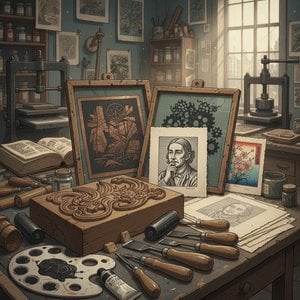
The Enduring Legacy of Printmaking: Techniques, Themes & Artistic Innovation Across Centuries
Explore the rich history of printmaking with ArtsDot. Discover techniques from intaglio to lithography, learn about collecting valuable prints & find museum-quality reproductions. Expert insights for art enthusiasts and collectors.
