
- Domů

- Reprodukce olejomalby
- Lucian Freud
- Drawing of spinal nerve cells

 Koupit tisk Koupit digitální obrázek
 Sdílet
 Sdílet
 Details
 Přidat do oblíbených

 Stáhnout
 Podobné položky
 X-Ray
X-Ray
 Slideshow
Drawing of spinal nerve cells


Ručně malovaná olejová reprodukce
Ručně malovaná olejná barva na plátně ve vašem zvoleném rozměru i s rámem, vyrobená našimi umělci na zakázku.




P118B $10

P118H $10

P118W $10

P438Z $10

P508JH $12

P508YH $12

P805H $10

P805Z $10

P919BZ $10

P919G $10

P919XJ $10

P959ZH $10

P968JZ $12

W106C $8

W218G $10

W218JH $8

W218Y $10

W307PJ $10

W316G $10

W316PJ $8

W316Y $10

W398PJ $8

W4111J $10

W500HY $15

W500JH $15

W692G $12

W849H $8

W940BG $15

W953PJ $8




 Více informací
Vyberte si z našich přednastavených velikostí, které odpovídají původním proporcím díla.

Můžete zadat vlastní rozměry pro konkrétní rám nebo prostor. Pokud se vámi vybraná velikost neshoduje s proporcemi původního obrazu, dílo buď ořízneme, nebo jej doplníme ručně malovanými prvky. Před zahájením výroby vám bude zaslán digitální náhled ke schválení.
Upozorňujeme, že náhled na obrazovce neodpovídá skutečnému ořezu ani rozšíření. Pouze digitální náhled přesně zobrazí finální kompozici.
Ačkoliv je možné zvolit vlastní velikost, pro zachování původních proporcí doporučujeme vybrat rozměr z předdefinovaného seznamu.
Po přijetí objednávky vám tým ArtsDot.com zašle e-mail s pokyny a poskytne náhledovou verzi.
Celosvětová doprava () za 3–4 týdny namísto standardních 5 týdnů. (1 červenec). Bez kompromisů v kvalitě.

Zdarma celosvětová expresní doprava

Vysoce kvalitní lněné plátno

Kompletní přepravní pojištění

Záruka vrácení celního poplatku

Záruka přesného barevného shodu

60denní lhůta pro vrácení zboží (pouze při vadách výroby)

100% garance vrácení peněz

Sleva při hromadné objednávce
 Skleněná varianta je dostupná pouze u rozměrů menších než 110 cm

Drawing of spinal nerve cells
Technika reprodukce
Rozměry reprodukce
-


Celková cena za výběr
-
Popis díla
A Portrait of Observation: Lucian Freud’s “Three Studies of Lucian Freud”
The canvas holds an arresting stillness—a stark black and white depiction of spinal nerve cells extracted from Petromyzon Planeri, a European sea lamprey. Painted in 1969 by Francis Bacon, this triptych isn't merely a scientific illustration; it’s a profound meditation on the artist’s own gaze and the unsettling beauty found within meticulous detail. Freud, deeply influenced by his grandfather Sigmund Freud’s pioneering work in psychoanalysis, consciously rejected the prevailing trend toward abstraction, choosing instead to confront reality with unflinching honesty—a stylistic decision that cemented Bacon's reputation as one of Britain’s most significant artists of the postwar era.- The Anatomical Precision: Freud’s fascination with anatomy stemmed from a desire to understand the human body not just intellectually, but emotionally. He meticulously studied specimens—particularly spinal nerve cells—capturing their intricate structure with painstaking accuracy. This dedication to observation mirrors Freud's grandfather’s approach to unlocking the secrets of the unconscious mind.
- Bacon’s Vision: Bacon recognized in Freud’s work a kindred spirit, someone who eschewed sentimentality for a brutally honest portrayal of existence. He famously described Freud as “a man who paints what he sees,” encapsulating the core principle guiding Bacon's artistic endeavors.
- Stylistic Echoes: The triptych’s monochrome palette—primarily black, white, and shades of grey—amplifies the unsettling atmosphere created by Freud’s technique. Bacon employed a layering process known as “grisaille,” applying thin washes of paint to build up tonal gradations that emphasize texture and form. This method lends an almost sculptural quality to the images.
Historical Context: The Shadow of Surrealism & Existential Angst
The late 1960s witnessed a burgeoning interest in existential philosophy, fueled by thinkers like Sartre and Camus—ideas that resonated deeply with Bacon’s artistic sensibilities. Freud's influence extended beyond his own explorations into the subconscious; he instilled in Bacon a conviction that art should grapple with uncomfortable truths about human experience. The triptych emerged during a period of considerable artistic experimentation, challenging conventions established by earlier movements like Surrealism and Impressionism.- Symbolic Resonance: While ostensibly depicting scientific specimens, the nerve cells themselves carry symbolic weight. They represent vulnerability, fragility, and the inescapable reality of mortality—themes that permeate Bacon’s oeuvre. Freud's meticulous rendering underscores the importance of confronting these fundamental anxieties.
- Emotional Impact: Viewing “Three Studies of Lucian Freud” evokes a visceral response – a feeling of unease mingled with fascination. The starkness of the monochrome, combined with Freud’s masterful depiction of texture and form, compels contemplation on the nature of perception and representation.
Technique & Legacy: Grisaille and Bacon's Distinctive Style
Bacon’s mastery of grisaille—a technique perfected by Michelangelo—allowed him to achieve an unparalleled level of tonal control. He painstakingly built up layers of paint, creating surfaces that resemble polished stone, mirroring Freud’s own commitment to capturing the essence of his subjects with uncompromising realism. This stylistic choice distinguishes Bacon's work from many contemporaries who favored brighter colors and looser brushstrokes.“Three Studies of Lucian Freud” stands as a testament to the enduring power of observation and the artist’s ability to distill complex emotions into deceptively simple visual forms. It remains an iconic image within Bacon’s oeuvre, securing his place among Britain's most influential artists—a figure who dared to confront darkness with unflinching honesty and whose legacy continues to inspire generations of painters.
Podobná umělecká díla


Biografie umělce
Lucian Freud - A Life Forged in Realism
Lucian Michael Freud (8 December 1922, Berlin, Germany—20 July 2011, London, England) was a British painter and draughtsman, specialising in figurative art, who is known as one of the foremost 20th-century English portraitists. He was the grandson of Sigmund Freud, the pioneering psychoanalyst, yet young Lucian’s path diverged from exploring the subconscious through theory, instead finding expression through the intensely physical act of painting. The looming shadow of Nazism forced his family to flee Germany in 1933, settling in London, a relocation that profoundly shaped both his life and the often somber, unsettling tone defining his artistic vision. His early education was fragmented, marked by expulsion from Bryanston School, but formative instruction at Cedric Morris’s East Anglian School of Painting and Drawing proved pivotal. There, an emphasis on direct observation took root, becoming a cornerstone of his evolving style—a deliberate departure from the growing abstraction embraced by many contemporaries. This grounding in meticulous study of the visible world set him apart, establishing a unique artistic identity.- Early Life and Family
- Education
- The Surrealist Echoes and Expressionist Influences
- Developing His Distinctive Style: Impasto and Observation
- Legacy and Influence
Early Life and Family
Lucian Freud was born in Berlin on 8 December 1922, the son of Ernst L. Freud, an architect who was the fourth child of Austrian psychoanalyst Sigmund Freud, and Lucie Brasch, his mother, a German Jewish woman. The family emigrated to St John’s Wood, London, in 1933 to escape the rise of Nazism. Lucian attended Dartington Hall School in Totnes, Devon, and Bryanston School for a year before being expelled owing to disruptive behaviour. He was educated at Goldsmith's College, University of London, where he studied alongside fellow artists Michael Andrews and David Hockney.Education
Freud’s artistic training began at the Central School of Arts and Crafts in London, followed by a year at East Anglian School of Painting and Drawing in Dedham, Essex. He was mentored by Cedric Morris and Arthur Lett-Haines, who instilled in him a dedication to meticulous observation—a crucial element shaping his future artistic approach.The Surrealist Echoes and Expressionist Influences
His early work demonstrated an initial flirtation with Surrealism and German Expressionism, blending dreamlike imagery with emotional intensity. However, Freud swiftly moved away from these influences, prioritizing a more grounded realism informed by the teachings of Morris.Developing His Distinctive Style: Impasto and Observation
By the early 1950s, Freud established his signature style—characterized by thickly impastoed paint, muted backgrounds amplifying flesh tones, and an almost brutal honesty in depicting the human form. He eschewed idealization or flattery, seeking instead to capture raw physicality, vulnerability, and psychological weight. His technique involved applying paint with considerable force, creating textured surfaces that mirrored the subject matter itself.Legacy and Influence
Lucian Freud’s oeuvre profoundly impacted British portraiture, challenging conventional notions of beauty and representation. He championed a style rooted in direct observation and emotional sincerity—a legacy continuing to inspire artists globally. His unflinching gaze upon the human condition cemented his place as one of the most important and influential figures in 20th-century art.
Lucian Freud
1922 - 2011 , Německo
Rychlé fakta
- Artistic Movement Or Style: Realismus
- Artists Who Influenced This Artist:
- Sigmund Freud
- Cedric Morris
- Date Of Birth: 8. prosince 1922 Berlín
- Date Of Death: 20. července 2011 Londýn
- Full Name: Lucian Michael Freud
- Nationality: Britský
- Notable Artworks:
- Girl with a Kitten
- Benefits Supervisor Sleeping
- Place Of Birth: Berlín, Německo
Související články

Thomas Eakins: Realism, Anatomy & the American Spirit – A Comprehensive Exploration of Life and Legacy
Explore the life & legacy of Thomas Eakins, a pivotal American Realist painter. Discover his groundbreaking techniques, anatomical precision, and iconic works like 'The Gross Clinic.' A comprehensive guide for art enthusiasts.


Top 10 mistrovských děl současného realismu | Umění pro váš domov s ArtsDot.com
Prozkoumejte 10 ikonických děl současného realismu! Objevte příběhy slavných malířů, techniky a význam těchto mistrovských děl. Reprodukce obrazů nejvyšší kvality s ArtsDot.com – inspirace pro váš interiér. Prohlédněte si celou kolekci online!

Beastly Brushstrokes: A Historical Journey Through Animal Painting & Aesthetic Movements
Explore the rich history of animal painting across cultures & movements. Discover iconic artists, symbolism, collecting trends & expert art consultation at ArtsDot.com.

Ramsay Richard Reinagle: A Study in British Sporting Art & Zoological Illustration
Explore the life & work of Ramsay Richard Reinagle (1775-1862), a key figure in British sporting art and animal portraiture. Discover his landscapes, panoramas, and contributions to zoological illustration with ArtsDot.
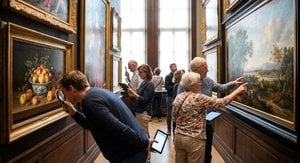
The Allure of Verisimilitude: Exploring Detailed Realism in Painting Across Historical Movements
Explore the captivating world of detailed realism in painting! Discover historical movements, key artists & collecting insights for discerning art enthusiasts. Expert analysis at ArtsDot.


