


 Zobrazit v interiéru
 Odeslat
 Sdílet
 Podrobnosti
 Průvodce

 Stáhnout obrázek
 Podobné kousky
 Rentgenové snímky
 Slideshow
 Statistiky
Multiplex A
 Geometric Abstraction
 1947
1947 30.0 x 20.0 cm
 Muzeum umění v Bostonu
 Přečíst si více
Umělecké dílo zobrazené na této stránce je chráněno autorským zákonem, což znamená, že nemůžeme legálně vytvářet ani prodávat jeho identickou reprodukci. Tato ochrana je vymáhána na základě mezinárodních dohod, jako například Berberská úmluva a národními zákony, včetně těch stanovených v Americký autorský zákon – Díl 17. Všechna práva vyhrazena.
Jako etickou a právní alternativu nabízíme vlastní, ručně malovaná umělecká díla inspirovaná originálem. Naši zdatní a profesionální umělci si pečlivě studují styl, náladu a uměleckou podstatu originálu, aby vytvořili nové, jedinečné dílo, které vyvolává stejný pocit – přičemž zůstává samostatným originálním tvůrčím dílem.
Tato metoda je plně v souladu s autorským právem, protože nezahrnuje kopírování ani duplikování chráněného díla. Jde o kreativní reinterpretaci – nový obraz, který je inspirován originálem, ale není s ním identický.
Ručně malovaná olejová reprodukce
Ručně malované olejné plátno v libovolném rozměru i s rámem, vyrobené našimi umělci na zakázku. ( Přepnout na tiskové verze Přepnout na digitální verzi obrazu)




P118B Kč10

P118H Kč10

P118W Kč10

P438Z Kč10

P508JH Kč12

P508YH Kč12

P805H Kč10

P805Z Kč10

P919BZ Kč10

P919G Kč10

P919XJ Kč10

P959ZH Kč10

P968JZ Kč12

W106C Kč8

W218G Kč10

W218JH Kč8

W218Y Kč10

W307PJ Kč10

W316G Kč10

W316PJ Kč8

W316Y Kč10

W398PJ Kč8

W4111J Kč10

W500HY Kč15

W500JH Kč15

W692G Kč12

W849H Kč8

W940BG Kč15

W953PJ Kč8




Vyberte si z našich přednastavených velikostí, které odpovídají původním proporcím díla.

Zadejte šířku a výšku, které potřebujete pro váš rám nebo stěnu. Protože se jedná o ruční malbu, při výběru jiného formátu může umělec kolem obrazu domalovat o něco více, nebo jej mírně oříznout — rozhodnete si vy. Před zahájením malby vám zašleme digitální náhled ke schválení. Obraz zobrazený na této stránce neodpovídá skutečnému výsledku — pouze digitální náhled jej zobrazuje.
Po přijetí objednávky vám tým ArtsDot.com zašle e-mail s pokyny a poskytne náhledovou verzi.
Celosvětová doprava () za 3–4 týdny namísto standardních 5 týdnů. (22 říjen). Bez kompromisů v kvalitě.

Zdarma celosvětová expresní doprava

Vysoce kvalitní lněné plátno

Úplné pojištění přepravy

Záruka vrácení celního poplatku

Záruka věrného barevného shodu

100dení lhůta pro vrácení zboží (pouze při vadách výroby)

100% garance vrácení peněz

Sleva při více objednávkách
 Skleněná varianta je dostupná pouze u rozměrů menších než 110 cm

Multiplex A
Technika provedení
Velikost reprodukce
-


Celková cena
Kč 5630
Josef Albers’s “Multiplex A”: A Geometric Meditation on Perception
“Multiplex A,” created in 1947 by the visionary artist Josef Albers, is more than just a woodcut; it's an invitation to contemplate the very nature of visual perception. Born in Bottrop, Germany, and deeply influenced by his early experiences with craftsmanship – from carpentry to glass engraving – Albers’s artistic journey was fundamentally shaped by a profound understanding of materials and their inherent qualities. His time at the Bauhaus, a crucible of modern art and design, further solidified this approach, pushing him to explore abstraction and challenge conventional notions of representation. “Multiplex A” stands as a culmination of these influences, a meticulously constructed exploration of color interaction and spatial relationships that continues to resonate with viewers today.
The artwork’s visual language is deceptively simple yet profoundly complex. Albers employs a restricted palette – primarily black and white – to create a dynamic interplay of geometric forms: triangles, squares, and rectangles are arranged in a seemingly random order, yet within this apparent chaos lies a carefully orchestrated balance. The precision of the woodcut technique—a method demanding meticulous detail and control—is crucial to conveying the artwork’s intellectual rigor. Each line is deliberate, each shape precisely rendered, contributing to an overall sense of ordered complexity. Albers wasn't simply creating a decorative pattern; he was designing a visual experiment, a tangible manifestation of his theories on color perception.
The Foundations of Color Theory
Albers’s work is inextricably linked to his groundbreaking book, “Interaction of Colors,” published in 1963. This seminal text explored the ways in which colors influence and modify each other when placed adjacent to one another. "Multiplex A" serves as a visual demonstration of these principles. The overlapping shapes create areas of simultaneous contrast, where colors appear to shift and change depending on their surrounding hues. Albers’s meticulous documentation of these color interactions—the precise shades he used and the resulting effects—became a cornerstone of modern color theory, influencing generations of artists and designers.
The artwork's design is rooted in Albers’s concept of “homage,” a deliberate tribute to the fundamental elements of art. He sought not to create something entirely new but rather to explore and illuminate existing artistic conventions. "Multiplex A" can be seen as an homage to the principles of geometry, color theory, and the very act of seeing. It’s a quiet assertion that beauty and meaning can be found in the simplest of forms and relationships.
Symbolism and Emotional Resonance
While Albers deliberately avoided overt symbolism in his work, “Multiplex A” possesses a subtle emotional depth. The geometric precision evokes a sense of order and control, while the overlapping shapes suggest ambiguity and uncertainty. The stark contrast between black and white creates a visual tension that mirrors the complexities of human perception. Some viewers interpret the artwork as a meditation on duality—the interplay of light and dark, order and chaos, certainty and doubt.
Beyond its intellectual rigor, “Multiplex A” also possesses an undeniable aesthetic appeal. The carefully balanced composition, combined with the rich texture of the woodcut print, creates a visually engaging experience. It’s a work that rewards repeated viewing, revealing new nuances and subtleties with each encounter. The artwork invites contemplation, prompting viewers to question their own assumptions about color, space, and perception.
A Legacy in Art and Design
Josef Albers' influence extends far beyond the art world. His teaching methods at Black Mountain College profoundly shaped the development of American art education, emphasizing hands-on experimentation and critical thinking. “Multiplex A” stands as a testament to his enduring legacy—a work that continues to inspire artists, designers, and anyone interested in exploring the mysteries of visual perception. Reproductions of this iconic piece offer a unique opportunity to bring Albers’s groundbreaking ideas into your home or studio, serving as a constant reminder of the power of art to illuminate our understanding of the world around us.
Otázky a odpovědi
Kde by měla být vystavena reprodukce díla „Multiplex A“ od Josef Albers?
Formát Portrait díla „Multiplex A“ od Josef Albers doporučujeme pro Living Room. Formát i prostor společně určují ideální umístění reprodukce.
Jak lze využít dílo „Multiplex A“ od Josef Albers při dekorování interiéru?
Pro použití (Geometry) a prostor (Living Room) jsou u díla „Multiplex A“ od Josef Albers uvedeny dvě doporučení.
V jaké orientaci je dílo „Multiplex A“ od Josef Albers?
Dílo „Multiplex A“ od Josef Albers má formát Portrait. Formát určuje poměry kompozice.
Související díla


Biografie umělce
A Life Forged in Material: The Early Years and Bauhaus Formation
Josef Albers, born in Bottrop, Germany, in 1888, wasn’t destined for the world of art from the outset. His early life was deeply rooted in the practicalities of his father's contracting business – a world of carpentry, plumbing, and house-painting. This immersion in materials, in understanding how forms materialized through tangible means, would profoundly shape his artistic sensibility, laying the groundwork for an approach that prioritized direct experience and observation above all else. He wasn’t simply inheriting a trade; he was absorbing a fundamental respect for craftsmanship and the inherent qualities of each medium. Before dedicating himself fully to art, Albers spent five years as a schoolteacher in Bottrop and surrounding areas, honing his patience and pedagogical skills – attributes that would later prove invaluable in his role as an influential educator. His formal artistic training began in 1913 at the Königliche Kunstschule (Royal Art School) in Berlin, where he explored printmaking, painting, and crucially, stained glass. This early work, particularly his commission for “Rosa Mystica Ora Pro Nobis” in 1918 – a breathtaking stained-glass window – already hinted at his lifelong fascination with the transformative power of light and color, suggesting an abstract exploration that was yet to fully unfold. It wasn’t merely decorative; it was a deliberate investigation into how light *transformed* material, a theme that would become central to his artistic vision.The Bauhaus Crucible: Color as Subject
A watershed moment arrived in 1922 when Albers joined the faculty of the Bauhaus, the revolutionary school founded by Walter Gropius, seeking to unify all art and design disciplines. Initially assigned to the *Werklehre* (workshop practice) course – a foundational program designed to instill practical skills – he quickly immersed himself in the core principles of the Bauhaus: functionalism, geometric abstraction, and an unwavering focus on material exploration. This period proved transformative, fundamentally altering his artistic trajectory. Albers began a systematic investigation into color perception, moving decisively away from representational art towards increasingly abstract forms. He wasn’t interested in simply *what* colors were; he was driven by a desire to understand *how* they interacted, how they influenced each other, and how our eyes perceived them. The influence of fellow Bauhaus masters like Paul Klee and Wassily Kandinsky is readily apparent in his early work, yet Albers forged his own distinct path, prioritizing empirical observation over purely theoretical or metaphysical interpretations. He wasn’t seeking spiritual truths through color; instead, he meticulously documented its physical effects – a rigorous scientific approach that would become the defining characteristic of his artistic method. This focus on perception—on *how* we see—rather than what is *seen* set him apart and laid the foundation for his later explorations into the complexities of visual experience.Homage to the Square: A Laboratory of Perception
Following a period teaching at Black Mountain College in North Carolina – where he fostered a generation of American artists including Robert Rauschenberg and Cy Twombly – Albers embarked on what would become his most enduring and iconic series: “Homage to the Square” (1949-1967). This seemingly simple project, consisting of paintings featuring nested squares within squares, each iteration exploring subtle variations in color relationships, belies an incredibly complex and rigorous investigation into perceptual phenomena. It wasn’t intended as a celebration of geometry; rather, it was a meticulously designed laboratory for studying how our eyes perceive color – a process far more nuanced than intuitive understanding suggests. Albers painstakingly documented his experiments, revealing that colors aren't static entities but dynamic forces governing each other through internal logic, often misleading to the eye. A seemingly brighter square might appear to recede while a darker one advances, defying conventional expectations. This systematic approach culminated in his seminal book, *Interaction of Color* (1963), a foundational text still widely studied by artists and designers today. The book isn’t a treatise on color theory; it's a series of exercises designed to demonstrate how our perception of color is relative and contextual – a testament to Albers’ belief that seeing is not passive, but an active process of interpretation.Legacy and Enduring Influence
Josef Albers’s impact extends far beyond his paintings. His tenure as head of the design department at Yale University, from 1950 until his retirement in 1958, cemented his reputation as a profoundly influential teacher. He emphasized hands-on experimentation, critical observation, and relentless questioning of assumptions. Students weren't simply taught *what* to paint; they were taught *how* to see – to analyze, to deconstruct, and to understand the underlying principles governing visual experience. His pedagogical approach fostered independent thinking and encouraged students to develop their own unique artistic voices. *Interaction of Color* continues to be a cornerstone of art education, shaping how generations understand color relationships. Albers is now recognized as a key figure in the development of abstract art, particularly geometric abstraction and minimalist aesthetics. His “Homage to the Square” series remains iconic for its exploration of perceptual phenomena, demonstrating that even within seemingly simple forms, there exists an infinite complexity waiting to be discovered. He died on March 25, 1976, in New Haven, Connecticut, leaving behind a legacy that continues to inspire and challenge artists, designers, and educators alike – a testament to the power of observation, experimentation, and the enduring mystery of color.Notable Works
- Gray Instrumentation I Prospectus (1975): A minimalist monochrome painting exemplifying geometric balance and subtle tonal variations.
- Study for Homage to the Square – Beaming (Date Unknown): A classic example of Albers’s exploration of color interaction within nested squares, evoking a sense of calm and spatial depth.
- Rosa Mystica Ora Pro Nobis (1918): His early stained-glass commission, foreshadowing his lifelong fascination with light and color.

Josef Albers
1888 - 1976 , Německo
Rychlé informace
- Artistic Movement Or Style: Geometrická abstrakce
- Artists Or Movements Influenced By This Artist:
- Minimalismus
- Barvy
- Artists Who Influenced This Artist:
- Paul Klee
- Wassily Kandinsky
- Date Of Birth: 19. března 1888
- Date Of Death: 25. března 1976
- Full Name: Josef Albers
- Nationality: Německý-Americký
- Notable Artworks:
- Homage k čtverci
- Rosa Mystica
- Place Of Birth: Bottrop, Německo
Související články

The Enduring Appeal of Geometric Patterns in Art: A Historical & Contemporary Exploration
Explore the captivating history of geometric abstraction in art, from ancient roots to contemporary masters. Expert insights for collectors & enthusiasts. Discover key artists, movements & investment potential.

Geometrická abstrakce: 10 mistrovských děl, které změnily umění | ArtsDot.cz
Prozkoumejte 10 ikonických děl geometrické abstrakce od Mondriana, Maleviče a Kandinského. Objevte příběhy umělců, techniky a historii tohoto revolučního hnutí. Najděte inspiraci pro moderní dekorace a luxusní reprodukce obrazů na ArtsDot.com.
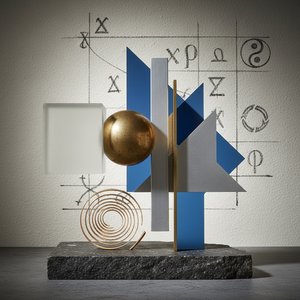
Beyond Form: Exploring the Philosophical Foundations of Geometric Abstraction
Explore the philosophical roots & artistic evolution of geometric abstraction with ArtsDot. Discover Mondrian, Malevich, De Stijl & more. Expert insights for collectors and art enthusiasts.

Wassily Kandinsky: Top 25 mistrovských děl abstrakce pro váš interiér | ArtsDot.com
Prozkoumejte 25 ikonických děl Wassily Kandinského – průkopníka abstraktního umění a expresionismu. Objevte příběhy za barevnými kompozicemi, Bauhaus styl a inspirujte se pro váš interiér s reprodukcemi nejvyšší kvality na ArtsDot.com.

Beyond Form & Color: Geometric Abstraction's Evolution in 20th/21st Century Art
Explore the evolution of geometric abstraction from Cubism to contemporary art. Discover key artists like Malevich & Mondrian, investment insights, and expert collecting advice at ArtsDot.