


The picture follows your choices: , .
Popis sbírného předmětu
Discover Jean-Baptiste Huet’s ‘The Broken Eggs,’ a dramatic Rococo oil painting of rural life & courtship. Explore its chiaroscuro lighting, impasto texture & evocative symbolism.
Biografie umělce
Discover Jean-Baptiste Huet’s captivating wallpapers & paintings from 18th century France! Explore pastoral scenes, aristocratic portraits & revolutionary moments.
 Zobrazit více
Ručně malovaná olejová reprodukce
Rukou malované olejné plátno v libovolném rozměru i s rámem, vyrobené našimi umělci na zakázku. ( Přepnout na tisk Přepnout na digitální obraz)
More about this painting
 Náhled v interiéru
 Sdílet
 Sdílet
 Podrobnosti o díle
 Průvodce

 Stáhnout
 Podobné položky
 Rentgenové snímky
 Slideshow
 Q&A
Q&A Statistiky
Order your painting in four simple steps
Take your time. You can change any answer; the price in your order card follows each choice.
1 Step one of four
Which size would you like?
These sizes keep the proportions of the original painting. The drawing shows your choice on a wall, above a two-metre sofa.
Or give your own measurements
Vyberte si z našich přednastavených velikostí, které odpovídají původním proporcím díla.

Zadejte šířku a výšku, které potřebujete pro váš rám nebo stěnu. Protože se jedná o ruční malbu, při výběru jiného formátu může umělec kolem obrazu domalovat o něco více, nebo jej mírně oříznout — rozhodnete si vy. Před zahájením malby vám zašleme digitální náhled ke schválení. Obraz zobrazený na této stránce neodpovídá skutečnému výsledku — pouze digitální náhled jej zobrazuje.
2 Step two of four
How should it be prepared: rolled, stretched or framed?
The prices below are for the size you chose in step one.
Choose the edges of the stretched canvas
Choose your frame

White Kč1

Blurside Kč1

Extended Kč1

P118B Kč10

P118H Kč10

P118W Kč10

P438Z Kč10

P508JH Kč12

P508YH Kč12

P805H Kč10

P805Z Kč10

P919BZ Kč10

P919G Kč10

P919XJ Kč10

P959ZH Kč10

P968JZ Kč12

W106C Kč8

W218G Kč10

W218JH Kč8

W218Y Kč10

W307PJ Kč10

W316G Kč10

W316PJ Kč8

W316Y Kč10

W398PJ Kč8

W4111J Kč10

W500HY Kč15

W500JH Kč15

W692G Kč12

W849H Kč8

W940BG Kč15

W953PJ Kč8

H24-GOLD Kč30

H24-SILVER Kč30

H36-GOLD Kč45

H36-SILVER Kč45
V rámu
Moulding: . Overall size with the frame: .
3 Step three of four
Would you like anything changed in the painting?
Most people answer no. Because each painting is made by hand, our artist can also adapt it for you.
After order, ArtsDot.com team will email client for instructions and provide a mockup preview
4 Step four of four
A few finishing options
All of them are optional. The answers already selected cost nothing extra.
Who paints it?
Celosvětová doprava () za 3–4 týdny namísto standardních 5 týdnů. (1 listopad). Bez kompromisů v kvalitě.
A nameplate, as in a museum?
Detaily ryté bronzové plakety
This elegant plaque features the artist's name and the title of the artwork, finely engraved for a timeless presentation.
It is made from bronze with a refined, elegant finish. The text is precisely laser-engraved for a sharp and permanent result. Measuring 9x2 cm, the plaque is compact yet easy to read. It's built to be durable and scratch-resistant, offering a professional, museum-quality look. Mounting is simple thanks to the included adhesive backing.
Detaily průhledné akrylové desky
The plaque includes essential engraved details such as the artist's name, the title of the artwork, the date it was created, the type of media used-like oil on canvas or watercolor-a brief description of the piece, and a QR code that links to the complete artwork information.
It is crafted from clear acrylic, offering a sleek, modern appearance. The text is UV-engraved in black to ensure strong visual contrast. With a size of 10x15 cm, it ensures optimal readability. It comes equipped with two metal hooks for secure wall mounting. The plaque is designed to be weather-resistant, making it suitable for various environments, and it includes interactive features that work seamlessly with smartphone scanning.
Detaily černé akrylové destičky
This elegant plaque includes engraved information such as the artist's name, the title of the artwork, the date it was created, the type of media used (like oil on canvas or watercolor), a short description of the artwork, and a QR code for quick access to more information.
The plaque itself is made from refined black acrylic with a premium finish. The text is laser-engraved in white for high contrast and readability. Its size is 10x15 cm, designed to be easy to read. It comes with two metal hooks for professional mounting. The design is sleek and fits any interior style. It is also weather-resistant and durable, with built-in digital integration for mobile compatibility.
A protective varnish?
When do you need it?
✓ Check and order
Your painting, as you ordered it

The broken eggs
Technika reprodukce
Rozměry reprodukce
-

Vybraní mistři umění
Vyšší míra detailu, jemnosti a delší doba výroby
-

Možnosti rámování reprodukcí
-
-
U děl nebo reprodukcí, u nichž je jakákoliv strana větší než 105 cm (přibližně 41 palců), bude rám dodán jako sestava v rozloženém stavu. Tato metoda zajišťuje bezpečné doručení a chrání dílo před poškozením během přepravy.
Vyžaduje se odborná montáž – nejedná se o produkt pro svépomocnou realizaci (DIY).
Sestava musí být složena a plátno napnuto zkušeným profesionálním rámovačem s použitím dřevěného lepidla (není součástí balení), kleští na napínání plátna a svorek pro udržení pravých úhlů křížů během schnutí lepidla. Nesprávná montáž nebo nerovnoměrné napnutí plátna může způsobit trvalé poškození uměleckého díla, které není kryto naší zárukou.
 U děl nebo reprodukcí, u nichž je jakákoliv strana větší než 105 cm (přibližně 41 palců), bude rám dodán jako sestava v rozloženém stavu. Tato metoda zajišťuje bezpečné doručení a chrání dílo před poškozením během přepravy.
Jsou zahrnuty všechny lišty z masivního dřeva, přesně na míru nařezané.
Sestavuje se pomocí součástí balení (šroubů), plus dřevěného lepidla na rohové spoje, které není součástí balení a musí jej zajistit váš rámovač.
Vyžaduje se profesionální nářadí, které není součástí sady: kleště na napínání plátna a svorky pro udržení kolmosti příček během schnutí lepidla.
Důležité:
Spoje v rozích vyžadují lepidlo na dřevo, tyčinky musí být přichyceny pomocí svorek, dokud lepidlo zcela neuschne, a pro napnutí plátna na sestavený rám je zapotřebí kleští na natahování plátna. Žádný z těchto náčiní není součástí sady. Před objednáním této velikosti prosím zajistěte zkušeného profesionálního rámovače.

Popisek díla
-
-

Ochranný lak
Lesklý lak (zvýrazňuje barvy, chrání před světlem a vlhkostí)
-

Přizpůsobit své umělecké dílo
Příklady možných úprav: nahrazení obličeje fotografií zákazníka; přidání domácího mazlíčka (např. výměna kočky za psa); vložení skrytého vzkazu do pozadí; změna krajiny nebo prvků v pozadí.
-

Prioritní doručení
Celosvětové doručení () za 3–4 týdny namísto standardních 5 týdnů. (1 listopad). Bez kompromisů v kvalitě.
-
Expresní doručení
Celosvětová doprava () do 5 týdnů. (8 listopad).
V ceně
Celková cena za vybrané možnosti reprodukcí
Kč 6257
Skleněná varianta je dostupná pouze u rozměrů menších než 110 cm
Included with every order
- Zdarma celosvětová expresní doprava
- Vysoce kvalitní lněné plátno
- Kompletní pojištění přepravy
- Záruka vrácení celního poplatku
- Záruka věrného barevného souladu
- 100dení lhůta pro vrácení zboží (pouze při vadách výroby)
- 100% záruka vrácení peněz
- Sleva při více objednávkách


Podobná díla


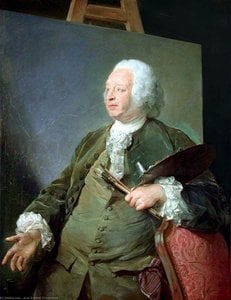


Jean Baptiste Huet
1745 - 1811, France
Biografie umělce
Jean-Baptiste Huet: A Parisian Master of Pastoral Elegance
Jean-Baptiste Huet (1745 – 1811), a name perhaps less familiar than those of his Rococo contemporaries, stands as a significant figure in 18th-century French art. Born into an artistic lineage—his uncle, Christophe Huet, was a renowned printmaker—Huet’s journey from apprentice to independent artist is a compelling tale of self-made success within the complex world of the *ancien régime*. His legacy isn't defined by grand historical narratives but rather by a quiet elegance and profound understanding of light, texture, and the subtle beauty of the natural world, particularly as reflected in his captivating wallpapers and paintings.Early Life and Apprenticeship: A Foundation in Art
Jean-Baptiste Marie Huet’s early life was steeped in artistic tradition. His father, Nicolas Huet, also worked as a painter, and his uncle, Christophe Huet, held a prominent position as a printmaker for the royal family. This familial connection provided him with an invaluable foundation, beginning his training under Charles Dagomer, a skilled animal painter associated with the Académie de Saint-Luc in Paris. Dagomer’s influence is evident in Huet's early works, particularly his depictions of animals – a subject he would master and become synonymous with. Crucially, Huet also apprenticed with Jean-Baptiste Le Prince, a former student of François Boucher, one of the most influential artists of the Rococo period. This mentorship exposed him to the refined techniques and aesthetic sensibilities that shaped his artistic development. The early exposure to these masters instilled in him an appreciation for detail, composition, and the delicate balance between observation and imagination.From Wallpaper Design to Artistic Recognition
Huet’s career trajectory is particularly noteworthy due to its evolution from wallpaper design to independent painting. Initially, he gained recognition as a designer of scenic vignettes for printed cotton wallpapers at the *manufacture de Jouy*, a prestigious workshop overseen by Christophe-Philippe Oberkampf. This commission provided him with an opportunity to hone his skills in composition and color, translating his artistic vision onto a large scale. However, Huet’s ambition extended beyond decorative arts; he sought recognition as a painter in his own right. He was admitted to the Académie Royale de Peinture et de Sculpture in 1769, a significant achievement that validated his artistic talent. His early Salon exhibitions showcased a growing confidence and a distinctive style characterized by a serene elegance and an intimate understanding of animal behavior.A Master of Pastoral Scenes and Animal Studies
Huet’s paintings are primarily known for their idyllic pastoral scenes, populated with graceful animals in harmonious settings. He eschewed the dramatic grandeur favored by some of his contemporaries, instead opting for a more subtle and intimate portrayal of rural life. His compositions are often bathed in soft, diffused light, creating a sense of tranquility and serenity. His depictions of animals—dogs, sheep, goats, birds—are remarkably lifelike, capturing their individual personalities and behaviors with remarkable accuracy. He wasn’t simply illustrating animals; he was conveying a deep appreciation for their beauty and their place within the natural world. The influence of Boucher is palpable in his use of color and composition, but Huet developed a unique style that combined classical elegance with a distinctly French sensibility.Beyond the Salon: Tapestries and Legacy
Huet’s artistic output extended beyond paintings and wallpapers. He played a crucial role in the production of tapestries for the Gobelins manufactory, designing elaborate cartoons depicting pastoral scenes and mythological subjects. These tapestries, commissioned by the French monarchy, further solidified his reputation as a versatile artist with a keen eye for detail and an understanding of decorative arts. Following the French Revolution, Huet continued to work, adapting to the changing artistic landscape. His later works often featured portraits and landscapes, reflecting the evolving tastes of the time. Jean-Baptiste Huet’s legacy endures not only through his surviving paintings and wallpapers but also as a testament to the power of self-determination in the world of art—a Parisian master who carved out a successful career through talent, dedication, and an unwavering commitment to his artistic vision. His work remains a beautiful example of Rococo elegance and a poignant reflection on the changing social and political landscape of 18th-century France.Související články

The Rococo Aesthetic: Opulence, Rebellion & the Pursuit of Pleasure in 18th-Century Art
Explore the opulent world of Rococo art! Discover its origins, key artists like Watteau & Boucher, and lasting influence on design. Expert insights for collectors & enthusiasts.

The Rococo Reverie of Fragonard: Love, Leisure & Pleasure in 18th-Century France
Explore the captivating world of Jean-Honoré Fragonard! Discover his Rococo masterpieces, intimate portraits & the allure of 18th-century French art. Learn about 'The Progress of Love' and more at ArtsDot.

The Allure of Elegance in Art: A Historical & Aesthetic Exploration of Refinement & Grace
Explore the exquisite world of Rococo art! Discover its history, masters (Watteau, Boucher & more), and defining elegance. Expert insights for collectors seeking museum-quality reproductions & custom portraits.