

 Náhled v interiéru
 Sdílet
 Sdílet
 Podrobnosti o díle
 Průvodce

 Stáhnout
 Podobné položky
 Rentgenové snímky
 Slideshow
 Otázky a odpovědi
 Statistiky
Pol

- 55.0 x 76.0 cm


 Zobrazit více
Získejte soubor připravený k tisku, který svou kvalitou výrazně převyšuje webový náhled. Každý prodávaný digitální obraz pochází z vysokorozlišeného originálu v naší databázi – obvykle o šířce 5 000 až 15 000 pixelů – díky čemuž můžete tisknout ve velkém formátu, provádět těsný střih nebo si s jistotou užít i ty nejjemnější detaily.
Žádný soubor neopustí naše studio bez úprav. Digitální expert kontroluje barvy v porovnání s původním malířským dílem a v případě potřeby je upravuje, poté pomocí profesionálních nástrojů pro retuš zvyšuje ostrost a detailnost — přičemž vždy zůstává věrný tahům štětcem a stylu umělce. Výsledkem je obraz, který vypadá jako malba, nikoliv jako naskenovaný snímek s filtrem.
Schvalování před dokončením: náš expert vám do 72 hodin zašle obraz e-mailem k revizi. Nejsste spokojeni? Můžete požádat o úpravy či opravy, nebo si můžete vyžádat vrácení peněz, pokud kvalita neodpovídá vašim očekáváním.
Tuto kvalitu využívají vydavatelství, designová studia, galerie i tiskárny.
Digitální obrazy
Stáhněte si soubor ve vysokém rozlišení pro osobní prohlížení, tisk nebo kreativní projekty. ( Přepnout na tisk Koupit ručně malovaný obraz)
Součást každé objednávky digitálního obrazu
Profesionální digitální doručení, zaručené
Když si vyberete ArtsDot.com, nezískáváte pouze obrázek – získáváte digitální umělecké dílo s profesionálně vylepšenými detaily, zpracované s precizností a podpořené zárukou za spokojenost. Zde je vše, co vaše objednávka automaticky obsahuje:

Rychlé doručení e-mailem
Váš digitální obraz ve vysokém rozlišení vám bude zaslán e-mailem do 72 hodin od objednávky – připraven k okamžitému použití.

Digitální soubor s využitím AI
Vaše umělecké dílo je profesionálně optimalizováno pomocí pokročilých nástrojů umělé inteligence a manuální úpravy, což zajišťuje maximální úroveň detailu, ostrosti a přesnosti barev.

Doživotní bezplatné znovuodeslání digitálních obrazů
Soubor jste omylem smazali nebo ztratili? Žádný problém – kdykoliv vám ho znovu zašleme zcela zdarma.

Bez poplatků za dovoz – navždy
Užijte si své umělecké dílo okamžitě bez celních poplatků, daní nebo nákladů na dopravu – digitální stažení je vždy bez daňových povinností.

Záruka přesnosti barev
Díky profesionálním nástrojům a správě barev zajišťujeme, aby váš digitální obraz odrážel původní barvy co nejvěrněji.

100dená záruka spokojenosti
Pokud nebudete s digitálním obrázkem spokojeni, provedeme jeho revizi nebo vám vrátíme 100% platby do 100 dnů – bez jakýchkoliv dotazů.

100% záruka vrácení peněz
Nespokojeni? Získejte plnou náhradu peněz do 100 dnů od obdržení digitálního souboru – bez zbytečných dotazů.

Slevy při hromadných objednávkách
Koupě 3 obrazů ušetří 10% – Koupě 5 obrazů ušetří 15% – Koupě 10+ obrazů ušetří 20%. Ideální pro kreativní projekty, galerie a agentury.
A Dance of Form and Fluidity
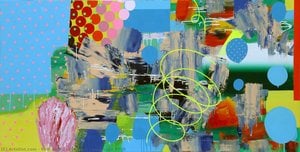
In the mesmerizing realm of Janaina Tschäpe’s "Pol," viewers are invited into a dreamscape where the boundaries between the organic and the abstract dissolve into a rhythmic dance of color. Created in 2012, this piece serves as a profound exploration of movement and metamorphosis, characteristic of Tschäpe’s unique ability to blend aquatic imagery with botanical whispers. The composition is anchored by a striking blue and yellow color scheme, a duality that evokes both the deep, tranquil mysteries of an underwater world and the vibrant, sun-drenched energy of life in bloom. At its heart lies a central, commanding circle, surrounded by a constellation of smaller celestial or cellular forms that seem to drift across the canvas like organisms suspended in a liquid medium.
The painting’s visual language is one of delightful surprise and whimsical complexity. Amidst the swirling geometric shapes and circular motifs, the unexpected presence of two bananas—one nestled near the top left and another drifting toward the bottom right—injects a playful, surrealist element into the work. These organic fragments act as anchors of reality within an otherwise ethereal abstraction, challenging the viewer to find meaning in the intersection of the mundane and the magnificent. This juxtaposition is a hallmark of Tschä-pe’s practice, where she utilizes gestural movement to replicate the mutation and flux found in nature's most hidden corners.
Technique and the Essence of Nature
Tschäpe’s technique in "Pol" reflects her deep-seated fascination with the relationship between the human body and the material world. The application of color suggests a liquid appearance, where edges are not rigid but rather fluid, mimicking the contours of minerals, plants, or even the undulating movement of sea creatures. This sense of "shaping fluid" allows the artwork to breathe, creating an atmosphere that feels less like a static image and more like a captured moment of biological transformation. The interplay between the bold yellows and the deep, immersive blues creates a visual tension that is both soothing and stimulating, making it a centerpiece capable of commanding attention in any sophisticated interior.
For the discerning collector or interior designer, this piece offers much more than mere decoration; it provides an emotional gateway. The artwork resonates with themes of harmony, growth, and the cyclical nature of life. Whether placed in a contemporary gallery setting or used to add a layer of intellectual depth to a residential living space, "Pol" acts as a window into a world of endless possibility. It is a work that rewards prolonged contemplation, inviting one to lose themselves in its circular rhythms and discover the quiet beauty of the abstract metamorphosis occurring right before their eyes.
Otázky a odpovědi
Jakou náladu a emoci vyjadřuje „Pol“ od Janaina Tschäpe?
„Pol“ od Janaina Tschäpe vyvolává Playful pocit v rámci celkové Playful nálady.
Jakou intenzitu barev má „Pol“ od Janaina Tschäpe?
„Pol“ od Janaina Tschäpe má Balanced barevnou intenzitu.
Jaké jsou rozměry originálu „Pol“?
Původní rozměry díla "Pol" jsou 55 x 76 cm. Původní rozměry slouží jako užitečný vodítko při výběru velikosti reprodukce.
Podobná díla




Biografie umělce
A Universe of Metamorphosis
Janaina Tschäpe exists within a realm where the boundaries between the organic and the abstract dissolve into a rhythmic dance of color and form. Born in Munich, Germany, and raised in São Paulo, Brazil, her identity as a Brazilian/German artist informs a practice that is profoundly interdisciplinary. Her work does not merely sit upon a surface; it breathes, shifting between representation, fantasy, and abstraction to create what can be described as a holistic cosmology. Through painting, drawing, photography, video, and sculpture, Tschäpe invites viewers into dreamscapes where the distinction between the human body, botanical whispers, and aquatic mysteries becomes beautifully blurred.
Her artistic journey is marked by a deep fascination with the concept of metamorphosis. In her early photographic and video works, such as One Hundred Little Deaths, she explored themes of mortality and transformation, often staging herself or models as nebulous, mysterious beings. These creatures, adorned with appendages made from fabric, water-filled latex, or inflatables, inhabit landscapes that serve as narrative sources where the whimsical and the actual coexist. This exploration of the body—often reflecting a feminist resistance to the policing of the female form—allows her to excavate the nature of landscape and the complex interactions between humanity and the natural world.
Technique and the Fluidity of Nature
The visual language of Tschäpe is one of delightful surprise and whimsical complexity. In her paintings, particularly her vibrant watercolors, she captures the transformative properties of water through a meticulous application of media including watercolor, casein, colored pencil, and pastel. Her canvases often possess a liquid appearance, where edges are not rigid but fluid, mimicking the undulating movement of sea creatures or the contours of minerals. This sense of shaping fluid allows her work to evoke both the deep, tranquil mysteries of an underwater world and the sun-drenched energy of life in bloom.
There is a dynamic tension inherent in her compositions: a struggle between loose, luscious forms that pervade the canvas and precise systems of markings that overlay and unify the piece. This technique creates a sensation of movement, where biomorphic shapes function as emotive signifiers of her interior thoughts. Whether she is utilizing saturated colors to suggest growth or incorporating unexpected elements—like the surrealist presence of fruit within an abstract field—her work remains anchored in the exploration of how life transitions and mutates.
Legacy and Global Presence
Since moving to New York in 1997, Tschäpe has established a significant presence in the international art world. Her multidisciplinary oeuvre is not merely a collection of individual pieces but a gesamtkunstwerk—a total work of art—where each creation plays a supporting role in a grand evolutionary opera. Her ability to collapse scale, making the grand cosmos feel as intimate as the infinitesimal cellular level, has earned her recognition in some of the most prestigious institutions globally.
Her profound contributions to contemporary art are reflected in the permanent collections of numerous world-renowned museums, including:
- Centre Pompidou, Paris, France
- Solomon R. Guggenheim Museum, New York
- National Gallery of Art, Washington, D.C.
- Museo Nacional Centro de Arte Reina Sofía, Madrid, Spain
- Harvard Art Museum, Cambridge, Massachusetts
- Moderna Museet, Stockholm, Sweden
- Thyssen-Bornemisza Art Contemporary, Vienna, Austria

Janaina Tschäpe
1973 -