


 Zobrazit v interiéru
 Odeslat
 Sdílet
 Podrobnosti
 Průvodce

 Stáhnout obrázek
 Podobné kousky
 Rentgenové snímky
 Slideshow
 Statistiky
Portinari Triptych (10)
 Oil
Oil- WallArt
- Flemish Renaissance Realism
 1476
1476- Renaissance
 253.0 x 586.0 cm
 Galleria degli Uffizi
 Přečíst si více
Ručně malovaná olejová reprodukce
Ručně malované olejné plátno v libovolném rozměru i s rámem, vyrobené našimi umělci na zakázku. ( Přepnout na tiskové verze Přepnout na digitální verzi obrazu)




P118B $10

P118H $10

P118W $10

P438Z $10

P508JH $12

P508YH $12

P805H $10

P805Z $10

P919BZ $10

P919G $10

P919XJ $10

P959ZH $10

P968JZ $12

W106C $8

W218G $10

W218JH $8

W218Y $10

W307PJ $10

W316G $10

W316PJ $8

W316Y $10

W398PJ $8

W4111J $10

W500HY $15

W500JH $15

W692G $12

W849H $8

W940BG $15

W953PJ $8




Vyberte si z našich přednastavených velikostí, které odpovídají původním proporcím díla.

Můžete zadat vlastní rozměry pro konkrétní rám nebo prostor. Pokud se vámi vybraná velikost neshoduje s proporcemi původního obrazu, dílo buď ořízneme, nebo jej doplníme ručně malovanými prvky. Před zahájením výroby vám bude zaslán digitální náhled ke schválení.
Upozorňujeme, že náhled na obrazovce neodpovídá skutečnému ořezu ani rozšíření. Pouze digitální náhled přesně zobrazí finální kompozici.
Ačkoliv je možné zvolit vlastní velikost, pro zachování původních proporcí doporučujeme vybrat rozměr z předdefinovaného seznamu.
Po přijetí objednávky vám tým ArtsDot.com zašle e-mail s pokyny a poskytne náhledovou verzi.
Celosvětová doprava () za 3–4 týdny namísto standardních 5 týdnů. (26 září). Bez kompromisů v kvalitě.

Zdarma celosvětová expresní doprava

Vysoce kvalitní lněné plátno

Úplné pojištění přepravy

Záruka vrácení celního poplatku

Záruka věrného barevného shodu

100dení lhůta pro vrácení zboží (pouze při vadách výroby)

100% garance vrácení peněz

Sleva při více objednávkách
 Skleněná varianta je dostupná pouze u rozměrů menších než 110 cm

Portinari Triptych (10)
Technika provedení
Velikost reprodukce
-


Celková cena
$ 263
Hugo van der Goes: A Pioneer of Flemish Realism
Hugo van der Goes (1440 – 1482) stands as one of the most influential figures in the Northern Renaissance, a painter who irrevocably altered artistic conventions and ushered in an era of unprecedented psychological depth. Though biographical details remain elusive—scholars debate his origins and early training—his legacy is undeniable: he fundamentally challenged the prevailing aesthetic sensibilities of his time, establishing himself as a visionary innovator whose work continues to captivate audiences centuries later. Entering the Ghent painters’ guild in 1467 solidified his professional standing, yet it was his singular artistic vision – a masterful fusion of intense realism, profound emotional resonance, and dramatic compositional prowess – that cemented his place among the giants of European art history. Before Van der Goes, Flemish painting largely adhered to stylized depictions prioritizing decorative elegance; he boldly rejected these constraints, injecting his canvases with an unprecedented level of observational accuracy and psychological insight.The Portinari Triptych: A Landmark Achievement
Van der Goes’s magnum opus, the *Portinari Altarpiece*, commissioned for Santa Maria Nuova in Florence, represents a watershed moment in artistic history. Completed around 1476, this monumental panel painting exemplifies the burgeoning humanist spirit of the Renaissance and embodies the ideals of piety and contemplation central to medieval religious art. The triptych depicts scenes from the life of Saint Mary Magdalene, showcasing her ascension into heaven alongside angels—a powerful visual narrative designed to inspire devotion and convey spiritual transcendence. Its meticulous detail—from the exquisitely rendered drapery to the subtly expressive faces of the figures—demonstrates Van der Goes’s mastery of oil painting technique, a medium he championed as a means of achieving unparalleled luminosity and textural richness. The innovative use of sfumato – a hazy blending of colors – particularly noticeable in Mary Magdalene's face – anticipates techniques developed by Leonardo da Vinci and Michelangelo, signaling the dawn of a new artistic paradigm.Technique and Innovation: Mastering Oil Paint
Van der Goes’s groundbreaking approach to painting hinged on his pioneering adoption of oil paint—a technique that had begun to gain traction in Italy but remained largely unexplored in Flanders until this period. Unlike tempera, which relied on pigment bound with egg yolk, oil paint allowed for gradual layering and blending, resulting in colors that retained their vibrancy over extended durations and creating textures that mirrored the subtleties of natural surfaces. This meticulous attention to detail—evident throughout the *Portinari Altarpiece*—was achieved through painstaking preparation and execution, reflecting Van der Goes’s unwavering commitment to artistic excellence. The artist meticulously applied thin glazes of color upon underlayers, building up tonal gradations with remarkable precision, thereby capturing not merely visual appearances but also emotional nuances.Symbolism and Emotional Resonance: Beyond Mere Representation
The *Portinari Altarpiece* transcends mere depiction; it communicates profound spiritual ideas through carefully chosen symbols and evocative imagery. The radiant light emanating from Mary Magdalene’s halo symbolizes divine grace and illuminates the scene with ethereal beauty, emphasizing her sanctity and highlighting the transformative power of faith. Similarly, the angels surrounding Mary Magdalene convey a sense of serenity and majesty, reinforcing the narrative's message of ascension and eternal life. Van der Goes skillfully employed color palettes—particularly golds and blues—to evoke feelings of solemnity and contemplation, inviting viewers to engage in an introspective dialogue with the artwork’s spiritual themes. The artist’s ability to convey emotion through facial expressions – notably Mary Magdalene’s sorrowful gaze – underscores his psychological acuity and distinguishes him from earlier artists who prioritized formal conventions over emotional authenticity.Legacy and Influence: Shaping Artistic Expression
Hugo van der Goes's influence extended far beyond the confines of Florence, inspiring subsequent generations of painters across Europe. His unwavering dedication to realism and psychological depth established a new standard for artistic representation, propelling the Northern Renaissance toward unprecedented levels of sophistication. Artists like Jan van Eyck and Rogier van der Weyden recognized Van der Goes’s genius and embraced his innovative techniques—particularly sfumato—incorporating them into their own works. Ultimately, Hugo van der Goes remains an enduring testament to the transformative potential of artistic vision—a painter who irrevocably reshaped European art history and continues to inspire awe and admiration today.Související díla


Biografie umělce
A Pioneer of Flemish Realism: The Life and Art of Hugo van der Goes
Born around 1440 in the vibrant artistic hub of Ghent, Belgium, Hugo van der Goes emerged as a pivotal figure in the Northern Renaissance. Though shrouded in some mystery—details of his early life remain scarce—his impact on the development of painting during the latter half of the 15th century is undeniable. Van der Goes wasn’t merely a painter; he was an innovator who profoundly altered the course of artistic expression, influencing masters both within Flanders and across the burgeoning Italian Renaissance. He entered the Ghent painters' guild in 1467, marking his formal establishment as a master craftsman, yet it was his unique vision—a blend of intense realism, psychological depth, and dramatic composition—that would set him apart. Before Van der Goes, Flemish painting, while technically brilliant, often adhered to established conventions; he dared to break from these traditions, imbuing his work with an unprecedented level of human emotion and tangible reality.Life and Early Career
The precise details of Hugo van der Goes’s early life remain elusive, lost in the mists of historical record. What is known is pieced together from guild records and contemporary accounts, revealing a man who likely received his initial training in Ghent itself. He first appears documented in 1467 as a master within the painters' guild, alongside figures like Joos van Wassenhove and Daneel Ruthaert – individuals whose artistic styles would later influence his own. His early commissions were primarily for civic projects—heraldic decorations for Charles the Bold’s grand entry into Ghent in 1469, a testament to his skill in capturing power and authority through visual representation. This period also saw him working on elaborate designs for the city's celebrations, showcasing his versatility as an artist. In 1468, he was tasked with creating decorations for the marriage of Margaret of York and Charles the Bold, further establishing his reputation within the artistic circles of Flanders. A significant turning point in Van der Goes’s life occurred when he accepted a position as a lay brother at the Roode Klooster monastery near Auderghem around 1477. This decision, shrouded in some mystery, marked a dramatic shift from his previous career and suggests a profound spiritual transformation or perhaps a struggle with inner turmoil. Despite taking vows of silence and dedicating himself to religious life, he continued to accept commissions, demonstrating an unwavering commitment to his craft. Notably, he undertook the challenging task of evaluating unfinished works by Dieric Bouts for the city of Leuven, highlighting his expertise and recognition within the artistic community. However, this period was also marked by increasing bouts of depression and psychological distress, culminating in a tragic death in 1482. The circumstances surrounding his demise remain debated, but it’s believed he succumbed to despair after a severe breakdown.The Portinari Triptych: A Masterpiece of Emotional Depth
Van der Goes's most celebrated achievement is undoubtedly the Portinari Triptych, commissioned by Tommaso Portinari, an Italian banker residing in Bruges, around 1475. This monumental work—now housed in the Uffizi Gallery in Florence—is a profound exploration of faith, family, and human emotion. The triptych depicts the Nativity scene, with a central panel showcasing the Adoration of the Shepherds. Van der Goes masterfully captures the raw emotions of the figures – the shepherds’ awe, the Virgin Mary's serene contemplation, and the infant Jesus’ vulnerability—with an unprecedented level of psychological realism. The use of color is particularly striking, employing somber hues to create a sense of gravity and spiritual intensity. The composition itself is dynamic and engaging, drawing the viewer into the scene with its dramatic lighting and intricate details. The influence of this masterpiece extended far beyond Florence, inspiring artists like Domenico Ghirlandaio who sought to emulate Van der Goes’s innovative approach to realism and emotional expression.Technique and Artistic Innovations
Hugo van der Goes's artistic style was characterized by a radical departure from the stylized conventions prevalent in earlier Flemish painting. He rejected the idealized figures and flat perspectives of his predecessors, instead imbuing his works with a remarkable sense of immediacy and tangible reality. His use of color was deliberate and often somber, creating a powerful emotional impact. Van der Goes’s monumental style—characterized by large-scale compositions and imposing figures—further amplified this effect. He didn't shy away from portraying imperfections; his figures often possess a raw, almost unsettling realism that distinguishes them from the more polished representations of his time. His meticulous attention to detail – particularly in rendering fabrics and textures – was revolutionary for its era. Furthermore, Van der Goes’s ability to convey inner states—awe, sorrow, reverence—through subtle gestures, expressive faces, and the careful manipulation of light and shadow set a new standard for portraiture and religious painting. The influence of Jan van Eyck’s meticulous detail is evident, but Van der Goes transcends imitation, forging a style uniquely his own.Legacy and Influence
Hugo van der Goes's legacy extends far beyond his relatively short lifetime. His innovative techniques and profound psychological insights paved the way for future generations of artists, both in Flanders and Italy. His work can be found today in prestigious museums such as the Musées royaux des Beaux-Arts in Brussels, offering a glimpse into the genius of this pioneering Flemish master. He remains a compelling figure—a testament to the power of art to capture the complexities of the human condition and to transcend cultural boundaries. His influence is still felt in contemporary art, demonstrating his enduring relevance as one of the most important artists of the Northern Renaissance.- His emphasis on realism influenced subsequent generations.
- The Portinari Altarpiece remains a landmark achievement in art history.
- His exploration of psychological depth set a new standard for portraiture and religious painting.

Hugo van der Goes
1440 - 1482 , Belgie
Rychlé informace
- Artistic Movement Or Style: Severská renesance
- Artists Or Movements Influenced By This Artist:
- Domenico Ghirlandaio
- Italská renesance
- Artists Who Influenced This Artist:
- Jan van Eyck
- Dieric Bouts
- Date Of Birth: c. 1440
- Date Of Death: 1482
- Full Name: Hugo van der Goes
- Nationality: Flemish
- Notable Artworks:
- Portinari Altarpiece
- Monforte Altarpiece
- Place Of Birth: Ghent, Belgie
Související články
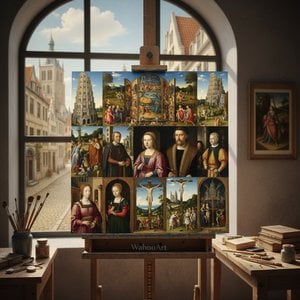
Top 10 mistrovských děl severní renesance – obrazy a umění pro váš domov | ArtsDot.com
Objevte 10 ikonických děl severní renesance – Jan van Eyck, Dürer a další mistři. Ponořte se do příběhů umění, technik a barev. Reprodukce obrazů pro váš domov na ArtsDot.com.

Echoes of Time: Exploring the Enduring Appeal & Historical Context of Vintage Art Prints
Explore the captivating world of vintage art prints! Discover their history, collecting tips & enduring appeal. Expert insights on chromolithography and building a legacy collection with ArtsDot.

Romantic Realism's Finest: 10 Masterpieces for Your Home | ArtsDot
Explore 10 defining masterpieces of Romantic Realism! Discover Courbet, Millet & Daumier's powerful paintings—capturing emotion and social realities. Find museum-quality reproductions for your home at ArtsDot.com.

Giclée Prints: Archival Quality & Aesthetic Nuances for the Discerning Collector
Explore the world of giclée prints with ArtsDot. Learn about archival quality, aesthetic nuances & investment potential. Expert guidance for discerning art collectors seeking museum-quality reproductions and lasting value.

The Enduring Legacy of Fine Art Prints: Technique, History & Aesthetic Impact
Explore the rich history & techniques of fine art prints. Discover investment potential, assess authenticity, and learn how to preserve your collection with expert guidance. Trusted insights for discerning collectors.


