

 Náhled v interiéru
 Sdílet
 Sdílet
 Podrobnosti o díle
 Průvodce

 Stáhnout
 Podobné položky
 Rentgenové snímky
 Slideshow
 Otázky a odpovědi
 Statistiky
Hope Diamond package

- 28.0 x 36.0 cm


 Zobrazit více
Umělecké dílo zobrazené na této stránce je chráněno autorským zákonem, což znamená, že nemůžeme legálně vytvářet ani prodávat jeho identickou reprodukci. Tato ochrana je vymáhána na základě mezinárodních dohod, jako například Berberská úmluva a národními zákony, včetně těch stanovených v Americký autorský zákon – Díl 17. Všechna práva vyhrazena.
Tato metoda je plně v souladu s autorským právem, protože nezahrnuje kopírování ani duplikování chráněného díla. Jde o kreativní reinterpretaci – nový obraz, který je inspirován originálem, ale není s ním identický.
Giclée / Umělecký tisk
Giclée nebo plátěný tisk muzeální kvality s rychlou výrobou a širokou nabídkou povrchových úprav. ( Koupit ručně malovaný obraz Přepnout na digitální obraz)




P118B Kč10

P118H Kč10

P118W Kč10

P438Z Kč10

P508JH Kč12

P508YH Kč12

P805H Kč10

P805Z Kč10

P919BZ Kč10

P919G Kč10

P919XJ Kč10

P959ZH Kč10

P968JZ Kč12

W106C Kč8

W218G Kč10

W218JH Kč8

W218Y Kč10

W307PJ Kč10

W316G Kč10

W316PJ Kč8

W316Y Kč10

W398PJ Kč8

W4111J Kč10

W500HY Kč15

W500JH Kč15

W692G Kč12

W849H Kč8

W940BG Kč15

W953PJ Kč8




Vyberte si z našich přednastavených velikostí, které odpovídají původním proporcím díla.

Zadejte šířku a výšku, které potřebujete pro váš rám nebo stěnu. Tisk lze pouze oříznout, nikdy však nelze zvětšit obraz nad jeho původní rozměr, proto při výběru jiného formátu dochází ke ztrátě části obrazu. Před samotným tiskem vám zašleme digitální náhled k schválení. Obraz zobrazený na této stránce nenabízí skutečný výřez — ten uvidíte pouze v náhledu.
Celosvětové doručení () do 2 týdnů namísto standardních 4/5 týdnů. (5 listopad)

Zdarma celosvětová expresní doprava

Vysoce kvalitní lněné plátno

Kompletní pojištění přepravy

Záruka vrácení celního poplatku

Záruka věrného barevného souladu

100dení lhůta pro vrácení zboží (pouze při vadách výroby)

100% záruka vrácení peněz

Sleva při více objednávkách
 Skleněná varianta je dostupná pouze u rozměrů menších než 110 cm

Hope Diamond package
Giclée / Umělecký tisk
Rozměry reprodukce
-


Celková cena za vybrané možnosti reprodukcí
Kč 1366
A Journey in Paper and Ink: The Allure of the Hope Diamond Package
In the quiet intersection of postal history and fine art lies "Hope Diamond package," a captivating work by Harry Weinstein that invites viewers into a world of international intrigue and historical transit. At first glance, the painting presents us with a humble brown envelope, yet beneath its weathered surface lies a rich tapestry of global connection. This is not merely a depiction of mail; it is a window into a moment in time, captured through the meticulous rendering of a mailing wrapper destined for the Smithsonian's National Postal Museum. The piece breathes life into the mundane, transforming a simple object of logistics into a vessel of storytelling and mystery.
Symbolism and the Weight of History
Beyond its visual charm, the painting carries a heavy symbolic resonance. The handwritten note, "Please deliver registered mail," acts as a poignant reminder of the care and gravity associated with precious cargo. It hints at the legendary status of the Hope Diamond itself, suggesting that even in its most transit-oriented form, the object possesses an aura of importance that demands protection. This tension between the fragility of paper and the permanence of historical legend creates a compelling emotional pull for the observer. The artwork serves as a meditation on communication—how ideas, treasures, and histories are packaged, sent, and eventually preserved for posterity.
For the discerning collector or interior designer, this piece offers a unique opportunity to introduce a conversation starter into a curated space. Its aesthetic is both scholarly and soulful, making it an ideal centerpiece for a library, a study, or a sophisticated gallery wall. As a high-quality reproduction, it brings the meticulous craftsmanship of Weinstein’s era into the modern home, offering a touch of academic elegance and a deep connection to the global heritage of the postal arts. To possess this work is to hold a fragment of a world where every stamp told a story and every envelope carried the weight of the world.
Otázky a odpovědi
Kdo prodává ručně malované kopie díla „Hope Diamond package“ od Harry Weinstein?
Ručně malovanou reprodukci díla „Hope Diamond package“ od Harry Weinstein si můžete objednat přímo na jeho stránce Ručně malovaná reprodukce: ručně malovaná olejová reprodukce na lněném plátně, vyrábíme na zakázku.
Jsou barvy díla „Hope Diamond package“ od Harry Weinstein syté, nebo tlumené?
Nasycení barevné palety díla "Hope Diamond package" je na úrovni Clear Color Presence.
Jakou atmosféru vyzařuje dílo "Hope Diamond package"?
Dílo „Hope Diamond package“ od Harry Weinstein je v náladě popsáno jako Nostalgic. Tato klasifikace může pomoci při zařazení díla do konkrétního prostředí.
Podobná díla


Biografie umělce
The Eye of the Apprentice
New York City, 1896. A child is born to Jacob Weinstein, a man who navigated the uncertainties of the Russian Empire before arriving at Ellis Island in 1890. The boy, Harry, grows up within the walls of his father's jewelry shop, a place defined by the sharp judgment required for the trade. He moves through the Diamond District as a runner and messenger, absorbing the language of gems and the weight of commerce. A single moment shifts everything. In a pawnshop, a tray of discarded items catches his attention. He spots a ring with a green stone, priced at a mere twenty-five cents. He buys it. Two days later, that same stone—a two-carat emerald—is sold for eight hundred dollars.
This instinct for value becomes the foundation of his life. By 1920, he adopts a new name, Winston, and establishes The Premier Diamond Company. He is no longer just a messenger; he is an architect of acquisition.
The King of Diamonds
The business expands with calculated precision. In 1932, Harry Winston, Inc. opens its doors in New York City. His method relies on a specific philosophy: finding beauty in historic collections and modernizing them for a new era. He does not merely collect; he transforms. The acquisition of the Arabella Huntington jewelry collection in 1926 marks a turning point. He takes pieces that feel anchored to the past and redesigns them, focusing on the brilliance of the stone itself rather than heavy, old-fashioned settings.
His influence reaches into the heart of popular culture through the red carpet. In 1944, he initiates a practice that changes Hollywood forever, lending diamonds to Jennifer Jones for the Academy Awards. This creates a direct link between the jewelry house and the stars of the screen. His technical innovations also leave a mark on the industry:
- The development of the Winston Cluster design in the 1940s.
- A focus on arranging gemstones to minimize visible metal settings.
- The organization of the Court of Jewels exhibitions starting in 1949.
A Legacy in Stone
The stones he handles carry their own histories, often more famous than the man himself. He manages the division of the 726-carat Jonker Diamond and acquires the Vargas Diamond. Yet, his most significant contribution to public history involves a blue stone of immense legend. In 1958, he donates the 45.5-carat Hope Diamond to the Smithsonian Institution. He sends it via U.S. registered mail, a simple act of transit for an object of such gravity. This gift helps establish the foundation of the Smithsonian National Gem Collection.
Harry Weinstein died in 1978, leaving behind a name synonymous with the highest tier of the diamond trade. His life was defined by the ability to see value where others saw nothing, turning a twenty-five cent investment into a global empire of light and stone.

Harry Weinstein
1896 - 1978 , United States of America
Rychlé informace o umělci
- Full Name: Harry Weinstein
- Notable Artworks: ['Hope Diamond package']
- Note: The subject was an American jeweler.
- Place Of Birth: New York, United States of America
- Date Of Birth: 1896
- Date Of Death: 1978
Související články

Echoes of Time: Nostalgia, Technique & Cultural Significance in Vintage Paintings
Explore the captivating world of vintage paintings! Discover key styles, cultural significance & collecting tips from art experts at ArtsDot. Find authentic reproductions and elevate your home décor.

Top 10 slavných obrazů v odstínech písečné hnědé – inspirace pro váš interiér | ArtsDot.cz
Objevte top 10 slavných obrazů v odstínech písečné hnědé od Van Gogha, Rembrandta a dalších mistrů! Inspirace pro váš interiér s reprodukcemi nejvyšší kvality. ArtsDot – umění pro váš domov.

Mark Rothko: Top 25 děl mistra barev a emocí | ArtsDot.cz
Prozkoumejte 25 ikonických děl Marka Rothka, mistra abstraktního expresionismu. Objevte příběhy za jeho barevnými plátny a emoce v umění. Reprodukce obrazů nejvyšší kvality na ArtsDot.com.

Top 10 slavných obrazů v odstínech hříbek – Umění pro váš domov s ArtsDot
Objevte top 10 slavných obrazů v odstínech hříbek – od Van Gogha po Moneta. Ponořte se do příběhů umění a inspirujte se pro váš interiér s reprodukcemi nejvyšší kvality na ArtsDot.com.
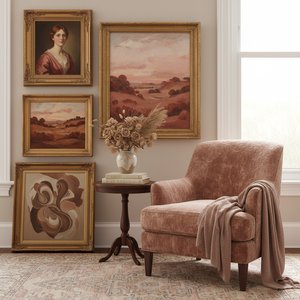
Top 10 slavných obrazů v odstínech růžové a hnědé – inspirace pro váš interiér | ArtsDot.cz
Objevte top 10 slavných obrazů v odstínech růžové a hnědé od Monet, Renoir a dalších mistrů. Inspirace pro váš interiér s reprodukcemi nejvyšší kvality na ArtsDot.cz! Prozkoumejte celou kolekci online.