


 Zobrazit v interiéru
 Odeslat
 Sdílet
 Podrobnosti
 Průvodce

 Stáhnout obrázek
 Podobné kousky
 Rentgenové snímky
 Slideshow
 Statistiky
Fire in the Ashes
 1989
1989 58.0 x 73.0 cm
 Přečíst si více
Zakupte si digitální obraz ve vysokém rozlišení a vylepšeném provedení, který nabízí mnohem vyšší kvalitu než online náhled.
Každý soubor je pečlivě připraven našimi specialisty s využitím pokročilých nástrojů a odborné manuální retuše. Zajišťujeme, aby každý obraz disponoval výjimečnou ostrostí, přesnou barevnou věrností a jemnými detaily.
Finální soubor vám bude do 72 hodin zaslán e-mailem, optimalizovaný pro okamžité použití v profesionálním, redakčním i tiskovém prostředí. Nabízíme stejnou kvalitu, které důvěřují špičková designová studia, nakladatelství i galerie.
Digitální obrazy
Stáhněte si soubor ve vysokém rozlišení pro osobní prohlížení, tisk a kreativní projekty. ( Přepnout na tiskové verze Objednat ručně malovanou reprodukci)
Součást každé objednávky digitálního obrazu
Exponenciální digitální doručení, zaručené
Když si vyberete ArtsDot.com, nezískáváte pouze obrázek – získáváte digitální umělecké dílo s profesionálně vylepšenými detaily, zpracované s precizností a podpořené zárukou za spokojenost. Zde je vše, co vaše objednávka automaticky obsahuje:

Bleskové doručení e-mailem
Váš digitální obraz ve vysokém rozlišení vám bude zaslán e-mailem do 72 hodin od objednávky – připraven k okamžitému použití.

Digitální soubor s podporou AI
Vaše umělecké dílo je profesionálně optimalizováno pomocí pokročilých nástrojů umělé inteligence a manuální úpravy, což zajišťuje maximální úroveň detailu, ostrosti a přesnosti barev.

Doživotní bezplatné znovuodeslání
Soubor jste omylem smazali nebo ztratili? Žádný problém – kdykoliv vám ho znovu zašleme zcela zdarma.

Bez poplatků za dovoz – navždy
Užijte si své umělecké dílo okamžitě bez celních poplatků, daní nebo nákladů na dopravu – digitální stažení je vždy bez daňových povinností.

Záruka přesnosti barev
Díky profesionálním nástrojům a správě barev zajišťujeme, aby váš digitální obraz odrážel původní barvy co nejvěrněji.

100dená záruka spokojenosti
Pokud nebudete s digitálním obrázkem spokojeni, provedeme jeho revizi nebo vám vrátíme 100% platby do 100 dnů – bez jakýchkoliv dotazů.

100% záruka vrácení peněz
Nespokojeni? Získejte plnou náhradu peněz do 100 dnů od obdržení digitálního souboru – bez zbytečných dotazů.

Slevy při hromadných objednávkách
Při koupi 3 obrazů ušetříte 10% – Při koupi 5 obrazů ušetříte 15% – Při koupi 10+ obrazů ušetříte 20%. Ideální pro kreativní projekty, galerie a agentury.
Související díla


Biografie umělce
George Legrady: A Life Sculpted by Displacement and Digital Innovation
George Legrady, born Légrády György in Budapest, Hungary, in 1950, represents a compelling narrative of artistic transformation—a life profoundly shaped by displacement, intellectual curiosity, and an unwavering embrace of technological innovation. His journey, beginning amidst the turbulent aftermath of the Hungarian Revolution of 1956, ultimately led him to become a pioneering figure in digital media art, renowned for his ability to weave together photography, data visualization, and interactive installations into thought-provoking explorations of identity, memory, and the very nature of representation.
Legrady’s early years were marked by a poignant sense of exile. At just six years old, he and his family sought refuge in Montreal, Canada, fleeing the political upheaval that followed the revolution. This experience—the abrupt severance from homeland and culture—became a foundational element in his artistic vision, informing a deep sensitivity to themes of displacement, cultural hybridity, and the complexities of belonging. His Hungarian heritage, however, remained a powerful undercurrent, subtly influencing his work through familial connections to lithography (inherited from his great-grandfather Légrády Tivadar, co-founder of a Budapest publishing house) and theater (linked to his maternal great-grandfather Váradi Antal, a playwright and director). These ancestral threads provided a rich tapestry of artistic traditions that would later inform his multidisciplinary approach.
Legrady’s formative years were characterized by a remarkable adaptability. He navigated the linguistic landscape of Montreal—learning French in elementary school followed by English in high school—a duality that may have contributed to his later interest in semiotics and the inherent ambiguities of communication. Before dedicating himself fully to art, he engaged in a series of demanding jobs – construction, factory work, even grueling labor as an underground miner in northern Manitoba – experiences that instilled within him a deep appreciation for materiality, labor, and the tangible realities of human existence. Simultaneously, his passion for music persisted, manifesting through keyboard performances with various Montreal bands, honing his collaborative spirit and rhythmic sensibilities.
Early Artistic Explorations: Photography and Social Commentary
Legrady’s formal artistic education began at Loyola College in Montreal, where he encountered photography as a medium of profound potential. Guided by the mentorship of Charles Gagnon and John Max, he quickly recognized that photography wasn't simply about capturing reality; it was a tool for shaping perception and engaging with social issues. This realization led to his first major project: a 1973 photo documentary documenting the lives of four James Bay Cree communities facing displacement due to the construction of hydroelectric dams. This work wasn’t merely an aesthetic exercise; it was a direct response to a critical political event, demonstrating Legrady's commitment to using art as a vehicle for social commentary and giving voice to marginalized populations.
Following his studies at Goddard College in Vermont, where he embraced the counter-cultural ethos of the institution, Legrady returned to Montreal and continued to develop his photographic practice. He explored semiotic analysis of the photographic image, questioning its claims to objectivity and examining how it constructs meaning. This period saw the creation of projects like *Catalogue of Found Objects* (1976) and *Floating Objects* (1980), in which he decontextualized everyday objects, photographing them suspended in mid-air—a deliberate disruption of conventional photographic conventions.
The Digital Revolution: Embracing Computational Art
In the early 1980s, Legrady’s artistic trajectory shifted dramatically with his encounter with computer technology. Inspired by the work of Harold Cohen at the University of California, San Diego, he began to explore the possibilities of algorithmic processes and digital image manipulation. This marked a pivotal moment in his career—a transition from capturing reality to constructing it through computation. He learned programming, experimenting with generating images based on mathematical rules and algorithms, challenging the traditional role of the artist as the sole creator.
This exploration led to a series of groundbreaking projects that pushed the boundaries of digital art. In 1985, he created *Billboard Syntax*, a photo documentary analyzing the visual language of public advertisements in four major Chinese cities—a project that revealed how images and text work together to shape consumer behavior. Legrady’s interest in systems of communication continued to evolve, culminating in large-scale interactive installations that explored historical narratives and collective memory. Anecdoted Archive from the Cold War (1993) invited users to navigate a complex network of information related to the era, prompting reflection on the construction of history and the power of narrative. Slippery Traces (1995), published by the ZKM Museum in Karlsruhe, further developed these themes, delving into the ephemeral nature of digital data.
Interactive Narratives and Data Visualization
In the early 1990s, Legrady’s work increasingly embraced interactivity and data visualization as central components. His projects moved beyond static images, inviting audience participation and challenging conventional notions of authorship. The 1993 project *Anecdoted Archive from the Cold War* allowed users to navigate a complex network of information related to the era, prompting reflection on the construction of history and the power of narrative. Pockets Full of Memories (2001-2006), commissioned by Centre Pompidou, exemplified his commitment to participatory art; visitors contributed personal objects which were then digitally scanned, categorized using a Kohonen self-organizing map algorithm, and projected as a dynamic visualization—a collective portrait of shared experiences.
Legrady’s legacy extends beyond individual artworks. He has served as Associate Professor in Conceptual Design at the University of California, Santa Barbara, and Professor of Electronic Media at Concordia University, where he directs the Experimental Visualization Lab. His work continues to inspire artists and scholars alike, shaping the future of digital art with his visionary approach and unwavering commitment to innovation.
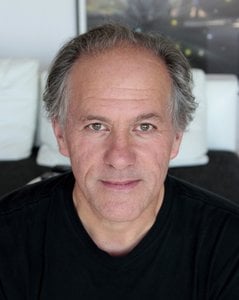
George Legrady
1950 - , Maďarsko
Rychlé informace
- Artistic Movement Or Style: Digitální umění, Nová média
- Artists Who Influenced This Artist:
- Charles Gagnon
- Harold Cohen
- Date Of Birth: 1950
- Full Name: George Legrady (Légrády György)
- Nationality: Maďar, Kanaďan
- Notable Artworks:
- Anecdoted Archive
- Pockets Full of Memories
- Making Visible
- Place Of Birth: Budapešť, Maďarsko