

 Zobrazit v interiéru
 Odeslat
 Sdílet
 Podrobnosti
 Průvodce

 Stáhnout obrázek
 Podobné kousky
 Rentgenové snímky
 Slideshow
 Statistiky
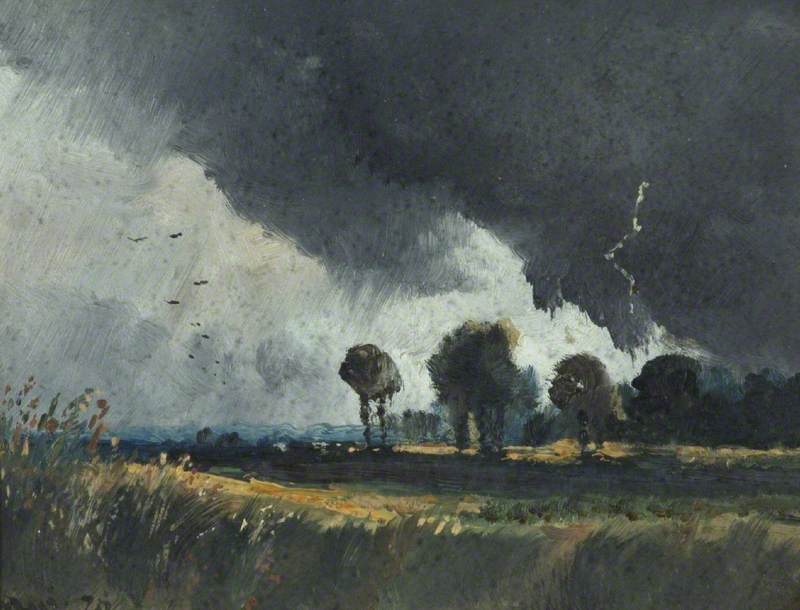
Stormy Landscape
 Romanticism
 1878
1878 18.0 x 22.0 cm
 Victoria Art Gallery
 Přečíst si více
Giclée / Umělecký tisk
Giclée nebo plátěný tisk muzeální kvality s rychlou výrobou a širokou nabídkou povrchových úprav. ( Objednat ručně malovanou reprodukci Přepnout na digitální verzi obrazu)




































Vyberte si z našich přednastavených velikostí, které odpovídají původním proporcím díla.

Zadejte šířku a výšku, které potřebujete pro váš rám nebo stěnu. Tisk lze pouze oříznout, nikdy však nelze zvětšit obraz nad jeho původní rozměr, proto při výběru jiného formátu dochází ke ztrátě části obrazu. Před samotným tiskem vám zašleme digitální náhled k schválení. Obraz zobrazený na této stránce nenabízí skutečný výřez — ten uvidíte pouze v náhledu.
Celosvětové doručení () do 2 týdnů namísto standardních 4/5 týdnů. (23 říjen)

Zdarma celosvětová expresní doprava

Vysoce kvalitní lněné plátno

Úplné pojištění přepravy

Záruka vrácení celního poplatku

Záruka věrného barevného shodu

100dení lhůta pro vrácení zboží (pouze při vadách výroby)

100% garance vrácení peněz

Sleva při více objednávkách
 Skleněná varianta je dostupná pouze u rozměrů menších než 110 cm

Stormy Landscape
Giclée / Umělecký tisk
Velikost reprodukce
-


Celková cena
Kč 1330
Související díla


Biografie umělce
A Romantic Vision of Coastal England
George Hornblower Simms, a British landscape painter born in 1818, remains a poignant voice from the Victorian era, capturing the sublime and often turbulent beauty of the English coastline. His artistic journey was deeply rooted in the burgeoning Romantic movement, a period defined by an intense fascination with the power of nature and the emotional resonance of the landscape. Through his meticulous observations, Simms did more than merely document scenery; he translated the fleeting atmospheric conditions of the British Isles into enduring, emotive compositions that speak to the soul of the viewer.
The foundations of Simms’ technique were laid in Newcastle upon Tyne, where his early training under the prominent Romantic painter William Henry Haydon provided him with a sophisticated understanding of tonal painting. From Haydon, he inherited an appreciation for the expressive potential of color and the ability to use subtle gradations to create depth and drama. This formative period instilled in him a lifelong pursuit of capturing light—whether it be the golden, tranquil glow of a seaside hamlet or the brooding, heavy shadows of an approaching tempest.
Mastery of Light and Atmosphere
As his career progressed, Simms moved from the industrial heart of Newcastle to the coastal serenity of Brighton in 1853, a transition that profoundly influenced his subject matter. His oeuvre, consisting of approximately 200 paintings, serves as a testament to his devotion to seascapes and rural landscapes. He became a master of the Luminist style, utilizing light not just as an illumination, but as a central protagonist in his narratives. In works such as “Beach with Village,” one can witness his ability to bathe a tranquil scene in a warmth that evokes a sense of peace and nostalgia.
Conversely, Simms was equally adept at portraying the more violent aspects of nature. His “Stormy Landscape” stands as a powerful example of his ability to convey turbulent energy through expressive brushwork and dramatic, silhouetted forms against heavy, churning skies. In these pieces, the boundaries between realism and impressionism begin to blur, as he uses impasto textures and vigorous strokes to mimic the raw power of wind and water. This duality—the ability to pivot from the serene to the catastrophic—is what defines his unique artistic identity.
Legacy and Artistic Significance
Throughout his life, Simms achieved significant recognition within the prestigious art circles of his time, exhibiting extensively at the Royal Academy and the Tate Gallery. His work resonated with a Victorian public that was increasingly captivated by the dramatic interplay between man and the natural world. By blending the precision of traditional landscape painting with the emotional depth of Romanticism, he carved out a niche that remains highly regarded by collectors of nineteenth-century British art.
The historical significance of George Hornblower Simms lies in his role as a chronicler of an era's aesthetic sensibilities. His paintings, such as “River with Windmill, Stormy Sky,” offer more than just visual beauty; they provide a window into the Victorian fascination with the sublime. Through his mastery of tonal gradations and atmospheric perspective, Simms ensured that the fleeting moments of the English coast—the shifting clouds, the rising tides, and the play of light upon the waves—would be preserved in a state of eternal, evocative grace.

George Hornblower Simms
1818 - 1889
Rychlé informace
- Full Name: George Hornblower Simms
- Nationality: British
- Date Of Birth: 1818
- Date Of Death: 1889
- Place Of Birth: London, England
- Notable Artworks:
- Beach with Village
- Stormy Landscape
- Artistic Movement Or Style: Romantic/Luminist
- Artists Who Influenced This Artist: ['Turner']
- Artists Or Movements Influenced By This Artist: ['Hudson River School']
Související články

Romantická krajina v malbě: 10 mistrovských děl, které definovaly umělecký proud | ArtsDot
Prozkoumejte 10 ikonických děl romantické krajinářské malby! Objevte příběhy Caspara Davida Friedricha, Turnera a dalších mistrů. Reprodukce obrazů nejvyšší kvality pro váš interiér na ArtsDot.com.

Georges Braque: 25 mistrovských děl kubismu a revoluce v umění | ArtsDot.cz
Prozkoumejte 25 ikonických děl Georges Braque, průkopníka kubismu. Objevte příběhy za obrazy, techniky a inspiraci tohoto francouzského mistra. Reprodukce obrazů v nejvyšší kvalitě na ArtsDot.com.

The Sublime and the Picturesque: Exploring Emotion & Nature in Romantic Landscape Painting
Explore the emotional power of Romantic landscape painting! Discover the sublime & picturesque traditions, key artists like Friedrich & Cole, and find your perfect artwork at ArtsDot.

Evocations of Place: A Historical Journey Through Landscape Art
Explore the rich history of landscape art with ArtsDot. Discover renowned artists, movements like Impressionism & Romanticism, and expert guidance for collecting timeless pieces. Find your perfect serene escape today!

Georges Seurat: 25 mistrovských děl a revoluce bodové techniky | ArtsDot
Prozkoumejte 25 ikonických děl Georges Seurata – průkopníka impresionismu a bodové techniky. Objevte příběhy za slavnými obrazy, barevnou teorii a inspirujte se pro váš interiér s reprodukcemi nejvyšší kvality na ArtsDot.com.