


 Zobrazit v interiéru
 Odeslat
 Sdílet
 Podrobnosti
 Průvodce

 Stáhnout obrázek
 Podobné kousky
 Rentgenové snímky
 Slideshow
 Statistiky
Saint Maurelius
 Oil
Oil- WallArt
- Renaissance
 Renaissance
 65.0 x 103.0 cm
 Cathedral Museum of Ferrara
 Přečíst si více
Giclée / Umělecký tisk
Giclée nebo plátěný tisk muzeální kvality s rychlou výrobou a širokou nabídkou povrchových úprav. ( Objednat ručně malovanou reprodukci Přepnout na digitální verzi obrazu)




P118B Kč10

P118H Kč10

P118W Kč10

P438Z Kč10

P508JH Kč12

P508YH Kč12

P805H Kč10

P805Z Kč10

P919BZ Kč10

P919G Kč10

P919XJ Kč10

P959ZH Kč10

P968JZ Kč12

W106C Kč8

W218G Kč10

W218JH Kč8

W218Y Kč10

W307PJ Kč10

W316G Kč10

W316PJ Kč8

W316Y Kč10

W398PJ Kč8

W4111J Kč10

W500HY Kč15

W500JH Kč15

W692G Kč12

W849H Kč8

W940BG Kč15

W953PJ Kč8




Vyberte si z našich přednastavených velikostí, které odpovídají původním proporcím díla.

Zadejte šířku a výšku, které potřebujete pro váš rám nebo stěnu. Tisk lze pouze oříznout, nikdy však nelze zvětšit obraz nad jeho původní rozměr, proto při výběru jiného formátu dochází ke ztrátě části obrazu. Před samotným tiskem vám zašleme digitální náhled k schválení. Obraz zobrazený na této stránce nenabízí skutečný výřez — ten uvidíte pouze v náhledu.
Celosvětové doručení () do 2 týdnů namísto standardních 4/5 týdnů. (16 říjen)

Zdarma celosvětová expresní doprava

Vysoce kvalitní lněné plátno

Úplné pojištění přepravy

Záruka vrácení celního poplatku

Záruka věrného barevného shodu

100dení lhůta pro vrácení zboží (pouze při vadách výroby)

100% garance vrácení peněz

Sleva při více objednávkách
 Skleněná varianta je dostupná pouze u rozměrů menších než 110 cm

Saint Maurelius
Giclée / Umělecký tisk
Velikost reprodukce
-


Celková cena
Kč 1313
A Vision of Devotion: The Presence of Saint Maurelius
In the quiet, commanding presence of Saint Maurelius, we encounter more than just a portrait; we enter a moment of profound spiritual contemplation. Painted by the master of the Ferrarese School, Benvenuto Garofalo, this work captures a figure of immense gravity and sanctity. The saint is depicted in the midst of a solemn vigil, draped in heavy, dignified robes that anchor him within the composition. As he gazunds into the distance, his gaze suggests a soul preoccupied with the divine, bridging the gap between the earthly realm and the celestial. In his hands, he holds a book—a symbol of wisdom, scripture, and the enduring weight of religious tradition—which serves as both a physical attribute and a narrative anchor for the viewer.
The composition is masterfully layered, pulling the eye from the central authority of the saint toward a soft, atmospheric background where other figures emerge from the shadows. This depth creates a sense of a living, breathing community of faith, suggesting that while the saint stands as a singular pillar of strength, he is part of a much larger, historical tapestry of devotion. For the discerning collector or interior designer, this painting offers a profound sense of stability and timelessness, making it an ideal centerpiece for spaces that demand an atmosphere of intellectual depth and quiet elegance.
The Mastery of the Ferrarese Renaissance
To understand the technical brilliance of this piece, one must look to Garofalo’s roots in the vibrant artistic landscape of Ferrara. As a contemporary of the High Renaissance, Garofalo infused his work with a sophisticated command of sfumato and light, allowing forms to emerge softly from the darkness. The technique employed here demonstrates a remarkable ability to manipulate texture—from the tactile weight of the saint's liturgical garments to the subtle, ethereal glow that illuminates his face. His brushwork, though meticulous, never feels rigid; instead, it breathes life into the skin tones and the folds of the fabric, creating a sense of organic realism.
The color palette is intentionally restrained yet deeply emotive, utilizing rich, earthy tones that evoke the solemnity of a cathedral interior. This controlled use of color directs the viewer's focus toward the emotional core of the painting: the stern, yet compassionate expression of the saint. For those seeking to adorn a sophisticated interior, such a work provides a luxurious textural element that complements classical or contemporary decor, bringing with it the prestige of the 16th-century Italian masters.
A Legacy of Spiritual and Aesthetic Grandeur
Beyond its aesthetic merits, Saint Maurelius serves as a window into the complex religious psyche of the late Renaissance. The painting is not merely a depiction of a man, but an exploration of authority, piety, and the human connection to the sacred. Every element, from the positioning of the secondary figures to the way light catches the edge of the holy book, is designed to evoke a sense of awe and reverence. It is a piece that invites long periods of study, rewarding the viewer with new layers of meaning upon every encounter.
Owning a high-quality reproduction of such a masterpiece allows for the infusion of historical grandeur into the modern home. Whether placed in a private library, a formal dining room, or a curated gallery space, this work acts as a conversation piece that transcends time. It offers an opportunity to surround oneself with the enduring beauty of the Italian Renaissance, providing a constant source of inspiration and a profound connection to the artistic heritage of mankind.
Otázky a odpovědi
Jakou převládající barvu v sobě nese dílo „Saint Maurelius“ od Garofalo?
Dominantní odstín díla „Saint Maurelius“ od Garofalo je Green to Violet Spectrum. Tento odstín tvoří základní tón celé palety.
Jakým způsobem spolu barvy díla "Saint Maurelius" navazují?
„Saint Maurelius“ od Garofalo představuje Strong Color Unity barevnou harmonii.
Je k dispozici prezentace pro „Saint Maurelius“ od Garofalo?
Dílo „Saint Maurelius“ od Garofalo si můžete prohlédnout jako diaporama na stránce Diaporama daného díla.
Související díla


Biografie umělce
Benvenuto Garofalo: A Master of Ferrara’s Late Renaissance
Benvenuto Garofalo, born in Canaro near Ferrara in 1481 and tragically dying in 1559, stands as a pivotal figure within the School of Ferrara – a vibrant artistic movement that flourished during the late Italian Renaissance. More than simply a painter, Garofalo was a meticulous craftsman, a skilled storyteller, and a keen observer of human emotion, whose works offer a captivating glimpse into the refined tastes and complex sensibilities of 16th-century Italy. His career began as an apprentice within the court of the Duke d’Este, quickly establishing him amongst a circle of artists known for their opulent commissions and elaborate conceits. While his early pieces are often described as “idyllic,” reflecting the luxurious setting of Ferrara, they demonstrate a sophisticated understanding of perspective and color that would evolve dramatically over time.
Garofalo’s nickname, "Il Garofalo," likely derives from his habit of signing some works with a depiction of a carnation (garofano in Italian). This seemingly small detail speaks volumes about the artist's personality – a touch of personal flair within a highly structured artistic environment. His early career was marked by collaborations, notably with Dosso Dossi, and he benefited greatly from the tutelage of Boccaccino, who introduced him to Venetian painting techniques, influencing his later stylistic choices. The period spent in Rome between 1509 and 1512 proved particularly transformative, exposing Garofalo to the influence of Giulio Romano’s classical style – a shift that would profoundly impact his approach to composition and subject matter.
The Delizia di Belriguardo and Beyond
Returning to Ferrara after Rome, Garofalo found himself deeply involved in decorating several palaces for Duke Alfonso I. The “Delizia di Belriguardo,” a lavishly decorated room within the Palazzo del Belvedere, stands as one of his most celebrated achievements. This project showcased his mastery of fresco painting and his ability to seamlessly integrate classical motifs with the prevailing Mannerist style. Alongside Dosso Dossi, Garofalo created a series of scenes depicting mythological subjects, demonstrating a remarkable command of detail and a deep appreciation for the beauty of the human form. The Duke’s patronage provided him with consistent work, allowing him to hone his skills and explore new artistic avenues.
His output extended beyond palace walls; Garofalo painted extensively in oil and fresco, producing works such as “The Massacre of the Innocents” (1519) at the church of S. Francesco and the powerfully evocative "Betrayal of Christ" (1524). Notably, he employed clay models for study – a testament to his dedication to anatomical accuracy and compositional planning. The “Massacre of the Innocents,” in particular, reveals Garofalo’s meticulous approach; he created detailed clay figures to analyze perspective, drapery, and the emotional impact of each scene.
A Mannerist Style Shaped by Influences
Garofalo's style is often characterized as a synthesis of various influences. The Lombard influence is evident in his use of rich color palettes and dynamic compositions. Roman art provided him with a foundation in classical mythology and portraiture, while Venetian painting instilled within him an appreciation for atmospheric perspective and the subtle nuances of light and shadow. His work reflects this complex interplay of styles, creating a unique visual language that is both elegant and emotionally resonant.
The years spent in Rome were particularly formative, exposing Garofalo to the innovations of Raphael and Giulio Romano. He absorbed their emphasis on illusionistic space, dramatic lighting, and intricate detail, incorporating these elements into his own work. His later paintings demonstrate a growing interest in Mannerist conventions – elongated figures, distorted perspectives, and exaggerated gestures – reflecting a deliberate departure from the more balanced proportions of High Renaissance art.
Legacy and Tragic End
Garofalo continued to paint until 1550, when blindness forced him to seek work in monasteries. He dedicated his remaining years to creating devotional paintings, driven by a profound sense of faith. He married at the age of forty-eight and died in Ferrara on September 6th (or 16th) 1559, leaving behind two children. His life was tragically cut short, but his artistic legacy endures through his masterful depictions of religious subjects, his innovative use of color and composition, and his profound understanding of the human condition.
Garofalo’s story is one of artistic brilliance tempered by personal hardship. He remains a significant figure in the history of Italian painting, representing the culmination of the School of Ferrara's distinctive style and embodying the complex aesthetic sensibilities of the late Renaissance.

Garofalo
1481 - 1559
Rychlé informace
- Artistic Movement Or Style: Late Renaissance & Mannerism
- Artists Or Movements Influenced By This Artist:
- Ferrara School
- Venetian Colouring
- Artists Who Influenced This Artist:
- Dosso Dossi
- Giulio Romano
- Date Of Birth: 1481
- Date Of Death: 1559
- Full Name: Benvenuto Garofalo
- Nationality: Italian
- Notable Artworks:
- Massacre of the Innocents
- Betrayal of Christ
- Place Of Birth: Canaro, Ferrara
Související články

Sacred Narratives on Canvas: Exploring Religious Painting Through History
Explore the rich history of religious painting with ArtsDot.com! Discover iconic artworks, symbolism & techniques from antiquity to the Renaissance. Enhance your art appreciation today.

Sacred Narratives on Canvas: Exploring Devotional Imagery Across Art History
Explore the rich history of devotional art! Discover iconic masterpieces, symbolism & techniques from antiquity to the Renaissance. Expert insights for collectors & enthusiasts at ArtsDot.

The Hague School: Realism, Atmosphere & the Dawn of Dutch Impressionism
Explore the Hague School's pivotal role in Dutch art history. Discover realism, atmospheric landscapes & its influence on Impressionism. Learn about key artists like Mauve & Maris with ArtsDot.

Top 10 mistrovských děl Hudson River School: Krajina jako umělecký odkaz
Prozkoumejte 10 ikonických děl Hudson River School – Cole, Church, Bierstadt a další. Objevte romantismus v americké krajinomalbě a inspirujte se pro luxusní dekorace s ArtsDot.com!
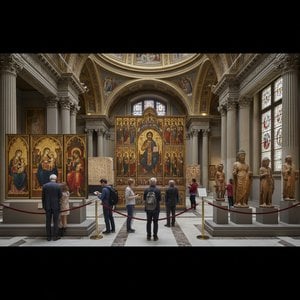
Sacred Narratives Embodied: A Comprehensive Exploration of Religious Iconography in Art History
Explore the rich history of religious iconography in art! Discover symbolism, movements & masterpieces from Byzantine to Renaissance periods. Expert insights for collectors and enthusiasts at ArtsDot.