


 Zobrazit v interiéru
 Odeslat
 Sdílet
 Podrobnosti
 Průvodce

 Stáhnout obrázek
 Podobné kousky
 Rentgenové snímky
 Slideshow
 Statistiky
Moje Matka
 Akryl na plátně
- Obrazová tvorba na stěnu
- Surrealist Expressionism
 1926
1926 50.0 x 55.0 cm
 Kulturgeschichtliche Museum Osnabrück
 Přečíst si více
Giclée / Umělecký tisk
Giclée nebo plátěný tisk muzeální kvality s rychlou výrobou a širokou nabídkou povrchových úprav. ( Objednat ručně malovanou reprodukci Přepnout na digitální verzi obrazu)




P118B Kč10

P118H Kč10

P118W Kč10

P438Z Kč10

P508JH Kč12

P508YH Kč12

P805H Kč10

P805Z Kč10

P919BZ Kč10

P919G Kč10

P919XJ Kč10

P959ZH Kč10

P968JZ Kč12

W106C Kč8

W218G Kč10

W218JH Kč8

W218Y Kč10

W307PJ Kč10

W316G Kč10

W316PJ Kč8

W316Y Kč10

W398PJ Kč8

W4111J Kč10

W500HY Kč15

W500JH Kč15

W692G Kč12

W849H Kč8

W940BG Kč15

W953PJ Kč8




Vyberte si z našich přednastavených velikostí, které odpovídají původním proporcím díla.

Zadejte šířku a výšku, které potřebujete pro váš rám nebo stěnu. Tisk lze pouze oříznout, nikdy však nelze zvětšit obraz nad jeho původní rozměr, proto při výběru jiného formátu dochází ke ztrátě části obrazu. Před samotným tiskem vám zašleme digitální náhled k schválení. Obraz zobrazený na této stránce nenabízí skutečný výřez — ten uvidíte pouze v náhledu.
Celosvětové doručení () do 2 týdnů namísto standardních 4/5 týdnů. (24 říjen)

Zdarma celosvětová expresní doprava

Vysoce kvalitní lněné plátno

Úplné pojištění přepravy

Záruka vrácení celního poplatku

Záruka věrného barevného shodu

100dení lhůta pro vrácení zboží (pouze při vadách výroby)

100% garance vrácení peněz

Sleva při více objednávkách
 Skleněná varianta je dostupná pouze u rozměrů menších než 110 cm

Moje Matka
Giclée / Umělecký tisk
Velikost reprodukce
-


Celková cena
Kč 1324
Felix Nussbaum’s “My Mother” – A Silent Testament to Displacement
The painting "My Mother," created by Felix Nussbaum in 1926, transcends mere representation; it embodies the profound emotional resonance of exile and the enduring power of familial connection. Nussbaum, a German-Jewish Surrealist artist grappling with the burgeoning anxieties of his time, meticulously crafted this piece as a response to the evolving artistic landscape—influenced heavily by masters like Giorgio de Chirico, Henri Rousseau, and Vincent van Gogh—marking a pivotal moment in his oeuvre. The artwork’s understated elegance belies its weighty subject matter: a portrait of his mother rendered in a realistic style with subtle attention to detail, capturing her gaze with remarkable sensitivity.- Style & Technique: Nussbaum's approach aligns closely with the New Objectivity movement, prioritizing precise observation and conveying emotion through carefully considered color palettes and textural nuances. The painting utilizes muted tones—primarily browns and creams—creating a contemplative atmosphere that mirrors the solemnity of the subject matter. Brushstrokes are deliberate and controlled, emphasizing form and capturing the contours of his mother’s face with remarkable accuracy.
- Historical Context: Created before the widespread dissemination of Nazi propaganda and persecution, “My Mother” speaks to a pre-war period marked by intellectual ferment and artistic experimentation. Nussbaum's formative years were shaped by exposure to Expressionist painting, particularly Franz Marc’s work, which instilled in him a commitment to conveying inner psychological states through visual imagery—a characteristic that finds its expression here.
- Symbolism & Emotion: The composition itself is imbued with symbolic significance. The woman's profile view directs the viewer's gaze inward, prompting reflection on themes of memory, identity, and maternal love. Her serene expression conveys a quiet dignity despite the unspoken anxieties surrounding her son’s impending departure from Germany—a poignant foreshadowing of the turbulent years that would soon engulf Europe.
- Material & Dimensions: Executed in oil paint on canvas measuring 50 x 55 cm, “My Mother” exemplifies Nussbaum's dedication to craftsmanship and artistic precision. The canvas’s texture contributes to the painting’s overall mood—a subtle reminder of the tangible world amidst the intangible realm of emotion.
Further Exploration & Artistic Influence
Nussbaum’s artistic journey continued after 1926, marked by displacement and persecution during World War II. His experiences profoundly impacted his creative output, culminating in powerful self-portraits that powerfully articulate the trauma of exile—a testament to his unwavering commitment to confronting difficult truths through art. The painting "My Mother" stands as a cornerstone of Nussbaum’s artistic legacy, demonstrating his ability to distill complex emotions into deceptively simple visual forms. It remains an enduring symbol of resilience and remembrance—a poignant reminder that even in moments of profound sorrow, beauty can persist.Where to Find Reproductions
High-quality reproductions of “My Mother” are available from reputable art dealers and online platforms specializing in fine art prints. Consider framing options that complement the painting’s muted palette and understated elegance—enhancing its visual impact and preserving its artistic integrity for generations to come.Otázky a odpovědi
Mohu si objednat olejnou reprodukci díla "Moje Matka"?
Ručně malovanou reprodukci díla „Moje Matka“ od Felix Nussbaum si můžete objednat přímo na jeho stránce Ručně malovaná reprodukce: ručně malovaná olejová reprodukce na lněném plátně, vyrábíme na zakázku.
Do jaké místnosti se doporučuje „Moje Matka“ od Felix Nussbaum?
Doporučeným prostorem pro „Moje Matka“ od Felix Nussbaum je Obývací pokoj. Toto doporučení lze samozřejmě přizpůsobit vašemu interiéru.
Jaká velikost reprodukce se doporučuje pro dílo „Moje Matka“ od Felix Nussbaum?
Pro dílo „Moje Matka“ od Felix Nussbaum se doporučuje reprodukce ve velikosti Velká. Velikost lze upravit při zachování původních proporcí.
Související díla


Biografie umělce
A Life Etched in Exile: The Haunting Vision of Felix Nussbaum
Felix Nussbaum’s story is a stark and profoundly moving testament to the power of art born from unimaginable suffering. Born in Osnabrück, Germany, in 1904, his life unfolded against the backdrop of rising nationalism and escalating persecution, culminating in the horrors of the Holocaust. He wasn't simply a victim *of* history; he was an artist who meticulously documented its impact on his soul, creating a body of work that stands as both a personal lament and a universal warning. Nussbaum’s paintings offer a rare, unflinching glimpse into the psychological landscape of displacement, fear, and ultimately, annihilation – a perspective often absent from broader historical narratives. His father, Philipp Nussbaum, a World War I veteran with an early passion for painting himself, recognized and nurtured his son's talent, providing encouragement that would prove vital in the darkening years to come. This initial support fostered a lifelong dedication to art, even as political realities increasingly constricted his path.Formative Years and Artistic Influences
Nussbaum’s artistic journey began with formal studies in Hamburg and Berlin in 1920, continuing for as long as circumstances allowed. His early work reveals a clear debt to the Post-Impressionist masters, particularly Vincent van Gogh and Henri Rousseau. The vibrant colors and expressive brushwork of these artists provided a foundation upon which Nussbaum would later build his unique style. However, he wasn’t content with mere imitation. He actively sought out new influences, drawn to the unsettling dreamscapes of Giorgio de Chirico and Carlo Carrà, pioneers of the *pittura metafisica* movement. The careful attention to color demonstrated by Carl Hofer's expressionist paintings also left a lasting impression on Nussbaum’s approach. These diverse inspirations coalesced into what would become known as his “New Objectivity” style – a blend of realism and surrealism, characterized by precise detail, unsettling compositions, and a pervasive sense of alienation. This period was marked by experimentation and growth, but the looming shadow of Nazi ideology soon threatened to extinguish his artistic promise.Exile, Isolation, and the Shadow of War
The ascent of the Nazis in 1933 irrevocably altered Nussbaum’s life. Studying on a scholarship in Rome at the Berlin Academy of the Arts, he witnessed firsthand the chilling pronouncements of Hitler's propaganda minister, outlining the tenets of Nazi art – glorification of heroism and the Aryan race. It became painfully clear that as a Jew, his place within the German artistic establishment was untenable. This realization forced him into exile, first to Paris and then to Belgium, where he married Felka Platek in 1937. The following decade was defined by fear and isolation. Despite finding some measure of safety, Nussbaum lived under constant threat, haunted by the knowledge of his parents’ perilous situation back in Germany. They had initially resisted his pleas to join them in exile, clinging to a misguided hope that things would improve, but ultimately returned home only to face the full force of Nazi persecution. This loss – the severing of his spiritual and financial support – deeply impacted Nussbaum's work, infusing it with an increasingly desperate and melancholic tone. He continued to paint prolifically during this period, finding solace and purpose in his art even as his world crumbled around him.A Testament to Suffering: Late Works and Lasting Legacy
The Nazi invasion of Belgium in 1940 marked a turning point. Nussbaum was arrested as a “hostile alien” and interned at the Saint-Cyprien camp in France, an experience that profoundly shaped his artistic vision. He managed to escape and went into hiding with Felka, relying on the generosity of friends for shelter and supplies. The final years of his life were spent in constant danger, producing some of his most powerful and haunting works. Self-Portrait with Jewish Identity Card (1943) is perhaps his most iconic painting – a stark and unflinching depiction of dehumanization, showing Nussbaum clutching the document that marked him as an outcast. Triumph of Death (1944), another masterpiece from this period, is filled with symbolic details—a crumpled music score playing “The Lambeth Walk,” a poignant reminder of what was lost—revealing Nussbaum’s meticulous attention to detail and his ability to imbue even mundane objects with profound meaning. Tragically, in 1944, Nussbaum's parents were murdered at Auschwitz. Shortly after, he and Felka were discovered by German forces, deported to Mechelen transit camp, and ultimately sent to Auschwitz themselves, where Felix was murdered upon arrival in August of that year. His brother and sister-in-law followed soon after, completing the annihilation of his family within a single year. Despite this unimaginable loss, Nussbaum’s art endures as a powerful testament to the resilience of the human spirit and a chilling reminder of the horrors of the Holocaust. The Felix Nussbaum Haus in Osnabrück stands as a fitting tribute to his life and work, ensuring that his voice continues to resonate for generations to come. His inclusion in documentaries like *Eyewitness* further solidifies his place among those artists who bore witness to history’s darkest chapters.
Felix Nussbaum
1904 - 1945 , Германия
Rychlé informace
- Artistic Movement Or Style: Surrealismus, Nová Objektivita
- Artists Who Influenced This Artist:
- Vincent van Gogh
- Henri Rousseau
- Giorgio de Chirico
- Carlo Carrà
- Carl Hofer
- Date Of Birth: 1904
- Date Of Death: 1944
- Full Name: Felix Nussbaum
- Nationality: Německý Židovský
- Notable Artworks:
- Sebeprůobraz s Židovským Identifikačním Kartou
- Přemožitelství smrti
- Plátno Felky Platek
- Maskarád
- Gypsy
- Place Of Birth: Osnabrück, Německo
Související články

The Visceral Cry of a Nation: Exploring Emotion & Distortion in German Expressionism
Explore the powerful world of German Expressionism with ArtsDot. Discover Kirchner, Nolde & Die Brücke's emotive masterpieces. Learn about this pivotal art movement and its lasting impact on modern art.

Top 10 děl německého expresionismu: Umění plné emocí pro váš domov | ArtsDot
Prozkoumejte 10 ikonických děl německého expresionismu od Muncha, Kirchnera a dalších. Objevte příběhy za obrazy plnými emocí a výrazných barev. Reprodukce umění nejvyšší kvality na ArtsDot.com – inspirace pro váš interiér!
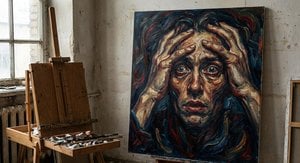
Figurative Expressionism: Emotional Intensity & Subjective Reality in 20th-Century Art
Explore the powerful world of Figurative Expressionism with ArtsDot. Discover key artists like Kirchner & Beckmann, understand its emotional depth, and learn how to collect this influential 20th-century art movement.

The Raw Emotion of Expressionism: A Deep Dive into its History, Characteristics & Enduring Influence
Explore the raw emotion of Expressionism with ArtsDot. Discover its history, key artists like Kirchner & Munch, and lasting influence on modern art. Expert insights for collectors & enthusiasts.
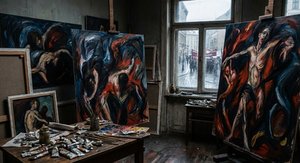
The Visceral Language of Emotion: Exploring Expressionism's Impact on 20th-Century Art
Explore the powerful world of Expressionism! Discover key artists like Kirchner & Nolde, understand its emotional impact, and learn about this revolutionary art movement's lasting legacy. Expert insights for collectors & enthusiasts.
