


 Zobrazit v interiéru
 Odeslat
 Sdílet
 Podrobnosti
 Průvodce

 Stáhnout obrázek
 Podobné kousky
 Rentgenové snímky
 Slideshow
 Statistiky
Self-Portrait


 Přečíst si více
Ručně malovaná olejová reprodukce
Ručně malované olejné plátno v libovolném rozměru i s rámem, vyrobené našimi umělci na zakázku. ( Přepnout na tiskové verze Přepnout na digitální verzi obrazu)




































Vyberte si z našich přednastavených velikostí, které odpovídají původním proporcím díla.

Type the width and the height you need, to fit your frame or your wall. This is hand-painted, so for a size with a different shape the artist can paint a bit more around the picture, or cut a bit — you choose. We send you a digital mockup to approve before the painting starts. The picture shown on this page does not show the real result — only the mockup does.
Po přijetí objednávky vám tým ArtsDot.com zašle e-mail s pokyny a poskytne náhledovou verzi.
Celosvětová doprava () za 3–4 týdny namísto standardních 5 týdnů. (14 říjen). Bez kompromisů v kvalitě.

Zdarma celosvětová expresní doprava

Vysoce kvalitní lněné plátno

Úplné pojištění přepravy

Záruka vrácení celního poplatku

Záruka věrného barevného shodu

100dení lhůta pro vrácení zboží (pouze při vadách výroby)

100% garance vrácení peněz

Sleva při více objednávkách
 Skleněná varianta je dostupná pouze u rozměrů menších než 110 cm

Self-Portrait
Technika provedení
Velikost reprodukce
-


Celková cena
Kč 5539
Otázky a odpovědi
Jakou paletu a jaká hlavní barva definují "Self-Portrait"?
Dílo „Self-Portrait“ od Eugène Lawrence Vail využívá paletu Dark, přičemž hlavní barvou je Rosy Brown (#ada48f).
Jak harmonické jsou barvy díla „Self-Portrait“ od Eugène Lawrence Vail?
Barvy díla „Self-Portrait“ od Eugène Lawrence Vail vykazují Softly Mixed Palette harmonii. Harmonie popisuje vzájemný vztah barev k sobě navzájem.
Jakým způsobem se dílo „Self-Portrait“ zapojuje do témat a stylu umělce Eugène Lawrence Vail?
„Self-Portrait“ patří k dílu Eugène Lawrence Vail v rámci směru Neo-Expressionism, jehož typická témata zahrnují impressionism, post-impressionism, american regionalism, americana", working class life, social commentary, process focused".
Související díla


Biografie umělce
The Dual Heritage of a Visionary
The life of Eugène Lawrence Vail was a beautiful tapestry woven from two distinct worlds, blending the rugged charm of his Breton roots with the disciplined intellect of his American upbringing. Born in 1857 in Saint-Servan, France, to a Breton mother and an American father, Vail occupied a unique cultural space that would later define the breadth of his artistic perspective. His early path, however, seemed destined for a much more pragmatic vocation than the canvas. At the insistent behest of his father, who sought to provide him with a "practical" foundation, Vail traveled to New Jersey to study engineering at the Stevens Institute of Technology. It was during these formative years in Hoboken that he demonstrated not only academic rigor but also a burgeoning spirit of community, becoming a founding father of the Gamma chapter of the Theta Xi fraternity.
Yet, the call of the aesthetic could not be silenced by the precision of mathematics or the structure of engineering. After a brief period serving as a cartographer during the scientific expeditions of the Wheeler Survey in the United States, Vail felt the irresistible pull toward the fine arts. Returning to France in 1879, he embarked on a transformative journey through the most prestigious ateliers of his era. He sought mentorship from masters such as William Merritt Chase and James Carroll Beckwith at the Art Students League, before immersing himself in the rigorous traditions of the Académie Julian and the École des Beaux-Arts de Paris. Under the guidance of luminaries like Alexandre Cabanel and Raphaël Collin, Vail began to bridge the gap between classical technique and the burgeoning revolutionary spirit of Impressionism.
A Symphony of Light and Breton Soul
As his mastery over form grew, so too did his ability to capture the ephemeral. Vail’s true artistic awakening occurred as he wandered through the art colonies of Pont Aven and Concarneau, where the salt air and the rhythmic life of the coastal villages became his primary muses. His work is celebrated for its profound ability to translate the fleeting effects of light and atmosphere onto canvas, a hallmark of the Impressionistic movement. He did not merely paint landscapes; he painted the very soul of Brittany. Through bold, textured brushstrokes and a vibrant palette, he rendered village interiors and rural vistas that felt imbued with warmth, authenticity, and a sense of timelessness.
His stylistic evolution was marked by an increasing devotion to color and light, a progression that perhaps deepened during his autumn years spent in the sun-drenched landscapes of Italy. This period saw his work become even more fluid and impressionistic, moving away from strict structuralism toward a more emotive, atmospheric expression. His compositions often whispered stories of Breton folklore and local mythology, grounding his ethereal light in the tangible traditions of the people he so dearly loved. Whether depicting a quiet corner of a village or the shimmering surface of a coastal tide, Vail’s work remains a testament to the power of observation and the emotional resonance of the natural world.
Legacy and Recognition
The significance of Eugène Lawrence Vail’s contribution to the art world was recognized by his peers during his lifetime through numerous prestigious accolades. His talent earned him a gold medal at the Exposition Universelle in 1889, an achievement that solidified his standing within the international art community. He became a regular presence in the most esteemed galleries of Paris, including the celebrated gallery of Georges Petit, where he exhibited alongside members of the Société nouvelle de peintres et de sculpteurs. His reach extended far beyond the borders of France, with exhibitions spanning Northern Europe and even the Louisiana Purchase Exposition in the United States.
Today, the enduring legacy of Vail is preserved in some of the world's most venerable institutions, ensuring that his luminous visions continue to inspire new generations of art lovers. His life’s work serves as a vital link between American academic training and French Impressionist innovation. Notable collections holding his masterpieces include:
- The Brooklyn Museum
- The National Gallery of Art
- The Smithsonian American Art Museum
- Musée d'Orsay
Through his ability to marry the precision of a cartographer with the soul of a poet, Eugène Lawrence Vail left behind a body of work that remains as vibrant and evocative today as the day the paint first dried upon it.

Eugène Lawrence Vail
1857 - 1934 , France
Rychlé informace
- Full Name: Eugène Lawrence Vail
- Nationality: French American
- Date Of Birth: 1857
- Date Of Death: 1934
- Place Of Birth: Saint-Servan-sur-Renne, France
- Notable Artworks:
- The Flags, Saint Mark's, Venice - Fête Day
- Ambulance Call
- Artistic Movement Or Style: Impressionism
- Artists Who Influenced This Artist:
- William Merritt Chase
- James Carroll Beckwith
- Artists Or Movements Influenced By This Artist: ['École des Beaux-Arts']
Související články

The Echo of Self: Reflectivity as a Core Theme in Art History & Contemporary Practice
Explore the rich history of self-representation in art, from Renaissance masters to modern innovators. Discover how artists use portraiture to reveal identity, emotion & the depths of the human psyche. Expert insights for collectors.
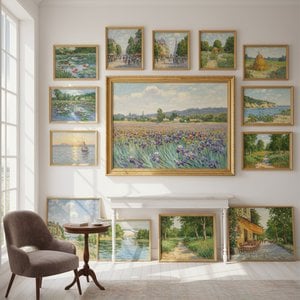
Top 10 impresionistických krajin: Mistrovská díla, která změnila umění | ArtsDot
Prozkoumejte 10 ikonických impresionistických krajin od Monet, Renoir a dalších. Objevte příběhy umělců, techniky a barevnost tohoto revolučního hnutí. Najděte perfektní obraz pro váš interiér na ArtsDot.com

Reflecting the Self: A History of Portraiture & Psychological Insight
Explore the fascinating history of self-portraiture from Renaissance masters like Dürer & Rembrandt to modern interpretations. Discover the psychological insights and artistic techniques behind these iconic works. Expert analysis for art enthusiasts.

The Inner Landscape: Exploring Themes of Introspection in Visual Art Across Movements & Eras
Explore the captivating world of introspective art! Discover how artists across eras – from Rembrandt to Kahlo – used self-portraiture to reveal their inner worlds and emotional depths. A journey through art history & psychology.

Paula Modersohn-Becker: Pioneering Expressionism & the Intimate Self
Explore the groundbreaking work of Paula Modersohn-Becker, a pioneer of Expressionism. Discover her intimate self-portraits & poignant depictions of motherhood – shaping early 20th-century art with emotional depth and innovation.