


 Zobrazit v interiéru
 Odeslat
 Sdílet
 Podrobnosti
 Průvodce

 Stáhnout obrázek
 Podobné kousky
 Rentgenové snímky
 Slideshow
 Statistiky
Polygon
 Geometric Abstraction
 1938
1938- Modern
 44.0 x 45.0 cm
 McNay Art Museum
 Přečíst si více
Umělecké dílo zobrazené na této stránce je chráněno autorským zákonem, což znamená, že nemůžeme legálně vytvářet ani prodávat jeho identickou reprodukci. Tato ochrana je vymáhána na základě mezinárodních dohod, jako například Berberská úmluva a národními zákony, včetně těch stanovených v Americký autorský zákon – Díl 17. Všechna práva vyhrazena.
Jako etickou a právní alternativu nabízíme vlastní, ručně malovaná umělecká díla inspirovaná originálem. Naši zdatní a profesionální umělci si pečlivě studují styl, náladu a uměleckou podstatu originálu, aby vytvořili nové, jedinečné dílo, které vyvolává stejný pocit – přičemž zůstává samostatným originálním tvůrčím dílem.
Tato metoda je plně v souladu s autorským právem, protože nezahrnuje kopírování ani duplikování chráněného díla. Jde o kreativní reinterpretaci – nový obraz, který je inspirován originálem, ale není s ním identický.
Ručně malovaná olejová reprodukce
Ručně malované olejné plátno v libovolném rozměru i s rámem, vyrobené našimi umělci na zakázku. ( Přepnout na tiskové verze Přepnout na digitální verzi obrazu)




































Vyberte si z našich přednastavených velikostí, které odpovídají původním proporcím díla.

Zadejte šířku a výšku, které potřebujete pro váš rám nebo stěnu. Protože se jedná o ruční malbu, při výběru jiného formátu může umělec kolem obrazu domalovat o něco více, nebo jej mírně oříznout — rozhodnete si vy. Před zahájením malby vám zašleme digitální náhled ke schválení. Obraz zobrazený na této stránce neodpovídá skutečnému výsledku — pouze digitální náhled jej zobrazuje.
Po přijetí objednávky vám tým ArtsDot.com zašle e-mail s pokyny a poskytne náhledovou verzi.
Celosvětová doprava () za 3–4 týdny namísto standardních 5 týdnů. (21 říjen). Bez kompromisů v kvalitě.

Zdarma celosvětová expresní doprava

Vysoce kvalitní lněné plátno

Úplné pojištění přepravy

Záruka vrácení celního poplatku

Záruka věrného barevného shodu

100dení lhůta pro vrácení zboží (pouze při vadách výroby)

100% garance vrácení peněz

Sleva při více objednávkách
 Skleněná varianta je dostupná pouze u rozměrů menších než 110 cm

Polygon
Technika provedení
Velikost reprodukce
-


Celková cena
Kč 5589
The Geometry of Silence: A Study in Abstract Form
In the quiet, contemplative realm of geometric abstraction, Charles Shaw’s Polygon stands as a profound testament to the power of simplified form. Created in 1938, this evocative piece invites the viewer into a world where the chaos of the external universe is distilled into a rhythmic arrangement of shapes. The composition is anchored by a deliberate interplay between triangles and circles, set against a textured backdrop that suggests the organic warmth of wood. While the original visual experience may be captured in monochrome, the structural integrity of the work remains unshakable, offering a masterclass in balance and spatial tension. Each element—from the primary geometric anchors to the smaller, scattered circular motifs—functions as a note in a silent, visual symphony, guiding the eye through a carefully choreographed dance of light and shadow.
The technique employed by Shaw reflects his deep-seated transition from the literary observations of the Jazz Age to the disciplined rigor of American abstraction. In Polygon, we see the influence of his training at the Art Students League, where the precision of line meets a painterly sensitivity to texture. The way the shapes interact with the underlying surface creates a sense of depth that transcends the two-dimensional plane; it is as if the geometry is not merely painted onto the canvas, but emerging from within the very grain of the medium itself. This fusion of mathematical precision and organic texture provides a tactile quality that makes the work feel both intellectually structured and emotionally grounded.
A Legacy of Modernist Vision
To understand Polygon is to understand the evolution of American Modernism. As a pioneer who moved from the social satires of New York’s literary circles toward the pure exploration of shape, Shaw brought a unique poetic sensibility to his abstract works. This piece, dating from the late 1930s, captures a moment in art history when artists were seeking a new language to express the complexities of a changing world—a language stripped of narrative clutter and focused on the essential truths of form and proportion. For the collector or the interior designer, this work offers more than mere decoration; it provides a sophisticated focal point that embodies the intellectual elegance of the pre-war era.
Integrating a high-quality reproduction of Polygon into a contemporary space allows for a seamless blend of historical depth and modern aesthetic. Its minimalist composition makes it an ideal companion for mid-century modern interiors, industrial lofts, or even highly curated minimalist galleries. The piece possesses a rare ability to command attention through its subtle complexity, acting as a meditative anchor in any room. Whether viewed as a study in mathematical harmony or as an emotional exploration of space, Shaw’s Polygon remains a timeless masterpiece, offering an enduring sense of calm and structural beauty to those who appreciate the profound impact of the abstract.
Otázky a odpovědi
Je „Polygon“ od Charles Shaw vhodným dárkem a pro koho by se hodilo?
„Polygon“ je doporučován jako dárek pro Corporate Gift, s ohledem na Geometry.
Jak výrazné jsou barvy díla „Polygon"]?
Dílo „Polygon“ od Charles Shaw je zachyceno s Subtle Color saturací a Balanced intenzitou.
Mohu si prohlédnout "Polygon" v celoplátno formátu slideshow?
K dispozici je sklízivka: stránka Diaporama díla „Polygon“ od Charles Shaw.
Související díla


Biografie umělce
The Architect of Abstraction: The Life and Vision of Charles Green Shaw
In the vibrant, pulse-quickening atmosphere of 1920s New York, where the jazz age roared through smoky cafés and theatrical halls, a unique creative spirit began to emerge. Charles Green Shaw was not merely an observer of this era but a chronicler of its wit and social complexity. Before he became a titan of American geometric abstraction, Shaw established himself as a sharp-witted writer and illustrator, lending his pen to prestigious publications such as The New Yorker, Vanity Fair, and Smart Set. His early literary career allowed him to navigate the intellectual currents of Manhattan, documenting the theatrical world with a precision that would later translate into his meticulous approach to canvas and form.
While his initial inclinations were rooted in the written word and the social satire of the urban landscape, a profound artistic metamorphosis was simmering beneath the surface. His formal training at the Art Students League, particularly under the guidance of Thomas Hart Benton in 1927, provided the structural discipline necessary to transition from prose to paint. This period of study, supplemented by private lessons with the legendary George Luks, instilled in Shaw a deep respect for observation and the fundamental mechanics of composition. Yet, it was his transformative journey through Europe between 1930 and 1933 that would forever alter his artistic trajectory.
A Journey Through Form and Geometry
Traveling through Italy, France, and Spain, Shaw encountered the burgeoning movements of Modernism that were reshaping the global art landscape. The influence of Piet Mondrian and Josef Albers became palpable in his evolving technique, as he moved away from representational narratives toward a profound exploration of geometric abstraction. He began to embrace a language of polygons and intersecting planes, creating small, meticulously crafted works that possessed an almost architectural weight. These canvases often seemed to echo the soaring, structural grandeur of the New York skyscrapers he knew so well, distilling the chaotic energy of the metropolis into a rhythmic, balanced arrangement of shapes.
This period marked the birth of his most celebrated stylistic contributions, where the boundaries between organic life and mathematical precision began to blur. His work often navigated the delicate space between Concretionism and a more biomorphic abstraction, a tension that gave his paintings a breathing, vital quality despite their rigid geometric foundations. Through his mastery of color and form, Shaw achieved a sense of "plasticity" within the polygon, making each shape feel as though it possessed its own internal volume and light.
Legacy and the Geometry of Silence
As his career progressed into the mid-20th century, Shaw’s work became a cornerstone of the American Abstract Artists movement. His ability to synthesize the structural rigor of the Bauhaus with a uniquely American sensibility ensured his place in the pantheon of modern masters. His paintings, characterized by their contemplative depth and rhythmic precision, found permanent homes in the world's most esteemed institutions, including:
- The Metropolitan Museum of Art
- The Museum of Modern Art (MoMA)
- The Smithsonian American Art Museum
- The Whitney Museum of American Art
- The Art Institute of Chicago
Beyond the technical brilliance of his 'Plastic Polygon' series, Shaw’s historical significance lies in his role as a bridge between the social realism of his contemporaries and the pure abstraction that would define much of post-war art. He transformed the visual noise of the modern age into a "geometry of silence," inviting viewers to find peace within the structured interplay of triangles, circles, and light. Today, Charles Green Shaw remains a pivotal figure whose work continues to resonate as a testament to the power of distilled form and the enduring beauty of the abstract intellect.

Charles Shaw
1892 - 1974
Rychlé informace
- Full Name: Charles Green Shaw
- Nationality: American
- Date Of Birth: 1892
- Date Of Death: 1974
- Notable Artworks:
- Plastic Polygon
- Space Curve
- Artistic Movement Or Style: Geometric Abstraction, Concretionism
- Artists Who Influenced This Artist: ['Thomas Hart Benton']
- Artists Or Movements Influenced By This Artist: ['Minimal Art']
Související články

Beyond Form & Color: Geometric Abstraction's Enduring Legacy in Art History
Explore the captivating world of geometric abstraction! Discover its origins, key artists like Malevich & Mondrian, and why this movement remains highly valued by art collectors today. Expert insights at ArtsDot.
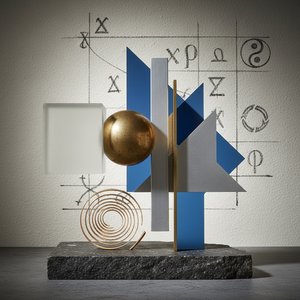
Beyond Form: Exploring the Philosophical Foundations of Geometric Abstraction
Explore the philosophical roots & artistic evolution of geometric abstraction with ArtsDot. Discover Mondrian, Malevich, De Stijl & more. Expert insights for collectors and art enthusiasts.

Wassily Kandinsky: Top 25 mistrovských děl abstrakce pro váš interiér | ArtsDot.com
Prozkoumejte 25 ikonických děl Wassily Kandinského – průkopníka abstraktního umění a expresionismu. Objevte příběhy za barevnými kompozicemi, Bauhaus styl a inspirujte se pro váš interiér s reprodukcemi nejvyšší kvality na ArtsDot.com.

Beyond Form & Color: Geometric Abstraction's Evolution in 20th/21st Century Art
Explore the evolution of geometric abstraction from Cubism to contemporary art. Discover key artists like Malevich & Mondrian, investment insights, and expert collecting advice at ArtsDot.

Geometrická abstrakce: 10 mistrovských děl, které změnily umění | ArtsDot.cz
Prozkoumejte 10 ikonických děl geometrické abstrakce od Mondriana, Maleviče a Kandinského. Objevte příběhy umělců, techniky a historii tohoto revolučního hnutí. Najděte inspiraci pro moderní dekorace a luxusní reprodukce obrazů na ArtsDot.com.