

 Náhled v interiéru
 Sdílet
 Sdílet
 Podrobnosti o díle
 Průvodce

 Stáhnout
 Podobné položky
 Rentgenové snímky
 Slideshow
 Q&A
Q&A Statistiky
Kostým bramborový

- 160.0 x 70.0 cm


 Zobrazit více
Umělecké dílo zobrazené na této stránce je chráněno autorským zákonem, což znamená, že nemůžeme legálně vytvářet ani prodávat jeho identickou reprodukci. Tato ochrana je vymáhána na základě mezinárodních dohod, jako například Berberská úmluva a národními zákony, včetně těch stanovených v Americký autorský zákon – Díl 17. Všechna práva vyhrazena.
Tato metoda je plně v souladu s autorským právem, protože nezahrnuje kopírování ani duplikování chráněného díla. Jde o kreativní reinterpretaci – nový obraz, který je inspirován originálem, ale není s ním identický.
Giclée / Umělecký tisk
Giclée nebo plátěný tisk muzeální kvality s rychlou výrobou a širokou nabídkou povrchových úprav. ( Koupit ručně malovaný obraz Přepnout na digitální obraz)




P118B Kč10

P118H Kč10

P118W Kč10

P438Z Kč10

P508JH Kč12

P508YH Kč12

P805H Kč10

P805Z Kč10

P919BZ Kč10

P919G Kč10

P919XJ Kč10

P959ZH Kč10

P968JZ Kč12

W106C Kč8

W218G Kč10

W218JH Kč8

W218Y Kč10

W307PJ Kč10

W316G Kč10

W316PJ Kč8

W316Y Kč10

W398PJ Kč8

W4111J Kč10

W500HY Kč15

W500JH Kč15

W692G Kč12

W849H Kč8

W940BG Kč15

W953PJ Kč8




Vyberte si z našich přednastavených velikostí, které odpovídají původním proporcím díla.

Zadejte šířku a výšku, které potřebujete pro váš rám nebo stěnu. Tisk lze pouze oříznout, nikdy však nelze zvětšit obraz nad jeho původní rozměr, proto při výběru jiného formátu dochází ke ztrátě části obrazu. Před samotným tiskem vám zašleme digitální náhled k schválení. Obraz zobrazený na této stránce nenabízí skutečný výřez — ten uvidíte pouze v náhledu.
Celosvětové doručení () do 2 týdnů namísto standardních 4/5 týdnů. (3 listopad)

Zdarma celosvětová expresní doprava

Vysoce kvalitní lněné plátno

Kompletní pojištění přepravy

Záruka vrácení celního poplatku

Záruka věrného barevného souladu

100dení lhůta pro vrácení zboží (pouze při vadách výroby)

100% záruka vrácení peněz

Sleva při více objednávkách
 Skleněná varianta je dostupná pouze u rozměrů menších než 110 cm

Kostým bramborový
Giclée / Umělecký tisk
Rozměry reprodukce
-


Celková cena za vybrané možnosti reprodukcí
Kč 1346
A Singular Vision: Exploring “The Potato Costume” by Agnès Varda
Agnès Varda’s “The Potato Costume,” created in 2003, stands as a cornerstone of French New Wave cinema and photography—a movement that championed realism and challenged conventional cinematic narratives. More than just an image captured on film; it represents a deliberate artistic statement rooted in Varda's profound engagement with the textures and rhythms of everyday life, particularly within rural landscapes – a recurring motif throughout her oeuvre. Presented as an installation at the Venice Biennale, this artwork invites viewers to contemplate not only its visual form but also the artist’s underlying philosophical concerns regarding memory, identity, and the transformative power of seemingly insignificant objects.Composition & Context: A Domestic Ritual
The photograph depicts Varda herself adorned in a striking potato costume crafted from resin – a bold choice reflecting her fascination with materiality and her desire to disrupt established artistic conventions. The setting is a sparsely furnished room bathed in natural light, mirroring the quiet contemplation inherent in Varda’s films. Carefully positioned elements—a navy coat and hat hanging on hooks, a framed portrait above them, two clocks—contribute to a meticulously constructed tableau that speaks volumes about personal history and artistic intention. This deliberate arrangement isn't merely decorative; it establishes a dialogue between the viewer and the artwork itself, prompting reflection on themes of time, place, and remembrance – concepts central to Varda’s exploration of human experience.Technique & Materiality: Documentary Precision Meets Artistic Gesture
Varda’s technique leans heavily toward documentary photography, prioritizing observation and capturing authentic moments. However, “The Potato Costume” isn't merely a snapshot; it’s an intentional staging designed to provoke contemplation. The resin costume—a material chosen for its durability and connection to the earth—represents more than just a visual element; it symbolizes resilience and transformation. The soft lighting enhances the textures of the walls and fabric, emphasizing the materiality of the space and highlighting Varda's meticulous attention to detail. Furthermore, the photograph’s perspective – one-point perspective – draws the eye inwards, mirroring the artist’s focus on internal experience and psychological nuance—a technique she consistently employed throughout her cinematic career.Symbolism & Emotional Resonance: Humor Amidst Reflection
The seemingly absurd form of the potato costume serves as a powerful vehicle for conveying Varda's artistic philosophy. It juxtaposes humor with introspection, prompting viewers to consider how we construct narratives about our lives and how objects can hold significant emotional weight. The inclusion of familiar domestic items—clothing, clocks, portraits—reinforces the idea that art finds its inspiration in the ordinary, elevating everyday experiences into moments of contemplation and artistic expression. Like many of Varda’s films, “The Potato Costume” invites us to consider the complexities of human existence with a gentle yet perceptive gaze – an invitation to engage with beauty found in unexpected places.A Legacy of Innovation: Varda's Influence on Cinema
Agnès Varda remains a pivotal figure in cinematic history, establishing herself as a champion of “cinema vérité”—a filmmaking style rooted in realism and observation—and profoundly impacting subsequent generations of filmmakers. Her unwavering dedication to capturing authentic human experience, combined with her masterful use of visual storytelling, cemented her place as one of the most influential artists of her time. "The Potato Costume" encapsulates this legacy, demonstrating Varda’s ability to transform simple subjects into evocative symbols of memory and artistic vision—a testament to her enduring contribution to the art form.Otázky a odpovědi
Patří „Kostým bramborový“ od Arlette Varda mezi vyhledávaná díla směru French New Wave?
Dílo "Kostým bramborový" je v katalogu hodnoceno jako Uznávaní mezi díly z období French New Wave.
Jakou barevnou harmonii představuje dílo „Kostým bramborový“ od Arlette Varda?
Barvy díla „Kostým bramborový“ od Arlette Varda vykazují Nesourodá paleta harmonii. Harmonie popisuje vzájemný vztah barev k sobě navzájem.
Do jakého prostoru se doporučuje umělecké dílo „Kostým bramborový“ od Arlette Varda?
Reprodukce díla „Kostým bramborový“ se skvěle hodí do Obývací pokoj.
Podobná díla


Biografie umělce
Agnès Varda: A Pioneer of the French New Wave
Arlette Varda, later known and celebrated as Agnès Varda, was a singular figure in 20th-century cinema – a Belgian-born French filmmaker, screenwriter, and photographer whose work fundamentally reshaped how movies were made and viewed. Born on May 30, 1928, in Ixelles, Brussels, to Christiane Pasquet and Eugène Jean Varda (a Greek refugee), her early life was steeped in the cultural crossroads of Europe. This heritage – a French mother with roots in Sète and a father tracing his lineage back through Ottoman Asia Minor – profoundly influenced her artistic sensibility, informing a deep appreciation for both urban and rural landscapes, and a keen awareness of social realities. Varda’s journey into art began not with film but with photography; she honed her skills as a still photographer, capturing the everyday lives of families and documenting events before dedicating herself to the moving image. This initial experience proved invaluable, instilling in her an observational eye and a respect for authentic representation – qualities that would become hallmarks of her distinctive cinematic style.Early Years & Photographic Beginnings
Varda’s formal artistic training laid the groundwork for her future success. She studied art history at the École du Louvre and photography at the École des Beaux-Arts, developing a sophisticated understanding of composition, form, and visual storytelling. Crucially, she also attended the Lycée et Collège Victor-Duruy, earning a bachelor’s degree in literature and psychology – disciplines that would later inform her nuanced portrayals of human relationships and psychological states. Her early career as a stage photographer for the Théâtre National Populaire provided an essential apprenticeship, exposing her to theatrical performance and demanding a collaborative approach to visual creation. It was during this period that she began to develop her own unique style, moving beyond mere documentation to explore questions of meaning and form through carefully constructed images. She described her initial foray into photography as “asking questions with composition, form, and meaning,” a philosophy that would permeate her entire cinematic oeuvre.The Birth of the New Wave & Unconventional Techniques
Varda’s emergence coincided with the burgeoning French New Wave movement in the 1950s, and she quickly became one of its most vital voices. Rejecting the polished aesthetics and studio-bound productions of traditional cinema, Varda embraced a radically different approach. She championed location shooting – often in unglamorous urban environments or remote rural areas – and utilized non-professional actors, bringing a sense of realism and immediacy to her films that was unprecedented at the time. This deliberate choice challenged established conventions and reflected a desire to capture authentic experiences rather than staged performances. Her early work, such as *La Pointe Courte* (1955), demonstrated this innovative spirit, employing a documentary-like style with handheld cameras and natural lighting, creating a sense of intimacy and immediacy rarely seen in French cinema. Her films frequently explored themes of female experience, social injustice, and the complexities of human relationships, often through a feminist lens.Notable Works & Lasting Influence
Varda’s filmography is remarkably diverse, encompassing both narrative features and experimental documentaries. *Cléo from 5 to 7* (1962), a poignant portrait of a pop singer grappling with mortality, remains one of her most celebrated works, lauded for its innovative use of time and space. *Vagabond* (1985) is a powerful meditation on homelessness and the search for identity, while *Kung Fu Hooligans* (1976) offered a playful critique of consumer culture. However, it’s her later films that perhaps best exemplify her evolving artistic vision. *Les Cent et une nuits de Simon Cinéma* (1995), a loving tribute to the art of cinema, and *Visages Villages* (2017), a visually stunning exploration of rural France, cemented her legacy as a filmmaker deeply committed to capturing the beauty and complexity of everyday life. Her work was consistently praised for its honesty, empathy, and refusal to adhere to conventional cinematic norms.A Legacy of Innovation & Social Commentary
Arlette Varda’s influence extends far beyond her individual films. She helped to establish a new aesthetic vocabulary for cinema, prioritizing observation, spontaneity, and the voices of ordinary people. Her commitment to social justice is evident in many of her works, particularly those that address issues of gender inequality, poverty, and displacement. Varda's later years saw her continue to push boundaries, experimenting with new technologies and approaches while retaining a deep respect for her artistic roots. She was awarded the Academy Award for Best Documentary Feature for *Visages Villages* in 2018, a testament to her enduring impact on cinema and art. Agnès Varda died on March 29, 2019, leaving behind a rich and influential body of work that continues to inspire filmmakers and audiences alike. Her legacy is not simply one of groundbreaking technique but also of a profound commitment to seeing the world with fresh eyes and telling stories that matter.
Arlette Varda
1928 - 2019 , Belgium
Rychlé informace o umělci
- Full Name: Arlette Varda (Agnès Varda)
- Nationality: Belgian-French
- Date Of Birth: 1928
- Date Of Death: 2019
- Place Of Birth: Ixelles, Belgium
- Notable Artworks:
- La Pointe Courte
- Cléo from 5 to 7
- Vagabond
- Artistic Movement Or Style: New Wave Cinema
- Artists Who Influenced This Artist:
- René Clair
- Jean Renoir
- Artists Or Movements Influenced By This Artist:
- François Truffaut
- Jean-Luc Godard
Související články
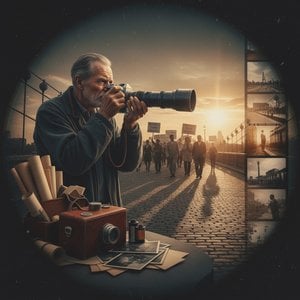
Witnessing History Through Lens & Light: Documentary Photography's Enduring Legacy
Explore the powerful history of documentary photography – from its origins to contemporary masters like Gordon Parks & W. Eugene Smith. Discover how this art form shapes our understanding of society and witness pivotal moments in time.

Charles Le Brun: Master of French Baroque Classicism & His Enduring Legacy
Explore the life & art of Charles Le Brun, master of French Baroque Classicism. Discover his royal commissions, influence on Versailles, and enduring legacy through detailed analysis & stunning artworks.

Simon Vouet: A Baroque Master's Journey from Italian Influence to French Classicism
Explore the life & art of Simon Vouet, a pivotal French Baroque painter who introduced Italian styles to France. Discover his masterpieces and lasting influence on 17th-century art.

Top 10 mistrovských děl dokumentární fotografie – inspirace pro váš interiér | ArtsDot.com
Prozkoumejte 10 ikonických děl dokumentární fotografie od Dorothey Lange po Henriho Cartier-Bressona. Objevte příběhy za slavnými snímky a inspirujte se pro váš interiér s uměleckými reprodukcemi nejvyšší kvality na ArtsDot.com.

Albert Kretschmer: Capturing 19th-Century Costume & the Seeds of Expressionism
Explore the exquisite costume studies of Albert Kretschmer (1825-1891). Discover his detailed illustrations, influence on art history & connection to early Expressionism. Learn about collecting this remarkable artist's work.
