


 Náhled v interiéru
 Sdílet
 Sdílet
 Podrobnosti o díle
 Průvodce

 Stáhnout
 Podobné položky
 Rentgenové snímky
 Slideshow
 Statistiky
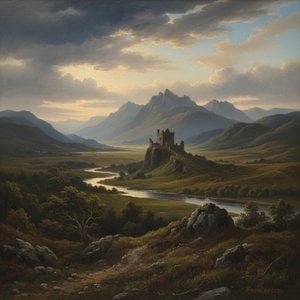
Aberdare
 Romanticism
 52.0 x 72.0 cm
 Zobrazit více
Ručně malovaná olejová reprodukce
Rukou malované olejné plátno v libovolném rozměru i s rámem, vyrobené našimi umělci na zakázku. ( Přepnout na tisk Přepnout na digitální obraz)




P118B Kč10

P118H Kč10

P118W Kč10

P438Z Kč10

P508JH Kč12

P508YH Kč12

P805H Kč10

P805Z Kč10

P919BZ Kč10

P919G Kč10

P919XJ Kč10

P959ZH Kč10

P968JZ Kč12

W106C Kč8

W218G Kč10

W218JH Kč8

W218Y Kč10

W307PJ Kč10

W316G Kč10

W316PJ Kč8

W316Y Kč10

W398PJ Kč8

W4111J Kč10

W500HY Kč15

W500JH Kč15

W692G Kč12

W849H Kč8

W940BG Kč15

W953PJ Kč8




Vyberte si z našich přednastavených velikostí, které odpovídají původním proporcím díla.

Zadejte šířku a výšku, které potřebujete pro váš rám nebo stěnu. Protože se jedná o ruční malbu, při výběru jiného formátu může umělec kolem obrazu domalovat o něco více, nebo jej mírně oříznout — rozhodnete si vy. Před zahájením malby vám zašleme digitální náhled ke schválení. Obraz zobrazený na této stránce neodpovídá skutečnému výsledku — pouze digitální náhled jej zobrazuje.
Po přijetí objednávky vám tým ArtsDot.com zašle e-mail s pokyny a poskytne náhledovou verzi.
Celosvětová doprava () za 3–4 týdny namísto standardních 5 týdnů. (28 říjen). Bez kompromisů v kvalitě.

Zdarma celosvětová expresní doprava

Vysoce kvalitní lněné plátno

Kompletní pojištění přepravy

Záruka vrácení celního poplatku

Záruka věrného barevného souladu

100dení lhůta pro vrácení zboží (pouze při vadách výroby)

100% záruka vrácení peněz

Sleva při více objednávkách
 Skleněná varianta je dostupná pouze u rozměrů menších než 110 cm

Aberdare
Technika reprodukce
Rozměry reprodukce
-


Celková cena za vybrané možnosti reprodukcí
Kč 6177
Podobná díla


Biografie umělce
The Weaver of Words and Wings
The story of Alexander Wilson is one of profound transformation, a journey that began in the rhythmic clatter of Scottish looms and culminated in the breathtaking discovery of the American wilderness. Born in Paisley, Scotland, in 1766, Wilson’s early years were steeped in the grit and toil of the Industrial Revolution. As a young man apprenticed to the weaving trade, his spirit was not merely occupied by the mechanical precision of cloth, but by the lyrical beauty of verse. Heavily influenced by the soulful dialect poetry of Robert Burns, Wilson found his voice in the struggles of his community. His early literary works were far from gentle; they were sharp, satirical, and often dangerous. The publication of poems that critiqued the harsh realities of mill life led to legal turbulence and even imprisonment, a period of upheaval that ultimately acted as the catalyst for his departure from his homeland.
In 1794, driven by a desire for new horizons and perhaps a reprieve from the shadows of controversy, Wilson emigrated to America. This migration marked the transition from a poet of social unrest to a pioneer of natural science. Settling in Pennsylvania, he initially sought stability through teaching, yet his true calling lay in the observation of the living world around him. It was during this period that the seeds of ornithology began to germinate. Influenced by the legendary naturalist William Bartram, Wilson moved beyond the written word of poetry into the visual and scientific documentation of North American fauna. He possessed a rare duality of talent: the meticulous eye of a scientist and the evocative soul of an artist, allowing him to perceive the intricate details of avian life with unprecedented clarity.
A Legacy in Ink and Feather
The true magnitude of Wilson’s contribution to science and art is crystallized in his monumental achievement, American Ornithology. This ambitious nine-volume work, published between 1808 and 1814, stands as a cornerstone of natural history. Unlike many of his predecessors, Wilson did not merely describe birds; he brought them to life through a combination of rigorous field observation and exquisite illustration. His travels across the vast American continent were driven by an insatiable hunger to document species that were previously unknown to European science. Through his painstaking efforts, he successfully described dozens of new species, providing a foundational text that would later inspire even more famous figures like John James Audubon.
The significance of Wilson's work extends far beyond the boundaries of biological classification. His illustrations served as a bridge between the raw, untamed frontier of the New World and the established scientific academies of Europe. In his plates, one finds a marriage of accuracy and aesthetic grace, where the texture of a feather or the curve of a beak is rendered with such devotion that the viewer feels the pulse of the living creature. His life’s work represents a pivotal moment in the development of American identity—a period when the continent began to define its own natural heritage through the eyes of those who lived within it.
Reflecting on his enduring impact, several key elements define his historical importance:
- The Father of American Ornithology: His systematic documentation established the groundwork for all subsequent avian studies in North America.
- Artistic and Scientific Synthesis: He pioneered a method of combining detailed biological description with high-quality visual art, setting a new standard for natural history publications.
- Cultural Bridge: His transition from a Scottish weaver to an American naturalist symbolizes the transformative power of the immigrant experience and the expansion of scientific frontiers.
- Literary Roots: The precision and passion found in his scientific work were deeply informed by his early training in the emotive and rhythmic traditions of Scottish poetry.

Alexander Wilson
1766 - 1813 , United Kingdom
Rychlé informace o umělci
- Full Name: Alexander Wilson
- Nationality: Scottish-American
- Date Of Birth: 1766
- Date Of Death: 1813
- Place Of Birth: Paisley, United Kingdom
- Notable Artworks:
- Cardiff from the North Road
- Penarth Head
- Aberdare
- Artistic Movement Or Style: Romanticism
- Artists Who Influenced This Artist:
- Robert Burns
- William Bartram
Související články

Ephemeral Visions: Exploring the Artistic Legacy & Contemporary Practice of Watercolor Painting
Explore the captivating world of watercolor painting! Discover its rich history, essential techniques, influential artists & collecting tips. A comprehensive guide for art enthusiasts from ArtsDot.

Ephemeral Visions: Exploring the History & Emotional Resonance of Watercolor Painting
Explore the captivating history of watercolor painting, from ancient techniques to modern masters like Kandinsky & Blake. Discover essential artists, collecting tips & the emotional power of this luminous medium. Expert insights for art enthusiasts.

10 legendárních akvarelů, které změnily svět umění | ArtsDot
Objevte 10 legendárních akvarelů od Turner, Monet a dalších mistrů! Ponořte se do historie umění a inspirujte se pro váš interiér. Kvalitní reprodukce na ArtsDot.com.

Romantická krajina v malbě: 10 mistrovských děl, které definovaly umělecký proud | ArtsDot
Prozkoumejte 10 ikonických děl romantické krajinářské malby! Objevte příběhy Caspara Davida Friedricha, Turnera a dalších mistrů. Reprodukce obrazů nejvyšší kvality pro váš interiér na ArtsDot.com.
Alexander Nasmyth: Picturing Scotland's Romantic Landscape – Innovation & Identity
Explore the life & art of Alexander Nasmyth, a pivotal figure in Scottish Romantic landscape painting. Discover his iconic works, including portraits of Robert Burns, and learn about his lasting influence on national identity. Fine art reproductions available.