

 Náhled v interiéru
 Sdílet
 Sdílet
 Podrobnosti o díle
 Průvodce

 Stáhnout
 Podobné položky
 Rentgenové snímky
 Slideshow
 Q&A
Q&A Statistiky
Shadows at Noon

- 25.0 x 35.0 cm


 Zobrazit více
Umělecké dílo zobrazené na této stránce je chráněno autorským zákonem, což znamená, že nemůžeme legálně vytvářet ani prodávat jeho identickou reprodukci. Tato ochrana je vymáhána na základě mezinárodních dohod, jako například Berberská úmluva a národními zákony, včetně těch stanovených v Americký autorský zákon – Díl 17. Všechna práva vyhrazena.
Tato metoda je plně v souladu s autorským právem, protože nezahrnuje kopírování ani duplikování chráněného díla. Jde o kreativní reinterpretaci – nový obraz, který je inspirován originálem, ale není s ním identický.
Giclée / Umělecký tisk
Giclée nebo plátěný tisk muzeální kvality s rychlou výrobou a širokou nabídkou povrchových úprav. ( Koupit ručně malovaný obraz Přepnout na digitální obraz)




































Vyberte si z našich přednastavených velikostí, které odpovídají původním proporcím díla.

Zadejte šířku a výšku, které potřebujete pro váš rám nebo stěnu. Tisk lze pouze oříznout, nikdy však nelze zvětšit obraz nad jeho původní rozměr, proto při výběru jiného formátu dochází ke ztrátě části obrazu. Před samotným tiskem vám zašleme digitální náhled k schválení. Obraz zobrazený na této stránce nenabízí skutečný výřez — ten uvidíte pouze v náhledu.
Celosvětové doručení () do 2 týdnů namísto standardních 4/5 týdnů. (2 listopad)

Zdarma celosvětová expresní doprava

Vysoce kvalitní lněné plátno

Kompletní pojištění přepravy

Záruka vrácení celního poplatku

Záruka věrného barevného souladu

100dení lhůta pro vrácení zboží (pouze při vadách výroby)

100% záruka vrácení peněz

Sleva při více objednávkách
 Skleněná varianta je dostupná pouze u rozměrů menších než 110 cm

Shadows at Noon
Giclée / Umělecký tisk
Rozměry reprodukce
-


Celková cena za vybrané možnosti reprodukcí
Kč 1347
Delving into the Artist's Vision
Alan Crane's Shadows at Noon is a testament to his exceptional skill and artistic vision. The lithograph measures 25 x 35 cm and showcases the artist's ability to play with light and shadow, creating an atmosphere that is both serene and thought-provoking. The scene depicts people sitting on the ground in front of a building, with animals scattered around them, evoking a sense of tranquility and harmony.Exploring the Artistic Style
The use of lithography as a medium adds a unique texture to the piece, giving it a sense of depth and dimensionality. Alan Crane's style is characterized by his attention to detail and his ability to capture the subtleties of light and shadow. This is evident in Shadows at Noon, where the interplay between light and dark creates a sense of tension and balance.- Lithography as a medium allows for a range of tonal values, from deep blacks to subtle grays.
- The composition of the piece is carefully balanced, with the figures and animals arranged in a harmonious manner.
- The use of light is a key element, with the shadows adding depth and dimensionality to the scene.
The allure of Shadows at Noon lies in its ability to evoke a sense of calm and contemplation, inviting the viewer to step into the serene world created by Alan Crane. As we gaze upon this masterpiece, we are reminded of the power of art to transport us to another time and place.
Otázky a odpovědi
V jakém roce a v rámci kterého uměleckého směru bylo dílo "Shadows at Noon" vytvořeno?
Dílo „Shadows at Noon“ vzniklo v roce 1952 jako reprezentativní dílo směru Contemporary Realism. Datum vzniku a příslušnost k danému směru pevně ukotvují toto umělecké dílo v dějinách umění.
Do které éry tvorby Alan Crane spadá dílo "Shadows at Noon"?
V rámci kariéry umělce Alan Crane spadá dílo „Shadows at Noon“ do období Mature Period. Tato fáze umožňuje jeho srovnání s dalšími díly tohoto umělce.
Odkud pocházejí návštěvníci díla „Shadows at Noon“ od Alan Crane?
Stránka Statistiky díla „Shadows at Noon“ od Alan Crane zobrazuje statistiky veřejných návštěv: měsíční návštěvnost tohoto díla, srovnání s nejvíce prohlíženými díly daného umělce a původ jeho návštěvníků.
Podobná díla


Biografie umělce
Alan Crane: Weaver of Light and Shadow in the American West
Alan Crane, a name perhaps less familiar than some of his contemporaries, nevertheless holds a significant place within the landscape of 20th-century American art. Born in Brooklyn, New York, in 1901, Crane’s artistic journey was one marked by a deep connection to the natural world, particularly the rugged beauty and evocative light of the American West, coupled with a masterful command of lithography – a medium he embraced with an almost obsessive dedication.
Crane's early life provided fertile ground for his future artistic pursuits. He studied at Pratt Institute, absorbing the principles of design and illustration while simultaneously developing a keen eye for detail and composition. Crucially, he found mentorship under Winold Weiss, a pioneering figure in American muralism, and later collaborated with Richard Boleslawsky, a renowned theatrical designer known for his innovative use of color and form. These early influences instilled in Crane a respect for craftsmanship, an appreciation for dramatic lighting, and a willingness to experiment with new techniques – qualities that would define his distinctive style.
Crane’s artistic trajectory took a pivotal turn when he relocated to New England, immersing himself in the landscapes of Massachusetts and Maine. It was during this period that he truly discovered his passion for lithography, recognizing its potential to capture the subtle nuances of light, shadow, and texture with unparalleled precision. He joined numerous art organizations – including the Salmagundi Club, Audubon Artists, and the Rockport Art Association – demonstrating a commitment to artistic community and continuous learning.
The Lithographic Vision
Crane’s work is overwhelmingly defined by his extraordinary skill as a lithographer. He wasn't simply reproducing images; he was translating them onto stone with an almost alchemical precision. His prints are characterized by a remarkable ability to render atmospheric effects – the shimmering heat of the desert sun, the cool dampness of a forest floor, the dramatic interplay of light and shadow in a mountain range. This mastery stemmed from countless hours spent meticulously working on his stones, refining each line and tone until it perfectly conveyed the essence of his subject.
His subjects often centered around the American West – vast landscapes, weathered buildings, and scenes of rural life. However, Crane’s approach wasn't merely descriptive; he imbued his prints with a sense of mood and emotion. He frequently employed a muted palette, dominated by earthy tones and subtle gradations of gray, creating an atmosphere of quiet contemplation and understated beauty. The influence of European landscape painters, particularly the Barbizon School, is evident in his use of light and color, but Crane’s work possesses a uniquely American sensibility – a reverence for the ruggedness and resilience of the West.
Mexico: A Source of Inspiration
A significant chapter in Crane's artistic development unfolded during his extended visits to Mexico. Beginning in 1948, he spent several years exploring the country’s diverse landscapes and cultures, producing a remarkable series of lithographs that captured the spirit of this vibrant nation. These prints – “Haunted Garden, Mexico,” “Indian Laurels, Chapala,” “Clouds and Spires, San Miguel Allende” – are considered among his finest works, showcasing his ability to translate the exotic beauty of Mexico onto stone with sensitivity and respect.
His time in Mexico wasn’t merely a period of observation; it was a transformative experience that profoundly shaped his artistic vision. He developed a deeper understanding of color theory, composition, and the interplay between light and shadow – skills he subsequently applied to his depictions of the American West. The Mexican landscapes provided him with new perspectives on form, texture, and atmosphere, enriching his already considerable talent.
Notable Works and Legacy
Beyond his lithographs, Crane produced a substantial body of work in other media, including illustrations for books and magazines. His book *Pepita Bonita* (1942), *Gloucester Joe* (1943) and *Nick and Nan in Yucatan* (1945) are prime examples of his versatility and artistic range. His Smithsonian artwork “Village in the Sun” is a testament to his meticulous attention to detail and ability to capture the essence of architectural design.
Alan Crane’s legacy extends beyond his individual works; he played a vital role in the development of American lithography, demonstrating its potential as a medium for capturing the subtleties of light, shadow, and texture. His prints continue to be admired for their beauty, craftsmanship, and evocative power – a testament to his artistic vision and unwavering dedication to his craft. He died in 1969, leaving behind a rich body of work that continues to inspire artists and art lovers alike.
Further Exploration
- Spires and Clouds (1949): A stunning lithograph showcasing architectural grandeur & dramatic skies. (/en/art/alan-crane-spires-and-clouds-AQTHB6-en/)
- Shadows at Noon (1952): Captivating 1952 lithograph showcasing serene rural scenes & masterful light/shadow play. (/en/art/alan-crane-shadows-at-noon-AQTHAJ-en/)
- Village in the Sun (1946): A serene 1946 masterpiece of architectural detail & light. (/en/art/alan-crane-village-in-the-sun-AQTHAU-en/)
- Alan Crane - Artists | The Old Print Shop: https://oldprintshop.com/artists/268

Alan Crane
1901 - 1969
Rychlé informace o umělci
- Artistic Movement Or Style: Lithography, Illustration
- Artists Or Movements Influenced By This Artist: ['Elizabeth Borton de Trevino']
- Artists Who Influenced This Artist:
- Winold Weiss
- Richard Boleslawski
- Date Of Birth: 1901
- Date Of Death: 1969
- Full Name: Alan Horton Crane
- Nationality: American
- Notable Artworks:
- Spires and Clouds
- Shadows at Noon
- Village in the Sun
- Place Of Birth: Brooklyn, New York
Související články

Josef Kriehuber: A Life Immersed in Viennese Topography – From Lithographic Precision to Romantic Observation
Explore the life and work of Josef Kriehuber, a master lithographer who captured 19th-century Vienna. Discover his portraits of nobility, landscapes, & artistic techniques. A guide for collectors & art enthusiasts.

The Eloquent Darkness: Exploring Shadow as Subject, Symbolism & Technique in Art History
Explore the captivating history of shadow in art! Discover chiaroscuro & tenebrism techniques used by masters like Caravaggio & Rembrandt. Uncover symbolism, emotional impact & enduring legacy with ArtsDot.

Walter Crane: Aestheticism, Socialism & the Evolution of British Decorative Art
Explore the life & work of Walter Crane, a pivotal figure in Aestheticism & the Arts & Crafts movement. Discover his socialist ideals, stunning illustrations, and lasting impact on British art & design.

Edward Hopper: Top 25 děl mistra samoty a amerického realismu | ArtsDot.com
Prozkoumejte top 25 děl Edwarda Hoppera, mistra amerického realismu. Objevte příběhy za ikonickými obrazy plnými samoty a atmosféry. Reprodukce obrazů v nejvyšší kvalitě na ArtsDot.com.
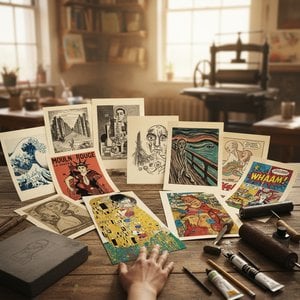
10 legendárních litografií, které změnily umění navždy | ArtsDot.cz
Objevte 10 legendárních litografií od Toulouse-Lautreca, Muncha a Picassa! Ponořte se do historie umění s ArtsDot.cz a zkrášlete svůj domov reprodukcemi nejvýznamnějších děl. Prozkoumejte celou kolekci online.