


Картината следва вашите избори: , .
Описание на колекционерския предмет
 Прочети повече
Биография на художника
Уилем де Кунинг (1904-1997) е ключова фигура в абстрактния експресионизъм. Известен с динамичните картини, серията "Жена" и влиянието си върху Ню Йоркската школа. Разгледайте творчеството му!
Ръчно изработена маслена репродукция
Ръчно рисувана маслена картина върху платно във вашия размер и рамка, изработена по поръчка от нашите художници. ( Превключване към принт Превключване към дигитално изображение)
Това произведение е защитено от авторско право
Изкуството, представено на тази страница, е защитено от законите за авторско право, което означава, че не можем законно да създаваме или продаваме идентични репродукции. Тази защита се прилага съгласно международни споразумения като Бернска конвенция и от националното законодателство, включително разпоредбите на Закон за авторското право на САЩ – Раздел 17.
Като уважителна и законна алтернатива, ние предлагаме изработени по поръчка, ръчно рисувани произведения на изкуството, вдъхновени от оригинала. Нашите умени и професионални артисти внимателно изучават стила, настроението и артистичната същност на оригиналното произведение, за да създадат ново, уникално творческо произведение, което предизвиква същото чувство – оставайки в същото време самостоятелно оригинално творение.
Този метод е напълно съвместим с законите за авторско право, тъй като не включва копиране или дублиране на защитеното произведение. Вместо това става въпрос за творческа реинтерпретация – нова картина, която е вдъхновена от оригинала, но не е идентична с него.
Още информация за тази картина
 Преглед в реален мащаб
 Изпрати
 Сподели
 Детайли
 Ръководство

 Изтегляне
 Подобни артикули
 Рентгенова снимка
 Слайдшоу
 Въпроси и отговори
 Статистика
Поръчайте вашата картина в четири лесни стъпки
Не бързайте. Можете да промените всеки от отговорите; цената в количката ви се актуализира според всеки избор.
1 Стъпка първа от четири
Какъв размер бихте искали?
Тези размери запазват пропорциите на оригиналната картина. Илюстрацията показва избрания от Вас размер върху стена, над двуметрова софа.
Или въведете свои собствени размери
Изберете от нашите предварително зададени размери, които съответстват на оригиналните пропорции на произведението.

Въведете необходимата ширина и височина, за да паснат на вашата рамка или стена. Тъй като това е ръчна работа, при избор на размер с различен формат художникът може да нарисува малко повече около картината или да отреже малко от периферията — вие избирате. Преди да започне рисуването, ще ви изпратим дигитален мок업 за одобрение. Картината, показана на тази страница, не е реалният резултат — само мок업ът го показва.
2 Стъпка две от четири
Как трябва да бъде подготвено: на руло, на платно или в рамка?
Цените по-долу са за избрания от Вас размер от първа стъпка.
Изберете страните на разпънатото платно
Изберете своята рамка

Бяло €1

Размити краища €1

Разширен €1

P118B €10

P118H €10

P118W €10

P438Z €10

P508JH €12

P508YH €12

P805H €10

P805Z €10

P919BZ €10

P919G €10

P919XJ €10

P959ZH €10

P968JZ €12

W106C €8

W218G €10

W218JH €8

W218Y €10

W307PJ €10

W316G €10

W316PJ €8

W316Y €10

W398PJ €8

W4111J €10

W500HY €15

W500JH €15

W692G €12

W849H €8

W940BG €15

W953PJ €8

H24-GOLD €30

H24-SILVER €30

H36-GOLD €45

H36-SILVER €45
С рамка
Рамка: . Общ размер с рамката: .
3 Стъпка три от четири
Желаете ли да промените нещо в картината?
Повечето хора отговарят с „не“. Тъй като всяка картина е изработена на ръка, нашият художник може също така да я адаптира специално за Вас.
След получаване на поръчката, екипът на ArtsDot.com ще изпрати имейл до клиента с инструкции и ще предостави примерен макет
4 Четвърта от четирите стъпки
Няколко варианта за завършен вид
Всички те са по избор. Вече избраните отговори не включват допълнителни разходи.
Кой го рисува?
Доставка по целия свят () в рамките на 3-4 седмици вместо стандартните 5 седмици. (3 Ноември). Без компромис с качеството.
Табелка, точно като в музея?
Детайли за гравираната бронзова плака
This elegant plaque features the artist's name and the title of the artwork, finely engraved for a timeless presentation.
It is made from bronze with a refined, elegant finish. The text is precisely laser-engraved for a sharp and permanent result. Measuring 9x2 cm, the plaque is compact yet easy to read. It's built to be durable and scratch-resistant, offering a professional, museum-quality look. Mounting is simple thanks to the included adhesive backing.
Детайли за прозрачната акрилна плака
The plaque includes essential engraved details such as the artist's name, the title of the artwork, the date it was created, the type of media used-like oil on canvas or watercolor-a brief description of the piece, and a QR code that links to the complete artwork information.
It is crafted from clear acrylic, offering a sleek, modern appearance. The text is UV-engraved in black to ensure strong visual contrast. With a size of 10x15 cm, it ensures optimal readability. It comes equipped with two metal hooks for secure wall mounting. The plaque is designed to be weather-resistant, making it suitable for various environments, and it includes interactive features that work seamlessly with smartphone scanning.
Детайли за черната акрилна плака
This elegant plaque includes engraved information such as the artist's name, the title of the artwork, the date it was created, the type of media used (like oil on canvas or watercolor), a short description of the artwork, and a QR code for quick access to more information.
The plaque itself is made from refined black acrylic with a premium finish. The text is laser-engraved in white for high contrast and readability. Its size is 10x15 cm, designed to be easy to read. It comes with two metal hooks for professional mounting. The design is sleek and fits any interior style. It is also weather-resistant and durable, with built-in digital integration for mobile compatibility.
Защитен лак?
Кога ви е необходимо?
✓ Проверете и поръчайте
Вашата картина, точно както я поръчахте

Untitled (23)
Вид репродукция
Размер на репродукцията
-

Елитен старши художник
Повече детайлност, изящество и допълнително време за производство
-

Рамка за репродукция
-
-
За произведения на изкуството или репродукции, чийто размер е над 105 см (приблизително 41 инча) във всяка страна, рамката ще бъде изпратена в разглобен вид като комплект за сглобяване. Този метод гарантира безопасна доставка и предотвратява повреди по време на транспортиране.
Изисква се професионално сглобяване – това не е продукт за самостоятелна изработка (DIY).
Комплектът трябва да бъде сглобен, а платното – опънато от опитен професионален багер, като се използва дървено лепило (не е включено в комплекта), клещи за опъване на платно и затягащи скоби, за да се поддържа правотата на подрамника, докато лепилото изсъхне. Неправилното сглобяване или неравномерното опъване на платното може трайно да повреди произведението и не е покрито от нашата гаранция.
 За произведения на изкуството или репродукции, чийто размер е над 105 см (приблизително 41 инча) във всяка страна, рамката ще бъде изпратена в разглобен вид като комплект за сглобяване. Този метод гарантира безопасна доставка и предотвратява повреди по време на транспортиране.
Всички елементи от масивна дървесина са включени, прецизно изрязани по размер.
Сглобява се с предоставените винтове, както и с лепило за дърво за ъгловите връзки, което не е включено в комплекта и трябва да бъде осигурено от вашия рамкар.
Изискват се професионални инструменти, които не са включени: щипка за опъване на платно (натягач) и скоби за фиксиране на подрамниците под прав ъгъл, докато лепилото изсъхне.
Важно:
За сглобяването на ъглите е необходимо лепило за дърво, рейките трябва да се фиксират с

Етикет с име
-
-

Защитен лак
Гланцов лак (подсилва цветовете и предпазва от светлина и влага)
-

Персонализирай моето произведение
Примери за възможности за персонализация: Заменете лицето със снимка на клиента; Добавете домашен любимец (например, заменете котка с куче); Включете скрито съобщение във фона; Променете пейзажа или елементите на фона.
-

Спешно
Доставка по целия свят () в рамките на 3-4 седмици вместо стандартните 5 седмици. (3 Ноември). Без компромис с качеството.
-
Експресна доставка
Доставка по целия свят () в рамките на 5 седмици. (10 Ноември).
Включена
Обща цена
€ 235
Опцията със стъкло е налична само за размери под 110 см
Включено във всяка поръчка
- Безплатна експресна доставка по целия свят
- Висококачествено ленено платно
- Пълно застраховане на доставката
- Гаранция за възстановяване на митнически такси
- Гаранция за пълно съответствие на цветовете
- Политика за връщане в рамките на 100 дни (само при дефекти)
- 100% Гаранция за връщане на сумата
- Оферта за отстъпка при поръчка на повече бройки


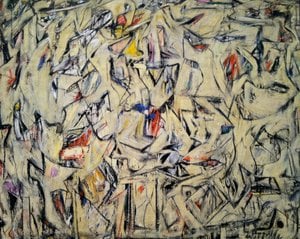
A Tempestuous Vision of Female Power: Examining Willem de Kooning’s Untitled (23)
The photograph captures a striking monochrome depiction of “Untitled (23),” a seminal work by Willem de Kooning, completed in 1968. This painting embodies the core tenets of Abstract Expressionism – raw emotion, dynamic gesture, and an uncompromising exploration of form—making it a cornerstone of American art history. The image itself is deliberately muted, prioritizing textural detail over vibrant color, mirroring the artist’s stylistic preference for conveying psychological intensity rather than literal representation.Subject Matter: Embodied Femininity
At its heart lies a woman figure dominating the canvas. De Kooning famously eschewed traditional portraiture conventions, opting instead to depict women as fragmented, turbulent entities—a deliberate rejection of idealized femininity prevalent in earlier artistic movements. The woman’s posture is defiant, her limbs outstretched and intertwined, conveying a palpable sense of struggle and vulnerability simultaneously. Her face remains largely obscured, furthering the ambiguity surrounding her identity and emphasizing the painting's focus on emotional experience rather than visual accuracy. Surrounding her are amorphous shapes—suggestive of drapery or perhaps even swirling currents—creating an atmosphere of dynamism and instability that reflects the artist’s inner turmoil.Style & Technique: Bold Brushwork and Energetic Gestures
De Kooning’s technique is instantly recognizable through its aggressive brushstrokes – thick, impasto layers of paint applied with forceful movements. This method wasn't merely about applying pigment; it was a deliberate attempt to capture the physicality of emotion itself. The artist utilized a palette knife extensively, pushing paint across the canvas with palpable energy, resulting in textured surfaces that pulsate with movement and contribute significantly to the painting’s expressive power. The absence of color reinforces this tactile quality, allowing viewers to engage directly with the artist's hand—a hallmark of Abstract Expressionism.Historical Context: The Crucible of Postwar Art
“Untitled (23)” emerged during a period of profound artistic upheaval following World War II. The postwar era witnessed a dramatic shift away from representational art towards abstraction, fueled by anxieties about societal change and a desire to express subjective experience in ways that bypassed rational thought. De Kooning’s work aligns perfectly with this movement's ethos, reacting against the perceived constraints of academic tradition and embracing spontaneity as a vehicle for conveying psychological depth. It stands alongside other iconic paintings from the period—such as Jackson Pollock’s drip canvases—establishing a visual vocabulary that continues to resonate today.Symbolism: Fragmentation and Resilience
The fragmented form of the woman figure speaks to broader themes of trauma and resilience. De Kooning's deliberate disruption of conventional compositional structures mirrors the psychological fragmentation experienced by individuals confronting existential crises. However, despite her apparent vulnerability, the woman’s posture exudes strength—a testament to the human spirit’s capacity for enduring hardship and maintaining inner integrity. The surrounding amorphous shapes symbolize the uncontrollable forces shaping our lives, while simultaneously suggesting an underlying order beneath the surface chaos.Emotional Impact: Confronting Darkness
Ultimately, “Untitled (23)” compels viewers to confront uncomfortable truths about the human condition. It eschews comforting illusions of beauty or harmony, presenting instead a visceral depiction of emotional struggle—a courageous assertion of feeling in defiance of artistic conventions. The painting’s enduring power lies in its ability to provoke contemplation and elicit responses rooted in personal experience—a testament to De Kooning's mastery of conveying profound psychological resonance through visual language.Въпроси и отговори
Каква цветова палитра е използвана в „Untitled (23)“ на Уилям де Кунинг?
Цветовете на "Untitled (23)" образуват Neutrals палитра. Тази класификация описва доминиращите цветни групи.
За коя стая се препоръчва „Untitled (23)“ на Уилям де Кунинг?
Репродукция на „Untitled (23)“ се вписва отлично в Living Room.
Къде се препоръчва да бъде изложена творбата "Untitled (23)" във формат Landscape?
Формат (Landscape) и препоръчителното пространство (Living Room) са двете посочени подробности за разположението на „Untitled (23)“ на Уилям де Кунинг.
Подобни произведения


Уилям де Кунинг
1904 - 1997, Нидерландия
Биография на художника
A Life Forged in Abstraction
Willem de Kooning, a name synonymous with the raw energy and emotional depth of Abstract Expressionism, was born in Rotterdam, Netherlands, in 1904. His early life was marked by a familial split – his parents divorced when he was young – which perhaps instilled within him a sense of restless searching that would permeate his artistic journey. Leaving formal schooling at twelve, de Kooning apprenticed with a commercial art firm, laying the groundwork for his technical skill while simultaneously fueling a desire to break free from conventional constraints. Evening classes at the Academie van Beeldende Kunsten en Technische Wetenschappen in Rotterdam provided further foundational training, but it was a yearning for something more – a bolder, more expressive language – that ultimately propelled him towards America in 1926. His arrival wasn’t straightforward; he famously stowed away on a ship, embodying the spirit of an outsider seeking new horizons. New York City became his adopted home, and its vibrant, often gritty energy profoundly shaped his evolving style. He navigated various jobs – house painter, carpenter – all while relentlessly pursuing his artistic vision, absorbing the city’s pulse into his work.From Urban Scenes to Abstract Fury
De Kooning's early paintings reflected his immediate surroundings: urban landscapes and portraits that captured the dynamism of New York life. These works, often rendered in muted tones and characterized by a sense of movement, offered a glimpse into the burgeoning metropolis. However, these were merely stepping stones towards a more profound exploration of form and emotion. A pivotal moment came with his connection to Arshile Gorky, whose influence proved transformative. Gorky encouraged de Kooning’s experimentation with abstraction, fostering a willingness to dismantle traditional representation in pursuit of something deeper. De Kooning began to loosen his brushwork, layering colors and creating gestural marks that conveyed feeling rather than precise detail. This shift marked the beginning of a radical departure from representational art, laying the foundation for his later, more abstract works. The 1930s saw de Kooning engage with social realism and mural projects through the Works Progress Administration (WPA), a period that honed his skills but also highlighted the limitations of purely representational art. He found himself drawn to the work of Stuart Davis and John Graham, artists who were pushing boundaries in their own right, exploring new ways to capture the energy and complexity of modern life. This confluence of influences gradually steered him away from literal depiction and toward an increasingly abstract vocabulary.The Woman Series: A Landmark Achievement
Following World War II, de Kooning emerged as a central figure in the burgeoning Abstract Expressionist movement. This period marked a turning point, culminating in his iconic “Woman” series (1950-1953). These paintings – including the monumental *Woman I*, *Woman II*, and *Woman III* – are not merely depictions of female figures; they are visceral explorations of femininity, sexuality, and the complexities of human emotion. Characterized by aggressive brushstrokes, fragmented forms, and a jarring juxtaposition of colors, the “Woman” series challenged conventional notions of beauty and representation. They were controversial, even shocking to some, but their power lay precisely in their refusal to conform. De Kooning wasn’t interested in creating idealized images; he sought to capture the raw, untamed essence of his subjects. The figures are often distorted and unsettling, reflecting a deeper psychological landscape. Alongside this series, works like *The Glazier* and *Excavation* further demonstrated his dynamic approach to painting, showcasing a masterful command of texture, color, and composition. He didn't shy away from chaos or ambiguity; instead, he embraced them as integral components of his artistic language.Evolving Landscapes and Enduring Legacy
In the 1960s and beyond, de Kooning’s style underwent another significant evolution. While abstraction remained central to his work, landscape elements began to play a more prominent role, often rendered with a brighter palette and a looser, more fluid brushstroke. He continued to experiment relentlessly throughout his life, exploring different techniques and materials, never content to rest on his laurels. He revisited themes from earlier periods, incorporating them into new compositions with a renewed sense of freedom and experimentation. His later works – such as *Easter Monday* (1976) – demonstrate a remarkable ability to reinvent himself while remaining true to his core artistic principles. De Kooning’s historical significance is undeniable. He helped establish New York City as a global center for art, challenging the dominance of European traditions and paving the way for future generations of artists. His work continues to inspire awe and provoke debate, reminding us of the power of abstraction to convey profound emotional truths. Willem de Kooning passed away in 1997, leaving behind a vast and influential body of work that stands as a testament to his unwavering commitment to artistic innovation and his enduring legacy as one of the most important American artists of the 20th century. His paintings are not just objects; they are windows into a complex and intensely felt inner world.Key Influences
De Kooning’s artistic development was shaped by a diverse range of influences, both formal and personal. Early exposure to commercial art instilled in him a strong sense of technical skill and an understanding of visual communication. The work of European masters like Picasso and Matisse provided inspiration for his early explorations of form and color. However, it was the encounter with Arshile Gorky that proved particularly transformative, encouraging him to abandon traditional representation and embrace abstraction. Furthermore, the vibrant energy of New York City itself – its diverse population, its rapid pace of change, its gritty underbelly – served as a constant source of stimulation and inspiration. The works of Stuart Davis and John Graham also played a significant role in shaping his artistic vision, demonstrating the possibilities of capturing modern life through abstraction.



Свързани статии

Топ 25 шедьоври на Василий Кандински: Абстрактно изкуство за вашия дом | ArtsDot.com
Разгледайте топ 25 шедьоври на Василий Кандински – пионер на абстрактното изкуство и експресионизма. Открийте историите зад цветните композиции, техниките и вдъхновението му. Купете висококачествени репродукции на картини Кандински за вашия дом на ArtsDot.com!

Топ 25 шедьоври на Франсиско Гоя: Изкуство, история и лукс за вашия дом
Разгледайте топ 25 шедьоври на Франсиско Гоя – от портрети до исторически картини. Открийте историите, техниките и емоциите зад неговите най-известни творби. Луксозни репродукции за вашия дом в ArtsDot.com!

Willem de Kooning: Abstraction, Gesture & the Evolution of Post-War American Painting
Explore the evolution of Willem de Kooning's iconic Abstract Expressionist paintings. Discover his signature style, key themes & investment potential with expert insights for discerning art collectors.