Преглед в реален мащаб
 Изпрати
 Сподели
 Детайли
 Ръководство

 Изтегляне
 Подобни артикули
 Рентгенова снимка
 Слайдшоу
 Въпроси и отговори
 Статистика
Easter Monday


 Прочети повече
Изкуството, представено на тази страница, е защитено от законите за авторско право, което означава, че не можем законно да създаваме или продаваме идентични репродукции. Тази защита се прилага съгласно международни споразумения като Бернска конвенция и от националното законодателство, включително разпоредбите на Закон за авторското право на САЩ – Раздел 17.
Този метод е напълно съвместим с законите за авторско право, тъй като не включва копиране или дублиране на защитеното произведение. Вместо това става въпрос за творческа реинтерпретация – нова картина, която е вдъхновена от оригинала, но не е идентична с него.
Жикле / Художествен принт
Giclée печат или принт върху платно с музейно качество, бързо производство и гъвкави опции за завършен вид. ( Купете ръчно рисувана картина Превключване към дигитално изображение)




P118B €10

P118H €10

P118W €10

P438Z €10

P508JH €12

P508YH €12

P805H €10

P805Z €10

P919BZ €10

P919G €10

P919XJ €10

P959ZH €10

P968JZ €12

W106C €8

W218G €10

W218JH €8

W218Y €10

W307PJ €10

W316G €10

W316PJ €8

W316Y €10

W398PJ €8

W4111J €10

W500HY €15

W500JH €15

W692G €12

W849H €8

W940BG €15

W953PJ €8




Изберете от нашите предварително зададени размери, които съответстват на оригиналните пропорции на произведението.

Въведете необходимата ширина и височина, за да паснат на вашата рамка или стена. Принтовете могат само да се изрязват, но никога не могат да бъдат по-големи от оригиналната картина, така че при размер с различен формат част от изображението ще бъде загубена. Преди да започнем печат, ще ви изпратим дигитален мок업 за одобрение. Изображението, показано на тази страница, не показва реалното изрязване — само мок업ът го показва.
Доставка по целия свят () в рамките на 2 седмици вместо стандартните 4/5 седмици. (11 Ноември)

Безплатна експресна доставка по целия свят

Висококачествено ленено платно

Пълно застраховане на доставката

Гаранция за възстановяване на митнически такси

Гаранция за пълно съответствие на цветовете

Политика за връщане в рамките на 100 дни (само при дефекти)

100% Гаранция за връщане на сумата

Оферта за отстъпка при поръчка на повече бройки
 Опцията със стъкло е налична само за размери под 110 см

Easter Monday
Жикле / Художествен принт
Размер на репродукцията
-


Обща цена
€ 56
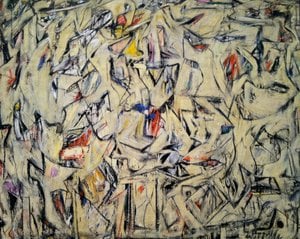
A Study in Contrast: De Kooning’s ‘Easter Monday’
Willem de Kooning's 1956 painting, “Easter Monday,” is not merely a depiction of faces; it’s an intensely psychological exploration rendered with the artist’s signature blend of aggression and vulnerability. The work immediately confronts the viewer with two figures, dramatically differentiated in scale and presence. One face, boldly positioned and adorned with a white hat, dominates the canvas, its gaze direct and seemingly challenging. This figure embodies a forceful assertion, a deliberate engagement that draws us into the painting’s turbulent emotional landscape. The other face, partially obscured and wearing spectacles, offers a quieter, more contemplative response – a subtle acknowledgement of the dominant presence. This juxtaposition immediately establishes a dynamic tension, reflecting perhaps the complexities of human interaction and the struggle for self-expression.
De Kooning's Abstract Expressionist Technique
Executed in oil on canvas, “Easter Monday” exemplifies de Kooning’s mastery of Abstract Expressionism. His technique is characterized by broad, gestural brushstrokes – thick impasto applied with a raw energy that suggests both control and unrestrained emotion. The painting isn't about precise representation; instead, it utilizes fragmented forms and distorted perspectives to convey feeling rather than objective reality. Notice the layering of paint, particularly around the prominent face, creating a sense of depth and texture that adds to the work’s visceral impact. De Kooning’s use of color is equally significant – muted tones punctuated by flashes of white and darker shades contribute to the painting's overall mood of unease and intensity. The horse heads, seemingly placed almost arbitrarily, further disrupt any potential for serene observation, adding another layer of unsettling symbolism.
Symbolism and Context within De Kooning’s Oeuvre
Created during a pivotal period in de Kooning’s career, “Easter Monday” reflects his ongoing exploration of the human figure – often rendered with a deliberately confrontational style. The painting's title, ‘Easter Monday,’ while seemingly straightforward, adds another layer of complexity. Easter, traditionally associated with rebirth and renewal, is juxtaposed with the raw emotional intensity of the scene. This tension speaks to de Kooning’s broader concerns about identity, alienation, and the anxieties of modern life. His work during this period was heavily influenced by Surrealism, particularly its exploration of the subconscious and dreamlike imagery, though he rejected the movement's emphasis on automatic drawing.
A Legacy of Emotional Intensity
“Easter Monday” stands as a powerful example of de Kooning’s ability to translate personal turmoil into universally resonant art. Its enduring appeal lies in its unflinching portrayal of human vulnerability and conflict. The bicycle, a symbol of freedom and movement, adds an element of irony to the composition, suggesting perhaps a futile attempt to escape internal struggles. This painting is more than just a reproduction; it’s a window into the mind of one of America's most influential artists – a testament to his relentless pursuit of emotional truth through bold, expressive brushwork. A hand-painted reproduction offers an unparalleled opportunity to experience the full force of de Kooning’s vision.
Въпроси и отговори
Коя е датата на създаване на „Easter Monday“ на Вилем Де Кунинг?
„Easter Monday“ на Вилем Де Кунинг е създадена през 1956.
Какво е мястото на „Easter Monday“ на Вилем Де Кунинг в историята на изкуството?
„Easter Monday“ на Вилем Де Кунинг принадлежи към художественото течение Abstract Expressionism, в рамките на епохата Modern. Заедно те определят мястото на произведението в историята на изкуството.
Колко силен е контрастът в „Easter Monday“ на Вилем Де Кунинг?
Светло-тъмният контраст на „Easter Monday“ е определен като Statement. Контрастът описва доколко силно се различават светлите и тъмните зони.
Подобни произведения


Свързани статии

Топ 10 шедьовъра на абстрактния експресионизъм – изкуство за вашия дом от ArtsDot.com
Разгледайте топ 10 шедьовъра на абстрактния експресионизъм – Полък, Ротко, де Кунинг и други. Открийте историите зад тези емблематични картини и преобразете дома си с изкуство от ArtsDot.com! Разгледайте пълната колекция онлайн.

Willem de Kooning: Abstraction, Gesture & the Evolution of Post-War American Painting
Explore the evolution of Willem de Kooning's iconic Abstract Expressionist paintings. Discover his signature style, key themes & investment potential with expert insights for discerning art collectors.

Топ 25 шедьоври на Василий Кандински: Абстрактно изкуство за вашия дом | ArtsDot.com
Разгледайте топ 25 шедьоври на Василий Кандински – пионер на абстрактното изкуство и експресионизма. Открийте историите зад цветните композиции, техниките и вдъхновението му. Купете висококачествени репродукции на картини Кандински за вашия дом на ArtsDot.com!

Топ 25 шедьоври на Франсиско Гоя: Изкуство, история и лукс за вашия дом
Разгледайте топ 25 шедьоври на Франсиско Гоя – от портрети до исторически картини. Открийте историите, техниките и емоциите зад неговите най-известни творби. Луксозни репродукции за вашия дом в ArtsDot.com!

Beyond Representation: Exploring the Emotional Landscape of Abstract Expressionism
Explore the profound emotional world of Abstract Expressionism with ArtsDot. Discover key artists like Pollock & Rothko, learn about collecting, and find museum-quality reproductions to inspire your space.