


 Представи си го
 Изпрати
 Сподели
 Детайли

 Изтегляне
 Подобни
 Рентгенова снимка
 Слайдшоу
 Статистика
Distant Thoughts

 Прочетете повече
Ръчно изработена маслена репродукция
Ръчно рисувана маслена картина върху платно във вашия размер и рамка, изработена по поръчка от нашите художници. ( Превключване към принт Превключване към дигитално изображение)




P118B $10

P118H $10

P118W $10

P438Z $10

P508JH $12

P508YH $12

P805H $10

P805Z $10

P919BZ $10

P919G $10

P919XJ $10

P959ZH $10

P968JZ $12

W106C $8

W218G $10

W218JH $8

W218Y $10

W307PJ $10

W316G $10

W316PJ $8

W316Y $10

W398PJ $8

W4111J $10

W500HY $15

W500JH $15

W692G $12

W849H $8

W940BG $15

W953PJ $8




Изберете от предварително зададените размери, които съответстват на оригиналните пропорции на произведението.

Можете да въведете свои собствени размери, за да пасне на конкретна рамка или пространство. Ако избраният от вас размер не съответства на пропорциите на оригиналното изображение, ние ще изрежем произведението или ще удължим картината с допълнителни ръчно рисувани елементи. Дигитален макет ще бъде изпратен за ваше одобрение преди започване на производството.
Моля, обърнете внимание, че прегледът на екрана не отразява действителното изрязване или разширяване. Само макетът ще покаже точно финалния състав.
Въпреки че са налични персонализирани размери, препоръчваме да изберете размер от предварително дефинирания списък, за да запазите оригиналните пропорции.
След поръчка, екипът на ArtsDot.com ще изпрати имейл на клиента за инструкции и ще предостави преглед на макет.
Доставка по целия свят () в рамките на 3/4 седмици вместо стандартните 5 седмици. (9 Септември). Без компромис с качеството.

Безплатна експресна доставка по целия свят

Висококачествено ленено платно

Пълно застраховане при доставка

Гаранция за възстановяване на митнически такси

Гаранция за цветова точност

Политика за връщане в рамките на 100 дни (само при дефекти)

100% Гаранция за връщане на парите

Предложение за отстъпка при поръчка на едро
 Стъклото е налично само в размери под 110 см

Distant Thoughts
Репродукционен метод
Размер на репродукцията
-


Обща цена
$ 263
Подобни произведения


Биография на художника
A Cornish Voice in Victorian Realism
Walter Langley (1852–1922) stands as a pivotal figure within the Newlyn School of plein air painters, representing a significant strand of British art history at the turn of the century. Born in Birmingham, his upbringing instilled in him a deep connection to the working class—a formative influence that would permeate his artistic vision and profoundly shape his depictions of Cornish life. His father was a journeyman tailor, providing Langley with an early understanding of craftsmanship and manual labor, values he carried throughout his life and subsequently translated into his paintings. This foundational respect for the dignity of toil became the heartbeat of his creative output.
At fifteen, Langley embarked on an apprenticeship with a lithographer, honing skills crucial for capturing detail and texture—skills that would prove invaluable in his later watercolor renderings. By twenty-one, he secured a scholarship to South Kensington Art School, where he studied designing alongside fellow artists like Frederic Leighton, absorbing the stylistic conventions of academic art while simultaneously nurturing his burgeoning artistic sensibilities. This dual exposure fostered a distinctive blend of technical proficiency and imaginative exploration, allowing him to bridge the gap between formal training and raw, observational truth.
The Soul of Newlyn
Langley’s artistic breakthrough arrived in 1881 when he was awarded £500 for a year's work by Mr. Thrupp, a Birmingham photographer—a generous patronage that enabled him to relocate his family to Newlyn, Cornwall. This move cemented Langley’s commitment to documenting the daily lives of Cornish fishermen and their families, establishing him as one of the earliest artists to settle in this burgeoning artistic community. His decision to prioritize painting over photography reflects a dedication to capturing the essence of human experience through visual art rather than photographic reproduction.
As a consummate watercolorist, Langley possessed an unsurpassed ability to capture the human form and the subtle nuances of light within the medium. His work often moved beyond mere landscape, focusing instead on the intimate domesticity and the quiet struggles of the coastal inhabitants. Whether through the muted tones of In The Firelight or the poignant narratives found in The Letter, his brushwork conveyed a profound empathy for his subjects. He was not merely an observer of the Newlyn coast; he was its chronicler, weaving the social fabric of the fishing village into every wash of color.
Social Realism and Lasting Legacy
Politically aligned with socialist ideals—particularly supporting Charles Bradlaugh, a radical politician—Langley’s work consistently championed social realism. He skillfully portrayed the hardships and the quiet resilience of the working class, making his art a vehicle for social observation. This commitment to truth earned him international recognition; notably, the great writer Leo Tolstoy cited Langley's work as an exemplary instance of good, meaningful art. His paintings did not seek to embellish poverty but to honor the humanity within it.
The historical significance of Walter Langley lies in his role as a founder of the artistic community at Newlyn and his ability to elevate the mundane struggles of rural life to the level of high art. His legacy is defined by several key contributions:
- Pioneering Social Realism: He brought a political and empathetic depth to the Newlyn School, moving beyond pure aesthetics to address the human condition.
- Mastery of Watercolor: He is remembered as one of the finest watercolorists the United Kingdom has ever produced, particularly for his ability to render texture and emotion in a delicate medium.
- Cultural Documentation: His oeuvre serves as a vital visual record of the Cornish fishing industry and the social structures of late Victorian and Edwardian Britain.
Through his dedication to en plein air painting and his unwavering focus on the dignity of labor, Walter Langley ensured that the voices of the Cornish fisherfolk would resonate far beyond the shores of Newlyn, leaving an indelible mark on the landscape of British Realism.

Walter Langley
1852 - 1922 , United Kingdom
Бързи факти
- Artistic Movement Or Style: Newlyn School, Plein Air Painting
- Artists Or Movements Influenced By This Artist: ['Tolstoy']
- Artists Who Influenced This Artist: ['Charles Kingsley']
- Date Of Birth: 1852 Birmingham UK
- Date Of Death: 1922
- Full Name: Walter Langley
- Nationality: British
- Notable Artworks:
- Men Must Work and Women Must Weep
- Between the Tides
- Place Of Birth: Birmingham UK
Всички статии

Джеймс Абът Макнил Уистлър: 25 шедьовъра за ценителите на изкуството и декора
Открийте 25 шедьовъра на Джеймс Абът Макнил Уистлър! Разгледайте историите зад неговите емблематични ноктюрни, портрети и импресионистични картини. Вдъхновете се за вашия интериор с висококачествени репродукции на ArtsDot.com
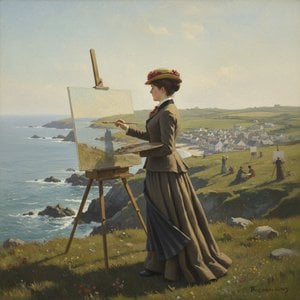
Elizabeth Adela Forbes: A Pioneering Impressionist of the Newlyn School
Explore the life & art of Elizabeth Adela Forbes, a pioneering Impressionist of the Newlyn School. Discover her captivating paintings, unique style, and lasting legacy with ArtsDot.
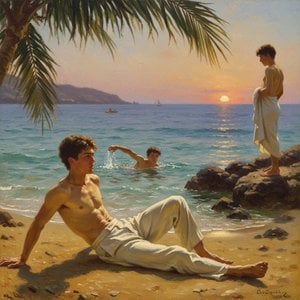
Henry Scott Tuke: Sunlit Masculinity & the Pastoral Ideal in Victorian Painting
Explore the captivating world of Henry Scott Tuke's paintings – a master of British Impressionism renowned for his intimate depictions of youth and sunlit maritime scenes. Discover his legacy & aesthetic influence.
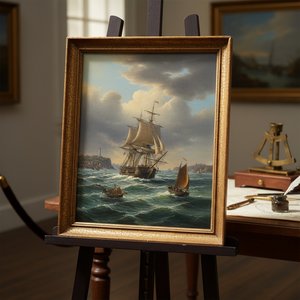
Samuel Walters: Capturing Victorian Maritime Life with Precision & Artistry
Explore the exquisite maritime paintings of Samuel Walters (1811-1882). Discover his mastery of detail, historical scenes & influence on Victorian art. Learn about collecting his works and find high-quality reproductions at ArtsDot.

Walter Greaves: A Study in Victorian Realism & the Social Landscape of British Art
Explore the life & work of Walter Greaves, a key Victorian realist painter influenced by Whistler. Discover his London streetscapes, portraits, and enduring legacy. Learn about art appraisal & reproduction options at ArtsDot.