Изпрати
 Сподели
 Детайли
 Ръководство

 Изтегляне
 Подобни артикули
 Слайдшоу
 Въпроси и отговори
 Статистика
Soeloe


 Прочети повече
Изкуството, представено на тази страница, е защитено от законите за авторско право, което означава, че не можем законно да създаваме или продаваме идентични репродукции. Тази защита се прилага съгласно международни споразумения като Бернска конвенция и от националното законодателство, включително разпоредбите на Закон за авторското право на САЩ – Раздел 17.
Този метод е напълно съвместим с законите за авторско право, тъй като не включва копиране или дублиране на защитеното произведение. Вместо това става въпрос за творческа реинтерпретация – нова картина, която е вдъхновена от оригинала, но не е идентична с него.
Жикле / Художествен принт
Giclée печат или принт върху платно с музейно качество, бързо производство и гъвкави опции за завършен вид. ( Купете ръчно рисувана картина Превключване към дигитално изображение)




































Изберете от нашите предварително зададени размери, които съответстват на оригиналните пропорции на произведението.

Въведете необходимата ширина и височина, за да паснат на вашата рамка или стена. Принтовете могат само да се изрязват, но никога не могат да бъдат по-големи от оригиналната картина, така че при размер с различен формат част от изображението ще бъде загубена. Преди да започнем печат, ще ви изпратим дигитален мок업 за одобрение. Изображението, показано на тази страница, не показва реалното изрязване — само мок업ът го показва.
Доставка по целия свят () в рамките на 2 седмици вместо стандартните 4/5 седмици. (12 Ноември)

Безплатна експресна доставка по целия свят

Висококачествено ленено платно

Пълно застраховане на доставката

Гаранция за възстановяване на митнически такси

Гаранция за пълно съответствие на цветовете

Политика за връщане в рамките на 100 дни (само при дефекти)

100% Гаранция за връщане на сумата

Оферта за отстъпка при поръчка на повече бройки
 Опцията със стъкло е налична само за размери под 110 см

Soeloe
Жикле / Художествен принт
Размер на репродукцията
-


Обща цена
€ 56
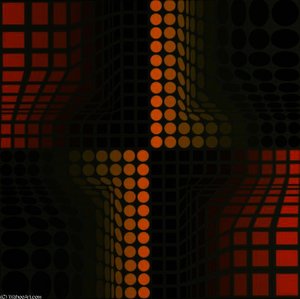
Victor Vasarely’s “Soeloe”: A Dive into Geometric Perception
The artwork "Soeloe," presented here as a meticulously crafted hand-painted reproduction, offers an immersive journey into the visionary world of Victor Vasarely – a pivotal figure in the development of Op Art and a key innovator within the broader movement towards geometric abstraction. Born Károly Vaszary in 1906 in Pécs, Croatia (then part of Austria-Hungary), Vasarely’s artistic trajectory was initially far removed from the canvas; his early studies in medicine hinted at a different path before he decisively embraced the power of visual expression in 1927. This decision, fueled by an intense fascination with perception and form, led him to enroll in the Podolini-Volkmann Academy and ultimately into the influential workshop of Sándor Bortnyik – Műhely – where the principles of functional design and the Bauhaus movement profoundly shaped his artistic sensibilities. “Soeloe” embodies this legacy perfectly, showcasing a deliberate orchestration of hexagonal shapes that challenges our very understanding of space and visual experience.
- A Symphony of Color: The artwork’s dominant palette – vibrant blues ranging from deep indigo to luminous cyan, punctuated by intense reds and stark whites – immediately captivates the viewer. Vasarely masterfully employs gradient effects within each shape, subtly shifting hues and saturations that create a dynamic and almost kinetic visual experience.
- Geometric Precision: The core of “Soeloe” lies in its meticulously constructed composition of overlapping hexagonal shapes. These forms, defined by sharp edges, generate a grid-like structure that simultaneously appears ordered and deliberately disrupted, reflecting Vasarely’s fascination with the interplay between order and chaos.
- Digital Roots: Despite its seemingly analog execution through hand-painting, the artwork's genesis can be traced back to the digital techniques employed by Vasarely himself – vector graphics software used to create these complex geometric patterns. This connection highlights the evolution of artistic expression from traditional methods to modern digital tools.
The Rise of Op Art and Kinetic Perception
“Soeloe” is inextricably linked to the broader context of Op Art, a movement that emerged in the 1960s – though Vasarely’s work predates it significantly – aiming to stimulate optical illusions through carefully arranged patterns. Vasarely's exploration extended beyond mere visual trickery; he sought to understand and manipulate how our eyes perceive depth, movement, and spatial relationships. His work isn't simply about creating beautiful shapes; it’s an investigation into the fundamental principles of human perception. The tightly packed arrangement of hexagons in “Soeloe” deliberately exploits this perceptual phenomenon, inviting the viewer to actively engage with the artwork and experience its effects firsthand.
- Bauhaus Influence: Vasarely's training within Bortnyik’s workshop instilled a deep appreciation for functional design and geometric abstraction – hallmarks of the Bauhaus movement. This influence is evident in “Soeloe’s” emphasis on clarity, precision, and the reduction of form to its essential elements.
- Kinetic Art Precursor: Vasarely's work anticipated the rise of kinetic art, which explores the relationship between perception and movement. While "Soeloe" is static, it evokes a sense of dynamic energy through its complex arrangement and manipulation of visual space.
Symbolism and Emotional Impact
Interestingly, “Soeloe” deliberately avoids overt symbolism or figurative representation. Vasarely was primarily interested in exploring the formal qualities of color and shape for their own sake – a pure aesthetic pursuit. However, this lack of explicit meaning doesn’t diminish the artwork's emotional impact. The controlled chaos of the composition generates a sense of visual tension and excitement, inviting contemplation and stimulating the viewer’s imagination. The sheer density of the forms creates an immersive experience, drawing the eye across the surface and fostering a feeling of dynamic movement.
Note: This hand-painted reproduction captures the essence of Vasarely's groundbreaking work, offering a unique opportunity to own a piece of art history that continues to challenge and inspire.Въпроси и отговори
Кой е художникът зад "Soeloe"?
Художникът зад "Soeloe" е Виктор Вазарели. Произведението е каталогизирано под името на Виктор Вазарели.
Свободен ли е от авторско право "Soeloe"?
„Soeloe“ на Виктор Вазарели е в все още е защитено с авторско право. Този статус определя как може да бъде репродуцирано изображението на произведението.
Какъв е форматът на "Soeloe"?
„Soeloe“ на Виктор Вазарели е Square композиция. Пропорциите си заслужават да бъдат проверени преди избор на размер на принта.
Подобни произведения




Свързани статии

Топ 10 шедьовъра в нюансите на синьото: Изкуство за вашия дом от ArtsDot.com
Разгледайте топ 10 шедьовъра в нюансите на синьото – от Моне до Ван Гог! Открийте историите зад картините, техниките и значението им. Купете висококачествени репродукции на ArtsDot.com и превърнете дома си в галерия.

Топ 10 шедьовъра на геометричната абстракция за Вашия дом | ArtsDot.com
Разгледайте топ 10 шедьовъра на геометричната абстракция – Кандински, Мондриан и други! Открийте историите зад тези емблематични картини и добавете елегантност към дома си с репродукции от ArtsDot.com. Разгледайте пълната колекция онлайн!

Топ 10 шедьовъра на абстрактния експресионизъм – изкуство за вашия дом от ArtsDot.com
Разгледайте топ 10 шедьовъра на абстрактния експресионизъм – Полък, Ротко, де Кунинг и други. Открийте историите зад тези емблематични картини и преобразете дома си с изкуство от ArtsDot.com! Разгледайте пълната колекция онлайн.

Serene Blue Backgrounds: Discover Soulful Art to Transform Your Space with Timeless Elegance
Transform your home with soulful blue art. From serene Monet impressions to modern textured sculptures, discover curated masterpieces designed to inspire calm. Explore expert art consultations and bespoke hand-painted reproductions to create your personal sanctuary.

Топ 25 шедьоври на Василий Кандински: Абстрактно изкуство за вашия дом | ArtsDot.com
Разгледайте топ 25 шедьоври на Василий Кандински – пионер на абстрактното изкуство и експресионизма. Открийте историите зад цветните композиции, техниките и вдъхновението му. Купете висококачествени репродукции на картини Кандински за вашия дом на ArtsDot.com!