


 Преглед в реален мащаб
 Сподели
 Сподели
 Подробности
 Ръководство

 Изтегляне
 Подобни артикули
 Рентгенова снимка
 Слайдшоу
 Статистика
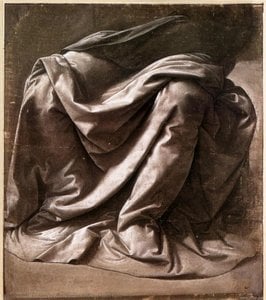
Study For 'a Bientot'
 Разгърни целия текст
Ръчно изработена маслена репродукция
Ръчно рисувана маслена картина върху платно във вашия размер и рамка, изработена по поръчка от нашите художници. ( Избор на принт Превключване към дигитално изображение)




































Изберете от нашите предварително зададени размери, които съответстват на оригиналните пропорции на произведението.

Можете да въведете свои собствени размери, за да паснат на конкретна рамка или пространство. Ако избраният от вас размер не съответства на пропорциите на оригиналното изображение, ние ще изрежем произведението или ще разширим картината с допълнителни ръчно рисувани елементи. Дигитален макет ще бъде изпратен за ваше одобрение преди започване на производството.
Моля, обърнете внимание, че предпрогледа на екрана не отразява действителното изрязване или разширяване. Само макетът ще покаже точно финалната композиция.
Въпреки че са налични персонализирани размери, препоръчваме да изберете размер от предварително дефинирания списък, за да запазите оригиналните пропорции.
След получаване на поръчка, екипът на ArtsDot.com ще изпрати имейл до клиента с инструкции и ще предостави примерен макет за преглед.
Доставка по целия свят () в рамките на 3-4 седмици вместо стандартните 5 седмици. (21 Септември). Без компромис с качеството.

Безплатна експресна доставка по целия свят

Висококачествено ленено платно

Пълно застраховане на доставката

Гаранция за възстановяване на митнически такси

Гаранция за пълно съответствие на цветовете

Политика за връщане в рамките на 100 дни (само при дефекти)

100% Гаранция за връщане на сумата

Отстъпка при поръчка на повече произведения
 Опцията със стъкло е налична само за размери под 110 см

Study For 'a Bientot'
Техника на репродукция
Размер на репродукцията
-


Крайна цена
$ 263
Свързани произведения



Биография на художника
Valentine Cameron Prinsep: A Pre-Raphaelite Visionary of Orientalism and Victorian Life
Valentine Cameron Prinsep, a name perhaps less familiar than his contemporaries within the Pre-Raphaelite Brotherhood, nevertheless possessed a distinctive artistic voice—one deeply rooted in both classical influences and a fascination with the exotic allure of the East. Born in 1838 in Calcutta, India, to a British colonial family, Prinsep’s lineage intertwined him with a rich tapestry of cultural connections, ultimately shaping his artistic trajectory and providing a unique perspective on Victorian society. His early life was marked by exposure to both Western and Eastern traditions, an experience that would profoundly inform his later work. His mother, Sarah Monckton Pattle, was a sister of the pioneering photographer Julia Margaret Cameron—a connection that introduced him to the world of artistic experimentation and innovation. Furthermore, she was related to Maria Jackson, grandmother to Virginia Woolf and Vanessa Bell – a lineage steeped in literary and intellectual heritage. The family’s return to England in 1843 and their settlement at Little Holland House, a vibrant salon presided over by his father Henry Thoby Prinsep, proved pivotal. This residence became a crucible for artistic exchange, attracting luminaries such as George Frederic Watts, Alfred Lord Tennyson, and Robert Browning. It was within these walls that young Valentine’s artistic sensibilities began to blossom, nurtured by the constant dialogue of ideas and the presence of masters shaping the Victorian aesthetic. A formative journey in 1856-57 accompanied Watts on an expedition to Sir Charles Thomas Newton's excavations at Halicarnassus—an experience that ignited a lifelong passion for classical forms, historical narratives, and the mysteries of antiquity. His formal training continued at Charles Gleyre’s atelier in Paris, where he found himself immersed in the burgeoning artistic circles of the city, alongside future masters like James Abbott McNeill Whistler, Edward Poynter, and George du Maurier—even serving as the inspiration for the character “Taffy” in Du Maurier’s celebrated novel *Trilby*.Pre-Raphaelite Affiliations and Artistic Development
Following his Parisian studies, Prinsep embarked on a period of travel through Italy, forging enduring friendships with Edward Burne-Jones and John Everett Millais. These encounters proved instrumental in solidifying his artistic direction, drawing him closer to the core tenets of the Pre-Raphaelite Brotherhood—a movement characterized by its reverence for medieval art, meticulous detail, symbolic imagery, and a rejection of academic conventions. The Italian sojourn provided him with invaluable exposure to Renaissance masterpieces, influencing his palette, composition, and approach to subject matter. He became deeply involved in the decoration of the Oxford Union Hall alongside Dante Gabriel Rossetti and other members of the movement, demonstrating a commitment to their shared aesthetic principles—a collaborative effort that further honed his skills and broadened his artistic horizons. A winter spent in Rome in 1859-60 brought him into contact with Robert Browning, enriching his intellectual landscape and providing inspiration for his work. Prinsep actively participated in the decoration of the Oxford Union Hall alongside Dante Gabriel Rossetti and other members of the movement, demonstrating a commitment to their shared aesthetic principles. Prinsep’s early works, such as *A Girl Carrying Grapes* (1862), clearly reflect the influence of Rossetti’s romanticism and the Pre-Raphaelite emphasis on detail and symbolism—a meticulous rendering of light, color, and texture that sought to capture a fleeting moment of beauty. He quickly established himself as a regular exhibitor at the Royal Academy of Arts, showcasing a diverse range of subjects and styles that demonstrated both his versatility and evolving artistic vision. The painting *Bianca Capella* (1866), depicting General Gordon in Chinese costume, garnered significant attention—a testament to Prinsep’s skill in portraiture and narrative composition. Interestingly, Millais later borrowed the same costume for his own work, *Esther*, highlighting the collaborative spirit within the artistic community.Orientalist Themes and Historical Narratives
Prinsep's oeuvre is characterized by a compelling blend of historical narratives, romantic themes, and insightful character studies—often imbued with a distinctly orientalist sensibility. His fascination with the East, fueled by his early life in India and his travels through Italy and the Middle East, manifested in numerous paintings that depicted scenes from Persian legends, Islamic cultures, and exotic locales. *The Lady of the Tooti-Nameh, or The Legend of the Parrot* (1865), for example, vividly portrays a scene from a popular translation of tales in Persian—a testament to his ability to capture both historical accuracy and evocative atmosphere. He skillfully employed color palettes, costume designs, and compositional arrangements to create a sense of otherness—a deliberate exploration of cultural differences that reflected the prevailing attitudes of Victorian England towards the East. *A Venetian Lover* (1868) showcases his talent for portraying romantic entanglements within opulent settings, while *Bacchus and Ariadne* (1869) draws upon classical mythology—a recurring motif in his work. However, Prinsep’s most ambitious and historically significant commission was undoubtedly *Delhi Durbar* (1880), a monumental painting that documented the proclamation of Queen Victoria as Empress of India. This vast canvas, commissioned by the Viceroy of India, Robert Bulwer-Lytton, meticulously captured the grandeur and ceremony of this pivotal event—a visual record of British imperial power and its impact on Indian society. The painting’s scale and detail demanded considerable skill and artistic vision, solidifying Prinsep’s reputation as a painter capable of capturing both historical accuracy and emotional resonance.Later Life, Literary Pursuits, and Legacy
In 1884, Prinsep's life took a fortunate turn with his marriage to Florence Leyland, daughter of the wealthy art collector Frederick Richards Leyland. This union provided him with financial security, allowing him to pursue diverse interests beyond painting—including business ventures and land ownership. He also turned his hand to writing, penning two plays—*Cousin Dick* and *Monsieur le Duc*, as well as two novels, and the travel journal *Imperial India*. Prinsep remained a dedicated volunteer, actively involved in various charitable organizations and contributing to civic life. He passed away in 1904 and was laid to rest alongside his wife Florence in Brompton Cemetery, London—marked by a distinctive Roman-style monument that reflected his artistic sensibilities. Valentine Cameron Prinsep’s legacy resides within the Pre-Raphaelite movement as a skilled painter who explored diverse themes while maintaining connections to prominent artists of his time. His work offers valuable insight into Victorian artistic trends and social concerns, particularly regarding depictions of historical events and working-class life. *Delhi Durbar*, in particular, remains a significant document of British imperial history—a poignant reminder of the complex interplay between power, culture, and representation.
Валентин Принсеп
1838 - 1904 , Индия
Бързи факти
- Artistic Movement Or Style: Предрафаелити
- Artists Or Movements Influenced By This Artist:
- Rossetti
- Предрафаелити
- Artists Who Influenced This Artist:
- Watts
- Burne-Jones
- Whistler
- Date Of Birth: 1838
- Date Of Death: 1904
- Full Name: Valentine Cameron Prinsep
- Nationality: Британски
- Notable Artworks:
- Miriam Watching
- Venetian Lover
- Bacchus and Ariadne
- Place Of Birth: Калафорг, Индия