


 Преглед в реален мащаб
 Сподели
 Сподели
 Подробности
 Ръководство

 Изтегляне
 Подобни артикули
 Рентгенова снимка
 Слайдшоу
 Статистика
English Illustrated (Far Eastern


 Разгърни целия текст
Ръчно изработена маслена репродукция
Ръчно рисувана маслена картина върху платно във вашия размер и рамка, изработена по поръчка от нашите художници. ( Избор на принт Превключване към дигитално изображение)




P118B $10

P118H $10

P118W $10

P438Z $10

P508JH $12

P508YH $12

P805H $10

P805Z $10

P919BZ $10

P919G $10

P919XJ $10

P959ZH $10

P968JZ $12

W106C $8

W218G $10

W218JH $8

W218Y $10

W307PJ $10

W316G $10

W316PJ $8

W316Y $10

W398PJ $8

W4111J $10

W500HY $15

W500JH $15

W692G $12

W849H $8

W940BG $15

W953PJ $8




Изберете от нашите предварително зададени размери, които съответстват на оригиналните пропорции на произведението.

Можете да въведете свои собствени размери, за да паснат на конкретна рамка или пространство. Ако избраният от вас размер не съответства на пропорциите на оригиналното изображение, ние ще изрежем произведението или ще разширим картината с допълнителни ръчно рисувани елементи. Дигитален макет ще бъде изпратен за ваше одобрение преди започване на производството.
Моля, обърнете внимание, че предпрогледа на екрана не отразява действителното изрязване или разширяване. Само макетът ще покаже точно финалната композиция.
Въпреки че са налични персонализирани размери, препоръчваме да изберете размер от предварително дефинирания списък, за да запазите оригиналните пропорции.
След получаване на поръчка, екипът на ArtsDot.com ще изпрати имейл до клиента с инструкции и ще предостави примерен макет за преглед.
Доставка по целия свят () в рамките на 3-4 седмици вместо стандартните 5 седмици. (25 Септември). Без компромис с качеството.

Безплатна експресна доставка по целия свят

Висококачествено ленено платно

Пълно застраховане на доставката

Гаранция за възстановяване на митнически такси

Гаранция за пълно съответствие на цветовете

Политика за връщане в рамките на 100 дни (само при дефекти)

100% Гаранция за връщане на сумата

Отстъпка при поръчка на повече произведения
 Опцията със стъкло е налична само за размери под 110 см

English Illustrated (Far Eastern
Техника на репродукция
Размер на репродукцията
-


Крайна цена
$ 263
Свързани произведения


Биография на художника
The Dynamic Brush of Utagawa Yoshitora: A Life Immersed in Action and Innovation
Utagawa Yoshitora, a name resonating within the vibrant world of *ukiyo-e*, stands as a compelling figure whose career bridged traditional Japanese artistry with an increasingly globalized aesthetic. Born into a lineage of printmakers – though precise dates remain elusive – Yoshitora flourished during the late Edo and early Meiji periods (roughly 1830s to 1880s), a time of immense social and artistic upheaval in Japan. He navigated this shifting landscape with remarkable adaptability, leaving behind a body of work characterized by dynamic compositions, bold color palettes, and an intriguing fusion of Japanese and Western influences. While often overshadowed by his more celebrated contemporaries like Kuniyoshi, Yoshitora’s contributions are increasingly recognized for their unique energy and historical significance. His artistic journey unfolded under several names – Ichimōsai Yoshitora, Kinchōrō Yoshitora, and Mosai Yoshitora – a practice not uncommon among *ukiyo-e* artists who adopted different art names throughout their careers to mark stylistic shifts or periods of production.A Canvas of Conflict: Samurai Battles and Historical Narratives
Yoshitora’s artistic reputation rests primarily on his depictions of samurai battles, warriors, and historical scenes. He possessed a keen eye for dramatic storytelling, translating epic conflicts onto woodblock prints with breathtaking detail. Unlike some artists who focused solely on idealized heroism, Yoshitora often imbued his battle scenes with a raw, visceral energy. His compositions are rarely static; instead, they explode with movement – clashing swords, rearing horses, and the determined expressions of combatants locked in fierce struggle. He wasn’t merely illustrating history; he was *recreating* it, capturing the chaos and intensity of warfare. This commitment to dynamic representation extended beyond individual battles, encompassing broader historical narratives and legendary tales of valor. His series depicting famous generals and their exploits became particularly popular, appealing to a public fascinated by both the glory and tragedy of Japan’s warrior past. The influence of earlier masters like Hokusai and Kuniyoshi is evident in his early works, but Yoshitora quickly developed a distinctive style marked by bolder outlines and more expressive use of color.Embracing the West: A Fusion of Styles
The arrival of Western culture in Japan during the late Edo period profoundly impacted *ukiyo-e* artists, and Yoshitora was among those most receptive to these new influences. He didn’t simply copy Western techniques; instead, he selectively integrated them into his existing artistic vocabulary. This is particularly noticeable in his use of perspective – a concept largely absent from traditional Japanese art – which he employed to create a greater sense of depth and realism in his compositions. Furthermore, Yoshitora experimented with shading and modeling techniques borrowed from European prints, adding volume and texture to his figures. His depictions of Western military uniforms and weaponry, often incorporated into scenes alongside traditional samurai armor, are testament to his curiosity and willingness to embrace the unfamiliar. This fusion of Eastern and Western elements wasn’t merely a stylistic quirk; it reflected Japan’s broader engagement with the world and its evolving identity during a period of rapid modernization.Beyond the Battlefield: Bijin-ga and Diverse Subject Matter
While best known for his warrior prints, Yoshitora's artistic range extended beyond the realm of conflict. He also produced *bijin-ga* – portraits of beautiful women – showcasing a delicate sensitivity and refined aesthetic sensibility. These works reveal a different facet of his talent, demonstrating his ability to capture not only action but also grace and elegance. His *bijin-ga* often depict courtesans or fashionable townswomen engaged in everyday activities, offering glimpses into the lives and customs of Edo society. Moreover, Yoshitora ventured into other subject areas, including landscapes, actors, and even Chinese print series, further highlighting his versatility as an artist. This diversity suggests a desire to appeal to a broad audience and explore different facets of Japanese culture.Legacy and Historical Significance
Utagawa Yoshitora’s legacy lies in his ability to synthesize tradition and innovation, creating *ukiyo-e* prints that are both visually striking and historically informative. He wasn't simply a follower of established conventions; he was an active participant in the evolution of Japanese art, pushing boundaries and experimenting with new techniques. His bold compositions, dynamic energy, and willingness to embrace Western influences set him apart from his contemporaries and paved the way for future generations of printmakers. While his work may not be as widely recognized as that of Hokusai or Kuniyoshi, Yoshitora’s contributions are increasingly appreciated by scholars and collectors alike. His prints offer a unique window into a pivotal period in Japanese history – a time of conflict, change, and cultural exchange – and serve as a testament to the enduring power of *ukiyo-e* art.- Key Themes: Samurai battles, historical narratives, warrior culture, fusion of Eastern and Western styles.
- Notable Series: Depictions of famous generals, legendary tales of valor, *bijin-ga* portraits.
- Influences: Hokusai, Kuniyoshi, European printmaking techniques.

Свързани статии
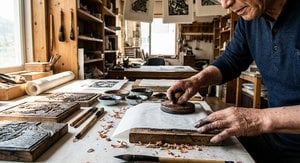
The Enduring Legacy of Woodblock Printmaking: Technique, History & Artistic Expression
Explore the rich history of woodblock printmaking – from ancient techniques to Ukiyo-e masterpieces. Discover expert insights on collecting, preserving & appreciating this enduring art form.

Suzuki Harunobu: Pioneering Ukiyo-e & the Refinement of Edo Period Printmaking
Discover the revolutionary world of Suzuki Harunobu, a pioneer of ukiyo-e printmaking. Explore his exquisite nishiki-e techniques, diverse subjects & lasting impact on Japanese art history. Learn more at ArtsDot.

Japonisme: How Japanese Woodblock Prints Revolutionized Western Art
Explore the profound impact of Japonisme on Western art. Discover how Japanese ukiyo-e woodblock prints revolutionized perspective, color, and composition for masters like Monet and Van Gogh, forever changing the course of modern art history.

Топ 25 шедьовъра на Кацушика Хокусай: Изкуство, история и вдъхновение за вашия дом
Разгледайте топ 25 шедьовъра на Кацушика Хокусай – японски гравюри, укийо-е и емблематичната "Голяма вълна". Историята зад изкуството и вдъхновение за вашия дом. Репродукции с музейно качество на ArtsDot.com.

Ukiyo-e: Exploring Japan's Floating World & Enduring Artistic Legacy
Explore the captivating world of Ukiyo-e – Japan's iconic woodblock prints! Discover masters like Hokusai & Hiroshige, learn about Edo period culture, and find expert art collecting guidance at ArtsDot.