


 Преглед в реален мащаб
 Сподели
 Сподели
 Подробности
 Ръководство

 Изтегляне
 Подобни артикули
 Рентгенова снимка
 Слайдшоу
 Статистика
The Microscope


 Разгърни целия текст
Жикле / Художествен принт
Giclée печат или принт върху платно с музейно качество, бързо производство и гъвкави опции за завършен вид. ( Поръчайте ръчно рисувано репродукция на този колекционерски предмет Превключване към дигитално изображение)




P118B €10

P118H €10

P118W €10

P438Z €10

P508JH €12

P508YH €12

P805H €10

P805Z €10

P919BZ €10

P919G €10

P919XJ €10

P959ZH €10

P968JZ €12

W106C €8

W218G €10

W218JH €8

W218Y €10

W307PJ €10

W316G €10

W316PJ €8

W316Y €10

W398PJ €8

W4111J €10

W500HY €15

W500JH €15

W692G €12

W849H €8

W940BG €15

W953PJ €8




Изберете от нашите предварително зададени размери, които съответстват на оригиналните пропорции на произведението.

Въведете необходимата ширина и височина, за да паснат на вашата рамка или стена. Принтовете могат само да се изрязват, но никога не могат да бъдат по-големи от оригиналната картина, така че при размер с различен формат част от изображението ще бъде загубена. Преди да започнем печат, ще ви изпратим дигитален мок업 за одобрение. Изображението, показано на тази страница, не показва реалното изрязване — само мок업ът го показва.
Доставка по целия свят () в рамките на 2 седмици вместо стандартните 4/5 седмици. (21 Октомври)

Безплатна експресна доставка по целия свят

Висококачествено ленено платно

Пълно застраховане на доставката

Гаранция за възстановяване на митнически такси

Гаранция за пълно съответствие на цветовете

Политика за връщане в рамките на 100 дни (само при дефекти)

100% Гаранция за връщане на сумата

Отстъпка при поръчка на повече произведения
 Опцията със стъкло е налична само за размери под 110 см

The Microscope
Жикле / Художествен принт
Размер на репродукцията
-


Крайна цена
€ 54
A Window into Enlightenment: Examining Robert Walter Weir’s “The Microscope”
Robert Walter Weir's "The Microscope," completed in 1849, stands as a remarkable testament to the confluence of scientific curiosity and humanist ideals that characterized mid-nineteenth century America. More than just a portrait depicting Jacob Whitman Bailey, a prominent advocate for American microscopy and instructor at West Point, this painting embodies the Romantic spirit’s fascination with both reason and imagination—a duality Weir skillfully captures through meticulous observation and expressive brushwork. The artwork resides within Yale University Art Gallery's collection, offering visitors an opportunity to contemplate its enduring significance.- Subject Matter: At its core, “The Microscope” presents a tableau of intellectual engagement. Bailey, dressed in attire reminiscent of Galileo Galilei—a deliberate allusion to the Renaissance astronomer’s groundbreaking discoveries—demonstrates his knowledge to his sons and daughter, Maria. This familial scene underscores the importance of educating children not only in traditional arts but also in scientific pursuits, reflecting the burgeoning belief that fostering intellectual development was crucial for societal progress.
- Style & Technique: Weir’s style aligns firmly with the Hudson River School tradition, prioritizing atmospheric perspective and tonal gradation to convey a sense of grandeur and tranquility. Employing oil paints on canvas, he achieved remarkable realism through careful layering and blending—a hallmark of the era's artistic approach. The subdued palette—dominated by browns, greens, and blues—creates an environment that feels both scholarly and contemplative.
Historical Context: Science and Domestic Education in Victorian America
The painting emerged during a period marked by significant advancements in scientific understanding, particularly in microscopy. Scientists like Bailey were actively exploring the microscopic world, uncovering previously unseen organisms and challenging prevailing theories about disease and heredity. Simultaneously, Victorian society placed considerable emphasis on educating girls—primarily focusing on music, dance, and needlework—though figures like Bailey recognized the necessity of introducing science into female education. Weir’s depiction reflects this societal preoccupation with cultivating intellectual prowess in young women.- Symbolism: The inclusion of Galileo's garb serves as a powerful symbol—representing the triumph of observation and experimentation over dogma. Bailey’s stance, gazing intently at the microscope, embodies the Romantic conviction that scientific inquiry could illuminate the mysteries of creation. Furthermore, Maria’s presence symbolizes the future generation inheriting this enlightened worldview.
- Emotional Impact: “The Microscope” transcends mere representation; it evokes a feeling of serene intellectual pursuit and familial devotion. Weir's masterful use of light and shadow contributes to an atmosphere of quiet contemplation—encouraging viewers to appreciate the beauty inherent in knowledge and the importance of nurturing young minds.
Yale Center for British Art’s Perspective
The Yale Center for British Art considers “The Microscope” as a pivotal piece illustrating the Romantic movement's commitment to both reason and imagination. Its inclusion within the American Art before 1900 galleries underscores its significance in shaping artistic sensibilities during this formative period. The painting continues to inspire interior designers seeking to infuse their spaces with elements of intellectual curiosity and humanist values—a legacy that extends far beyond its original creation.Въпроси и отговори
Каква емоция предава произведението от Romanticism „The Microscope“?
Reflective емоцията на „The Microscope“ допълва нейния Romanticism стил.
Има ли произведения, подобни на „The Microscope“?
Страницата Подобни произведения на „The Microscope“ на Робърт Уейър представя свързани произведения на изкуството.
Има ли слайдшоу за „The Microscope“ на Робърт Уейър?
Диапорамата на "The Microscope" може да бъде разгледана на страницата за Слайдшоу на произведението.
Свързани произведения


Биография на художника
Robert Walter Weir (1803 – 1889): A Pioneer of Romantic Landscape Painting and Educator
Robert Walter Weir, born June 18, 1803, in New York City, was a pivotal figure in the artistic landscape of 19th-century America—a painter who simultaneously championed classical ideals and embraced the burgeoning spirit of Romanticism. His life’s journey exemplifies unwavering dedication to artistic pursuits coupled with an enduring commitment to fostering intellectual curiosity within future generations. From his formative years marked by familial relocation and early exposure to art instruction, Weir ascended to become a celebrated artist recognized for monumental canvases like *The Embarkation of the Pilgrims*, alongside a profound influence on the education system at West Point Military Academy. ### Early Life and Artistic Training Weir’s upbringing instilled in him a deep appreciation for intellectual rigor—a characteristic that would permeate his artistic endeavors throughout his life. Initially pursuing mercantile ventures, he swiftly abandoned commerce to dedicate himself entirely to painting in 1821, embarking on a self-directed path honed through intensive study within New York City from 1822 to 1824. This initial training encompassed foundational anatomical studies at NYU’s medical school and mentorship under Robert Cox (or Cook), an English heraldic painter—influences that would shape his artistic sensibilities for decades to come. His formative years in Italy, specifically Florence (1824–1825) and Rome (1825–1827), proved transformative, immersing him in the masterpieces of Michelangelo and Raphael and instilling within him the principles of Renaissance composition—a legacy that would resonate powerfully throughout his oeuvre. ### Artistic Style and Influences: The Hudson River School Legacy Weir’s artistic style firmly established him as a cornerstone of the Hudson River School, an American art movement celebrated for its evocative depictions of the nation's landscapes infused with Romantic fervor. Like many artists of his time, Weir drew inspiration from classical traditions—a meticulous attention to detail, balanced compositions, and dramatic use of light and shadow—yet he skillfully adapted these techniques to capture the grandeur and sublime beauty of American vistas. His canvases frequently explored historical subjects, imbued with allegorical significance and conveying profound moral messages—demonstrating his ability to synthesize intellectual contemplation with artistic expression. Notably, Weir’s monumental *Embarkation of the Pilgrims*, commissioned by Congress in 1837 and installed in the Capitol Rotunda in 1843, stands as a testament to his mastery of narrative painting and his unwavering belief in the power of art to communicate complex ideas. ### Teaching at West Point: Shaping Future Leaders Weir’s impact extended far beyond his artistic achievements; he profoundly shaped the intellectual landscape of America through his tenure as Teacher of Drawing (1834–1846) and Professor of Drawing (1846–1876) at the United States Military Academy at West Point. Accepting this role in 1834, Weir recognized the importance of cultivating visual thinking alongside technical skill—a pedagogical approach that prioritized observation, analysis, and creative problem-solving abilities within a generation destined to lead the nation through turbulent times. Among his distinguished students were Ulysses S. Grant, Robert E. Lee, Jefferson Davis, and James Abbott McNeill Whistler—figures who would become synonymous with the Civil War era, underscoring Weir’s enduring influence on American history. ### Legacy and Recognition Robert Walter Weir's artistic legacy continues to inspire admiration and scholarly inquiry today. His monumental *Embarkation of the Pilgrims*, alongside numerous other landscapes and historical paintings, reside in prominent museums across America—a testament to his enduring contribution to the nation’s artistic heritage. Furthermore, Weir’s dedication to fostering creativity within young minds cemented his place as a transformative educator—a figure whose influence extended far beyond the confines of West Point Military Academy and into the broader cultural landscape of 19th-century America. His sons, John Ferguson Weir and Julian Alden Weir, followed in his artistic footsteps, perpetuating the family’s tradition of excellence and ensuring that Robert Walter Weir's vision—a harmonious blend of classical refinement and Romantic passion—remains vividly present in the annals of American art history.
Робърт Уейър
1803 - 1889 , Съединени американски щати
Бързи факти
- Artistic Movement Or Style: Хъдсън Ривър Скуул
- Artists Or Movements Influenced By This Artist: ['Хъдсън Ривър Скуул']
- Artists Who Influenced This Artist:
- Микеланджело
- Рафаел
- Date Of Birth: 18 юни 1803 г.
- Date Of Death: 1 май 1889 г.
- Full Name: Robert Walter Weir
- Nationality: Американски
- Notable Artworks:
- Изпразването на Пилигримите
- Спускането на Хендрик Худсън
- Place Of Birth: Ню Йорк, САЩ
Свързани статии

Robert Spencer: Luminism, Narrative & the American Landscape Tradition
Explore the captivating world of Luminism & the Hudson River School with our expert analysis. Discover the history, artists, and enduring beauty of 19th-century American landscape painting. Find museum-quality reproductions at ArtsDot.
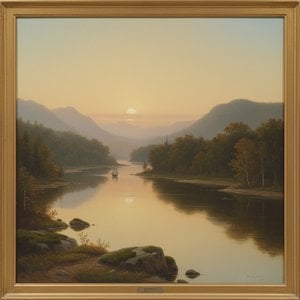
David Johnson: A Luminist Master of the Hudson River School & Beyond
Explore the captivating landscapes of David Johnson, a key figure in the Hudson River School & Luminism movement. Discover his artistic evolution, legacy, and how to collect his works with ArtsDot.

The Sublime Landscape: Exploring the Hudson River School Movement
Explore the captivating world of the Hudson River School! Discover the history, artists, and defining characteristics of this iconic American art movement. Learn about Romanticism's influence & find inspiration for your collection.

Топ 10 шедьовъра на Художественото движение "Речна школа на Хъдсън" – Вдъхновение за Вашия Дом
Открийте 10 шедьовъра на "Речната школа на Хъдсън" – Томас Коул, Чърч и Биърщадт. Разгледайте американския романтизъм, пейзажи и историческа живопис. Луксозни репродукции за Вашия дом! Explore the full collection on ArtsDot.com
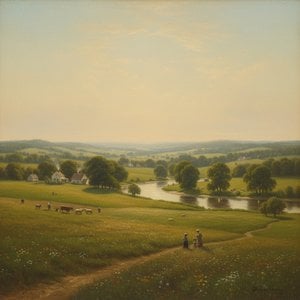
Thomas Worthington Whittredge: Capturing the American Pastoral Ideal with Luminist Light
Explore the luminous landscapes of Thomas Worthington Whittredge, a key figure in the Hudson River School and master of Luminism. Discover his captivating paintings & legacy with ArtsDot.