

 Преглед в реален мащаб
 Изпрати
 Сподели
 Детайли
 Ръководство

 Изтегляне
 Подобни артикули
 Рентгенова снимка
 Слайдшоу
 Q&A
Q&A Статистика
General Winfield Scott

- 86.0 x 68.0 cm


 Прочети повече
Жикле / Художествен принт
Giclée печат или принт върху платно с музейно качество, бързо производство и гъвкави опции за завършен вид. ( Купете ръчно рисувана картина Превключване към дигитално изображение)




P118B €10

P118H €10

P118W €10

P438Z €10

P508JH €12

P508YH €12

P805H €10

P805Z €10

P919BZ €10

P919G €10

P919XJ €10

P959ZH €10

P968JZ €12

W106C €8

W218G €10

W218JH €8

W218Y €10

W307PJ €10

W316G €10

W316PJ €8

W316Y €10

W398PJ €8

W4111J €10

W500HY €15

W500JH €15

W692G €12

W849H €8

W940BG €15

W953PJ €8




Изберете от нашите предварително зададени размери, които съответстват на оригиналните пропорции на произведението.

Въведете необходимата ширина и височина, за да паснат на вашата рамка или стена. Принтовете могат само да се изрязват, но никога не могат да бъдат по-големи от оригиналната картина, така че при размер с различен формат част от изображението ще бъде загубена. Преди да започнем печат, ще ви изпратим дигитален мок업 за одобрение. Изображението, показано на тази страница, не показва реалното изрязване — само мок업ът го показва.
Доставка по целия свят () в рамките на 2 седмици вместо стандартните 4/5 седмици. (2 Ноември)

Безплатна експресна доставка по целия свят

Висококачествено ленено платно

Пълно застраховане на доставката

Гаранция за възстановяване на митнически такси

Гаранция за пълно съответствие на цветовете

Политика за връщане в рамките на 100 дни (само при дефекти)

100% Гаранция за връщане на сумата

Оферта за отстъпка при поръчка на повече бройки
 Опцията със стъкло е налична само за размери под 110 см

General Winfield Scott
Жикле / Художествен принт
Размер на репродукцията
-


Обща цена
€ 55
The Resolute Gaze of an American Icon
In the quiet intensity of Robert Walter Weir’s 1855 masterpiece, General Winfield Scott, one does not merely encounter a portrait; one meets a legend. The painting captures the essence of a man whose life was etched into the very foundations of a burgeoning nation. Through a meticulously rendered posture and an unwavering, stern gaze, Weir presents Scott not just as a celebrated commander of the Mexican-American War, but as a symbol of unwavering determination and American fortitude. The subject’s presence is commanding, his black coat adorned with gold buttons catching the light in a way that suggests both the weight of his rank and the brilliance of his character. There is an undeniable gravity in his expression, a visual representation of the resolute spirit required to lead during one of America's most transformative eras.
A Symphony of Light and Hudson River Realism
As a titan of the Hudson River School, Weir brings a profound sense of atmospheric perspective to this intimate portrait. Eschewing the mere recording of likeness, the artist employs a sophisticated technique of layering oil paints on canvas to achieve a remarkable luminosity. This method allows for a depth of texture that makes the fabric of the uniform and the subtle shadows of the background feel almost tactile. The style is one of idealized realism—a delicate balance where every detail is rendered with precision, yet the overall effect elevates the subject to a state of classical dignity. For the discerning collector or interior designer, this mastery of light offers a captivating focal point that breathes life and a sense of historical depth into any sophisticated space.
The Silent Weight of History and Duty
Beyond the central figure, Weir weaves a complex narrative through subtle symbolic elements that invite deep contemplation. Positioned against a muted wall, the inclusion of a clock serves as a poignant memento mori, representing the relentless passage of time and the heavy mantle of responsibility borne by those in leadership. The composition is further enriched by the presence of two flanking figures, whose soft rendering suggests the collaborative nature of great historical achievements and the collective effort required for monumental goals. This careful arrangement transforms the painting from a simple portrait into a profound meditation on leadership, legacy, and the enduring spirit of duty. To possess a reproduction of such a work is to invite a conversation about history, strength, and the timeless virtues of perseverance into one's home.
Въпроси и отговори
Какви са реалните размери на „General Winfield Scott“ на Робърт Уейър?
Размерите на оригиналното произведение "General Winfield Scott" са 86 x 68 cm. Оригиналните размери са полезен ориентир при избора на размер на репродукцията.
Какво чувство създават цветовете на „General Winfield Scott“ на Робърт Уейър?
Палитрата от Earthy в „General Winfield Scott“ на Робърт Уейър се съчетава с неговия Powerful емоционален тон. Цветът е един от начините, по които едно произведение предава чувство.
Мога ли да видя рентгенов образ на „General Winfield Scott“ на Робърт Уейър?
Страницата Рентгенови лъчи на „General Winfield Scott“ на Робърт Уейър е интерактивен визуализатор, който ви позволява да разгледате единадесет оптични слоя на произведението, включително и рентгенов вид.
Подобни произведения


Биография на художника
Robert Walter Weir (1803 – 1889): A Pioneer of Romantic Landscape Painting and Educator
Robert Walter Weir, born June 18, 1803, in New York City, was a pivotal figure in the artistic landscape of 19th-century America—a painter who simultaneously championed classical ideals and embraced the burgeoning spirit of Romanticism. His life’s journey exemplifies unwavering dedication to artistic pursuits coupled with an enduring commitment to fostering intellectual curiosity within future generations. From his formative years marked by familial relocation and early exposure to art instruction, Weir ascended to become a celebrated artist recognized for monumental canvases like *The Embarkation of the Pilgrims*, alongside a profound influence on the education system at West Point Military Academy. ### Early Life and Artistic Training Weir’s upbringing instilled in him a deep appreciation for intellectual rigor—a characteristic that would permeate his artistic endeavors throughout his life. Initially pursuing mercantile ventures, he swiftly abandoned commerce to dedicate himself entirely to painting in 1821, embarking on a self-directed path honed through intensive study within New York City from 1822 to 1824. This initial training encompassed foundational anatomical studies at NYU’s medical school and mentorship under Robert Cox (or Cook), an English heraldic painter—influences that would shape his artistic sensibilities for decades to come. His formative years in Italy, specifically Florence (1824–1825) and Rome (1825–1827), proved transformative, immersing him in the masterpieces of Michelangelo and Raphael and instilling within him the principles of Renaissance composition—a legacy that would resonate powerfully throughout his oeuvre. ### Artistic Style and Influences: The Hudson River School Legacy Weir’s artistic style firmly established him as a cornerstone of the Hudson River School, an American art movement celebrated for its evocative depictions of the nation's landscapes infused with Romantic fervor. Like many artists of his time, Weir drew inspiration from classical traditions—a meticulous attention to detail, balanced compositions, and dramatic use of light and shadow—yet he skillfully adapted these techniques to capture the grandeur and sublime beauty of American vistas. His canvases frequently explored historical subjects, imbued with allegorical significance and conveying profound moral messages—demonstrating his ability to synthesize intellectual contemplation with artistic expression. Notably, Weir’s monumental *Embarkation of the Pilgrims*, commissioned by Congress in 1837 and installed in the Capitol Rotunda in 1843, stands as a testament to his mastery of narrative painting and his unwavering belief in the power of art to communicate complex ideas. ### Teaching at West Point: Shaping Future Leaders Weir’s impact extended far beyond his artistic achievements; he profoundly shaped the intellectual landscape of America through his tenure as Teacher of Drawing (1834–1846) and Professor of Drawing (1846–1876) at the United States Military Academy at West Point. Accepting this role in 1834, Weir recognized the importance of cultivating visual thinking alongside technical skill—a pedagogical approach that prioritized observation, analysis, and creative problem-solving abilities within a generation destined to lead the nation through turbulent times. Among his distinguished students were Ulysses S. Grant, Robert E. Lee, Jefferson Davis, and James Abbott McNeill Whistler—figures who would become synonymous with the Civil War era, underscoring Weir’s enduring influence on American history. ### Legacy and Recognition Robert Walter Weir's artistic legacy continues to inspire admiration and scholarly inquiry today. His monumental *Embarkation of the Pilgrims*, alongside numerous other landscapes and historical paintings, reside in prominent museums across America—a testament to his enduring contribution to the nation’s artistic heritage. Furthermore, Weir’s dedication to fostering creativity within young minds cemented his place as a transformative educator—a figure whose influence extended far beyond the confines of West Point Military Academy and into the broader cultural landscape of 19th-century America. His sons, John Ferguson Weir and Julian Alden Weir, followed in his artistic footsteps, perpetuating the family’s tradition of excellence and ensuring that Robert Walter Weir's vision—a harmonious blend of classical refinement and Romantic passion—remains vividly present in the annals of American art history.
Робърт Уейър
1803 - 1889 , Съединени американски щати
Бърза информация
- Artistic Movement Or Style: Хъдсън Ривър Скуул
- Artists Or Movements Influenced By This Artist: ['Хъдсън Ривър Скуул']
- Artists Who Influenced This Artist:
- Микеланджело
- Рафаел
- Date Of Birth: 18 юни 1803 г.
- Date Of Death: 1 май 1889 г.
- Full Name: Robert Walter Weir
- Nationality: Американски
- Notable Artworks:
- Изпразването на Пилигримите
- Спускането на Хендрик Худсън
- Place Of Birth: Ню Йорк, САЩ
Свързани статии

George Harvey: A Study in American Impressionism & the Poetics of Light
Explore the captivating world of George Harvey, a pivotal figure in American Impressionism & Luminism. Discover his stunning landscapes, artistic journey, and lasting influence on 19th-century art. Learn about provenance & appraisal.

Топ 10 шедьовъра на Художественото движение "Речна школа на Хъдсън" – Вдъхновение за Вашия Дом
Открийте 10 шедьовъра на "Речната школа на Хъдсън" – Томас Коул, Чърч и Биърщадт. Разгледайте американския романтизъм, пейзажи и историческа живопис. Луксозни репродукции за Вашия дом! Explore the full collection on ArtsDot.com

Robert Spencer: Luminism, Narrative & the American Landscape Tradition
Explore the captivating world of Luminism & the Hudson River School with our expert analysis. Discover the history, artists, and enduring beauty of 19th-century American landscape painting. Find museum-quality reproductions at ArtsDot.

The Sublime Landscape: Exploring the Hudson River School Movement
Explore the captivating world of the Hudson River School! Discover the history, artists, and defining characteristics of this iconic American art movement. Learn about Romanticism's influence & find inspiration for your collection.
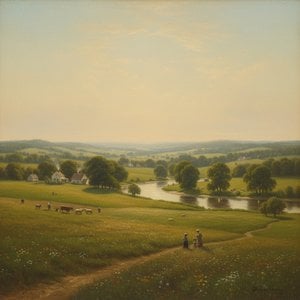
Thomas Worthington Whittredge: Capturing the American Pastoral Ideal with Luminist Light
Explore the luminous landscapes of Thomas Worthington Whittredge, a key figure in the Hudson River School and master of Luminism. Discover his captivating paintings & legacy with ArtsDot.