
 Oil On Canvas
- WallArt
- Abstract Expressionism
 1953
1953- Modern
 84.0 x 58.0 cm

The picture follows your choices: , .
Описание на колекционерския предмет
Explore Jackson Pollock's 'Easter and the Totem,' a 1953 Abstract Expressionist masterpiece. Discover its dynamic composition, drip technique & cultural impact.
 Прочети повече
Биография на художника
Пол Джаксън Полк е американски художник, пионер на абстрактния експресионизъм и известен с техниката си "дърпане" на боя върху платното. Неговите иконични картини са символ на революционен подход към изкуството и влияние върху съвременната художествена сцена.
Ръчно изработена маслена репродукция
Ръчно рисувана маслена картина върху платно във вашия размер и рамка, изработена по поръчка от нашите художници. ( Превключване към принт Превключване към дигитално изображение)
More about this painting
 Преглед в реален мащаб
 Изпрати
 Сподели
 Детайли
 Ръководство

 Изтегляне
 Подобни артикули
 Рентгенова снимка
 Слайдшоу
 Q&A
Q&A Статистика
Order your painting in four simple steps
Take your time. You can change any answer; the price in your order card follows each choice.
1 Step one of four
Which size would you like?
These sizes keep the proportions of the original painting. The drawing shows your choice on a wall, above a two-metre sofa.
Or give your own measurements
Изберете от нашите предварително зададени размери, които съответстват на оригиналните пропорции на произведението.

Въведете необходимата ширина и височина, за да паснат на вашата рамка или стена. Тъй като това е ръчна работа, при избор на размер с различен формат художникът може да нарисува малко повече около картината или да отреже малко от периферията — вие избирате. Преди да започне рисуването, ще ви изпратим дигитален мок업 за одобрение. Картината, показана на тази страница, не е реалният резултат — само мок업ът го показва.
2 Step two of four
How should it be prepared: rolled, stretched or framed?
The prices below are for the size you chose in step one.
Choose the edges of the stretched canvas
Choose your frame

White €1

Blurside €1

Extended €1

P118B €10

P118H €10

P118W €10

P438Z €10

P508JH €12

P508YH €12

P805H €10

P805Z €10

P919BZ €10

P919G €10

P919XJ €10

P959ZH €10

P968JZ €12

W106C €8

W218G €10

W218JH €8

W218Y €10

W307PJ €10

W316G €10

W316PJ €8

W316Y €10

W398PJ €8

W4111J €10

W500HY €15

W500JH €15

W692G €12

W849H €8

W940BG €15

W953PJ €8

H24-GOLD €30

H24-SILVER €30

H36-GOLD €45

H36-SILVER €45
С рамка
Moulding: . Overall size with the frame: .
3 Step three of four
Would you like anything changed in the painting?
Most people answer no. Because each painting is made by hand, our artist can also adapt it for you.
After order, ArtsDot.com team will email client for instructions and provide a mockup preview
4 Step four of four
A few finishing options
All of them are optional. The answers already selected cost nothing extra.
Who paints it?
Доставка по целия свят () в рамките на 3-4 седмици вместо стандартните 5 седмици. (31 Октомври). Без компромис с качеството.
A nameplate, as in a museum?
Детайли за гравираната бронзова плака
This elegant plaque features the artist's name and the title of the artwork, finely engraved for a timeless presentation.
It is made from bronze with a refined, elegant finish. The text is precisely laser-engraved for a sharp and permanent result. Measuring 9x2 cm, the plaque is compact yet easy to read. It's built to be durable and scratch-resistant, offering a professional, museum-quality look. Mounting is simple thanks to the included adhesive backing.
Детайли за прозрачната акрилна плака
The plaque includes essential engraved details such as the artist's name, the title of the artwork, the date it was created, the type of media used-like oil on canvas or watercolor-a brief description of the piece, and a QR code that links to the complete artwork information.
It is crafted from clear acrylic, offering a sleek, modern appearance. The text is UV-engraved in black to ensure strong visual contrast. With a size of 10x15 cm, it ensures optimal readability. It comes equipped with two metal hooks for secure wall mounting. The plaque is designed to be weather-resistant, making it suitable for various environments, and it includes interactive features that work seamlessly with smartphone scanning.
Детайли за черната акрилна плака
This elegant plaque includes engraved information such as the artist's name, the title of the artwork, the date it was created, the type of media used (like oil on canvas or watercolor), a short description of the artwork, and a QR code for quick access to more information.
The plaque itself is made from refined black acrylic with a premium finish. The text is laser-engraved in white for high contrast and readability. Its size is 10x15 cm, designed to be easy to read. It comes with two metal hooks for professional mounting. The design is sleek and fits any interior style. It is also weather-resistant and durable, with built-in digital integration for mobile compatibility.
A protective varnish?
When do you need it?
✓ Check and order
Your painting, as you ordered it

Easter and the Totem
Вид репродукция
Размер на репродукцията
-

Елитен старши художник
Повече детайлност, изящество и допълнително време за производство
-

Рамка за репродукция
-
-
За произведения на изкуството или репродукции, чийто размер е над 105 см (приблизително 41 инча) във всяка страна, рамката ще бъде изпратена в разглобен вид като комплект за сглобяване. Този метод гарантира безопасна доставка и предотвратява повреди по време на транспортиране.
Изисква се професионално сглобяване – това не е продукт за самостоятелна изработка (DIY).
Комплектът трябва да бъде сглобен, а платното – опънато от опитен професионален багер, като се използва дървено лепило (не е включено в комплекта), клещи за опъване на платно и затягащи скоби, за да се поддържа правотата на подрамника, докато лепилото изсъхне. Неправилното сглобяване или неравномерното опъване на платното може трайно да повреди произведението и не е покрито от нашата гаранция.
 За произведения на изкуството или репродукции, чийто размер е над 105 см (приблизително 41 инча) във всяка страна, рамката ще бъде изпратена в разглобен вид като комплект за сглобяване. Този метод гарантира безопасна доставка и предотвратява повреди по време на транспортиране.
Всички елементи от масивна дървесина са включени, прецизно изрязани по размер.
Сглобява се с предоставените винтове, както и с лепило за дърво за ъгловите връзки, което не е включено в комплекта и трябва да бъде осигурено от вашия рамкар.
Изискват се професионални инструменти, които не са включени: щипка за опъване на платно (натягач) и скоби за фиксиране на подрамниците под прав ъгъл, докато лепилото изсъхне.
Важно:
За сглобяването на ъглите е необходимо лепило за дърво, рейките трябва да се фиксират с

Етикет с име
-
-

Защитен лак
Гланцов лак (подсилва цветовете и предпазва от светлина и влага)
-

Персонализирай моето произведение
Примери за възможности за персонализация: Заменете лицето със снимка на клиента; Добавете домашен любимец (например, заменете котка с куче); Включете скрито съобщение във фона; Променете пейзажа или елементите на фона.
-

Спешно
Доставка по целия свят () в рамките на 3-4 седмици вместо стандартните 5 седмици. (31 Октомври). Без компромис с качеството.
-
Експресна доставка
Доставка по целия свят () в рамките на 5 седмици. (7 Ноември).
Включена
Обща цена
€ 233
Опцията със стъкло е налична само за размери под 110 см
Included with every order
- Безплатна експресна доставка по целия свят
- Висококачествено ленено платно
- Пълно застраховане на доставката
- Гаранция за възстановяване на митнически такси
- Гаранция за пълно съответствие на цветовете
- Политика за връщане в рамките на 100 дни (само при дефекти)
- 100% Гаранция за връщане на сумата
- Оферта за отстъпка при поръчка на повече бройки


Unveiling Jackson Pollock’s “Easter and the Totem”
- A Masterpiece of Abstract Expressionism: Jackson Pollock's 1953 painting, Easter and the Totem, stands as a pivotal work within the Abstract Expressionist movement. Measuring 84 x 58 cm and executed in oil on canvas, it’s not merely a visual experience but an exploration of form, symbolism, and the artist's inner world. This piece exemplifies Pollock’s revolutionary approach to painting, moving beyond traditional representation towards a more visceral and emotionally charged expression.
- Deconstructing the Composition: At first glance, Easter and the Totem appears as a dynamic interplay of color and shape – seemingly chaotic. However, closer inspection reveals a carefully constructed composition featuring at least six abstracted human figures interwoven with everyday objects: bowls, cups, a vase, and a bottle. These elements aren’t simply placed; they interact, creating a sense of movement and suggesting narratives within the abstract field. The arrangement isn't random; it hints at ritualistic gatherings or domestic scenes viewed through a fractured lens.
The Technique: Drip Painting and Action Painting
- Pollock’s Innovative Method: This painting is a prime example of Pollock's signature “drip” technique, also known as action painting. He laid the canvas flat on the floor and dripped, splashed, and poured paint onto it, eschewing traditional brushes in favor of sticks, knives, and even hardened paint. This method allowed for spontaneity and an all-over composition, where no single area dominates. The physicality of this process is crucial; Pollock didn’t just *paint* the canvas, he *engaged* with it, imbuing the work with his energy and emotion.
- Beyond Technique: A Philosophical Statement: Pollock believed that art should be an expression of the subconscious. The drip technique facilitated this by minimizing conscious control, allowing for a more direct translation of inner impulses onto the canvas. This wasn’t about depicting reality; it was about expressing the act of creation itself.
Historical Context and Symbolic Resonance
- A Post-War Reflection: Created in 1953, Easter and the Totem reflects the anxieties and uncertainties of the post-World War II era. The fragmented figures and ambiguous forms can be interpreted as a response to the trauma and disillusionment of the time. Abstract Expressionism, as a whole, emerged as a way to grapple with these complex emotions.
- The Title’s Significance: The title itself is intriguing. “Easter” suggests themes of rebirth and renewal, while "Totem" evokes ancient cultures and spiritual beliefs. This juxtaposition hints at Pollock's interest in mythology, symbolism, and the search for meaning in a rapidly changing world. The combination invites viewers to contemplate the relationship between personal experience and universal archetypes.
- Influence and Legacy: Pollock’s work profoundly impacted subsequent generations of artists. His exploration of abstraction and his emphasis on process paved the way for new artistic approaches, influencing figures like Roberto Matta and continuing to resonate in contemporary art today. The painting remains a powerful testament to the transformative potential of abstract expressionism.
Въпроси и отговори
В коя година е създадено „Easter and the Totem“ на Пол Джаксън Полк?
Създаването на „Easter and the Totem“ на Пол Джаксън Полк датира от 1953.
Какви са размерите на оригиналния „Easter and the Totem“ на Пол Джаксън Полк?
Размерите на оригиналната творба „Easter and the Totem“ на Пол Джаксън Полк са 84 x 58 cm. Репродукции могат да бъдат поръчани в други размери, като се запазват същите пропорции.
Как "Easter and the Totem" се вписва в темите и стила на Пол Джаксън Полк?
"Easter and the Totem" споделя със другите творби на Пол Джаксън Полк своя Abstract Expressionism стил и заложените теми: matisse influence, indigenous symbolism, spontaneous gestures, totemic narrative, expressionist legacy.
Подобни произведения


Пол Джаксън Полк
1912 - 1956, Съединени американски щати
Биография на художника
Early Life and the Seeds of Innovation
Paul Jackson Pollock, born in Cody, Wyoming, in 1912, was a restless spirit from the outset. His early life was marked by frequent relocation as his father pursued work as a land surveyor across the vast landscapes of the American West. This itinerant existence instilled in young Pollock a deep connection to the natural world and an exposure to diverse cultures, particularly through encounters with Native American art during those surveying trips – impressions that would subtly permeate his artistic vision later in life. Though he never explicitly imitated Indigenous styles, the raw energy and spiritual resonance of these early experiences undoubtedly left their mark. Pollock’s formal artistic training began at the Manual Arts High School in Los Angeles, followed by studies at the Art Students League of New York under the tutelage of Thomas Hart Benton. Benton, a prominent figure in the Regionalist movement, emphasized rhythmic composition and narrative themes rooted in American life. While Pollock initially absorbed these lessons, his inherent inclination leaned toward more abstract explorations. He was also profoundly impacted by Mexican muralists like José Clemente Orozco, whose powerful depictions of social struggle resonated deeply with him. These early influences laid a foundation, but it was the burgeoning world of Surrealism that truly unlocked Pollock’s artistic potential.The Birth of Action Painting and a Revolutionary Technique
The 1930s saw Pollock experimenting with various techniques, seeking alternatives to traditional brushwork. He began pouring paint, exploring its fluidity and unpredictable nature. However, it was around 1947 that his artistic trajectory underwent a radical transformation. Abandoning the easel altogether, Pollock laid canvases directly on the floor, initiating what would become known as his “drip technique.” He then proceeded to drip, splash, and fling paint onto the canvas from above, orchestrating a dynamic dance between artist, medium, and surface. This wasn’t merely about applying paint; it was about embodying the act of creation itself. Pollock's canvases became arenas for physical expression, capturing the immediacy of his gestures and emotions. The resulting paintings are characterized by their “all-over” composition – a lack of central focus that invites the viewer to explore the entire surface as a unified field of energy. Intricate networks of lines and colors intertwine, creating a visual complexity that is both captivating and challenging. He employed unconventional tools—sticks, knives, even syringes—to manipulate the paint in unpredictable ways, further emphasizing the spontaneous nature of his process.- This technique was revolutionary because it rejected traditional brushwork.
- It emphasized the physical act of painting as a performance.
Influences and Artistic Development
Pollock’s artistic development wasn't solely driven by experimentation. He drew inspiration from diverse sources, including the works of European masters like Picasso and Braque, as well as the vibrant murals of Mexican artists such as Diego Rivera. The influence of Surrealism, with its exploration of the subconscious and dreamlike imagery, also played a significant role in shaping his artistic vision. His exposure to Native American art during his father’s surveying trips instilled a deep appreciation for patterns, rhythms, and symbolic language – elements that subtly informed his abstract compositions. Key Influences:- Thomas Hart Benton (Regionalism)
- José Clemente Orozco (Mexican Muralism)
- Surrealism
- Native American Art
Iconic Works and Lasting Legacy
Pollock’s most celebrated works—such as Number 1, 1950 (Lavender Mist), One: Number 31, 1950, Blue Poles: Number 11, 1952, and Convergence—are testaments to his revolutionary technique. These paintings are not simply images; they are records of a performance, imbued with the artist’s physical presence and emotional intensity. The dynamic energy that emanates from these canvases is palpable, drawing viewers into a world of pure abstraction. Notable Works:- Number 1, 1950 (Lavender Mist)
- One: Number 31, 1950
- Blue Poles: Number 11, 1952
- Convergence
A Complex Figure and Enduring Influence
Despite initial skepticism, Pollock’s work eventually gained widespread recognition and acclaim. He was a complex figure—a brilliant artist grappling with personal demons, including alcoholism. His untimely death in 1956 at the age of 44 only served to heighten his mystique and solidify his place as one of the most important artists of the 20th century. His legacy continues to inspire artists today, demonstrating the power of experimentation, emotional expression, and a willingness to challenge conventional artistic boundaries. His innovative techniques and expressive style ensure his enduring influence for generations to come.


Свързани статии

Jacob Kainen: A Pioneer of American Color Field Painting & Abstract Expressionism
Explore the life & work of Jacob Kainen, a pivotal figure in American Abstract Expressionism and Color Field painting. Discover his journey from Social Realism to vibrant abstraction and lasting influence on 20th-century art.
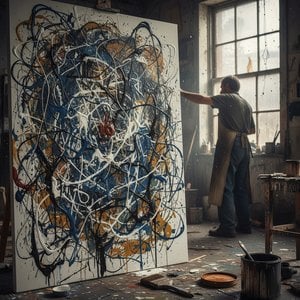
Paul Jackson Pollock: A Radical Departure – Exploring Abstract Expressionism's Pioneering Figure and His Enduring Legacy
Explore the revolutionary art of Jackson Pollock & Abstract Expressionism. Discover his iconic drip paintings, lasting impact, and considerations for collecting this pivotal American artist. Expert insights at ArtsDot.

Топ 10 шедьовъра на абстрактния експресионизъм – изкуство за вашия дом от ArtsDot.com
Разгледайте топ 10 шедьовъра на абстрактния експресионизъм – Полък, Ротко, де Кунинг и други. Открийте историите зад тези емблематични картини и преобразете дома си с изкуство от ArtsDot.com! Разгледайте пълната колекция онлайн.