

- 251.0 x 167.0 cm


Картината следва вашите избори: , .
Описание на колекционерския предмет
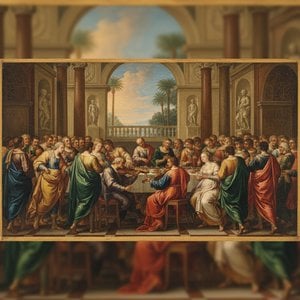
Paolo Veronese’s ‘St Jerome in the Wilderness’ showcases Venetian Renaissance artistry with its opulent color palette and serene depiction of the saint. This monumental 1580 painting, a masterful example of Veronese's vision, invites you to discover this timeless masterpiece.
 Прочети повече
Биография на художника
Паоло Веронезе (1528-1588): Венециански ренесансов майстор, известен с ярките цветове, драматичните композиции и великолепието на пиршествата и архитектурата. Разгледайте неговото наследство!
Ръчно изработена маслена репродукция
Ръчно рисувана маслена картина върху платно във вашия размер и рамка, изработена по поръчка от нашите художници. ( Превключване към принт Превключване към дигитално изображение)
Още информация за тази картина
 Преглед в реален мащаб
 Изпрати
 Сподели
 Детайли
 Ръководство

 Изтегляне
 Подобни артикули
 Рентгенова снимка
 Слайдшоу
 Въпроси и отговори
 Статистика
Поръчайте вашата картина в четири лесни стъпки
Не бързайте. Можете да промените всеки от отговорите; цената в количката ви се актуализира според всеки избор.
1 Стъпка първа от четири
Какъв размер бихте искали?
Тези размери запазват пропорциите на оригиналната картина. Илюстрацията показва избрания от Вас размер върху стена, над двуметрова софа.
Или въведете свои собствени размери
Изберете от нашите предварително зададени размери, които съответстват на оригиналните пропорции на произведението.

Въведете необходимата ширина и височина, за да паснат на вашата рамка или стена. Тъй като това е ръчна работа, при избор на размер с различен формат художникът може да нарисува малко повече около картината или да отреже малко от периферията — вие избирате. Преди да започне рисуването, ще ви изпратим дигитален мок업 за одобрение. Картината, показана на тази страница, не е реалният резултат — само мок업ът го показва.
2 Стъпка две от четири
Как трябва да бъде подготвено: на руло, на платно или в рамка?
Цените по-долу са за избрания от Вас размер от първа стъпка.
Изберете страните на разпънатото платно
Изберете своята рамка

Бяло €1

Размити краища €1

Разширен €1

P118B €10

P118H €10

P118W €10

P438Z €10

P508JH €12

P508YH €12

P805H €10

P805Z €10

P919BZ €10

P919G €10

P919XJ €10

P959ZH €10

P968JZ €12

W106C €8

W218G €10

W218JH €8

W218Y €10

W307PJ €10

W316G €10

W316PJ €8

W316Y €10

W398PJ €8

W4111J €10

W500HY €15

W500JH €15

W692G €12

W849H €8

W940BG €15

W953PJ €8

H24-GOLD €30

H24-SILVER €30

H36-GOLD €45

H36-SILVER €45
С рамка
Рамка: . Общ размер с рамката: .
3 Стъпка три от четири
Желаете ли да промените нещо в картината?
Повечето хора отговарят с „не“. Тъй като всяка картина е изработена на ръка, нашият художник може също така да я адаптира специално за Вас.
След получаване на поръчката, екипът на ArtsDot.com ще изпрати имейл до клиента с инструкции и ще предостави примерен макет
4 Четвърта от четирите стъпки
Няколко варианта за завършен вид
Всички те са по избор. Вече избраните отговори не включват допълнителни разходи.
Кой го рисува?
Доставка по целия свят () в рамките на 3-4 седмици вместо стандартните 5 седмици. (3 Ноември). Без компромис с качеството.
Табелка, точно като в музея?
Детайли за гравираната бронзова плака
This elegant plaque features the artist's name and the title of the artwork, finely engraved for a timeless presentation.
It is made from bronze with a refined, elegant finish. The text is precisely laser-engraved for a sharp and permanent result. Measuring 9x2 cm, the plaque is compact yet easy to read. It's built to be durable and scratch-resistant, offering a professional, museum-quality look. Mounting is simple thanks to the included adhesive backing.
Детайли за прозрачната акрилна плака
The plaque includes essential engraved details such as the artist's name, the title of the artwork, the date it was created, the type of media used-like oil on canvas or watercolor-a brief description of the piece, and a QR code that links to the complete artwork information.
It is crafted from clear acrylic, offering a sleek, modern appearance. The text is UV-engraved in black to ensure strong visual contrast. With a size of 10x15 cm, it ensures optimal readability. It comes equipped with two metal hooks for secure wall mounting. The plaque is designed to be weather-resistant, making it suitable for various environments, and it includes interactive features that work seamlessly with smartphone scanning.
Детайли за черната акрилна плака
This elegant plaque includes engraved information such as the artist's name, the title of the artwork, the date it was created, the type of media used (like oil on canvas or watercolor), a short description of the artwork, and a QR code for quick access to more information.
The plaque itself is made from refined black acrylic with a premium finish. The text is laser-engraved in white for high contrast and readability. Its size is 10x15 cm, designed to be easy to read. It comes with two metal hooks for professional mounting. The design is sleek and fits any interior style. It is also weather-resistant and durable, with built-in digital integration for mobile compatibility.
Защитен лак?
Кога ви е необходимо?
✓ Проверете и поръчайте
Вашата картина, точно както я поръчахте

St Jerome
Вид репродукция
Размер на репродукцията
-

Елитен старши художник
Повече детайлност, изящество и допълнително време за производство
-

Рамка за репродукция
-
-
За произведения на изкуството или репродукции, чийто размер е над 105 см (приблизително 41 инча) във всяка страна, рамката ще бъде изпратена в разглобен вид като комплект за сглобяване. Този метод гарантира безопасна доставка и предотвратява повреди по време на транспортиране.
Изисква се професионално сглобяване – това не е продукт за самостоятелна изработка (DIY).
Комплектът трябва да бъде сглобен, а платното – опънато от опитен професионален багер, като се използва дървено лепило (не е включено в комплекта), клещи за опъване на платно и затягащи скоби, за да се поддържа правотата на подрамника, докато лепилото изсъхне. Неправилното сглобяване или неравномерното опъване на платното може трайно да повреди произведението и не е покрито от нашата гаранция.
 За произведения на изкуството или репродукции, чийто размер е над 105 см (приблизително 41 инча) във всяка страна, рамката ще бъде изпратена в разглобен вид като комплект за сглобяване. Този метод гарантира безопасна доставка и предотвратява повреди по време на транспортиране.
Всички елементи от масивна дървесина са включени, прецизно изрязани по размер.
Сглобява се с предоставените винтове, както и с лепило за дърво за ъгловите връзки, което не е включено в комплекта и трябва да бъде осигурено от вашия рамкар.
Изискват се професионални инструменти, които не са включени: щипка за опъване на платно (натягач) и скоби за фиксиране на подрамниците под прав ъгъл, докато лепилото изсъхне.
Важно:
За сглобяването на ъглите е необходимо лепило за дърво, рейките трябва да се фиксират с

Етикет с име
-
-

Защитен лак
Гланцов лак (подсилва цветовете и предпазва от светлина и влага)
-

Персонализирай моето произведение
Примери за възможности за персонализация: Заменете лицето със снимка на клиента; Добавете домашен любимец (например, заменете котка с куче); Включете скрито съобщение във фона; Променете пейзажа или елементите на фона.
-

Спешно
Доставка по целия свят () в рамките на 3-4 седмици вместо стандартните 5 седмици. (3 Ноември). Без компромис с качеството.
-
Експресна доставка
Доставка по целия свят () в рамките на 5 седмици. (10 Ноември).
Включена
Обща цена
€ 235
Опцията със стъкло е налична само за размери под 110 см
Включено във всяка поръчка
- Безплатна експресна доставка по целия свят
- Висококачествено ленено платно
- Пълно застраховане на доставката
- Гаранция за възстановяване на митнически такси
- Гаранция за пълно съответствие на цветовете
- Политика за връщане в рамките на 100 дни (само при дефекти)
- 100% Гаранция за връщане на сумата
- Оферта за отстъпка при поръчка на повече бройки


St Jerome in the Wilderness: A Venetian Visionary's Embrace of Serenity
Paolo Veronese’s “St Jerome in the Wilderness,” completed around 1585–90, stands as a cornerstone of Venetian Renaissance art—a testament to Veronese’s unparalleled ability to capture both spiritual contemplation and visual grandeur. Executed during his prolific workshop years, this monumental painting transcends mere portraiture; it embodies an idealized vision of monastic asceticism bathed in the luminous glow of artistic innovation.
The scene depicts St. Jerome, revered as the patron saint of hermits and translators, seated beneath a sprawling canopy—a deliberate architectural device that harkens back to classical precedents while simultaneously elevating the figure’s solitude to an almost theatrical level. The artist skillfully employs atmospheric perspective, layering shades of ochre and umber to create depth and convey the impression of a vast, sunlit landscape.
- Composition: Veronese’s masterful arrangement prioritizes balance and harmony. Jerome occupies the central axis, flanked by two attentive dogs—a recurring motif in Veronese's oeuvre—who gaze upon him with unwavering devotion. This duality reinforces the saint’s inner peace amidst external challenges.
- Technique: Veronese’s technique is characterized by meticulous glazing – applying thin layers of translucent pigment over underlying colors to achieve remarkable luminosity and vibrancy. The use of sfumato, a subtle blending of tones that softens contours and creates an ethereal haze, contributes significantly to the painting's serene atmosphere.
- Color Palette: Dominating the canvas is a rich tapestry of earthy hues—warm yellows, reds, and browns—harmoniously interwoven with cooler greens and blues. These colors evoke the tranquility of the wilderness and symbolize Jerome’s spiritual purity.
Beyond its aesthetic beauty, “St Jerome in the Wilderness” carries profound symbolic weight. The desert landscape represents isolation and asceticism – a deliberate choice by Jerome to renounce worldly pleasures in pursuit of divine communion. The dogs serve as emblems of loyalty and faithfulness—companionship in solitude—reflecting the saint’s unwavering devotion to God.
The painting's impact extends beyond its immediate visual appeal; it exemplifies Veronese’s commitment to elevating religious subjects through artistic excellence. It remains a captivating masterpiece, inviting viewers to contemplate themes of faith, contemplation, and the enduring power of art to convey spiritual truths—a timeless reflection on serenity and devotion.
Historical Context: Venetian Renaissance Ideals
Created during the High Renaissance in Venice – a period marked by artistic flourishing and humanist intellectualism – “St Jerome” aligns perfectly with prevailing cultural values. The patronage of influential families like Gonzaga fueled ambitious artistic endeavors, prioritizing grandeur and beauty alongside moral instruction. Veronese’s work embodies this ethos, demonstrating how art could inspire piety and elevate the human spirit.
Further Research: Exploring St Jerome's Legacy
For deeper insights into St Jerome’s significance in Christian iconography and artistic tradition, consult resources such as:
Recommended Reproductions: Bringing Veronese's Vision Home
High-quality reproductions of “St Jerome in the Wilderness” are available from reputable art dealers and online platforms, allowing collectors and interior designers alike to experience Veronese’s masterful artistry firsthand.
Въпроси и отговори
Каква атмосфера би внесло в помещението репродукция на „St Jerome“ на Паоло Веронезе?
Благодарение на своята Elegant атмосфера, „St Jerome“ е подходяща за Living Room.
В кой етап от кариерата на Паоло Веронезе попада „St Jerome“, предвид датата му на създаване?
"St Jerome", създадена през 1580, принадлежи към Mature Period от кариерата на Паоло Веронезе.
Как се вписва „St Jerome“ в останалата творческа дейност на Паоло Веронезе?
В творчеството на Паоло Веронезе, „St Jerome“ е създадена в стила на Baroque, съчетавайки се с темите за titian’s color palette, venetian grandeur, biblical narrative, patronage influence, artistic legacy.
Подобни произведения


Паоло Веронезе
1528 - 1588, Италия
Биография на художника
A Venetian Visionary: The Life and Art of Paolo Veronese
Paolo Caliari, universally known as Paolo Veronese, emerged from the vibrant artistic currents of 16th-century Venice as a master of color, composition, and breathtaking spectacle. Born in Verona in 1528, his early life was deeply intertwined with the visual richness of his surroundings – the classical architecture, sculpted forms, and burgeoning humanist ideals that defined the region. His initial training under Antonio Badile and Giovanni Francesco Caroto provided him with a solid foundation in traditional techniques, but it was his relocation to Venice in the 1550s that truly ignited his artistic genius. The city itself became his constant muse, its bustling marketplaces, magnificent palazzi, and shimmering waterways profoundly shaping the scale and dramatic intensity of his work. Veronese swiftly absorbed the influences of established Venetian masters like Titian, whose mastery of color exerted a powerful impact on his palette; however, he forged a distinctive style characterized by an unparalleled sense of theatricality and grandeur – a truly unique vision.The Painter of Feasts and Grand Narratives
Veronese’s enduring legacy rests primarily upon his monumental paintings, particularly those depicting lavish feasts and biblical scenes reimagined as dazzling displays of Venetian life. The *Wedding at Cana*, completed in 1563 for the Benedictine monastery of San Giorgio Maggiore, stands as a prime example of his exceptional skill. This colossal canvas transcends mere illustration; it’s a vibrant panorama of 16th-century society, teeming with elegantly dressed figures, musicians, and architectural details rendered with astonishing precision. The painting isn't simply about *what* happened at Cana but rather *how* it would have appeared if it had unfolded in Venice during Veronese’s time – a remarkable feat of historical reconstruction. Similarly, *The Feast in the House of Levi*, originally titled *The Last Supper*, provoked considerable controversy with the Inquisition due to its inclusion of contemporary figures and an atmosphere that seemed almost irreverent. Veronese defended his artistic choices, asserting that painters possessed the same creative liberty as poets and jesters – a bold declaration reflecting his belief in art’s capacity to interpret and reimagine sacred narratives. These works weren't merely religious depictions; they were celebrations of life, wealth, and the splendor of Venice itself. He prioritized capturing the joy and abundance of existence over strict adherence to theological dogma.Influences and Artistic Development
While Titian’s influence on Veronese’s coloristic approach is undeniable, his artistic development was shaped by a complex interplay of diverse influences. The architectural precision evident in his compositions draws heavily from the classical traditions prevalent in Verona during his formative years, particularly the work of architects like Michele Sanmicheli. He also absorbed elements from Central Italian masters such as Raphael and Parmigianino, reflected in the graceful lines and harmonious arrangements within his paintings. However, Veronese didn’t merely imitate these influences; he synthesized them into a uniquely Venetian style characterized by its dramatic use of light, vibrant color palettes, and meticulous attention to detail. He excelled at creating illusions of space and depth, employing perspective techniques to draw viewers directly into the heart of his elaborate scenes. His mastery of oil painting allowed him to achieve an unparalleled luminosity and richness of texture – a hallmark of his distinctive style. Furthermore, Veronese maintained a large workshop, with contributions from his brother Benedetto and sons Gabriele and Carlo (or ‘Carletto’), ensuring that his artistic vision continued to flourish even after his death in 1588.Major Achievements and Notable Works
Veronese’s career was marked by numerous significant commissions and masterpieces. The full-scale decoration of the Venetian church of S. Sebastiano (1555–around 1570) stands as a testament to his ambition and technical skill. His ceiling and wall paintings for the library of S. Marco (1556–57) and the Ducal Palace (early 1550s and 1575–82) are equally impressive, showcasing his ability to transform vast spaces into breathtaking works of art. Perhaps most famously, he created a series of mythological paintings for an international clientele, including *Venus and Adonis* and *Bacchus and Ariadne*. His depiction of the *Last Supper*, though initially controversial, remains one of his most celebrated works, demonstrating his innovative approach to historical narrative. The sheer scale and opulent detail of these paintings cemented Veronese’s reputation as a leading figure in Venetian art.Legacy and Historical Significance
Paolo Veronese's impact extends far beyond the realm of Renaissance art. His work has resonated through centuries, inspiring artists across various disciplines. His dramatic compositions and vibrant color schemes have been cited as influences on everything from Baroque painting to modern cinema – even finding echoes in the visual aesthetics of Spaghetti Westerns. He was a key member of the “great trio” of Venetian painters—alongside Titian and Tintoretto—each contributing uniquely to the city’s artistic legacy, yet Veronese often stands apart for his sheer exuberance and celebration of earthly pleasures. His paintings continue to captivate audiences with their grandeur and spectacle, offering a glimpse into the opulent world of 16th-century Venice. Veronese's legacy is a testament to his artistic genius, his ability to capture the essence of an era, and his enduring contribution to the history of art – a true embodiment of Venetian splendor.


Свързани статии

Топ 25 шедьовъра на Якопо Тинторето: Драма, светлина и величие в изкуството
Разгледайте топ 25 шедьовъра на Якопо Тинторето – венециански ренесанс, драматизъм и чиароскуро. Открийте историите зад картините му и преобразете дома си с луксозни репродукции от ArtsDot.com!

Oil on Canvas: A Historical & Technical Exploration of a Timeless Artistic Medium
Explore the rich history & enduring techniques of oil painting on canvas. Discover the science behind its longevity, conservation practices, and contemporary relevance. Expert insights for art enthusiasts.
Paolo Veronese: A Renaissance Master of Color, Composition, and Venetian Splendor
Explore the vibrant world of Paolo Veronese, a Renaissance master renowned for his opulent compositions, masterful use of color, and dramatic Venetian scenes. Discover key artworks & legacy.