


 Сподели
 Сподели
 Подробности
 Ръководство

 Изтегляне
 Подобни артикули
 Слайдшоу
 Статистика
Trap

 Разгърни целия текст
Изкуството, представено на тази страница, е защитено от законите за авторско право, което означава, че не можем законно да създаваме или продаваме идентични репродукции. Тази защита се прилага съгласно международни споразумения като Бернска конвенция и от националното законодателство, включително разпоредбите на Закон за авторското право на САЩ – Раздел 17.
Като уважителна и законна алтернатива, ние предлагаме изработени по поръчка, ръчно рисувани произведения на изкуството, вдъхновени от оригинала. Нашите умени и професионални артисти внимателно изучават стила, настроението и артистичната същност на оригиналното произведение, за да създадат ново, уникално творческо произведение, което предизвиква същото чувство – оставайки в същото време самостоятелно оригинално творение.
Този метод е напълно съвместим с законите за авторско право, тъй като не включва копиране или дублиране на защитеното произведение. Вместо това става въпрос за творческа реинтерпретация – нова картина, която е вдъхновена от оригинала, но не е идентична с него.
Ръчно изработена маслена репродукция
Ръчно рисувана маслена картина върху платно във вашия размер и рамка, изработена по поръчка от нашите художници. ( Избор на принт Превключване към дигитално изображение)




































Изберете от нашите предварително зададени размери, които съответстват на оригиналните пропорции на произведението.

Въведете необходимата ширина и височина, за да паснат на вашата рамка или стена. Тъй като това е ръчна работа, при избор на размер с различен формат, художникът може да нарисува малко повече около картината или да отреже малко от периферията — вие избирате. Преди да започне рисуването, ще ви изпратим дигитален мок업 за одобрение. Картината, показана на тази страница, не е реалният резултат — само мок업ът го показва.
След получаване на поръчка, екипът на ArtsDot.com ще изпрати имейл до клиента с инструкции и ще предостави примерен макет за преглед.
Доставка по целия свят () в рамките на 3-4 седмици вместо стандартните 5 седмици. (21 Октомври). Без компромис с качеството.

Безплатна експресна доставка по целия свят

Висококачествено ленено платно

Пълно застраховане на доставката

Гаранция за възстановяване на митнически такси

Гаранция за пълно съответствие на цветовете

Политика за връщане в рамките на 100 дни (само при дефекти)

100% Гаранция за връщане на сумата

Отстъпка при поръчка на повече произведения
 Опцията със стъкло е налична само за размери под 110 см

Trap
Техника на репродукция
Размер на репродукцията
-


Крайна цена
€ 230
Introduction to Marcel Duchamp and the Dada Art Movement
Marcel Duchamp (1887-1968), a pioneering artist of the early 20th century, was instrumental in shaping modern art through his provocative works. As a leading figure of the Dada movement, Duchamp sought to challenge traditional notions of art and culture by creating pieces that defied conventional expectations (The Dada Art Movement Introduction).'Trap': A Readymade Masterpiece
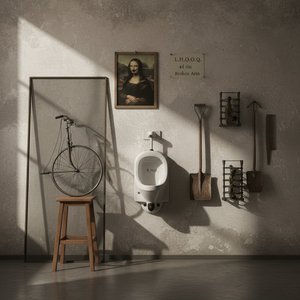
Among Duchamp's most notable contributions is 'Trap' (1917), a readymade artwork consisting of a wooden and metal coatrack. The artist submitted it to a show at the Bourgeois Art Gallery, requesting that it be placed near the entryway. During the exhibition, 'Trap' went largely unnoticed as an art piece, which was precisely Duchamp's intention (Painting by 'Marcel Duchamp' | Marcel Duchamp:Trap).The Readymade Concept and the Demise of Artistic Tradition
Duchamp's readymades, including 'Trap', were designed to question the very nature of art. By selecting ordinary objects and presenting them as works of art, Duchamp aimed to challenge the notion that artistic value is inherently tied to an object's aesthetic qualities or craftsmanship (Art Movements 1/2).Duchamp's Legacy and Influence on Contemporary Art
Marcel Duchamp's groundbreaking approach to art has had a lasting impact on contemporary artists, who continue to explore the boundaries of artistic expression. His work serves as a reminder that art can be found in the most unexpected places, and that its value lies not only in its physical form but also in the ideas it represents (Art Movements 1/2). To learn more about Marcel Duchamp's life and work, visit Marcel Duchamp's page on ArtsDot.com. Additionally, explore our extensive collection of art movements and artists to deepen your understanding of the evolution of art throughout history (A Journey Through Art History with ArtsDot’s Extensive Collection). Note: This article is intended for informational purposes only. For a more comprehensive understanding of Marcel Duchamp and his work, consider consulting scholarly resources or enrolling in an art history course.Въпроси и отговори
Популярно ли е произведението „Trap“ на Марсел Дюшан?
„Trap“ на Марсел Дюшан има Iconic ниво на популярност. Тази класификация отразява до каква степен произведението е разпознаваемо.
Мога ли да гледам "Trap" като слайдшоу на цял екран?
„Trap“ на Марсел Дюшан може да бъде разгледано като слайдшоу на страницата Слайдшоу на произведението.
Какъв е форматът на "Trap"?
Форматът на „Trap“ е Landscape. Това е полезно при планирането на мястото, където ще бъде поставена репродукцията.
Свързани произведения


Биография на художника
Marcel Duchamp (1887–1968): A Revolutionary Spirit
Marcel Duchamp, Henri-Robert-Marcel Duchamp, was born in Blainville-sur-Mer, Normandy, France, on July 28, 1887. His artistic lineage traced back to his father, a notary, and his brother Jacques Villon, who established himself as a successful painter – a familial encouragement that nevertheless wouldn’t fully encapsulate the rebellious spirit that would define Duchamp's life and career. Initially drawn to formal training in Paris, he mastered traditional techniques and experimented with Post-Impressionist styles, absorbing influences from artists like Cézanne and Gauguin. However, this grounding in academic art served as a crucial catalyst for his profound questioning of artistic conventions. He recognized that mere visual representation wasn’t sufficient to grapple with the existential anxieties of the era—specifically, the devastating impact of World War I on European society. This disillusionment fueled his embrace of Dadaism, a movement born from utter rejection of logic and reason, marking a decisive break from established artistic paradigms.Early Artistic Explorations: Cubism and Impressionism
Duchamp’s initial foray into art began with an exploration of Cubism alongside Jacques Villon. Their collaborative efforts yielded works like *Portrait of Chess Players* (1911), demonstrating a fascination for fragmented forms and multiple perspectives—a radical departure from the single viewpoint championed by earlier artistic traditions. While acknowledging the aesthetic merits of Cubist principles, Duchamp swiftly transcended purely visual concerns, perceiving that artistic expression demanded more than just rearranging elements on canvas. He sought to engage with deeper philosophical questions about perception and reality. This intellectual curiosity would propel him toward Dadaism and beyond.The Dadaist Rebellion: Challenging Artistic Boundaries
Duchamp’s involvement in Dadaism solidified his commitment to dismantling conventional notions of art. Rejecting the values of beauty, craftsmanship, and emotional expression—characteristics deemed paramount by mainstream artistic circles—he championed a stance of deliberate provocation. Dada artists aimed not to create aesthetically pleasing objects but rather to disrupt established hierarchies and expose the absurdity inherent in societal norms. Duchamp’s Dadaist output included provocative collages and assemblages that questioned accepted standards of taste and challenged viewers to confront uncomfortable truths. The movement's manifesto proclaimed “Anti-art,” asserting that art should be conceived as a negation of everything it represented.The Birth of Conceptual Art: ‘Ready-Made’ Sculpture
Duchamp’s most enduring contribution to the history of art arrived in 1917 with his groundbreaking concept of the ‘ready-made.’ Recognizing that artistic creativity extended beyond mere manual skill, he questioned whether an object could be considered art if it was simply presented as such—without any transformative intervention. His seminal work, *Fountain* (1917), consisted of a porcelain urinal signed “R. Mutt,” submitted anonymously to Marcel Duchamp’s own exhibition in New York City. This audacious act deliberately undermined the distinction between artwork and everyday object, sparking intense debate about authorship, originality, and the very definition of artistic value. It established Conceptual Art as a dominant force in postwar art, prioritizing ideas over visual form.Later Works: The Large Glass and Beyond
Duchamp continued to push boundaries throughout his career, culminating in *The Large Glass* (1915–1923), an ambitious multi-faceted project incorporating glass panels, enamel paint, and intricate sculptural elements. This monumental artwork explored themes of illusion, perception, and the subconscious—reflecting Duchamp’s lifelong fascination with psychoanalysis and his desire to delve into the complexities of human consciousness. His later explorations encompassed film, poetry, and graphic design, demonstrating a multifaceted artistic sensibility that defied categorization. Marcel Duchamp died October 2, 1968, leaving behind an unparalleled legacy as one of the most influential figures in modern art—a testament to his unwavering conviction that art should provoke thought and challenge accepted conventions. His influence persists today, inspiring artists to question assumptions about creativity and artistic expression.
Марсел Дюшан
1887 - 1968 , Франция
Бързи факти
- Artistic Movement Or Style:
- Кубизъм
- Дадаизъм
- Концептуален изкуство
- Artists Or Movements Influenced By This Artist:
- Концептуално изкуство
- Поп арт
- Минимализъм
- Date Of Birth: Юли 28, 1887
- Date Of Death: Октомври 2, 1968
- Full Name: Marcel Duchamp
- Nationality: Френски-Американски
- Notable Artworks:
- Фонтан
- Л.Х.О.О.К.
- Голям стъкло
- Place Of Birth: Блейнвил, Франция
Свързани статии
Marcel Duchamp: Challenging Conventions & Redefining Art in the 20th Century
Explore the revolutionary art of Marcel Duchamp! Discover how his Dadaist readymades challenged artistic conventions & redefined modern art. A deep dive into 'Fountain', conceptual shifts, and his lasting impact.

Marcel Dyf: A Study in Belgian Surrealist Landscape and the Poetics of Memory
Explore the captivating landscapes of Marcel Dyf (1899-1985). Discover his Impressionist roots, subtle Surrealism, and enduring legacy. Learn about his life, art, and value with ArtsDot.

Dadaism: A Rebellion Against Reason – Exploring the Origins, Characteristics, and Enduring Legacy of an Anti-Art Movement
Explore the revolutionary Dada art movement! Discover its origins in WWI, key artists like Duchamp & Höch, core principles, and lasting impact on modern and contemporary art. A comprehensive guide for enthusiasts.

Antoine Blanchard (Marcel Masson): Parisian Abstraction & the Legacy of Automatism
Explore the captivating world of Antoine Blanchard (Marcel Masson) and his nostalgic Parisian scenes. Discover his artistic influences, unique style, and the challenges of authentication. Expert insights & art appraisal information.

Dada: A Revolution of Anti-Art & the Rejection of Reason in Early 20th Century Aesthetics
Explore the revolutionary Dada art movement! Discover its origins, key artists like Duchamp & Arp, and lasting impact on modern art. A deep dive into anti-art & challenging conventions.


