


 Преглед в реален мащаб
 Сподели
 Сподели
 Подробности
 Ръководство

 Изтегляне
 Подобни артикули
 Рентгенова снимка
 Слайдшоу
 Статистика
Selected Details after Ingres II
 Acrylic On Canvas
- WallArt
- Dada
 1968
1968 34.0 x 23.0 cm
 Разгърни целия текст
Жикле / Художествен принт
Giclée печат или принт върху платно с музейно качество, бързо производство и гъвкави опции за завършен вид. ( Поръчайте ръчно рисувано репродукция на този колекционерски предмет Превключване към дигитално изображение)




P118B $10

P118H $10

P118W $10

P438Z $10

P508JH $12

P508YH $12

P805H $10

P805Z $10

P919BZ $10

P919G $10

P919XJ $10

P959ZH $10

P968JZ $12

W106C $8

W218G $10

W218JH $8

W218Y $10

W307PJ $10

W316G $10

W316PJ $8

W316Y $10

W398PJ $8

W4111J $10

W500HY $15

W500JH $15

W692G $12

W849H $8

W940BG $15

W953PJ $8




Изберете от нашите предварително зададени размери, които съответстват на оригиналните пропорции на произведението.

Можете да въведете собствени размери, за да паснат на конкретна рамка или пространство. Ако избраният от Вас размер не съвпада с пропорциите на оригиналното изображение, ние ще изрежем произведението или ще разширим изображението с огледален или едноцветен ръб. Дигитален макет ще бъде изпратен за Ваше одобрение преди започването на производството.
Моля, имайте предвид, че предпрегледът на екрана не отразява реалното изрязване или разширяване. Само макетът ще покаже точно финалната композиция.
Въпреки че са налични персонализирани размери, препоръчваме да изберете размер от предварително дефинирания списък, за да запазите оригиналните пропорции.
Доставка по целия свят () в рамките на 2 седмици вместо стандартните 4/5 седмици. (26 Септември)

Безплатна експресна доставка по целия свят

Висококачествено ленено платно

Пълно застраховане на доставката

Гаранция за възстановяване на митнически такси

Гаранция за пълно съответствие на цветовете

Политика за връщане в рамките на 100 дни (само при дефекти)

100% Гаранция за връщане на сумата

Отстъпка при поръчка на повече произведения
 Опцията със стъкло е налична само за размери под 110 см

Selected Details after Ingres II
Жикле / Художествен принт
Размер на репродукцията
-


Крайна цена
$ 62
A Delicate Exploration of Intimacy: Marcel Duchamp’s ‘Selected Details after Ingres II’
Created in 1968, during the final year of his prolific life, ‘Selected Details after Ingres II’ is a deceptively simple yet profoundly resonant work by the groundbreaking artist Marcel Duchamp. This black and white line drawing offers a quiet contemplation on the human form and the complexities of connection.
Subject & Composition
The artwork depicts two nude figures locked in an intimate embrace. The composition is tightly focused, centering entirely on their intertwined bodies against a stark, undefined background. Duchamp deliberately avoids any suggestion of setting or narrative context, directing the viewer’s attention solely to the physical and emotional interaction between the pair. Their forms are not idealized but rendered with a sensitive realism that emphasizes vulnerability and closeness.
Style & Technique
Executed with delicate precision using what appears to be pen or pencil, ‘Selected Details after Ingres II’ showcases Duchamp's mastery of line. The absence of shading or dramatic contrast creates a flat, almost graphic quality. This stylistic choice echoes early 20th-century figurative drawing and hints at influences from Expressionism in its simplification of form and focus on emotional impact. The work is characterized by its economy of means – Duchamp achieves remarkable expressiveness with minimal visual elements.
Historical Context & Artistic Lineage
The title itself provides a crucial key to understanding the artwork. It references Jean-Auguste-Dominique Ingres, a 19th-century master of Neoclassical painting renowned for his precise and idealized depictions of the nude. Duchamp’s work is not a direct copy or homage but rather a playful *deconstruction* of Ingres' aesthetic. He strips away the academic polish and sensual idealization, presenting instead a more raw and psychologically complex portrayal of intimacy. This act aligns with Duchamp’s broader artistic project – challenging conventional notions of art and beauty.
Symbolism & Emotional Resonance
While Duchamp often resisted definitive interpretations of his work, ‘Selected Details after Ingres II’ evokes a sense of longing and quiet sadness. The figures' embrace feels both protective and melancholic. The lack of facial detail encourages viewers to project their own emotions onto the scene. It is a study in human connection stripped bare, revealing its inherent tenderness and fragility. The deliberate ambiguity invites contemplation on themes of love, loss, and the ephemeral nature of physical intimacy.
Collecting & Interior Design
For collectors: This work represents a fascinating late-period exploration by one of the 20th century’s most influential artists. Its relatively small size (34 x 23 cm) makes it an accessible entry point into Duchamp's oeuvre.
- Its monochromatic palette and minimalist aesthetic make it incredibly versatile for a variety of interior styles.
- It pairs well with modern or contemporary furnishings, adding a touch of intellectual sophistication to any space.
- Consider framing the artwork simply, allowing the delicate lines and emotional weight of the image to take center stage.
‘Selected Details after Ingres II’ is more than just a drawing; it's an invitation to reflect on the enduring mysteries of human connection. It’s a piece that rewards close viewing and offers new insights with each encounter.
Свързани произведения


Биография на художника
Marcel Duchamp (1887–1968): A Revolutionary Spirit
Marcel Duchamp, Henri-Robert-Marcel Duchamp, was born in Blainville-sur-Mer, Normandy, France, on July 28, 1887. His artistic lineage traced back to his father, a notary, and his brother Jacques Villon, who established himself as a successful painter – a familial encouragement that nevertheless wouldn’t fully encapsulate the rebellious spirit that would define Duchamp's life and career. Initially drawn to formal training in Paris, he mastered traditional techniques and experimented with Post-Impressionist styles, absorbing influences from artists like Cézanne and Gauguin. However, this grounding in academic art served as a crucial catalyst for his profound questioning of artistic conventions. He recognized that mere visual representation wasn’t sufficient to grapple with the existential anxieties of the era—specifically, the devastating impact of World War I on European society. This disillusionment fueled his embrace of Dadaism, a movement born from utter rejection of logic and reason, marking a decisive break from established artistic paradigms.Early Artistic Explorations: Cubism and Impressionism
Duchamp’s initial foray into art began with an exploration of Cubism alongside Jacques Villon. Their collaborative efforts yielded works like *Portrait of Chess Players* (1911), demonstrating a fascination for fragmented forms and multiple perspectives—a radical departure from the single viewpoint championed by earlier artistic traditions. While acknowledging the aesthetic merits of Cubist principles, Duchamp swiftly transcended purely visual concerns, perceiving that artistic expression demanded more than just rearranging elements on canvas. He sought to engage with deeper philosophical questions about perception and reality. This intellectual curiosity would propel him toward Dadaism and beyond.The Dadaist Rebellion: Challenging Artistic Boundaries
Duchamp’s involvement in Dadaism solidified his commitment to dismantling conventional notions of art. Rejecting the values of beauty, craftsmanship, and emotional expression—characteristics deemed paramount by mainstream artistic circles—he championed a stance of deliberate provocation. Dada artists aimed not to create aesthetically pleasing objects but rather to disrupt established hierarchies and expose the absurdity inherent in societal norms. Duchamp’s Dadaist output included provocative collages and assemblages that questioned accepted standards of taste and challenged viewers to confront uncomfortable truths. The movement's manifesto proclaimed “Anti-art,” asserting that art should be conceived as a negation of everything it represented.The Birth of Conceptual Art: ‘Ready-Made’ Sculpture
Duchamp’s most enduring contribution to the history of art arrived in 1917 with his groundbreaking concept of the ‘ready-made.’ Recognizing that artistic creativity extended beyond mere manual skill, he questioned whether an object could be considered art if it was simply presented as such—without any transformative intervention. His seminal work, *Fountain* (1917), consisted of a porcelain urinal signed “R. Mutt,” submitted anonymously to Marcel Duchamp’s own exhibition in New York City. This audacious act deliberately undermined the distinction between artwork and everyday object, sparking intense debate about authorship, originality, and the very definition of artistic value. It established Conceptual Art as a dominant force in postwar art, prioritizing ideas over visual form.Later Works: The Large Glass and Beyond
Duchamp continued to push boundaries throughout his career, culminating in *The Large Glass* (1915–1923), an ambitious multi-faceted project incorporating glass panels, enamel paint, and intricate sculptural elements. This monumental artwork explored themes of illusion, perception, and the subconscious—reflecting Duchamp’s lifelong fascination with psychoanalysis and his desire to delve into the complexities of human consciousness. His later explorations encompassed film, poetry, and graphic design, demonstrating a multifaceted artistic sensibility that defied categorization. Marcel Duchamp died October 2, 1968, leaving behind an unparalleled legacy as one of the most influential figures in modern art—a testament to his unwavering conviction that art should provoke thought and challenge accepted conventions. His influence persists today, inspiring artists to question assumptions about creativity and artistic expression.
Марсел Дюшан
1887 - 1968 , Франция
Бързи факти
- Artistic Movement Or Style:
- Кубизъм
- Дадаизъм
- Концептуален изкуство
- Artists Or Movements Influenced By This Artist:
- Концептуално изкуство
- Поп арт
- Минимализъм
- Date Of Birth: Юли 28, 1887
- Date Of Death: Октомври 2, 1968
- Full Name: Marcel Duchamp
- Nationality: Френски-Американски
- Notable Artworks:
- Фонтан
- Л.Х.О.О.К.
- Голям стъкло
- Place Of Birth: Блейнвил, Франция
Свързани статии
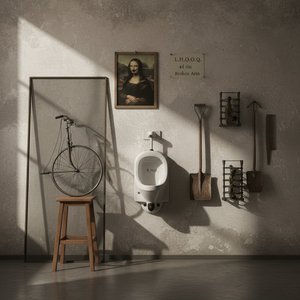
Marcel Duchamp: Challenging Conventions & Redefining Art in the 20th Century
Explore the revolutionary art of Marcel Duchamp! Discover how his Dadaist readymades challenged artistic conventions & redefined modern art. A deep dive into 'Fountain', conceptual shifts, and his lasting impact.
Timeless & Chic: Elevating Your New Home with the Sophistication of Black and White Photography
Transform your new home with the timeless allure of black and white photography. ArtsDot.com specializes in elegant monochrome decor and custom hand-painted wedding portraits that turn cherished milestones into lasting, soulful masterpieces. Elevate your space with ease.

Monochrome Visions: Exploring the Aesthetic & Historical Significance of Black & White Photography
Explore the rich history & artistic power of black and white photography. From early techniques to iconic masters like Ansel Adams, discover why monochrome continues to captivate art lovers today. Expert insights for collectors.

Топ 10 шедьовъра в бяло: Изкуство и елегантност за вашия дом | ArtsDot.com
Разгледайте Топ 10 шедьовъра в бяло – Моне, Ренуар и други велики художници! Открийте историите зад импресионизма, минимализма и красотата на бялата цветова палитра. Купете висококачествени репродукции на картини онлайн на ArtsDot.com.

Топ 10 шедьовъра в черно: Изкуство и емоция от ArtsDot.com
Разгледайте топ 10 шедьовъра в черно – от Ван Гог до Мунк! Открийте историите зад картините, техниките и емоциите. Репродукции с музейно качество на ArtsDot.com. Разгледайте пълната колекция онлайн!


