


 Преглед в реален мащаб
 Сподели
 Сподели
 Подробности
 Ръководство

 Изтегляне
 Подобни артикули
 Рентгенова снимка
 Слайдшоу
 Статистика
St Mark


 Разгърни целия текст
Ръчно изработена маслена репродукция
Ръчно рисувана маслена картина върху платно във вашия размер и рамка, изработена по поръчка от нашите художници. ( Избор на принт Превключване към дигитално изображение)




P118B $10

P118H $10

P118W $10

P438Z $10

P508JH $12

P508YH $12

P805H $10

P805Z $10

P919BZ $10

P919G $10

P919XJ $10

P959ZH $10

P968JZ $12

W106C $8

W218G $10

W218JH $8

W218Y $10

W307PJ $10

W316G $10

W316PJ $8

W316Y $10

W398PJ $8

W4111J $10

W500HY $15

W500JH $15

W692G $12

W849H $8

W940BG $15

W953PJ $8




Изберете от нашите предварително зададени размери, които съответстват на оригиналните пропорции на произведението.

Можете да въведете свои собствени размери, за да паснат на конкретна рамка или пространство. Ако избраният от вас размер не съответства на пропорциите на оригиналното изображение, ние ще изрежем произведението или ще разширим картината с допълнителни ръчно рисувани елементи. Дигитален макет ще бъде изпратен за ваше одобрение преди започване на производството.
Моля, обърнете внимание, че предпрогледа на екрана не отразява действителното изрязване или разширяване. Само макетът ще покаже точно финалната композиция.
Въпреки че са налични персонализирани размери, препоръчваме да изберете размер от предварително дефинирания списък, за да запазите оригиналните пропорции.
След получаване на поръчка, екипът на ArtsDot.com ще изпрати имейл до клиента с инструкции и ще предостави примерен макет за преглед.
Доставка по целия свят () в рамките на 3-4 седмици вместо стандартните 5 седмици. (25 Септември). Без компромис с качеството.

Безплатна експресна доставка по целия свят

Висококачествено ленено платно

Пълно застраховане на доставката

Гаранция за възстановяване на митнически такси

Гаранция за пълно съответствие на цветовете

Политика за връщане в рамките на 100 дни (само при дефекти)

100% Гаранция за връщане на сумата

Отстъпка при поръчка на повече произведения
 Опцията със стъкло е налична само за размери под 110 см

St Mark
Техника на репродукция
Размер на репродукцията
-


Крайна цена
$ 263
Свързани произведения


![Legend Of St Francis - [08] - Vision Of The Flaming Chariot — Джото Ди Бондоне, Gothic And Proto-renaissance](/media/artworks/images-thumb/65/6e/656e345ff55e49ce2e4377a050b85aa1.jpg)


![Legend Of St Francis - [18] - Apparition At Arles — Джото Ди Бондоне, Proto-renaissance](/media/artworks/images-thumb/79/1c/791c45725458c47701a241d551e6298f.jpg)
![Legend Of St Francis - [12] - Ecstasy Of St Francis — Джото Ди Бондоне, Proto-renaissance](/media/artworks/images-thumb/04/ab/04abd6d876609c25d110143ce0fae9c5.jpg)

Биография на художника
Lorenzo di Bicci: Bridging the Gothic and Renaissance in Florence
Lorenzo di Bicci, born around 1350 in the heart of Florence, stands as a pivotal figure bridging the late Gothic traditions of his predecessors with the burgeoning naturalism that would define the early Renaissance. While often overshadowed by the towering figures of Giotto and Masaccio, Lorenzo’s contribution to Florentine painting during the mid-14th century was remarkably significant, establishing a style characterized by refined elegance, luminous colors, and a subtle shift towards greater realism – a crucial stepping stone in the evolution of Italian art. His life unfolded within a vibrant artistic milieu, shaped by the legacy of masters like Andrea Pisano and Giotto di Bondone, yet he forged his own distinct path, primarily serving the needs of Florence’s wealthy clergy and merchant families. Lorenzo's early training remains somewhat shrouded in mystery; it is believed that he learned his craft largely from his father, Jacopo di Bicci, a skilled painter who likely worked as a workshop assistant for the renowned Giotto. This apprenticeship provided Lorenzo with an invaluable foundation in technique and artistic principles, but crucially, it also exposed him to Giotto’s revolutionary approach – one that prioritized human emotion and observation over rigid adherence to Byzantine conventions. Lorenzo's style, therefore, is not simply a copy of his father’s work; rather, it represents a deliberate adaptation and refinement of those lessons, imbued with a personal sensibility. He was known for exceptional talent in drawing, an ability he put to use at the initial stages of his painting. Unlike many celebrated Florentine artists of this period, Lorenzo mostly received commissions from the country clergy and from the lower-middle class Florentine guilds.A Style Defined by Refinement and Light
Lorenzo’s paintings are immediately recognizable for their harmonious color palettes and a remarkable sense of luminosity. He eschewed the heavy, dark backgrounds favored by many of his contemporaries, opting instead for lighter, more airy compositions that allowed figures to emerge with clarity and grace. This preference for light is not merely aesthetic; it reflects a deeper philosophical shift – a move towards celebrating the beauty and dignity of human life. His figures tend to have round faces and were often expressionless, conveying an air of serene composure. He was known for exceptional talent in drawing, an ability that he put to use at the initial stages of his painting. Lorenzo’s compositions avoided complexity, focusing on clear narratives and balanced arrangements. He skillfully employed perspective, though not with the mathematically precise rigor of later Renaissance artists, creating a sense of depth and spatial awareness through subtle variations in scale and detail.Collaborations and Key Works
Lorenzo's career was marked by numerous collaborations, often working alongside other prominent artists such as Agnolo Gaddi and Niccolò di Pietro Gerini. His early work, exemplified by the panel depicting *St. Martin Enthroned* (circa 1380), showcases his developing style – a blend of Gothic elegance and nascent Renaissance realism. This piece, now housed in the Depositi Galleria d'Arte Moderna in Florence, demonstrates his mastery of color and composition, as well as his ability to imbue religious subjects with a sense of quiet dignity. He also contributed significantly to the decoration of Orsanmichele, designing medallions for the Loggia dei Lanzi that celebrated Florentine virtues. Later commissions included altarpieces and frescoes, reflecting his versatility and adaptability.Influence and Legacy
Lorenzo di Bicci’s influence extended far beyond his own lifetime. He is considered a crucial link between the late Gothic style of his predecessors and the groundbreaking innovations of artists like Masaccio and Botticelli. His emphasis on naturalism, combined with his refined aesthetic sensibilities, paved the way for the High Renaissance. His successors, Bicci di Lorenzo and Neri di Bicci, continued to serve these groups, carrying forward his artistic legacy. While he may not be as widely celebrated as some of his contemporaries, Lorenzo di Bicci’s contribution to Florentine painting is undeniable – a testament to his skill, vision, and pivotal role in shaping the course of Italian art history. His work stands as a beautiful example of how tradition could be skillfully adapted and transformed, ultimately contributing to the remarkable flowering of artistic creativity that characterized Renaissance Florence.
Lorenzo di Bicci
1350 - 1427 , Italy
Бързи факти
- Artistic Movement Or Style: Florentine School
- Artists Or Movements Influenced By This Artist:
- Bicci di Lorenzo
- Neri di Bicci
- Artists Who Influenced This Artist:
- Andrea di Cione
- Giotto di Bondone
- Date Of Birth: c. 1350
- Date Of Death: 1427
- Full Name: Lorenzo di Bicci
- Nationality: Italian
- Notable Artworks:
- St. Martin Enthroned
- Dwelling in the Fuchun Mountains
- Place Of Birth: Florence, Italy
Свързани статии

The Radiant Dusk of Medieval Vision: Exploring Late Gothic Art's Synthesis of Faith, Form & Emotionality (c. 1300-1500)
Explore the exquisite beauty & spiritual depth of Late Gothic art (c. 1300-1500). Discover key artists, symbolism, and its lasting influence on the Renaissance. Expert insights at ArtsDot.
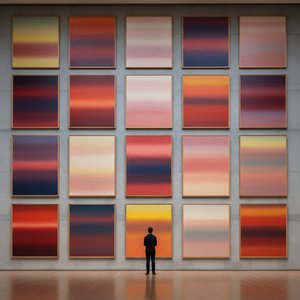
Топ 25 шедьовъра на Марк Ротко: Емоционални пейзажи за вашия дом | ArtsDot.com
Разгледайте топ 25 шедьовъра на Марк Ротко – емоционални абстрактни живописи, определящи експресионизма. Историята зад всяка картина, техники и цветове. Купете репродукции с музейно качество за вашия дом на ArtsDot.com!

Late Medieval Masterpieces: 10 Artworks That Defined an Era | ArtsDot
Journey through 10 defining Late Medieval masterpieces – from Giotto's frescoes to Jan van Eyck’s realism. Explore the stories, techniques & vibrant colors of Gothic art. Find museum-quality reproductions and elevate your home decor with ArtsDot.com! Discover all masterpieces on ArtsDot.com

Джорджо Вазари: 25 шедьовъра на Джото ди Бондоне – изкуство за вашия дом
Открийте 25 шедьовъра на Джото ди Бондоне – ренесансов гений и пионер в изкуството! Фрески, Мадони, Христос и библейски сцени. Вдъхновете се за вашия дом с висококачествени репродукции на ArtsDot.com.

The Shadow of Faith: Exploring Gothic Art's Spiritual Intensity & Architectural Innovation
Explore the spiritual intensity & architectural innovation of Gothic art! Discover the symbolism behind cathedrals, stained glass & master artists like Giotto and Monet. A deep dive into medieval history & artistic expression.