


 Преглед в реален мащаб
 Сподели
 Сподели
 Подробности
 Ръководство

 Изтегляне
 Подобни артикули
 Рентгенова снимка
 Слайдшоу
 Статистика
Study Sheet
 Acrylic On Canvas
- WallArt
- Expressionist Printmaking
 1931
1931 40.0 x 32.0 cm
 Kunsthalle Bremen
 Разгърни целия текст
Жикле / Художествен принт
Giclée печат или принт върху платно с музейно качество, бързо производство и гъвкави опции за завършен вид. ( Поръчайте ръчно рисувано репродукция на този колекционерски предмет Превключване към дигитално изображение)




P118B €10

P118H €10

P118W €10

P438Z €10

P508JH €12

P508YH €12

P805H €10

P805Z €10

P919BZ €10

P919G €10

P919XJ €10

P959ZH €10

P968JZ €12

W106C €8

W218G €10

W218JH €8

W218Y €10

W307PJ €10

W316G €10

W316PJ €8

W316Y €10

W398PJ €8

W4111J €10

W500HY €15

W500JH €15

W692G €12

W849H €8

W940BG €15

W953PJ €8




Изберете от нашите предварително зададени размери, които съответстват на оригиналните пропорции на произведението.

Въведете необходимата ширина и височина, за да паснат на вашата рамка или стена. Принтовете могат само да се изрязват, но никога не могат да бъдат по-големи от оригиналната картина, така че при размер с различен формат част от изображението ще бъде загубена. Преди да започнем печат, ще ви изпратим дигитален мок업 за одобрение. Изображението, показано на тази страница, не показва реалното изрязване — само мок업ът го показва.
Доставка по целия свят () в рамките на 2 седмици вместо стандартните 4/5 седмици. (24 Октомври)

Безплатна експресна доставка по целия свят

Висококачествено ленено платно

Пълно застраховане на доставката

Гаранция за възстановяване на митнически такси

Гаранция за пълно съответствие на цветовете

Политика за връщане в рамките на 100 дни (само при дефекти)

100% Гаранция за връщане на сумата

Отстъпка при поръчка на повече произведения
 Опцията със стъкло е налична само за размери под 110 см

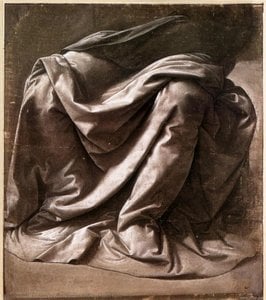
Study Sheet
Жикле / Художествен принт
Размер на репродукцията
-


Крайна цена
€ 54
A Portrait of Family Bonds: Käthe Kollwitz’s “Study Sheet”
Käthe Kollwitz's "Study Sheet," created in 1931, transcends mere depiction; it embodies the profound empathy and unwavering commitment to social justice that defined her artistic legacy. This deceptively simple drawing—measuring 40 x 32 cm—offers a glimpse into Kollwitz’s meticulous process and speaks volumes about her enduring fascination with portraying human vulnerability and familial connection. Examining this artwork reveals layers of meaning, reflecting not only the artist's technical prowess but also the socio-political currents shaping early twentieth-century Germany.The Artist’s Vision: Kollwitz’s Style and Technique
Kollwitz’s artistic style is instantly recognizable as Expressionism—a movement characterized by its rejection of idealized beauty in favor of conveying raw emotion and psychological truth. Unlike Impressionists who sought to capture fleeting moments of light, Kollwitz deliberately employed bold lines and muted colors to emphasize the contours of her subjects and imbue them with palpable feeling. The drawing utilizes a charcoal pencil on paper, demonstrating Kollwitz’s mastery of tonal shading—a technique she honed throughout her prolific career. Careful attention is paid to capturing subtle nuances of expression, particularly in the faces of the figures depicted. This deliberate choice underscores Kollwitz's belief that art should serve as a conduit for confronting uncomfortable realities and fostering compassion for those marginalized by society.Historical Context: Weimar Republic Anxiety
“Study Sheet” was produced during the Weimar Republic—a period marked by economic instability, political polarization, and simmering anxieties about the rise of extremist ideologies. Kollwitz’s artistic output coincided with this turbulent era, reflecting a deep concern for the plight of working-class families grappling with poverty and hardship. The depiction of a family huddled together—two adults and two children—immediately evokes images of resilience and solidarity amidst adversity. This motif resonates powerfully within the broader context of Weimar Germany, where anxieties about social upheaval fueled artistic explorations of vulnerability and human dignity. Kollwitz herself was deeply involved in socialist activism, using her art to advocate for social reform and denounce injustice – a commitment that permeated every piece she created.Symbolism Within Simplicity: The Family Unit
The inclusion of three cats within the composition adds another layer of symbolic significance. Cats have long been associated with domestic tranquility and maternal care—representing comfort and protection within the familial sphere. Their presence subtly reinforces Kollwitz’s central theme: the importance of nurturing relationships and safeguarding vulnerable individuals against external pressures. The artist's careful rendering of each feline contributes to the overall atmosphere of warmth and companionship, highlighting Kollwitz’s ability to distill complex emotions into deceptively understated visual elements.Emotional Resonance: A Legacy of Compassion
Ultimately, “Study Sheet” succeeds in capturing a moment of profound human connection—a testament to Kollwitz's unwavering empathy for the suffering masses. The drawing compels viewers to contemplate themes of familial love, resilience, and compassion—values that remain remarkably relevant today. It serves as an enduring reminder that art can illuminate the darkest corners of experience while simultaneously affirming the inherent dignity of every human being. Kollwitz’s masterful technique and her unflinching portrayal of emotion solidify “Study Sheet” as a cornerstone of Expressionist art and a poignant reflection on the human condition.Въпроси и отговори
Кой е създал "Study Sheet" и през коя година?
"Study Sheet" е създадена от Кате Коловциц през 1931 г.
Какво вид произведение е „Study Sheet“?
„Study Sheet“ на Кате Коловциц е класифициран като WallArt. Категорията описва вида на произведението, което представлява оригинала.
Каква атмосфера внася „Study Sheet“ на Кате Коловциц в интериора?
Calm атмосферата на „Study Sheet“ на Кате Коловциц съответства на препоръчаното пространство: Living Room.
Свързани произведения




Биография на художника
Early Life and Artistic Awakening
Käthe Kollwitz, born Käthe Schmidt on July 8, 1867, in Kaliningrad, Russia, emerged from a family deeply rooted in both intellectual ferment and social conscience. Her father, Karl Schmidt, was a progressive political figure—a radical social democrat and mason—while her maternal grandfather, Julius Rupp, instilled in young Käthe a potent blend of religious conviction and socialist ideals. This unique upbringing proved foundational, shaping not only her worldview but also the very core of her artistic expression. Even as a child, Kollwitz demonstrated an innate talent for drawing, encouraged by her father who recognized and nurtured her burgeoning creativity. Formal training began at age twelve under the guidance of local artists Gustav Naujok and Rudolf Mauer in Königsberg, laying the groundwork for a lifelong dedication to visual storytelling. These early lessons weren’t merely technical exercises; they were the first steps on a path toward becoming a powerful voice for the marginalized and oppressed. She continued her studies in Berlin and Munich, immersing herself in the artistic currents of the late 19th century, but always returning to the human condition as her central subject.- Her father’s political activism instilled in her a commitment to social justice from an early age.
- Julius Rupp’s religious convictions combined with socialist ideals created a formative intellectual environment.
- Early artistic instruction fostered her talent for drawing and established a lifelong passion for visual representation.
The Crucible of Experience: Art and Social Commentary
Kollwitz’s marriage to Karl Kollwitz in 1891 marked a pivotal moment, both personally and artistically. The couple settled in Berlin, where Karl practiced medicine among the city’s impoverished working class. This direct exposure to hardship and suffering profoundly impacted Käthe’s artistic vision. Initially, her work focused on depicting the realities of working-class life, imbued with the social democratic principles she had absorbed from her family. However, it was *The Weavers Cycle* (1894-1898), a series of prints inspired by Gerhart Hauptmann's play of the same name, that catapulted Kollwitz to widespread recognition. This powerful work vividly portrayed the desperation and revolt of Silesian weavers facing economic exploitation—a stark indictment of social injustice rendered with unflinching honesty. She didn’t shy away from portraying the brutal realities she witnessed; instead, she embraced them as essential components of her artistic truth. Following *The Weavers*, Kollwitz embarked on *The Peasants’ War Cycle* (1902-1908), exploring themes of rebellion and oppression through the lens of 16th-century German history. These early cycles established her reputation as an artist deeply committed to social realism, yet already hinting at the emotional intensity that would become a hallmark of her style.- *The Weavers Cycle* powerfully depicted economic exploitation and revolt among Silesian weavers.
- *The Peasants’ War Cycle* examined themes of rebellion and oppression rooted in historical events.
Loss, Grief, and the Expressionist Impulse
The First World War brought unimaginable tragedy into Kollwitz’s life. The death of her son, Peter, in 1914 shattered her world and irrevocably altered the course of her art. Grief became a central theme, permeating works like *Death with Girl in Her Lap*, a haunting depiction of maternal sorrow that transcends specific loss to embody universal mourning. This period also saw a shift in her artistic style, moving away from strict realism toward a more emotionally charged Expressionism. While she never fully abandoned representational forms, Kollwitz began to simplify shapes and amplify emotional impact through stark contrasts and dramatic compositions. Works like *Old Man with Noose* and *Tower of Mothers* exemplify this evolution—raw, visceral expressions of despair and the devastating consequences of war. Her mastery of printmaking techniques – etching, lithography, woodcuts – allowed her to achieve these effects, utilizing aquatint and sandpaper to create dramatic textures and tonal variations.- The death of her son profoundly impacted Kollwitz’s artistic vision, fueling themes of grief and loss.
- Her stylistic shift toward Expressionism prioritized emotional impact over precise representation.
Recognition, Resilience, and Enduring Legacy
Despite facing immense personal hardship, Kollwitz continued to create art that challenged societal norms and gave voice to the voiceless. In 1919, she achieved a historic milestone by becoming the first woman elected to the Prussian Academy of Arts—a testament to her artistic achievements and growing influence. However, this recognition was short-lived. With the rise of Nazism in Germany, Kollwitz was forced to resign from the Academy in 1933, and her work was banned as “degenerate art.” Undeterred, she turned to sculpture in her later years, continuing to explore themes of grief, loss, and resilience in bronze and stone. She died near Dresden in 1945, during the final days of World War II, a poignant end for an artist who had dedicated her life to bearing witness to human suffering. Today, Käthe Kollwitz is celebrated as a pivotal figure in Expressionism and a powerful advocate for social justice. Her art continues to resonate with audiences worldwide, reminding us of the enduring power of empathy and the importance of confronting difficult truths. The Käthe Kollwitz Museum in Berlin stands as a lasting tribute to her legacy, ensuring that her profound artistic vision will continue to inspire generations to come.Influences and Artistic Style
Kollwitz’s artistic development was shaped by several key influences. Max Klinger's print series *Ein Leben* (A Life) profoundly impacted her early work, demonstrating the potential of graphic cycles for narrative storytelling. The plays of Gerhart Hauptmann provided thematic inspiration for works like *The Weavers*, while her husband’s medical practice exposed her to the harsh realities faced by Berlin’s working class. However, Kollwitz wasn’t merely a recorder of external events; she possessed an exceptional ability to translate personal experience into universal emotions. Her style is characterized by its raw emotional intensity, simplified forms, and masterful use of light and shadow. While rooted in realism, her work transcends mere representation, delving into the psychological depths of human suffering. She wasn’t interested in beauty for beauty's sake; she sought to create art that would provoke thought, inspire empathy, and ultimately contribute to a more just world. Her legacy is not simply one of artistic innovation but also of moral courage.
Кате Коловциц
1867 - 1945 , Русия
Бързи факти
- Artistic Movement Or Style: Експресионизъм
- Artists Or Movements Influenced By This Artist: ['Емил Нейде']
- Artists Who Influenced This Artist: ['Макс Клингер']
- Date Of Birth: 8 юли 1867 г.
- Date Of Death: 1945 г.
- Full Name: Käthe Kollwitz
- Nationality: Германец
- Notable Artworks:
- „Мортис Цикл“
- „Веверици цикъл“
- Place Of Birth: Кьонигсберг, Русия
Свързани статии

Еволюиращите портрети: Персонализираното изкуство като летопис на семейния живот през поколенията
Открийте изкуството на семейния портрет! Ръчно рисувани произведения по поръчка, запазващи вашата семейна история за поколения. Експертни консултации и висококачествени репродукции от ArtsDot.

Топ 10 шедьовъра в черно: Изкуство и емоция от ArtsDot.com
Разгледайте топ 10 шедьовъра в черно – от Ван Гог до Мунк! Открийте историите зад картините, техниките и емоциите. Репродукции с музейно качество на ArtsDot.com. Разгледайте пълната колекция онлайн!

Топ 10 шедьовъра в нюансите на слоновата кост и черното: Изкуство за вашия дом от ArtsDot
Разгледайте топ 10 шедьовъра, доминирани от нюансите на слоновата кост и черното! Открийте историите зад известни картини от импресионизма до абстрактното изкуство. Купете висококачествени репродукции на ArtsDot.com и превърнете дома си в галерия.

Леонардо да Винчи: Топ 25 шедьовъра за вашия дом – Изкуство и Декор от ArtsDot
Разгледайте топ 25 шедьовъра на Леонардо да Винчи! От Мона Лиза до Тайната вечеря – истории, техники и вдъхновение за вашия дом. Купете репродукции с музейно качество от ArtsDot.com.

Топ 10 шедьовъра в нюансите на черното: Изкуство и елегантност за вашия дом
Разгледайте топ 10 шедьовъра, доминирани от нюансите на черното! Открийте историите зад известни картини от експресионизма и сюрреализма. Купете висококачествени репродукции за вашия дом на ArtsDot.com