

- 46.0 x 38.0 cm


Картината следва вашите избори: , .
Описание на колекционерския предмет
A striking 1870 self-portrait by Impressionist master Frédéric Bazille captures a serious, intellectual gaze through masterful brushwork, offering a profound window into the artist's soul for your private collection.
 Прочети повече
Биография на художника
Жан Фредерик Базиел (1841-1870) е ключова фигура на импресионизма, известен с ярките си пейзажи и портрети. Разкрий творчеството му и приятелствата с Моне, Ренуар и Сислей!
Ръчно изработена маслена репродукция
Ръчно рисувана маслена картина върху платно във вашия размер и рамка, изработена по поръчка от нашите художници. ( Превключване към принт Превключване към дигитално изображение)
Още информация за тази картина
 Преглед в реален мащаб
 Изпрати
 Сподели
 Детайли
 Ръководство

 Изтегляне
 Подобни артикули
 Рентгенова снимка
 Слайдшоу
 Въпроси и отговори
 Статистика
Поръчайте вашата картина в четири лесни стъпки
Не бързайте. Можете да промените всеки от отговорите; цената в количката ви се актуализира според всеки избор.
1 Стъпка първа от четири
Какъв размер бихте искали?
Тези размери запазват пропорциите на оригиналната картина. Илюстрацията показва избрания от Вас размер върху стена, над двуметрова софа.
Или въведете свои собствени размери
Изберете от нашите предварително зададени размери, които съответстват на оригиналните пропорции на произведението.

Въведете необходимата ширина и височина, за да паснат на вашата рамка или стена. Тъй като това е ръчна работа, при избор на размер с различен формат художникът може да нарисува малко повече около картината или да отреже малко от периферията — вие избирате. Преди да започне рисуването, ще ви изпратим дигитален мок업 за одобрение. Картината, показана на тази страница, не е реалният резултат — само мок업ът го показва.
2 Стъпка две от четири
Как трябва да бъде подготвено: на руло, на платно или в рамка?
Цените по-долу са за избрания от Вас размер от първа стъпка.
Изберете страните на разпънатото платно
Изберете своята рамка

Бяло €1

Размити краища €1

Разширен €1

P118B €10

P118H €10

P118W €10

P438Z €10

P508JH €12

P508YH €12

P805H €10

P805Z €10

P919BZ €10

P919G €10

P919XJ €10

P959ZH €10

P968JZ €12

W106C €8

W218G €10

W218JH €8

W218Y €10

W307PJ €10

W316G €10

W316PJ €8

W316Y €10

W398PJ €8

W4111J €10

W500HY €15

W500JH €15

W692G €12

W849H €8

W940BG €15

W953PJ €8

H24-GOLD €30

H24-SILVER €30

H36-GOLD €45

H36-SILVER €45
С рамка
Рамка: . Общ размер с рамката: .
3 Стъпка три от четири
Желаете ли да промените нещо в картината?
Повечето хора отговарят с „не“. Тъй като всяка картина е изработена на ръка, нашият художник може също така да я адаптира специално за Вас.
След получаване на поръчката, екипът на ArtsDot.com ще изпрати имейл до клиента с инструкции и ще предостави примерен макет
4 Четвърта от четирите стъпки
Няколко варианта за завършен вид
Всички те са по избор. Вече избраните отговори не включват допълнителни разходи.
Кой го рисува?
Доставка по целия свят () в рамките на 3-4 седмици вместо стандартните 5 седмици. (15 Ноември). Без компромис с качеството.
Табелка, точно като в музея?
Детайли за гравираната бронзова плака
This elegant plaque features the artist's name and the title of the artwork, finely engraved for a timeless presentation.
It is made from bronze with a refined, elegant finish. The text is precisely laser-engraved for a sharp and permanent result. Measuring 9x2 cm, the plaque is compact yet easy to read. It's built to be durable and scratch-resistant, offering a professional, museum-quality look. Mounting is simple thanks to the included adhesive backing.
Детайли за прозрачната акрилна плака
The plaque includes essential engraved details such as the artist's name, the title of the artwork, the date it was created, the type of media used-like oil on canvas or watercolor-a brief description of the piece, and a QR code that links to the complete artwork information.
It is crafted from clear acrylic, offering a sleek, modern appearance. The text is UV-engraved in black to ensure strong visual contrast. With a size of 10x15 cm, it ensures optimal readability. It comes equipped with two metal hooks for secure wall mounting. The plaque is designed to be weather-resistant, making it suitable for various environments, and it includes interactive features that work seamlessly with smartphone scanning.
Детайли за черната акрилна плака
This elegant plaque includes engraved information such as the artist's name, the title of the artwork, the date it was created, the type of media used (like oil on canvas or watercolor), a short description of the artwork, and a QR code for quick access to more information.
The plaque itself is made from refined black acrylic with a premium finish. The text is laser-engraved in white for high contrast and readability. Its size is 10x15 cm, designed to be easy to read. It comes with two metal hooks for professional mounting. The design is sleek and fits any interior style. It is also weather-resistant and durable, with built-in digital integration for mobile compatibility.
Защитен лак?
Кога ви е необходимо?
✓ Проверете и поръчайте
Вашата картина, точно както я поръчахте

Self Portrait
Вид репродукция
Размер на репродукцията
-

Елитен старши художник
Повече детайлност, изящество и допълнително време за производство
-

Рамка за репродукция
-
-
За произведения на изкуството или репродукции, чийто размер е над 105 см (приблизително 41 инча) във всяка страна, рамката ще бъде изпратена в разглобен вид като комплект за сглобяване. Този метод гарантира безопасна доставка и предотвратява повреди по време на транспортиране.
Изисква се професионално сглобяване – това не е продукт за самостоятелна изработка (DIY).
Комплектът трябва да бъде сглобен, а платното – опънато от опитен професионален багер, като се използва дървено лепило (не е включено в комплекта), клещи за опъване на платно и затягащи скоби, за да се поддържа правотата на подрамника, докато лепилото изсъхне. Неправилното сглобяване или неравномерното опъване на платното може трайно да повреди произведението и не е покрито от нашата гаранция.
 За произведения на изкуството или репродукции, чийто размер е над 105 см (приблизително 41 инча) във всяка страна, рамката ще бъде изпратена в разглобен вид като комплект за сглобяване. Този метод гарантира безопасна доставка и предотвратява повреди по време на транспортиране.
Всички елементи от масивна дървесина са включени, прецизно изрязани по размер.
Сглобява се с предоставените винтове, както и с лепило за дърво за ъгловите връзки, което не е включено в комплекта и трябва да бъде осигурено от вашия рамкар.
Изискват се професионални инструменти, които не са включени: щипка за опъване на платно (натягач) и скоби за фиксиране на подрамниците под прав ъгъл, докато лепилото изсъхне.
Важно:
За сглобяването на ъглите е необходимо лепило за дърво, рейките трябва да се фиксират с

Етикет с име
-
-

Защитен лак
Гланцов лак (подсилва цветовете и предпазва от светлина и влага)
-

Персонализирай моето произведение
Примери за възможности за персонализация: Заменете лицето със снимка на клиента; Добавете домашен любимец (например, заменете котка с куче); Включете скрито съобщение във фона; Променете пейзажа или елементите на фона.
-

Спешно
Доставка по целия свят () в рамките на 3-4 седмици вместо стандартните 5 седмици. (15 Ноември). Без компромис с качеството.
-
Експресна доставка
Доставка по целия свят () в рамките на 5 седмици. (22 Ноември).
Включена
Обща цена
€ 234
Опцията със стъкло е налична само за размери под 110 см
Включено във всяка поръчка
- Безплатна експресна доставка по целия свят
- Висококачествено ленено платно
- Пълно застраховане на доставката
- Гаранция за възстановяване на митнически такси
- Гаранция за пълно съответствие на цветовете
- Политика за връщане в рамките на 100 дни (само при дефекти)
- 100% Гаранция за връщане на сумата
- Оферта за отстъпка при поръчка на повече бройки


A Glimpse into the Soul of an Impressionist Master
In this poignant Self Portrait, painted in 1870, we encounter Frédéric Bazille not merely as a painter, but as a man caught in the delicate transition between youthful ambition and the heavy mantle of artistic legacy. The canvas presents a striking study of character; the subject gazes directly at the viewer with an expression that is simultaneously serious and deeply introspective. Clad in the crisp formality of a white shirt and a black tie, his neatly combed hair lends him an air of intellectual rigor, yet there is an undeniable vulnerability beneath the surface. This work serves as a profound window into the psyche of a man whose life would be tragically cut short at the height of his creative powers.
The composition is masterfully layered, moving beyond a simple portrait to create a narrative space that feels lived-in and complex. While the central figure commands our immediate attention, the presence of other figures—one positioned toward the right and another receding into the background on the left—suggests a world teeming with social connection and shared history. A subtle, almost ethereal detail, a bird visible near the top-left corner, introduces an element of unexpected life and perhaps symbolizes the fleeting nature of existence. The inclusion of a chair at the far right edge anchors the scene in a domestic reality, grounding the psychological depth of the portrait within a tangible, physical environment.
Technique and the Radiance of Light
As a pivotal figure in the early Impressionist movement, Bazille’s technique in this self-portrait reflects a sophisticated command over light and form. The brushwork, while maintaining a certain structural integrity characteristic of his academic training, begins to embrace the luminous qualities that would define his later contributions to art history. There is a palpable sense of texture in the rendering of his clothing and the subtle shadows that contour his face, creating a three-dimensional presence that breathes within the frame. The interplay of light across the subject's features does more than just define shape; it evokes an emotional temperature, capturing a moment of quiet, contemplative stillness.
For the discerning collector or interior designer, this piece offers much more than mere decoration. It is an invitation to engage with the history of French Impressionism through a deeply personal lens. The painting’s palette and composition make it a versatile centerpiece for a sophisticated interior, providing a focal point that sparks conversation and invites lingering study. Whether placed in a sunlit gallery or a moody, library-style study, this reproduction brings with it the weight of 19th-century history and the enduring beauty of a master's self-reflection.
Въпроси и отговори
Какъв национален произход стои зад Impressionism на "Self Portrait"?
"Self Portrait" свързва изкуственото движение Impressionism с Франция чрез родното място на неговия създател.
Мога ли да гледам "Self Portrait" като слайдшоу на цял екран?
Диапорамата на „Self Portrait“ може да бъде разгледана на страницата Слайдшоу на произведението.
Присъства ли в „Self Portrait“ типичното за творчеството на Фредерик Базил?
"Self Portrait" изобразява self portrait, man with beard, impressionism, male figure, 19th century art, portraiture, докато утвърдените теми на Фредерик Базил са impressionist light and color, french impressionism movement, early career development, foundational portraiture work. Сравнението между двете показва как произведението се свързва с обичайните сюжети на художника.
Подобни произведения


Фредерик Базил
1841 - 1870, Франция
Биография на художника
Jean Frédéric Bazille: A Fleeting Radiance in the Dawn of Impressionism
Jean Frédéric Bazille, a name perhaps less familiar than those of Monet or Renoir, nevertheless holds a crucial place in the genesis of Impressionism. Born in Montpellier, France, on December 6th, 1841, into a family deeply rooted in the wine trade and Protestant traditions, his life was tragically cut short at just 28 years old during the Franco-Prussian War. Yet, within those brief years, Bazille’s artistic vision blossomed, leaving behind a legacy of luminous landscapes and intimate portraits that captured the essence of light and friendship – qualities that would become hallmarks of the Impressionist movement.Early Influences and Parisian Awakening
Bazille's upbringing in Montpellier instilled in him a deep appreciation for the natural world and a keen eye for color, nurtured by his family’s connection to the Languedoc region. However, it was his relocation to Paris in 1862 that truly ignited his artistic journey. Driven by a desire to pursue both medicine and painting – a compromise dictated by his parents – he enrolled at Charles Gleyre's studio, a hub for young artists eager to break free from the rigid constraints of academic art. It was here, amidst the vibrant atmosphere of Parisian studios, that Bazille encountered the giants of Impressionism: Claude Monet, Pierre-Auguste Renoir, and Alfred Sisley. These encounters proved transformative, exposing him to new techniques and a radical approach to painting – *en plein air*, or working outdoors directly from nature. He was profoundly influenced by Eugène Delacroix’s expressive use of color, yet he skillfully synthesized this influence with the burgeoning Impressionist ideals, forging his own distinctive style.A Synthesis of Figure and Landscape
Bazille's artistic approach distinguished itself through a unique integration of figure painting and landscape. Unlike some of his contemporaries who primarily focused on capturing fleeting atmospheric effects, Bazille frequently placed human figures within carefully considered landscapes, imbuing the scenes with emotional resonance. His masterpiece, *Family Reunion* (1867-1868), exemplifies this approach. The painting isn’t merely a depiction of a familial gathering; it's a study in light filtering through the trees, animating the scene and evoking a sense of warmth and intimacy. He demonstrated an ability to capture not just what he *saw*, but also how he *felt* – the emotional impact of color, form, and light. His palette was often richer and more vibrant than that of some other Impressionists, reflecting his connection to the sun-drenched landscapes of his native Languedoc.The Tragedy and Lasting Legacy
Tragically, Bazille’s promising career was abruptly curtailed by the outbreak of the Franco-Prussian War in 1870. Driven by a sense of patriotic duty, he enlisted in the Zouave regiment just months before the conflict erupted. On November 28th, 1870, he fell in action at Beaune-la-Rolande, a young man with immense potential cut short. His untimely death sent shockwaves through the artistic community, depriving them of a generous benefactor and a talented artist. For many years, Bazille’s work remained relatively obscure, overshadowed by the more celebrated figures of Monet and Renoir. However, in recent decades, his contributions have been increasingly recognized and appreciated. Today, his paintings are proudly displayed in prestigious museums like the Musée d'Orsay in Paris, allowing art lovers worldwide to experience the beauty and innovation of his vision. Beyond his artistic output, Bazille embodies the spirit of youthful idealism, unwavering dedication, and the enduring power of friendship – qualities that continue to resonate with audiences today. He remains a poignant reminder of the potential lost, yet also a testament to the lasting impact of a brief but brilliant career.Key Works
- The Pink Dress (c. 1864): A quintessential Impressionist work showcasing Bazille’s ability to capture fleeting moments and the effects of light, featuring his cousin Therese des Hours in a serene landscape setting.
- Family Reunion (1867-1868): Demonstrates Bazille's masterful integration of figure painting and landscape, capturing the warmth and intimacy of a familial gathering through evocative use of light and color.
- Studio in Rue de Furstenberg (c. 1867): A portrait of Bazille’s friend, Édouard Manet, reflecting the artist's interest in capturing personality and atmosphere.
- Bathers (Summer Scene) (c. 1869-1870): An example of Bazille’s ability to capture the beauty of nature and the joy of leisure, showcasing his mastery of light and color.


Свързани статии

Beyond Impressionism: Exploring the Emotional Depth of Post-Impressionist Painting
Explore the profound emotional depth & innovative techniques of Post-Impressionism with ArtsDot. Discover Cézanne, Van Gogh, Gauguin & more – and their lasting impact on modern art.

Valentin Serov: Capturing the Soul of Russia’s Belle Époque
Explore the captivating portraits of Valentin Serov, Russia’s leading Belle Époque artist. Discover his psychological depth, realistic style & lasting influence on Russian art history. Learn more at ArtsDot.
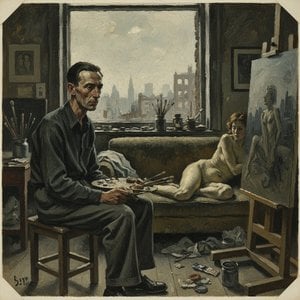
Lucian Freud: A Psychological Portraiture of Post-War Existence
Explore the profound psychological depth of Lucian Freud's portraits. Discover his unique realism, artistic evolution, and lasting influence on modern art. A collector’s guide to a master.