

- 63.0 x 52.0 cm


The picture follows your choices: , .
Описание на колекционерския предмет
 Прочети повече
Биография на художника
Жак-Луи Давид (1748-1825): Водещ френски неокласически художник на революцията и Наполеоновите епохи. Известен с "Клятвата на Коралии", неговото изкуство отразява героизъм, драма и класически идеали.
Ръчно изработена маслена репродукция
Ръчно рисувана маслена картина върху платно във вашия размер и рамка, изработена по поръчка от нашите художници. ( Превключване към принт Превключване към дигитално изображение)
More about this painting
 Преглед в реален мащаб
 Изпрати
 Сподели
 Детайли
 Ръководство

 Изтегляне
 Подобни артикули
 Рентгенова снимка
 Слайдшоу
 Q&A
Q&A Статистика
Order your painting in four simple steps
Take your time. You can change any answer; the price in your order card follows each choice.
1 Step one of four
Which size would you like?
These sizes keep the proportions of the original painting. The drawing shows your choice on a wall, above a two-metre sofa.
Or give your own measurements
Изберете от нашите предварително зададени размери, които съответстват на оригиналните пропорции на произведението.

Въведете необходимата ширина и височина, за да паснат на вашата рамка или стена. Тъй като това е ръчна работа, при избор на размер с различен формат художникът може да нарисува малко повече около картината или да отреже малко от периферията — вие избирате. Преди да започне рисуването, ще ви изпратим дигитален мок업 за одобрение. Картината, показана на тази страница, не е реалният резултат — само мок업ът го показва.
2 Step two of four
How should it be prepared: rolled, stretched or framed?
The prices below are for the size you chose in step one.
Choose the edges of the stretched canvas
Choose your frame

White €1

Blurside €1

Extended €1

P118B €10

P118H €10

P118W €10

P438Z €10

P508JH €12

P508YH €12

P805H €10

P805Z €10

P919BZ €10

P919G €10

P919XJ €10

P959ZH €10

P968JZ €12

W106C €8

W218G €10

W218JH €8

W218Y €10

W307PJ €10

W316G €10

W316PJ €8

W316Y €10

W398PJ €8

W4111J €10

W500HY €15

W500JH €15

W692G €12

W849H €8

W940BG €15

W953PJ €8

H24-GOLD €30

H24-SILVER €30

H36-GOLD €45

H36-SILVER €45
С рамка
Moulding: . Overall size with the frame: .
3 Step three of four
Would you like anything changed in the painting?
Most people answer no. Because each painting is made by hand, our artist can also adapt it for you.
After order, ArtsDot.com team will email client for instructions and provide a mockup preview
4 Step four of four
A few finishing options
All of them are optional. The answers already selected cost nothing extra.
Who paints it?
Доставка по целия свят () в рамките на 3-4 седмици вместо стандартните 5 седмици. (2 Ноември). Без компромис с качеството.
A nameplate, as in a museum?
Детайли за гравираната бронзова плака
This elegant plaque features the artist's name and the title of the artwork, finely engraved for a timeless presentation.
It is made from bronze with a refined, elegant finish. The text is precisely laser-engraved for a sharp and permanent result. Measuring 9x2 cm, the plaque is compact yet easy to read. It's built to be durable and scratch-resistant, offering a professional, museum-quality look. Mounting is simple thanks to the included adhesive backing.
Детайли за прозрачната акрилна плака
The plaque includes essential engraved details such as the artist's name, the title of the artwork, the date it was created, the type of media used-like oil on canvas or watercolor-a brief description of the piece, and a QR code that links to the complete artwork information.
It is crafted from clear acrylic, offering a sleek, modern appearance. The text is UV-engraved in black to ensure strong visual contrast. With a size of 10x15 cm, it ensures optimal readability. It comes equipped with two metal hooks for secure wall mounting. The plaque is designed to be weather-resistant, making it suitable for various environments, and it includes interactive features that work seamlessly with smartphone scanning.
Детайли за черната акрилна плака
This elegant plaque includes engraved information such as the artist's name, the title of the artwork, the date it was created, the type of media used (like oil on canvas or watercolor), a short description of the artwork, and a QR code for quick access to more information.
The plaque itself is made from refined black acrylic with a premium finish. The text is laser-engraved in white for high contrast and readability. Its size is 10x15 cm, designed to be easy to read. It comes with two metal hooks for professional mounting. The design is sleek and fits any interior style. It is also weather-resistant and durable, with built-in digital integration for mobile compatibility.
A protective varnish?
When do you need it?
✓ Check and order
Your painting, as you ordered it

Self-Portrait
Вид репродукция
Размер на репродукцията
-

Елитен старши художник
Повече детайлност, изящество и допълнително време за производство
-

Рамка за репродукция
-
-
За произведения на изкуството или репродукции, чийто размер е над 105 см (приблизително 41 инча) във всяка страна, рамката ще бъде изпратена в разглобен вид като комплект за сглобяване. Този метод гарантира безопасна доставка и предотвратява повреди по време на транспортиране.
Изисква се професионално сглобяване – това не е продукт за самостоятелна изработка (DIY).
Комплектът трябва да бъде сглобен, а платното – опънато от опитен професионален багер, като се използва дървено лепило (не е включено в комплекта), клещи за опъване на платно и затягащи скоби, за да се поддържа правотата на подрамника, докато лепилото изсъхне. Неправилното сглобяване или неравномерното опъване на платното може трайно да повреди произведението и не е покрито от нашата гаранция.
 За произведения на изкуството или репродукции, чийто размер е над 105 см (приблизително 41 инча) във всяка страна, рамката ще бъде изпратена в разглобен вид като комплект за сглобяване. Този метод гарантира безопасна доставка и предотвратява повреди по време на транспортиране.
Всички елементи от масивна дървесина са включени, прецизно изрязани по размер.
Сглобява се с предоставените винтове, както и с лепило за дърво за ъгловите връзки, което не е включено в комплекта и трябва да бъде осигурено от вашия рамкар.
Изискват се професионални инструменти, които не са включени: щипка за опъване на платно (натягач) и скоби за фиксиране на подрамниците под прав ъгъл, докато лепилото изсъхне.
Важно:
За сглобяването на ъглите е необходимо лепило за дърво, рейките трябва да се фиксират с

Етикет с име
-
-

Защитен лак
Гланцов лак (подсилва цветовете и предпазва от светлина и влага)
-

Персонализирай моето произведение
Примери за възможности за персонализация: Заменете лицето със снимка на клиента; Добавете домашен любимец (например, заменете котка с куче); Включете скрито съобщение във фона; Променете пейзажа или елементите на фона.
-

Спешно
Доставка по целия свят () в рамките на 3-4 седмици вместо стандартните 5 седмици. (2 Ноември). Без компромис с качеството.
-
Експресна доставка
Доставка по целия свят () в рамките на 5 седмици. (9 Ноември).
Включена
Обща цена
€ 234
Опцията със стъкло е налична само за размери под 110 см
Included with every order
- Безплатна експресна доставка по целия свят
- Висококачествено ленено платно
- Пълно застраховане на доставката
- Гаранция за възстановяване на митнически такси
- Гаранция за пълно съответствие на цветовете
- Политика за връщане в рамките на 100 дни (само при дефекти)
- 100% Гаранция за връщане на сумата
- Оферта за отстъпка при поръчка на повече бройки


A Portrait of Quiet Intensity: Jacques-Louis David’s Self-Portrait (1790)
Jacques-Louis David's Self-Portrait, painted in 1790, is not merely a likeness rendered on canvas; it’s a carefully constructed statement about an artist grappling with the seismic shifts of his time. This intimate work, measuring a modest 63 x 52 cm, offers a rare glimpse into the mind of a man poised on the precipice of revolution – a man who would become one of its most ardent and controversial figures. The painting immediately draws the viewer in with an arresting directness; David stares out from the canvas, his gaze unwavering and imbued with a subtle melancholy that belies the confident brushwork evident throughout.
The composition is rooted firmly in Neoclassical principles, a stylistic shift David championed after his early apprenticeship under François Boucher. The dark background, almost entirely devoid of detail, serves to amplify the figure’s presence, forcing us to confront his solemn expression and the carefully chosen details of his attire. He wears a meticulously tailored suit, indicative of the late 18th century, yet the wig – a deliberate stylistic choice – subtly nods towards an earlier, more formal era, creating a fascinating tension between tradition and modernity. The pipe in his hand isn’t simply a prop; it speaks to a contemplative nature, suggesting a man accustomed to quiet reflection amidst the clamor of artistic creation.
The Shadow of Revolution
Painted just two years before the execution of Louis XVI, this self-portrait is inextricably linked to the turbulent events unfolding in France. David’s early career had been marked by a flirtation with Rococo aesthetics, but he quickly embraced the ideals of Neoclassicism – an artistic movement that sought inspiration from the art and philosophy of ancient Greece and Rome. This shift reflected a broader cultural yearning for order, reason, and virtue, values increasingly championed in response to the perceived excesses of the Ancien Régime. The somber palette and restrained gestures within this portrait foreshadow the austere aesthetic that would define David’s most famous works during the Revolution – particularly his monumental depictions of heroic figures like *The Death of Marat* and *The Oath of the Horatii*.
Interestingly, the painting also hints at a personal struggle. The slight asymmetry in David's face, a physical characteristic he had dealt with since childhood, is subtly emphasized here. It’s as if he’s acknowledging his own imperfections while simultaneously projecting an image of unwavering self-assurance. This duality – vulnerability and strength – resonates deeply within the artwork and speaks to the complexities of a man navigating a period of profound social and political upheaval.
Technique and Detail: A Master's Hand
David’s technical skill is undeniable in this portrait. The meticulous rendering of fabric, particularly the texture of the suit and the folds of the wig, demonstrates his mastery of chiaroscuro – the dramatic use of light and shadow to create depth and form. Note the subtle gradations of tone, achieved through careful layering of paint, that give the figure a remarkable sense of volume. The artist’s attention to detail extends to the rendering of the hands, which are clasped together in a gesture of quiet contemplation.
- The precise brushwork reveals a deliberate control and an unwavering focus on capturing the likeness with accuracy.
- David's use of color is restrained, favoring muted tones that contribute to the overall sense of seriousness and introspection.
- The subtle modeling of the face – particularly around the eyes and mouth – conveys a remarkable degree of psychological depth.
Symbolism and Emotional Resonance
Beyond its technical brilliance, Self-Portrait is rich in symbolic meaning. The dark background can be interpreted as representing the uncertainties and anxieties of the era, while the figure’s direct gaze invites a sense of intimacy and engagement. The pipe, again, suggests a contemplative spirit, perhaps reflecting David's own internal struggles as he grappled with his role in shaping the future of France. This portrait isn’t simply a representation of a man; it’s an embodiment of the ideals – and the anxieties – of a nation on the brink of transformation. A reproduction offers a powerful way to connect with this pivotal moment in art history, bringing David's introspective gaze into your own space.
Въпроси и отговори
Какви са размерите на оригиналния „Self-Portrait“ на Жак-Луи Давид?
Размерите на оригиналното произведение "Self-Portrait" са 63 x 52 cm. Оригиналните размери са полезен ориентир при избора на размер на репродукцията.
В коя година е създадено „Self-Portrait“ на Жак-Луи Давид?
Създаването на „Self-Portrait“ на Жак-Луи Давид датира от 1790.
Има ли наръчник за „Self-Portrait“ на Жак-Луи Давид?
Наръчникът за „Self-Portrait“ е страницата Информационен лист на произведението – предназначен за принтиране информационен лист, който представя творбата заедно с нейното описание, авторство и таблица с данни (художник, дати, техника, оригинален размер, колекция).
Подобни произведения


Жак-Луи Давид
1748 - 1800, Франция
Биография на художника
A Brushstroke Across Revolution: The Life and Art of Jacques-Louis David
Jacques-Louis David, born in Paris in 1748, was more than just a painter; he was a visual chronicler of an era defined by upheaval, idealism, and the relentless pursuit of new orders. His life mirrored the dramatic shifts unfolding across France – from the waning opulence of the Rococo to the austere clarity of Neoclassicism, and ultimately, through the tumultuous years of revolution and Napoleonic glory. A childhood marked by the early loss of his father and a facial impediment that initially hindered his speech seemed only to sharpen his observational skills and fuel an unwavering dedication to artistic mastery. Though initially apprenticed to François Boucher, David quickly found himself drawn to the more morally resonant work of Joseph-Marie Vien, whose emphasis on history painting and classical subjects resonated with a burgeoning sense of purpose within the young artist. His early attempts to win the prestigious Prix de Rome were fraught with frustration, yet these repeated setbacks only intensified his resolve, forging a relentless perfectionism that would characterize his entire career.The Birth of Neoclassical Drama
David’s artistic evolution wasn't merely a stylistic shift; it was a philosophical statement. He rejected the frivolous ornamentation and playful themes of the Rococo, embracing instead the clarity, order, and moral seriousness inherent in classical antiquity. This commitment was profoundly influenced by archaeological discoveries at Pompeii and Herculaneum, which unveiled a world of Roman art and architecture previously lost to time. These unearthed ruins provided him with an idealized vision of republican virtue and civic duty – principles he would later translate into his paintings. His breakthrough came with “Oath of the Horatii” (1784), a painting that transcended mere artistic skill to become an emblem of civic virtue and patriotic sacrifice. The stark composition, dramatic lighting, and precise draftsmanship were revolutionary, signaling a decisive break from the past. It wasn’t simply *what* he painted but *how* – a deliberate construction designed to evoke powerful emotional responses and inspire contemplation on themes of duty, honor, and self-sacrifice. The figures are rendered with an almost sculptural quality, their bodies idealized according to classical proportions, while the scene unfolds with a dramatic intensity that captures the essence of heroic action. This work didn't just announce a new style; it foreshadowed the ideological currents that would soon sweep across France.Revolution and Remembrance: Art as Political Weapon
As the French Revolution erupted in 1789, David was not merely an observer but an active participant. A fervent supporter of the revolutionary cause and a close associate of Maximilien Robespierre, he saw art as a powerful tool for shaping public opinion and immortalizing the ideals of the new republic. His paintings during this period became potent symbols of revolutionary martyrdom and republican fervor. Perhaps his most iconic work from this era is “The Death of Marat” (1793), a hauntingly realistic depiction of the assassinated journalist, transformed into a secular saint. The painting’s stark simplicity – the pale body, the makeshift desk, the poignant letter clutched in Marat's hand – elevates the scene to a level of profound emotional resonance. David deliberately stripped away any trace of sentimentality or glorification of violence, presenting Marat as a victim of tyranny and a martyr for the cause of liberty. He served on the Committee of Public Safety during the Reign of Terror, even signing Robespierre’s death warrant, demonstrating his deep entanglement with the political machinations of the time. This period saw David shift from depicting idealized classical subjects to capturing the raw realities of revolutionary violence and sacrifice.From Revolution to Empire: Serving Napoleon
The fall of Robespierre marked another turning point in David's career. With remarkable adaptability, he navigated the shifting political landscape and aligned himself with Napoleon Bonaparte, becoming the First Consul’s official court painter. This new patronage ushered in a period of grand-scale commissions designed to glorify Napoleon’s victories and achievements. “Napoleon Crossing the Alps” (1801-1805) is perhaps the most famous example – a masterful piece of propaganda that presents Napoleon as a heroic, almost mythical figure conquering both nature and adversity. The painting depicts him leading his troops over the formidable Mont Cenis pass, bathed in dramatic light and surrounded by an idealized landscape. The composition is carefully constructed to convey a sense of power, determination, and divine favor. “The Coronation of Napoleon” (1807), an immense canvas capturing the opulence and grandeur of the imperial ceremony, further cemented David’s position as the preeminent artist of the Napoleonic era. During this time, his palette subtly shifted, incorporating warmer Venetian colors while maintaining the precision and clarity that defined his style.Exile, Legacy, and Enduring Influence
The Bourbon Restoration in 1814 brought renewed peril for David, whose association with the fallen Napoleon made him a target of persecution. He chose exile in Brussels in 1816, where he continued to paint and teach until his death on December 29, 1825. Even in exile, his influence remained profound. He trained numerous pupils, including Jean-Auguste-Dominique Ingres, who would become one of the most important neoclassical painters of the 19th century. David’s emphasis on draftsmanship, composition, and historical accuracy left an indelible mark on French art. *His legacy extends beyond mere imitation*; his expressive distortions of form and space even foreshadowed the innovations of later artists like Henri Matisse and Pablo Picasso. Jacques-Louis David was not simply a painter of his time; he *defined* it, capturing its spirit of revolution, ambition, and enduring ideals on canvas for generations to come.- Major Achievements: Established Neoclassicism as the dominant style in French painting.
- Historical Significance: Created iconic images that captured the spirit of the French Revolution and the Napoleonic era.
- Influence: Trained a generation of influential artists who carried on his legacy.


Свързани статии

Anne-Louis Girodet: Bridging Neoclassicism & Romanticism with Emotional Truth
Explore the captivating world of Anne-Louis Girodet, a pivotal figure bridging Neoclassicism & Romanticism. Discover his masterpieces and unique artistic vision with ArtsDot.

Illuminating the Enlightenment: A Comprehensive Exploration of 18th-Century Painting
Explore the captivating world of 18th-century painting! Discover Rococo's playful elegance & Neoclassicism’s Enlightenment ideals with expert insights into Fragonard, David, and more. A comprehensive guide for art enthusiasts.
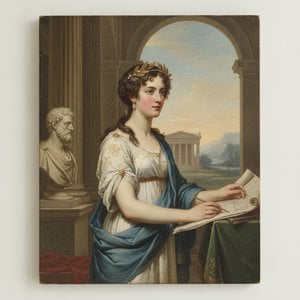
The Revival of Antiquity: Exploring Ideals of Beauty & Power in Neoclassical Portraiture
Explore the captivating world of Neoclassical portraiture! Discover the power & ideals behind masterpieces by David, Girodet & more. Expert analysis, custom reproductions & art appraisal at ArtsDot.