

 Преглед в реален мащаб
 Изпрати
 Сподели
 Детайли
 Ръководство

 Изтегляне
 Подобни артикули
 Рентгенова снимка
 Слайдшоу
 Въпроси и отговори
 Статистика
The Pont du Gard

- 242.0 x 242.0 cm


 Прочети повече
Жикле / Художествен принт
Giclée печат или принт върху платно с музейно качество, бързо производство и гъвкави опции за завършен вид. ( Купете ръчно рисувана картина Превключване към дигитално изображение)




P118B €10

P118H €10

P118W €10

P438Z €10

P508JH €12

P508YH €12

P805H €10

P805Z €10

P919BZ €10

P919G €10

P919XJ €10

P959ZH €10

P968JZ €12

W106C €8

W218G €10

W218JH €8

W218Y €10

W307PJ €10

W316G €10

W316PJ €8

W316Y €10

W398PJ €8

W4111J €10

W500HY €15

W500JH €15

W692G €12

W849H €8

W940BG €15

W953PJ €8




Изберете от нашите предварително зададени размери, които съответстват на оригиналните пропорции на произведението.

Въведете необходимата ширина и височина, за да паснат на вашата рамка или стена. Принтовете могат само да се изрязват, но никога не могат да бъдат по-големи от оригиналната картина, така че при размер с различен формат част от изображението ще бъде загубена. Преди да започнем печат, ще ви изпратим дигитален мок업 за одобрение. Изображението, показано на тази страница, не показва реалното изрязване — само мок업ът го показва.
Доставка по целия свят () в рамките на 2 седмици вместо стандартните 4/5 седмици. (13 Ноември)

Безплатна експресна доставка по целия свят

Висококачествено ленено платно

Пълно застраховане на доставката

Гаранция за възстановяване на митнически такси

Гаранция за пълно съответствие на цветовете

Политика за връщане в рамките на 100 дни (само при дефекти)

100% Гаранция за връщане на сумата

Оферта за отстъпка при поръчка на повече бройки
 Опцията със стъкло е налична само за размери под 110 см

The Pont du Gard
Жикле / Художествен принт
Размер на репродукцията
-


Обща цена
€ 56
A Vision of Roman Grandeur
In the soft, diffused light of a fading afternoon, Hubert Robert’s 1787 masterpiece, The Pont du Gard, invites the viewer into a world where history and imagination coalesce. This breathtaking work transcends a mere topographical record of the famous Roman aqueduct; instead, it serves as a profound meditation on the passage of time and the enduring spirit of human achievement. As the eye travels across the canvas, one is immediately struck by the monumental scale of the stone arches, which soar against a hazy, ethereal sky. Robert, a master of the capriccio style, does not simply present a ruin; he crafts a stage where the grandeur of antiquity meets the quiet pulse of contemporary life. The structure itself, a UNESCO World Heritage Site, stands as a silent sentinel of Roman engineering, its weathered stones telling stories of an empire that once commanded the landscape.
The painting is alive with a delicate, rhythmic energy. Below the imposing arches, the river flows with a gentle grace, populated by small figures and boats that provide a vital sense of scale. These tiny, scattered souls—some standing near the water's edge, others navigating the currents in small vessels—act as a poignant reminder of the fleeting nature of human existence when juxtaposed against the permanence of stone. This deliberate contrast creates a captivating tension, drawing the observer into a contemplative state where one might reflect on their own place within the vast tapestry of history.
The Artistry of Atmosphere and Light
Technically, Robert’s brilliance lies in his ability to manipulate light and atmosphere to evoke deep emotion. Moving away from the rigid precision of earlier eras, he employs a technique reminiscent of sfumato, subtly blending tonal variations to soften edges and create a sense of mysterious depth. The color palette is a masterful study in harmony; warm, earthy ochres and sun-drenched stones contrast beautifully with the cool, receding blues and purples of the distant sky. This use of atmospheric perspective does more than create distance; it imbues the scene with a dreamlike, almost spiritual quality, as if the viewer is witnessing a memory rather than a physical location.
For the discerning collector or interior designer, this painting offers an unparalleled opportunity to introduce a sense of timelessness and intellectual depth into a space. The composition is balanced yet dynamic, making it a perfect centerpiece for a room that seeks to inspire quiet reflection or sophisticated conversation. Whether placed in a sunlit gallery or a moody, library-style study, the luminous quality of Robert’s brushwork brings an air of classical elegance and romantic nostalgia to any environment.
A Legacy of Beauty and Decay
Historically, The Pont du Gard emerged during a pivotal moment in French art, capturing the transition from the playful ornamentation of the Rococo to the more austere, thoughtful ideals of Neoclassicism. Robert was uniquely positioned to capture this shift, blending the decorative charm of his era with an emerging fascination for the sublime and the melancholic beauty of ruins. His work anticipates the Romantic movement, prioritizing feeling and imagination over literal documentation. Through this lens, the aqueduct becomes a symbol of both stability and inevitable decay—a testament to the triumph of human ambition and the inescapable cycle of nature.
To possess a high-quality reproduction of this work is to hold a piece of the Enlightenment’s soul. It is an invitation to look beyond the surface of the modern world and reconnect with the monumental echoes of the past. For those who appreciate art that speaks to the heart as much as the eye, Robert’s vision remains an eternal masterpiece of light, shadow, and historical wonder.
Въпроси и отговори
Кой е авторът на "The Pont du Gard" и към кое художествено направление принадлежи?
"The Pont du Gard" е създадена от Хюберт Роберт в стила на Romantic Landscape. Художникът и художественото направление определят традицията на произведението.
Има ли слайдшоу за „The Pont du Gard“ на Хюберт Роберт?
Диапорамата на „The Pont du Gard“ може да бъде разгледана на страницата Слайдшоу на произведението.
На каква възраст е бил Хюберт Роберт, когато е създадена „The Pont du Gard“?
Хюберт Роберт е бил на 54 години, когато създава „The Pont du Gard“ през 1787. Възрастта е изчислена въз основа на годината на раждане на художника, 1733.
Подобни произведения


Свързани статии

Francesco Guardi: Venetian Light, Atmospheric Perspective & the Rococo to Neoclassical Transition
Explore the captivating world of Francesco Guardi, master of Venetian light and atmosphere. Discover his transition from Rococo to Neoclassicism, influence on Impressionism & investment potential with ArtsDot.

Romantic Realism's Finest: 10 Masterpieces for Your Home | ArtsDot
Explore 10 defining masterpieces of Romantic Realism! Discover Courbet, Millet & Daumier's powerful paintings—capturing emotion and social realities. Find museum-quality reproductions for your home at ArtsDot.com.
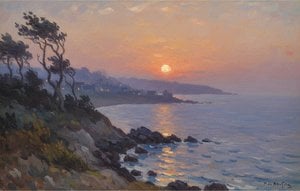
Maxime Maufra: Capturing Atmospheric Luminosity in Post-Impressionist Landscapes
Discover the captivating landscapes of Maxime Maufra, a key figure in Post-Impressionism. Explore his mastery of light, atmosphere & connection to the Pont-Aven School. Learn about collecting his work at ArtsDot.

Hubert Robert: Picturing Ruins, Preserving Memory – A Study of Romantic Antiquarianism & Artistic Innovation
Explore the captivating world of Hubert Robert, master of Romantic landscape painting & 'capriccio' ruins. Discover his historical context, artistic innovations, and collecting insights with ArtsDot.

Illuminating the Enlightenment: Artistic Expression in 18th-Century Europe
Explore the artistic brilliance of the Enlightenment era! Discover Rococo's elegance & Neoclassicism’s virtue with expert insights into 18th-century masterpieces. Learn about David, Kauffmann & more.


