
- Начало

- Възпроизведение на маслена картина
- Жуст Курбе
- The Painter's Studio
 Купи принт
 Изпрати
 Сподели
 Details

 Изтегляне
 Подобни
 X-Ray
X-Ray Слайдшоу
The Painter's Studio
 Acrylic On Canvas
- WallArt
- Contemporary Realism
 1855
1855 361.0 x 598.0 cm
 Музей д’Орсе
Ръчно изработена маслена репродукция
Ръчно рисувана маслена картина върху платно във вашия размер и рамка, изработена по поръчка от нашите художници.




P118B $10

P118H $10

P118W $10

P438Z $10

P508JH $12

P508YH $12

P805H $10

P805Z $10

P919BZ $10

P919G $10

P919XJ $10

P959ZH $10

P968JZ $12

W106C $8

W218G $10

W218JH $8

W218Y $10

W307PJ $10

W316G $10

W316PJ $8

W316Y $10

W398PJ $8

W4111J $10

W500HY $15

W500JH $15

W692G $12

W849H $8

W940BG $15

W953PJ $8




 Прочетете повече
Изберете от предварително зададените размери, които съответстват на оригиналните пропорции на произведението.

Можете да въведете свои собствени размери, за да пасне на конкретна рамка или пространство. Ако избраният от вас размер не съответства на пропорциите на оригиналното изображение, ние ще изрежем произведението или ще удължим картината с допълнителни ръчно рисувани елементи. Дигитален макет ще бъде изпратен за ваше одобрение преди започване на производството.
Моля, обърнете внимание, че прегледът на екрана не отразява действителното изрязване или разширяване. Само макетът ще покаже точно финалния състав.
Въпреки че са налични персонализирани размери, препоръчваме да изберете размер от предварително дефинирания списък, за да запазите оригиналните пропорции.
След поръчка, екипът на ArtsDot.com ще изпрати имейл на клиента за инструкции и ще предостави преглед на макет.
Доставка по целия свят () в рамките на 3/4 седмици вместо стандартните 5 седмици. (1 Юли). Без компромис с качеството.

Безплатна експресна доставка по целия свят

Висококачествено ленено платно

Пълно застраховане при доставка

Гаранция за възстановяване на митнически такси

Гаранция за цветова точност

60-Дневен период за връщане (Само при дефекти)

100% Гаранция за връщане на парите

Предложение за отстъпка при поръчка на едро
 Стъклото е налично само в размери под 110 см

The Painter's Studio
Репродукционен метод
Размер на репродукцията
-


Обща цена
-
Описание на произведението
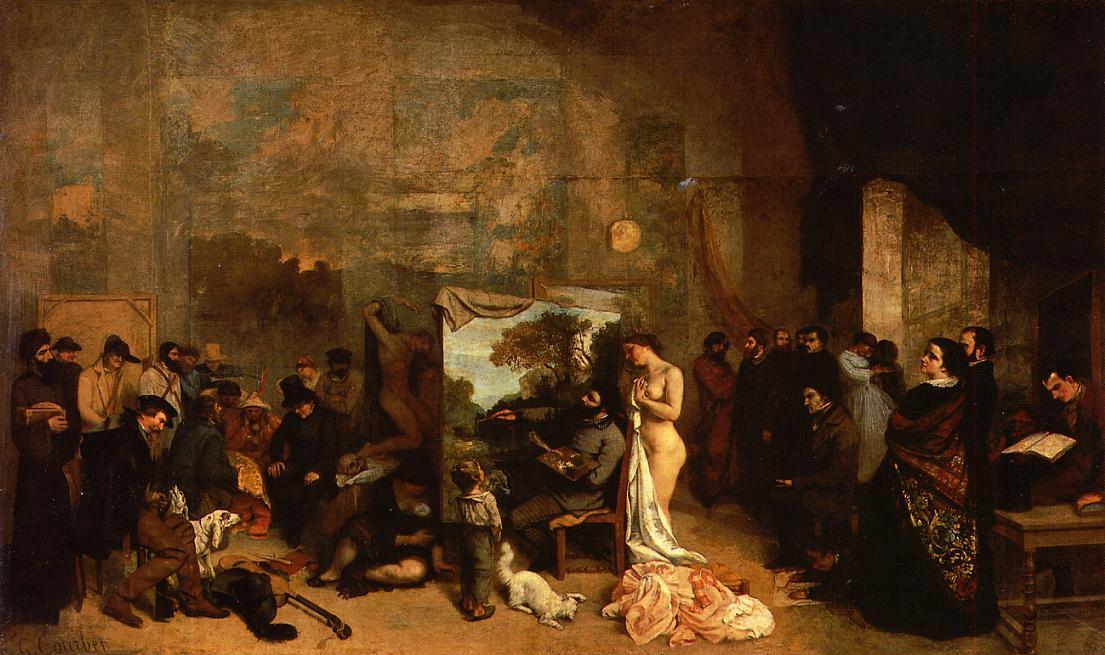
A Bold Declaration of Reality: Gustave Courbet’s “The Painter’s Studio”
Dr. Steven Zucker begins his exploration of Gustave Courbet's monumental canvas, "The Painter’s Studio," by highlighting its significance as a pivotal moment in artistic history. Rejected from the prestigious Salon of 1855—a decision that fueled Courbet’s rebellious spirit—the artist responded not with despair but with audacious determination: he organized his own exhibition, showcasing this sprawling masterpiece alongside fellow realist artists. This act wasn't merely about circumventing convention; it was a deliberate assertion of artistic freedom and a profound critique of the prevailing academic aesthetic. As Zucker eloquently puts it, “Rejected from a national exhibition, Courbet simply launched his own show to display this enormous work.”- Subject Matter & Composition: The painting depicts a richly populated room—a deliberate provocation against the idealized landscapes favored by Romantic painters—featuring figures representing various strata of society. From the impoverished beggar girl to Napoleon III himself, Courbet meticulously portrays the everyday realities of his time.
- Style & Technique: Courbet’s masterful use of oil paint on canvas exemplifies realism at its most uncompromising. Thick brushstrokes and a muted palette convey texture and depth, capturing the materiality of the scene with remarkable accuracy. The artist eschewed illusionistic techniques, prioritizing direct observation and honest representation.
Symbolism: An Allegory of Artistic Struggle
“The Painter’s Studio” transcends mere depiction; it operates as a complex allegory reflecting Courbet's personal journey and artistic convictions. Each figure within the room carries symbolic weight, embodying ideals antithetical to academic art. The guitar, dagger, and hat serve as emblems of defiance against traditional conventions, while the presence of Alfred Bruchas—a wealthy collector who championed realism—and philosophers Proudhon and Champfler underscores Courbet’s engagement with intellectual discourse.
- The Figures: Courbet himself is positioned at the center, surrounded by benevolent symbols – a woman representing Truth (the muse), a child symbolizing innocence, and a cat embodying independence. These figures represent Courbet's belief in the transformative power of art and its ability to challenge societal norms.
- Representations of Ideals: The couple gazing out the window embodies free love—a rejection of bourgeois morality—further emphasizing Courbet’s humanist perspective.
Historical Context & Significance
Painted in 1855, “The Painter’s Studio” arrived at a time when artistic discourse was fiercely debated. The Salon rejected Courbet's painting due to its unflinching portrayal of social realities and its rejection of idealized beauty. This decision galvanized the realist movement, establishing Courbet as a champion of authenticity and challenging the dominance of academic art.
- The Pavilion of Realism: Courbet’s audacious act of organizing his own exhibition solidified his position as a pioneer of realism and signaled a decisive break from artistic conventions.
- Legacy: “The Painter’s Studio” continues to inspire artists and collectors alike, serving as a testament to Courbet's unwavering commitment to portraying the world truthfully—a legacy that resonates powerfully within the contemporary art landscape.
Emotional Impact & Artistic Inspiration
Courbet’s masterful composition invites contemplation on themes of social justice, artistic freedom, and human connection. The painting's palpable atmosphere captures a moment of intellectual exchange and artistic fervor—a reminder that art can serve as both a mirror to society and a catalyst for transformative change. Its enduring beauty lies in its ability to provoke thought and inspire creativity.
Подобни произведения


Биография на художника
A Rebel’s Brush: The Life and Legacy of Gustave Courbet
Jean Désiré Gustave Courbet, born in Orléans, France, on June 10, 1819, stands as a monumental figure in the history of art – a defiant iconoclast who irrevocably altered the trajectory of painting during the mid-nineteenth century. More than simply capturing visual impressions; his oeuvre embodies a profound philosophical commitment to portraying reality without embellishment, rejecting Romantic idealism and establishing Realism as a dominant artistic force. His upbringing within a relatively prosperous bourgeois family fostered an early appreciation for artistic pursuits, nurtured by his mother’s encouragement – a formative influence that propelled him toward a revolutionary vision of artistic expression.Early Training and Parisian Influences
Courbet's formal education commenced at the École des Beaux-Arts in Paris in 1839, yet he swiftly recognized the limitations imposed by the academy’s rigid conventions. While acknowledging connections to artists like Eugène Delacroix and Théodore Géricault – figures who championed dramatic emotion and historical narrative – Courbet deliberately distanced himself from their stylistic approach. He prioritized observation over imagination, grounding his art in meticulous detail and rejecting the idealized representations favored by Romantic painters. This rejection wasn’t merely aesthetic; it represented a fundamental disagreement with the prevailing cultural values of his time—a conviction that art should serve as a mirror to society rather than an escape from it.The Birth of Realism: Challenging Artistic Conventions
Courbet's artistic breakthrough arrived in 1849 with the completion of *The Stone Breakers*, a monumental canvas depicting two laborers engaged in arduous physical labor. Initially dismissed by critics as vulgar and lacking artistic merit, this painting nevertheless captured the essence of Realist philosophy—the belief that art should depict everyday life accurately, without resorting to mythological fantasies or sentimental embellishments. The decision to portray these figures on a grand scale – traditionally reserved for historical dramas – was deliberate; it asserted the dignity and importance of working-class individuals as subjects worthy of artistic consideration. This bold stance provoked considerable controversy and solidified Courbet’s reputation as an uncompromising artist committed to challenging societal norms.Notable Works and Artistic Philosophy
Courbet's artistic output extended beyond *The Stone Breakers*, encompassing landscapes, portraits, and genre scenes that reflected his unwavering dedication to realism. His canvases—such as *A Burial at Ornans* (1850), a haunting depiction of a rural funeral—were characterized by their meticulous detail, expressive brushstrokes, and rejection of idealized beauty. He famously declared, “I do not depict what I see; I paint what I feel,” encapsulating his artistic philosophy – a conviction that art should convey emotion authentically rather than merely imitating visual appearances. His technique involved applying paint thickly onto the canvas—an impasto style—creating textured surfaces that emphasized the materiality of the medium itself and conveying a palpable sense of immediacy.Legacy and Historical Significance
Gustave Courbet’s influence on subsequent artistic movements is undeniable. He liberated Impressionists and Post-Impressionists from the constraints of academic tradition, encouraging them to explore new visual languages and perspectives. His unwavering commitment to social realism paved the way for artists who sought to engage with pressing societal issues—artists who recognized the transformative potential of art as a tool for critique and change. Courbet’s legacy persists today – a testament to his courage in confronting artistic conventions and his profound conviction that art should serve as a conduit for truth and empathy. He died on December 31, 1877, leaving behind an unparalleled body of work that continues to inspire artists and scholars alike.
Жуст Курбе
1819 - 1877 , Франция
Бързи факти
- Artistic Movement Or Style: Реализъм
- Artists Or Movements Influenced By This Artist:
- Импресионизъм
- Постимпресионизъм
- Artists Who Influenced This Artist:
- Ежен Делакроа
- Теодор Жерико
- Караваджо
- Date Of Birth: Юли 31, 1819 г.
- Date Of Death: Април 29, 1877 г.
- Full Name: Gustave Courbet
- Nationality: Френски
- Notable Artworks:
- Скелети от Етрета след буря
- Погребение в Орланс
- Ателие на художника
- Place Of Birth: Орланс, Франция
Всички статии

Топ 10 шедьоври на импресионизма: Изкуство за вашия дом от ArtsDot
Разгледайте топ 10 шедьоври на импресионизма – Моне, Реноар и други! Открийте историите зад картините, техниките и цветовете. Музейни репродукции за вашия дом от ArtsDot.com.


От джунгли и златни геометрични форми: Настоящите най-търсени стилове за мурали
Открийте най-новите тенденции в дизайна на мурали за хотели! Експертни съвети, висококачествени изпълнения и персонализирани решения от . Преобразете пространството си!

Навигиране в художественото изражение: Ръководство за избор на изкуство по стил
Ръководство за избор на художествен стил, който отговаря на вашия вкус и интериор. Съвети за инвестиране в изкуство и откриване на нови артисти. Експертни насоки и актуални тенденции.

Изкуственият интелект среща паметта: Трансформация на лични фотографии в стиловете на великите майстори на изкуството
Открийте как изкуственият интелект превръща вашите снимки в шедьоври в стила на великите майстори! Експертен анализ, етични съображения и най-добрите инструменти за дигитално изкуство. Създайте уникални произведения с ArtsDot.

Преобразуване на Лични Спомени в Безвремево Изкуство: Свободата на Художествения Стил и Индивидуалният Подход
Преобразувайте любимите си снимки в безвремеви произведения на изкуството с ArtsDot! Ръчно рисувани портрети, персонализирани стилове и експертна консултация. Създайте уникален шедьовър днес!



