


The picture follows your choices: , .
Описание на колекционерския предмет
Explore Giorgio Vasari’s "Winter" fresco – a Baroque masterpiece featuring a reclining figure in opulent detail. Discover dynamic composition & rich symbolism of strength & transformation.
 Прочети повече
Биография на художника
Жорж Вазари (1511-1574) е италиански художник, архитект и историк на изкуството, известен с "Животите на художниците", което е основополагащ труд за историята на изкуството и дизайна на Флорентийската галерия Уфици.
Ръчно изработена маслена репродукция
Ръчно рисувана маслена картина върху платно във вашия размер и рамка, изработена по поръчка от нашите художници. ( Превключване към принт Превключване към дигитално изображение)
More about this painting
 Изпрати
 Сподели
 Детайли
 Ръководство

 Изтегляне
 Подобни артикули
 Слайдшоу
 Q&A
Q&A Статистика
Order your painting in four simple steps
Take your time. You can change any answer; the price in your order card follows each choice.
1 Step one of four
Which size would you like?
These sizes keep the proportions of the original painting. The drawing shows your choice on a wall, above a two-metre sofa.
Or give your own measurements
Изберете от нашите предварително зададени размери, които съответстват на оригиналните пропорции на произведението.

Въведете необходимата ширина и височина, за да паснат на вашата рамка или стена. Тъй като това е ръчна работа, при избор на размер с различен формат художникът може да нарисува малко повече около картината или да отреже малко от периферията — вие избирате. Преди да започне рисуването, ще ви изпратим дигитален мок업 за одобрение. Картината, показана на тази страница, не е реалният резултат — само мок업ът го показва.
2 Step two of four
How should it be prepared: rolled, stretched or framed?
The prices below are for the size you chose in step one.
Choose the edges of the stretched canvas
Choose your frame

White €1

Blurside €1

Extended €1

P118B €10

P118H €10

P118W €10

P438Z €10

P508JH €12

P508YH €12

P805H €10

P805Z €10

P919BZ €10

P919G €10

P919XJ €10

P959ZH €10

P968JZ €12

W106C €8

W218G €10

W218JH €8

W218Y €10

W307PJ €10

W316G €10

W316PJ €8

W316Y €10

W398PJ €8

W4111J €10

W500HY €15

W500JH €15

W692G €12

W849H €8

W940BG €15

W953PJ €8

H24-GOLD €30

H24-SILVER €30

H36-GOLD €45

H36-SILVER €45
С рамка
Moulding: . Overall size with the frame: .
3 Step three of four
Would you like anything changed in the painting?
Most people answer no. Because each painting is made by hand, our artist can also adapt it for you.
After order, ArtsDot.com team will email client for instructions and provide a mockup preview
4 Step four of four
A few finishing options
All of them are optional. The answers already selected cost nothing extra.
Who paints it?
Доставка по целия свят () в рамките на 3-4 седмици вместо стандартните 5 седмици. (2 Ноември). Без компромис с качеството.
A nameplate, as in a museum?
Детайли за гравираната бронзова плака
This elegant plaque features the artist's name and the title of the artwork, finely engraved for a timeless presentation.
It is made from bronze with a refined, elegant finish. The text is precisely laser-engraved for a sharp and permanent result. Measuring 9x2 cm, the plaque is compact yet easy to read. It's built to be durable and scratch-resistant, offering a professional, museum-quality look. Mounting is simple thanks to the included adhesive backing.
Детайли за прозрачната акрилна плака
The plaque includes essential engraved details such as the artist's name, the title of the artwork, the date it was created, the type of media used-like oil on canvas or watercolor-a brief description of the piece, and a QR code that links to the complete artwork information.
It is crafted from clear acrylic, offering a sleek, modern appearance. The text is UV-engraved in black to ensure strong visual contrast. With a size of 10x15 cm, it ensures optimal readability. It comes equipped with two metal hooks for secure wall mounting. The plaque is designed to be weather-resistant, making it suitable for various environments, and it includes interactive features that work seamlessly with smartphone scanning.
Детайли за черната акрилна плака
This elegant plaque includes engraved information such as the artist's name, the title of the artwork, the date it was created, the type of media used (like oil on canvas or watercolor), a short description of the artwork, and a QR code for quick access to more information.
The plaque itself is made from refined black acrylic with a premium finish. The text is laser-engraved in white for high contrast and readability. Its size is 10x15 cm, designed to be easy to read. It comes with two metal hooks for professional mounting. The design is sleek and fits any interior style. It is also weather-resistant and durable, with built-in digital integration for mobile compatibility.
A protective varnish?
When do you need it?
✓ Check and order
Your painting, as you ordered it

Winter
Вид репродукция
Размер на репродукцията
-

Елитен старши художник
Повече детайлност, изящество и допълнително време за производство
-

Рамка за репродукция
-
-
За произведения на изкуството или репродукции, чийто размер е над 105 см (приблизително 41 инча) във всяка страна, рамката ще бъде изпратена в разглобен вид като комплект за сглобяване. Този метод гарантира безопасна доставка и предотвратява повреди по време на транспортиране.
Изисква се професионално сглобяване – това не е продукт за самостоятелна изработка (DIY).
Комплектът трябва да бъде сглобен, а платното – опънато от опитен професионален багер, като се използва дървено лепило (не е включено в комплекта), клещи за опъване на платно и затягащи скоби, за да се поддържа правотата на подрамника, докато лепилото изсъхне. Неправилното сглобяване или неравномерното опъване на платното може трайно да повреди произведението и не е покрито от нашата гаранция.
 За произведения на изкуството или репродукции, чийто размер е над 105 см (приблизително 41 инча) във всяка страна, рамката ще бъде изпратена в разглобен вид като комплект за сглобяване. Този метод гарантира безопасна доставка и предотвратява повреди по време на транспортиране.
Всички елементи от масивна дървесина са включени, прецизно изрязани по размер.
Сглобява се с предоставените винтове, както и с лепило за дърво за ъгловите връзки, което не е включено в комплекта и трябва да бъде осигурено от вашия рамкар.
Изискват се професионални инструменти, които не са включени: щипка за опъване на платно (натягач) и скоби за фиксиране на подрамниците под прав ъгъл, докато лепилото изсъхне.
Важно:
За сглобяването на ъглите е необходимо лепило за дърво, рейките трябва да се фиксират с

Етикет с име
-
-

Защитен лак
Гланцов лак (подсилва цветовете и предпазва от светлина и влага)
-

Персонализирай моето произведение
Примери за възможности за персонализация: Заменете лицето със снимка на клиента; Добавете домашен любимец (например, заменете котка с куче); Включете скрито съобщение във фона; Променете пейзажа или елементите на фона.
-

Спешно
Доставка по целия свят () в рамките на 3-4 седмици вместо стандартните 5 седмици. (2 Ноември). Без компромис с качеството.
-
Експресна доставка
Доставка по целия свят () в рамките на 5 седмици. (9 Ноември).
Включена
Обща цена
€ 234
Опцията със стъкло е налична само за размери под 110 см
Included with every order
- Безплатна експресна доставка по целия свят
- Висококачествено ленено платно
- Пълно застраховане на доставката
- Гаранция за възстановяване на митнически такси
- Гаранция за пълно съответствие на цветовете
- Политика за връщане в рамките на 100 дни (само при дефекти)
- 100% Гаранция за връщане на сумата
- Оферта за отстъпка при поръчка на повече бройки


A Baroque Vision of Mythic Contemplation: Giorgio Vasari’s “Winter”
Giorgio Vasari's "Winter," painted in 1557, is not merely a decorative ceiling fresco; it’s a profound meditation on human experience rendered with the dramatic intensity characteristic of the High Renaissance and blossoming into the Baroque. This monumental work, likely commissioned for a grand palazzo or religious institution, immediately captivates with its layered composition and masterful manipulation of light and shadow – hallmarks of Vasari's innovative approach to ceiling painting. The central figure, draped in luxurious fabrics and posed in a state of apparent repose, evokes a sense of both vulnerability and immense power, instantly drawing the viewer into a world of mythic drama. The sheer scale of the fresco, combined with its intricate details, speaks to the ambition and patronage that fueled artistic endeavors during this pivotal period.
- Subject Matter & Narrative Complexity: The scene depicts a reclining figure – traditionally interpreted as Hercules or another heroic deity – engaged in a moment of profound contemplation. The inclusion of smaller framed scenes flanking the central figure adds layers to the narrative, suggesting a complex mythological story unfolding across multiple registers. This deliberate layering was a key feature of Baroque ceiling designs, intended to overwhelm and inspire awe.
- Baroque Style & Dramatic Lighting: Vasari’s command of Baroque style is evident in the dynamic use of light and shadow. Strong highlights accentuate the central figure's form, while deep shadows create a sense of depth and volume, enhancing the dramatic effect. The curvilinear lines throughout the composition contribute to a feeling of movement and fluidity – essential elements of the Baroque aesthetic.
Technique & Materials: A Masterclass in Fresco Painting
“Winter” exemplifies Vasari’s groundbreaking techniques for ceiling painting, pushing beyond the limitations of earlier Renaissance approaches. The fresco technique itself is central to its impact; pigments were applied directly onto wet plaster, creating a durable and luminous surface that has endured for over four centuries. Vasari meticulously blended colors – primarily warm tones of browns, ochres, reds, and golds – accented with cooler blues and greens – achieving a rich and nuanced palette. The subtle texture of the finished surface, a direct result of the fresco process, adds to the painting’s tactile quality and sense of realism. Notably, Vasari incorporated gold leaf for decorative elements, further amplifying the work's opulence and grandeur.
- Pigments & Plaster: The pigments used were likely oil-based, a departure from traditional tempera paints, allowing for greater color saturation and blending capabilities. The plaster itself was carefully prepared to ensure optimal adhesion and durability.
- Gold Leaf: The strategic use of gold leaf – particularly in the wreath-like structure above the figure – served not only as decoration but also symbolized divine favor and immortality, a common motif in Renaissance art.
Symbolism & Historical Context
Beyond its aesthetic qualities, “Winter” is rich in symbolic meaning. The fire burning nearby could represent passion, transformation, or even the destructive power of fate – themes frequently explored in classical mythology. The wreath, often associated with victory and immortality, reinforces this interpretation. Painted in 1557, during a period of intense artistic innovation and religious fervor, “Winter” reflects the broader cultural currents of the late Renaissance. Vasari’s work aligns with the humanist ideals that emphasized human potential and celebrated classical antiquity, while simultaneously embracing the dramatic and emotional intensity characteristic of the emerging Baroque style. The piece stands as a testament to Vasari's role in shaping artistic conventions and his enduring legacy within the history of Western art.
Въпроси и отговори
Какво настроение и емоция изразява „Winter“ на Жоржo Вазари?
Записаното настроение на „Winter“ на Жоржo Вазари е Dramatic, а неговият емоционален тон е Melancholic.
Мога ли да видя „Winter“ на Жоржo Вазари върху моята собствена стена преди покупка?
Можете да прегледате „Winter“ на Жоржo Вазари върху вашата собствена стена чрез страницата за Преглед с AR на произведението, използвайки добавена реалност на съвместимо устройство.
Каква емоция предава произведението от Baroque „Winter“?
В рамките на движението Baroque, „Winter“ е запечатвано с Melancholic тон.
Подобни произведения


Жоржo Вазари
1511 - 1574, Италия
Биография на художника
A Life Woven into the Renaissance Fabric
Giorgio Vasari, born in Arezzo, Tuscany, on July 30, 1511, was more than simply a painter; he was a quintessential embodiment of the Italian Renaissance spirit. His life unfolded as a vibrant tapestry woven with threads of artistic creation, architectural innovation, insightful historical writing, and an unwavering dedication to celebrating the masters who came before him. From his earliest training under Guglielmo da Marsiglia, a skilled artisan in stained glass, young Giorgio’s path was steered towards visual artistry. However, it was his move to Florence at sixteen that truly ignited his potential. Immersing himself within the dynamic circle of Andrea del Sarto and absorbing the influences of Rosso Fiorentino and Jacopo Pontormo, Vasari began a journey that would see him become one of the most influential figures of his era. His formative years were also deeply marked by the patronage and friendship of the powerful Medici family, a relationship that would shape both his career and his perspective on art’s role in society.The Artist's Hand and Eye
Vasari’s artistic style is often categorized as Mannerist, reflecting the prevailing aesthetic trends of the mid-16th century. His paintings are characterized by elongated figures, dynamic compositions, and a sophisticated use of color—qualities highly admired during his lifetime. While perhaps not achieving the same level of enduring fame as some of the artists he chronicled, Vasari’s skill was undeniable. Notable works such as *The Studio of the Painter*, a fresco housed in Casa Vasari in Arezzo, offer a fascinating glimpse into the artistic practices of the time. The sheer scale and ambition of his frescoes for the Palazzo Vecchio in Florence, undertaken between 1555 and 1572, demonstrate his mastery of large-scale decorative schemes. His final monumental undertaking, *The Last Judgement*, adorning the cupola of Florence Cathedral—completed after his death by Federico Zuccari—stands as a testament to his unwavering commitment to grand artistic visions. Beyond painting, Vasari’s architectural contributions were equally significant. He designed the elegant loggia of the Palazzo degli Uffizi, transforming it into a public piazza and creating a vital link within Florence's urban landscape. Perhaps most famously, he conceived and oversaw the construction of the Vasari Corridor, a secret passageway connecting the Uffizi Gallery with the Palazzo Pitti—a feat of engineering and architectural ingenuity that continues to captivate visitors today.A Historian Forging a Legacy
However, it is arguably as an art historian that Giorgio Vasari secured his most lasting legacy. His monumental work, *Lives of the Most Excellent Painters, Sculptors, and Architects*, published in 1550 (with a revised edition in 1568), revolutionized the way art was understood and appreciated. This groundbreaking text wasn’t merely a collection of biographies; it established a narrative framework for the development of Italian Renaissance art, tracing its evolution from the early masters like Cimabue and Giotto to his contemporaries Michelangelo and Raphael. Vasari's work introduced the very concept of the “Renaissance” – a rebirth of classical ideals—and laid the foundation for modern art history as a discipline. While acknowledging that Vasari’s accounts are not without their biases and inaccuracies, particularly concerning artists predating his own time, the impact of *Lives* remains profound. It provided a crucial historical context for artistic creation, elevating the status of artists from skilled craftsmen to intellectual figures worthy of scholarly attention.Influences and Enduring Significance
Vasari’s artistic development was profoundly shaped by his exposure to the works of Renaissance masters. His visit to Rome in 1529, where he studied the art of Raphael and other High Renaissance artists, proved pivotal. He absorbed their principles of composition, anatomical accuracy, and idealized beauty, incorporating them into his own style. Michelangelo, whom Vasari greatly admired, exerted a particularly strong influence on both his painting and architecture. The grandeur and dynamism characteristic of Michelangelo’s work are evident in many of Vasari’s projects. Beyond specific artists, the broader intellectual currents of the Renaissance—humanism, classical learning, and a renewed interest in empirical observation—also informed Vasari's approach to art and history. Giorgio Vasari died on June 27, 1574, in Florence, leaving behind a multifaceted legacy that continues to resonate today. He was not only a talented artist and architect but also a pioneering historian whose writings shaped our understanding of one of the most transformative periods in Western art history. His work remains essential for anyone seeking to explore the rich cultural heritage of the Italian Renaissance.Major Achievements
- The Studio of the Painter (1563): A groundbreaking fresco cycle within his own home, offering a detailed depiction of an artist’s workshop and serving as a visual treatise on artistic practice.
- Frescoes in Palazzo Vecchio (1555-1572): Monumental decorative schemes illustrating Florentine history and civic pride, showcasing Vasari's mastery of large-scale fresco painting.
- Design of the Uffizi Gallery (1560): A transformative redesign of a former arsenal into a public space, integrating art and architecture to create a vibrant center for Florence.
- The Vasari Corridor (1564-1573): An ingenious architectural solution connecting the Uffizi Gallery with the Palazzo Pitti, providing a secure passage for the Medici family.
- Lives of the Most Excellent Painters, Sculptors, and Architects (1550, 1568): A seminal work of art history that established a framework for understanding the development of Renaissance art and cemented Vasari’s legacy as a cultural historian.
Notable Works
Paintings:- The Studio of the Painter (Casa Vasari, Arezzo)
- Allegories
- Portraits (including portraits of members of the Medici family)
- Loggia of Palazzo Vecchio, Florence
- Uffizi Gallery, Florence
- Vasari Corridor, Florence
- Church of Santa Croce, Florence (restoration and decoration)
- Palazzo Pitti, Florence (design elements)
- Lives of the Most Excellent Painters, Sculptors, and Architects (1550, 1568)


Свързани статии

The Enduring Legacy of Fresco: Technique, History & Artistic Expression Across Cultures
Explore the rich history & enduring legacy of fresco painting! Discover ancient techniques, Giotto's masterpieces, and modern applications. Expert insights for art lovers & professionals.

Изкуството, което живее с нас: Емоционалната сила на персонализираната вътрешна фреска
Създайте уникална фреска с ! Ръчно рисувани стенописи по поръчка, персонализирани дизайни и експертни консултации. Инвестирайте в изкуство, което отразява вашата индивидуалност и преобразява пространството ви.
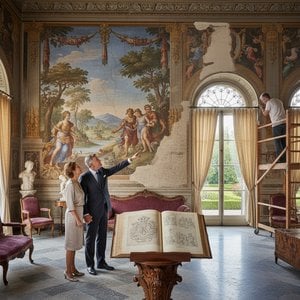
Фреската като Семейно Наследство: Пресъздайте Своята История по Стените
Създайте уникална семейна фреска с ! Експертни художници, висококачествени материали и персонализиран дизайн. Запазете спомените си за поколения наред!