


 Изпрати
 Сподели
 Детайли

 Изтегляне
 Подобни
 Слайдшоу
 Статистика
Saint Longinus


 Прочетете повече
Жикле / Художествен принт
Giclée печат или принт върху платно с музейно качество, бързо производство и гъвкави опции за завършен вид. ( Купете ръчно рисувана картина Превключване към дигитално изображение)




































Изберете от предварително зададените размери, които съответстват на оригиналните пропорции на произведението.

Можете да въведете собствени размери, за да паснат на конкретна рамка или пространство. Ако избраният от Вас размер не съвпада с пропорциите на оригиналното изображение, ние ще изрежем произведението или ще разширим изображението с огледален или едноцветен ръб. Дигитален макет ще бъде изпратен за Ваше одобрение преди започването на производството.
Моля, имайте предвид, че предпрегледът на екрана не отразява реалното изрязване или разширяване. Само макетът ще покаже точно финалната композиция.
Въпреки че са налични персонализирани размери, препоръчваме да изберете размер от предварително дефинирания списък, за да запазите оригиналните пропорции.
Доставка по целия свят () в рамките на 2 седмици вместо стандартните 4/5 седмици. (11 Септември)

Безплатна експресна доставка по целия свят

Висококачествено ленено платно

Пълно застраховане при доставка

Гаранция за възстановяване на митнически такси

Гаранция за цветова точност

Политика за връщане в рамките на 100 дни (само при дефекти)

100% Гаранция за връщане на парите

Предложение за отстъпка при поръчка на едро
 Стъклото е налично само в размери под 110 см

Saint Longinus
Жикле / Художествен принт
Размер на репродукцията
-


Обща цена
$ 62
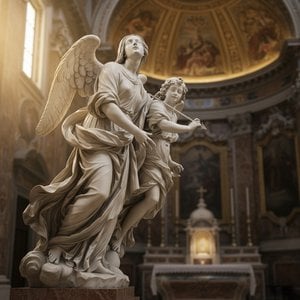
A Moment Frozen in Marble: The Divine Drama of Saint Longinus
Within the hallowed, sun-drenched expanse of St. Peter's Basilica, a singular figure emerges from the shadows to command the soul of every pilgrim and art lover who wanders through its nave. Gian Lorenzo Bernini’s Saint Longinus is not merely a sculpture; it is a breathtaking theatrical event captured in eternal stone. Completed in 1631, this masterpiece serves as a cornerstone of the Baroque era, embodying the movement's profound desire to dissolve the boundary between the earthly and the divine. As you gaze upon the luminous marble, you are not observing a static object, but rather witnessing a pivotal heartbeat in Christian history—the precise moment of spiritual awakening for the Roman soldier who pierced the side of Christ.
Bernini, the undisputed virtuoso of the Roman Baroque, possessed an almost supernatural ability to manipulate cold, hard marble as if it were soft flesh or flowing fabric. In Saint Longinus, his technical prowess is on full display through a masterful use of chiaroscuro. By deeply carving the folds of the saint's drapery and sculpting the rugged musculature of his form, Bernini creates a complex interplay of light and shadow. This technique breathes life into the stone, allowing light to dance across the surfaces and highlight the intense, searching expression on Longinus' face. For the collector or designer, this work represents the pinnacle of sculptural achievement, where the material itself seems to pulse with an inner vitality.
Symbolism and the Language of Motion
The composition of the sculpture is a masterclass in dynamic energy. Unlike the balanced, serene figures of the Renaissance, Bernini’s Saint Longinus is caught in a state of profound motion. One arm is raised toward the heavens in a gesture of desperate supplantation, while the other hand firmly grips the lance—the very instrument of Christ's passion. This physical tension serves as a powerful metaphor for the internal struggle between doubt and faith. The lance itself acts as a symbolic bridge, connecting the brutal reality of the crucifixion to the miraculous conversion of the soldier. Every line of the figure’s posture directs the viewer's eye upward, guiding the spirit toward a sense of transcendence.
For those seeking to bring the grandeur of the Baroque into a curated space, understanding this emotional depth is essential. The sculpture does not just depict a person; it depicts an emotion—a mixture of anguish, reverence, and sudden, overwhelming revelation. The way the light catches the polished marble surfaces evokes a sense of celestial presence, making the piece an ideal inspiration for high-end interior environments that aim to evoke awe, contemplation, and historical weight. To possess a reproduction of such a work is to invite a conversation about the enduring power of faith and the transformative nature of art into one's personal or professional sanctuary.
Подобни произведения


Биография на художника
A Roman Genius: The Life and Legacy of Gian Lorenzo Bernini
Gian Lorenzo Bernini, a name synonymous with the Baroque era, was more than just a sculptor; he was an architect, painter, stage designer, and a true *uomo universale* – a Renaissance man who profoundly shaped the artistic landscape of 17th-century Rome. Born in Naples in 1598, Bernini’s journey to becoming one of history's most celebrated artists began within his father Pietro’s workshop, an environment steeped in classical tradition and burgeoning with nascent talent. From a young age, it was evident that Gian Lorenzo possessed an extraordinary gift – a remarkable ability to capture emotion, movement, and the very essence of human experience through marble and bronze. His early works, influenced by the masterpieces housed within the Vatican collections, hinted at the revolutionary style he would soon establish.Sculpting Emotion: The Birth of Baroque Drama
Bernini’s genius lay in his ability to transcend mere representation and imbue his sculptures with a palpable sense of life. He didn't simply carve figures; he breathed into them an emotional intensity previously unseen in art. While Renaissance sculpture often prioritized idealized forms and static beauty, Bernini embraced dynamism, theatricality, and the raw power of human emotion. His works moved beyond simple depiction to evoke a visceral response in the viewer – a feeling of awe, wonder, or even profound spiritual connection. Key elements defined his distinctive style: an unparalleled mastery of capturing complex emotions through subtle shifts in facial expression and body language; an astonishing technical proficiency that allowed him to render textures—flowing hair, delicate fabrics, smooth skin—with breathtaking realism; and above all, a commitment to dramatic narrative, depicting moments of intense action or spiritual climax. The *Ecstasy of Saint Teresa*, housed within the Cornaro Chapel, stands as perhaps his most iconic achievement – a swirling composition of marble, bronze, and light that captures a mystical experience with an almost overwhelming emotional force. The sculpture’s dynamism, its blurring of the line between reality and dream, cemented Bernini's reputation as a pioneer of the Baroque style. Other masterpieces like *Apollo and Daphne* and *David* showcase this same dynamic energy, transforming stone into fleeting moments of transformation and poised tension.Beyond Sculpture: Architecture and Urban Visions
Bernini’s creative vision extended far beyond the confines of sculpture; he was a remarkably versatile artist who made significant contributions to architecture and urban planning, fundamentally reshaping the cityscape of Rome. His architectural designs were never conceived in isolation; they were always integrated with his sculptural work, creating unified artistic experiences that blurred the boundaries between disciplines. The monumental *Baldacchino* above the high altar of St. Peter’s Basilica is a testament to this holistic approach – a soaring bronze canopy that dominates the space and draws the eye upwards in awe. He also played a pivotal role in redesigning several Roman piazzas, transforming them into vibrant public spaces. The *Fountain of the Four Rivers* in Piazza Navona, with its allegorical figures representing major rivers from different continents, is a prime example of his ability to create dynamic and engaging urban environments – a celebration of global interconnectedness rendered in stone and bronze. His work on St. Peter’s Basilica, including the expansive colonnade that embraces visitors as they approach, dramatically altered the basilica's appearance and created a grand ceremonial space befitting the heart of Christendom.A Lasting Influence: Bernini’s Historical Significance
Gian Lorenzo Bernini profoundly impacted the course of Western art. His innovative approach to sculpture established the Baroque style as a dominant force in European art for over a century, influencing generations of artists with his dramatic compositions and technical virtuosity. He wasn't merely an imitator of classical forms; he synthesized them with a new sense of dynamism and emotional intensity, creating something entirely original. His integration of sculpture, architecture, and painting into unified artistic experiences set a new standard for artistic expression, demonstrating the power of art to engage all the senses and evoke profound emotions. As Howard Hibbard eloquently noted, Bernini’s impact was so significant that he stands as “the greatest sculptor of the 17th century.” His works continue to inspire awe and admiration, solidifying his place as one of history's most important artists – a true *uomo universale* whose legacy continues to resonate today.Family & Further Achievements
- Pietro Bernini: Gian Lorenzo’s father, a sculptor who provided early training and guidance.
- Cardinal Scipione Borghese: An early patron whose commissions allowed Bernini to develop his signature style.
- Pope Urban VIII: Bernini's most significant patron, providing extensive opportunities for architectural and sculptural projects in Rome.
- Architectural Projects: Beyond St. Peter’s Basilica, Bernini designed churches like Sant’Andrea al Quirinale and contributed to the design of Palazzo Barberini.
- Theatrical Designs: He was also a playwright and stage designer, creating elaborate sets and machinery for theatrical productions.

Джан Лоренцо Бернини
1598 - 1680 , Италия
Бързи факти
- Artistic Movement Or Style: Барокко
- Artists Or Movements Influenced By This Artist:
- Бароккова скулптура
- Европейско изкуство
- Artists Who Influenced This Artist:
- Пиетро Бернини
- Микеланджело
- Date Of Birth: 7 декември 1598
- Date Of Death: 28 ноември 1680
- Full Name: Gian Lorenzo Bernini
- Nationality: Италиански
- Notable Artworks:
- Екстазът на Свети Тереза
- Аполо и Дафне
- Давид
- Фонтана на четирите реки
- Place Of Birth: Неапол, Италия
Всички статии

Топ 10 легендарни бронзови шедьоври, променили изкуството завинаги | ArtsDot.com
Разгледайте топ 10 легендарни бронзови шедьоври, променили изкуството! От скулптурите на Роден до Микеланджело – историите зад вечните произведения. Висококачествени репродукции и идеи за интериор в ArtsDot.com.
Gian Lorenzo Bernini: Sculpting Baroque Emotion & the Roman Imagination
Explore the life & revolutionary art of Gian Lorenzo Bernini, the master sculptor of the Baroque era. Discover his iconic works like David and Ecstasy of Saint Teresa – a journey into Roman artistic genius.

The Enduring Form: Exploring Themes & Techniques in Sculpture Across Historical Periods
Explore the rich history of sculpture from ancient masterpieces to contemporary innovations. Discover key techniques, influential artists & investment potential for discerning art collectors.

Theatricality & Triumph: Baroque Drama in Painting & Sculpture
Explore the dramatic world of Baroque art! Discover its history, defining characteristics, & lasting influence on painting & sculpture. Expert insights into Caravaggio, Zurbarán, and Bernini – plus high-quality reproductions at ArtsDot.

Топ 10 Бронзови Скулптури, Променили Изкуството завинаги | ArtsDot.bg
Разгледайте топ 10 легендарни бронзови скулптури, променили изкуството! От Роден до Микеланджело – истории на гении и вечни шедьоври. Вдъхновете се за вашия дом с ArtsDot.bg. Разгледайте пълната колекция онлайн!
