


 Преглед в реален мащаб
 Сподели
 Сподели
 Подробности
 Ръководство

 Изтегляне
 Подобни артикули
 Рентгенова снимка
 Слайдшоу
 Статистика
Fire in the Ashes
 1989
1989 58.0 x 73.0 cm
 Разгърни целия текст
Жикле / Художествен принт
Giclée печат или принт върху платно с музейно качество, бързо производство и гъвкави опции за завършен вид. ( Поръчайте ръчно рисувано репродукция на този колекционерски предмет Превключване към дигитално изображение)




































Изберете от нашите предварително зададени размери, които съответстват на оригиналните пропорции на произведението.

Можете да въведете собствени размери, за да паснат на конкретна рамка или пространство. Ако избраният от Вас размер не съвпада с пропорциите на оригиналното изображение, ние ще изрежем произведението или ще разширим изображението с огледален или едноцветен ръб. Дигитален макет ще бъде изпратен за Ваше одобрение преди започването на производството.
Моля, имайте предвид, че предпрегледът на екрана не отразява реалното изрязване или разширяване. Само макетът ще покаже точно финалната композиция.
Въпреки че са налични персонализирани размери, препоръчваме да изберете размер от предварително дефинирания списък, за да запазите оригиналните пропорции.
Доставка по целия свят () в рамките на 2 седмици вместо стандартните 4/5 седмици. (22 Септември)

Безплатна експресна доставка по целия свят

Висококачествено ленено платно

Пълно застраховане на доставката

Гаранция за възстановяване на митнически такси

Гаранция за пълно съответствие на цветовете

Политика за връщане в рамките на 100 дни (само при дефекти)

100% Гаранция за връщане на сумата

Отстъпка при поръчка на повече произведения
 Опцията със стъкло е налична само за размери под 110 см

Fire in the Ashes
Жикле / Художествен принт
Размер на репродукцията
-


Крайна цена
$ 62
Свързани произведения


Биография на художника
George Legrady: A Life Sculpted by Displacement and Digital Innovation
George Legrady, born Légrády György in Budapest, Hungary, in 1950, represents a compelling narrative of artistic transformation—a life profoundly shaped by displacement, intellectual curiosity, and an unwavering embrace of technological innovation. His journey began amidst the turbulent aftermath of World War II and the Hungarian Revolution of 1956, experiences that instilled within him a deep sensitivity to themes of identity, memory, and the complexities inherent in representing reality. Leaving behind his childhood home at just six years old, Legrady embarked on an odyssey across continents, ultimately finding refuge in Montreal, Quebec, Canada—a pivotal moment that irrevocably influenced his artistic perspective.
His family’s lineage was rich with creative heritage. His father, Thomas Legrady, a musician and composer, nurtured a love for the arts within him, while ancestral ties to lithography – tracing back through great-grandfather Légrády Tivadar, co-founder of a Budapest publishing house – and the theater – via maternal great-grandfather Váradi Antal, a playwright and director – hinted at a deep connection to storytelling and visual communication. This confluence of influences fostered a multidisciplinary approach to artmaking from an early age. Legrady’s formative years were marked by navigating two distinct linguistic worlds—French elementary school followed by English high school—a duality that perhaps contributed to his later interest in semiotics and the inherent ambiguities of representation.
Before dedicating himself fully to artistic pursuits, Legrady engaged in a series of demanding physical jobs – construction, factory work, even grueling labor as an underground miner in northern Manitoba. These experiences provided him with a grounding in materiality and the realities of manual labor—a stark contrast to the conceptual realms he would later explore. Simultaneously, his passion for music persisted, manifesting as a keyboardist in various Montreal bands, honing his collaborative spirit and rhythmic sensibilities. This diverse range of experiences – from physical exertion to musical expression – undoubtedly shaped his artistic vision, imbuing it with a unique blend of pragmatism and imagination.
Early Artistic Explorations: Photography and Social Commentary
Legrady’s formal artistic education commenced in 1969 at Loyola College in Montreal, where he encountered photography as an art form under the guidance of Charles Gagnon and John Max. This initial encounter sparked a deep fascination with the medium, leading him to pursue further studies at Goddard College in Vermont in 1971 and culminating in a Master of Fine Arts degree in Photography from the San Francisco Art Institute in 1976. His early photographic work was deeply rooted in social documentation, reflecting his commitment to using art as a tool for engaging with pressing social issues.
His debut project, realized in 1973, involved documenting the lives of four James Bay Cree communities facing displacement due to the contentious James Bay hydroelectric conflict. This wasn’t merely an aesthetic exercise; it was a deliberate act of solidarity and advocacy—a way to give voice to marginalized Indigenous populations and expose the human cost of large-scale development projects. This early work established a pattern of using photography as a means of social commentary, a theme that would continue to inform his artistic practice throughout his career.
The Digital Revolution: From Photography to Interactive Media
As the 1980s dawned, Legrady began to explore the burgeoning field of digital media—a transformative shift that fundamentally altered his approach to artmaking. Inspired by the pioneering work of Harold Cohen at the University of California, San Diego, he embraced computer technology as a new set of tools for deconstructing and reimagining the photographic image. This marked a decisive departure from traditional photography, moving towards a more conceptual and experimental realm.
Legrady’s exploration of digital technologies extended beyond mere technical experimentation; it was driven by a profound questioning of the nature of representation itself. He began to investigate how algorithms could be used to generate images, challenging the notion that art is solely the product of individual authorship. His work during this period—including photo documentaries on billboards in China and explorations of visual syntax—demonstrated his growing interest in systems of communication and the ways in which meaning is constructed through image and text.
Interactive Installations and Data Visualization: Shaping Collective Memory
In the early 1990s, Legrady’s artistic focus shifted towards interactive installations and data visualization—techniques that invited audience participation and transformed abstract information into compelling aesthetic experiences. His project, Anecdoted Archive from the Cold War (1993), allowed users to navigate a complex network of historical data related to the Cold War era, prompting reflection on the construction of history and the power of narrative. This work exemplified his ability to harness technology not just for artistic expression but also for fostering critical engagement with complex social issues.
Perhaps his most ambitious undertaking is Making Visible the Invisible (2005-present), a continuously evolving data visualization project for the Seattle Central Library. This ongoing work collects and visualizes real-time data—from library usage to environmental factors—transforming abstract information into dynamic, engaging experiences. The project’s evolution reflects Legrady's commitment to exploring the intersection of art, technology, and social awareness. His recent work, such as *Pockets Full of Memories* (2001-2006), further demonstrates his ability to create participatory artworks that capture collective memory and foster a sense of shared experience.
Recognition and Legacy: A Pioneer in Contemporary Art
Throughout his distinguished career, George Legrady has received numerous accolades recognizing his innovative contributions to the field of digital art. From Canada Council Arts Grants spanning decades to prestigious fellowships from the National Endowment for the Arts and Creative Capital Foundation, his work has consistently garnered critical acclaim. The University of Southern California Innovative Teaching Award (1987) acknowledges his dedication to pedagogical experimentation, while the Langlois Foundation Grant (2000) supported his continued exploration of digital media. In 2016, Concordia University bestowed upon him an Honorary Doctorate of Fine Arts, cementing his status as a leading figure in contemporary art. Legrady’s significance lies not only in his artistic output but also in his pioneering spirit—his willingness to embrace new technologies and challenge conventional boundaries. He has consistently pushed the limits of what art can be, blurring the lines between photography, data visualization, interactivity, and social commentary. His work serves as a powerful reminder that technology is not merely a tool but a medium for exploring fundamental questions about human perception, memory, and our relationship to the world around us.
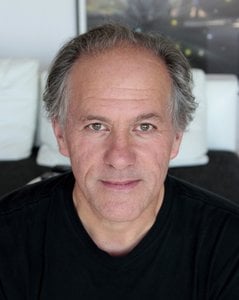
Джордж Морланд
1950 - , Унгария
Бързи факти
- Artistic Movement Or Style: Дигитално изкуство, Нова медия
- Artists Who Influenced This Artist:
- Чарлз Гагнон
- Хърбърт Коен
- Date Of Birth: 1950
- Full Name: George Legrady / Légrády György
- Nationality: Канадец, Унгарец
- Notable Artworks:
- Anecdoted Archive
- Pockets Full of Memories
- Making Visible
- Place Of Birth: Будапещ, Унгария