


Картината следва вашите избори: , .
Описание на колекционерския предмет
Vibrant German Expressionism featuring two monkeys by Franz Marc (1913); explore the colorful spirit of this dynamic masterpiece today.
 Прочети повече
Биография на художника
Фанц Марк (1880-1916) е немски експресионист, известен с живописните си животни и ярки цветове. Създател на "Синия странник", неговото творчество изразява духовни търсения и връзка с природата.
Ръчно изработена маслена репродукция
Ръчно рисувана маслена картина върху платно във вашия размер и рамка, изработена по поръчка от нашите художници. ( Превключване към принт Превключване към дигитално изображение)
Още информация за тази картина
 Преглед в реален мащаб
 Изпрати
 Сподели
 Детайли
 Ръководство

 Изтегляне
 Подобни артикули
 Рентгенова снимка
 Слайдшоу
 Въпроси и отговори
 Статистика
Поръчайте вашата картина в четири лесни стъпки
Не бързайте. Можете да промените всеки от отговорите; цената в количката ви се актуализира според всеки избор.
1 Стъпка първа от четири
Какъв размер бихте искали?
Тези размери запазват пропорциите на оригиналната картина. Илюстрацията показва избрания от Вас размер върху стена, над двуметрова софа.
Или въведете свои собствени размери
Изберете от нашите предварително зададени размери, които съответстват на оригиналните пропорции на произведението.

Въведете необходимата ширина и височина, за да паснат на вашата рамка или стена. Тъй като това е ръчна работа, при избор на размер с различен формат художникът може да нарисува малко повече около картината или да отреже малко от периферията — вие избирате. Преди да започне рисуването, ще ви изпратим дигитален мок업 за одобрение. Картината, показана на тази страница, не е реалният резултат — само мок업ът го показва.
2 Стъпка две от четири
Как трябва да бъде подготвено: на руло, на платно или в рамка?
Цените по-долу са за избрания от Вас размер от първа стъпка.
Изберете страните на разпънатото платно
Изберете своята рамка

Бяло €1

Размити краища €1

Разширен €1

P118B €10

P118H €10

P118W €10

P438Z €10

P508JH €12

P508YH €12

P805H €10

P805Z €10

P919BZ €10

P919G €10

P919XJ €10

P959ZH €10

P968JZ €12

W106C €8

W218G €10

W218JH €8

W218Y €10

W307PJ €10

W316G €10

W316PJ €8

W316Y €10

W398PJ €8

W4111J €10

W500HY €15

W500JH €15

W692G €12

W849H €8

W940BG €15

W953PJ €8

H24-GOLD €30

H24-SILVER €30

H36-GOLD €45

H36-SILVER €45
С рамка
Рамка: . Общ размер с рамката: .
3 Стъпка три от четири
Желаете ли да промените нещо в картината?
Повечето хора отговарят с „не“. Тъй като всяка картина е изработена на ръка, нашият художник може също така да я адаптира специално за Вас.
След получаване на поръчката, екипът на ArtsDot.com ще изпрати имейл до клиента с инструкции и ще предостави примерен макет
4 Четвърта от четирите стъпки
Няколко варианта за завършен вид
Всички те са по избор. Вече избраните отговори не включват допълнителни разходи.
Кой го рисува?
Доставка по целия свят () в рамките на 3-4 седмици вместо стандартните 5 седмици. (10 Ноември). Без компромис с качеството.
Табелка, точно като в музея?
Детайли за гравираната бронзова плака
This elegant plaque features the artist's name and the title of the artwork, finely engraved for a timeless presentation.
It is made from bronze with a refined, elegant finish. The text is precisely laser-engraved for a sharp and permanent result. Measuring 9x2 cm, the plaque is compact yet easy to read. It's built to be durable and scratch-resistant, offering a professional, museum-quality look. Mounting is simple thanks to the included adhesive backing.
Детайли за прозрачната акрилна плака
The plaque includes essential engraved details such as the artist's name, the title of the artwork, the date it was created, the type of media used-like oil on canvas or watercolor-a brief description of the piece, and a QR code that links to the complete artwork information.
It is crafted from clear acrylic, offering a sleek, modern appearance. The text is UV-engraved in black to ensure strong visual contrast. With a size of 10x15 cm, it ensures optimal readability. It comes equipped with two metal hooks for secure wall mounting. The plaque is designed to be weather-resistant, making it suitable for various environments, and it includes interactive features that work seamlessly with smartphone scanning.
Детайли за черната акрилна плака
This elegant plaque includes engraved information such as the artist's name, the title of the artwork, the date it was created, the type of media used (like oil on canvas or watercolor), a short description of the artwork, and a QR code for quick access to more information.
The plaque itself is made from refined black acrylic with a premium finish. The text is laser-engraved in white for high contrast and readability. Its size is 10x15 cm, designed to be easy to read. It comes with two metal hooks for professional mounting. The design is sleek and fits any interior style. It is also weather-resistant and durable, with built-in digital integration for mobile compatibility.
Защитен лак?
Кога ви е необходимо?
✓ Проверете и поръчайте
Вашата картина, точно както я поръчахте

Two Monkeys
Вид репродукция
Размер на репродукцията
-

Елитен старши художник
Повече детайлност, изящество и допълнително време за производство
-

Рамка за репродукция
-
-
За произведения на изкуството или репродукции, чийто размер е над 105 см (приблизително 41 инча) във всяка страна, рамката ще бъде изпратена в разглобен вид като комплект за сглобяване. Този метод гарантира безопасна доставка и предотвратява повреди по време на транспортиране.
Изисква се професионално сглобяване – това не е продукт за самостоятелна изработка (DIY).
Комплектът трябва да бъде сглобен, а платното – опънато от опитен професионален багер, като се използва дървено лепило (не е включено в комплекта), клещи за опъване на платно и затягащи скоби, за да се поддържа правотата на подрамника, докато лепилото изсъхне. Неправилното сглобяване или неравномерното опъване на платното може трайно да повреди произведението и не е покрито от нашата гаранция.
 За произведения на изкуството или репродукции, чийто размер е над 105 см (приблизително 41 инча) във всяка страна, рамката ще бъде изпратена в разглобен вид като комплект за сглобяване. Този метод гарантира безопасна доставка и предотвратява повреди по време на транспортиране.
Всички елементи от масивна дървесина са включени, прецизно изрязани по размер.
Сглобява се с предоставените винтове, както и с лепило за дърво за ъгловите връзки, което не е включено в комплекта и трябва да бъде осигурено от вашия рамкар.
Изискват се професионални инструменти, които не са включени: щипка за опъване на платно (натягач) и скоби за фиксиране на подрамниците под прав ъгъл, докато лепилото изсъхне.
Важно:
За сглобяването на ъглите е необходимо лепило за дърво, рейките трябва да се фиксират с

Етикет с име
-
-

Защитен лак
Гланцов лак (подсилва цветовете и предпазва от светлина и влага)
-

Персонализирай моето произведение
Примери за възможности за персонализация: Заменете лицето със снимка на клиента; Добавете домашен любимец (например, заменете котка с куче); Включете скрито съобщение във фона; Променете пейзажа или елементите на фона.
-

Спешно
Доставка по целия свят () в рамките на 3-4 седмици вместо стандартните 5 седмици. (10 Ноември). Без компромис с качеството.
-
Експресна доставка
Доставка по целия свят () в рамките на 5 седмици. (17 Ноември).
Включена
Обща цена
€ 235
Опцията със стъкло е налична само за размери под 110 см
Включено във всяка поръчка
- Безплатна експресна доставка по целия свят
- Висококачествено ленено платно
- Пълно застраховане на доставката
- Гаранция за възстановяване на митнически такси
- Гаранция за пълно съответствие на цветовете
- Политика за връщане в рамките на 100 дни (само при дефекти)
- 100% Гаранция за връщане на сумата
- Оферта за отстъпка при поръчка на повече бройки


The Primal Symphony of Form and Color
To stand before Franz Marc's "Two Monkeys" is to step directly into the vibrant, pulsating heart of early twentieth-century German Expressionism. This painting is not merely a depiction of fauna; it is a spirited meditation on connection, instinct, and the inherent vitality of life itself. The composition immediately draws the eye to the central pair of monkeys, rendered with an almost palpable energy. They interact in a moment captured forever—a playful entanglement that speaks volumes about companionship and shared existence. Surrounding them, the scattered birds add layers of movement, transforming what might be a simple portrait into a dynamic, breathing ecosystem painted upon canvas.
A Deep Dive into Expressionist Spirit
Painted in 1913, this work sits at a pivotal moment in art history, just before the profound upheavals that would reshape the world. Franz Marc was deeply concerned with stripping away the superficialities of modern life to find something purer, more spiritual beneath the surface. His fascination with the animal kingdom was never purely academic; for him, animals were conduits to a deeper, almost mystical truth about existence. The style itself is revolutionary—the colors are not used descriptively but emotionally. They vibrate against one another, creating an audible resonance that mirrors the intensity of Marc's inner vision. It is art as spiritual utterance.
Symbolism Woven in Pigment
The symbolism within "Two Monkeys" is rich and multifaceted. The monkeys themselves often represented a primal, untamed joy or perhaps even the duality of nature—the wild spirit juxtaposed against the structured world. Marc imbued his subjects with an almost symbolic weight; they are emblems of pure being. Furthermore, the inclusion of various birds suggests freedom, communication, and the ceaseless flow of life's narrative. When considering this piece for a collector’s space or a designer’s vision, one is not simply acquiring art, but rather incorporating a philosophy: a celebration of instinctual beauty and vibrant connection.
Technique and Emotional Resonance
Marc’s technique here showcases his mastery in handling color fields to evoke emotion. The brushwork, while energetic, maintains a certain clarity that allows the viewer's eye to wander through the composition without becoming overwhelmed. The colors—bold, saturated, and deeply expressive—do not mimic reality; they amplify feeling. Owning a reproduction of this piece means inviting a burst of controlled, passionate energy into your environment. It demands attention, yet it rewards contemplation, offering a visual balm for the modern soul weary from muted tones and predictable forms.
Въпроси и отговори
Как е описано настроението на „Two Monkeys“ на Франц Марк?
"Two Monkeys" има Playful атмосфера.
Кой размер на принта от „Two Monkeys“ на Франц Марк е подходящ за препоръчаната стая?
Препоръчителното съчетание за „Two Monkeys“ на Франц Марк: принт с размер Large в Living Room.
Мога ли да прегледам „Two Monkeys“ на Франц Марк, преди да поръчам?
Предварителен преглед на „Two Monkeys“ на Франц Марк можете да видите на страницата за преглед на произведението Преглед на произведението.
Подобни произведения


Франц Марк
1880 - 1916, Германия
Биография на художника
A Life Immersed in Color and Spirit
Franz Moritz Wilhelm Marc, born in Munich in 1880, was a painter whose brief but intensely focused career irrevocably altered the course of German Expressionism. His story is one of profound spiritual seeking translated into a vibrant visual language, a quest to understand the essence of life through the purity he found in the natural world—particularly within the animal kingdom. Initially influenced by his father, Wilhelm Marc, a landscape painter, young Franz’s artistic path wasn't immediately certain. He briefly considered theology, grappling with questions of faith and existence before ultimately dedicating himself to art at the Academy of Fine Arts in Munich. These early explorations into religious thought would remain deeply embedded within his work, shaping his belief that art could be a conduit for spiritual experience. His academic training provided him with technical foundations, but it was encounters with the works of Vincent van Gogh during visits to Paris that truly ignited his artistic vision. Van Gogh’s emotive use of color and raw expression resonated profoundly with Marc, liberating him from conventional techniques and setting him on a path toward a more subjective and emotionally charged style.The Blue Rider and a New Artistic Vision
Marc's artistic development wasn’t solitary; it flourished within the dynamic context of early 20th-century Munich. He experimented with various artist groups, including the Neue Künstlervereinigung München, before co-founding *Der Blaue Reiter* (The Blue Rider) in 1911 alongside Wassily Kandinsky. This wasn’t merely a group or an exhibition series; it was a philosophical and artistic revolution. *Der Blaue Reiter* sought to move beyond mere representation, aiming instead to express inner spiritual truths through abstraction and symbolic color. The journal of the same name became a platform for disseminating these ideas, showcasing not only their own work but also that of other forward-thinking artists and exploring diverse cultural influences from folk art to primitive sculpture. Marc’s contributions during this period were pivotal. He moved away from depicting landscapes as static scenes, instead focusing on animals—horses, deer, foxes—as vessels of spiritual energy. These weren’t simply animal portraits; they were symbolic representations of innocence, harmony, and a connection to the natural world that he believed humanity had lost. The influence of Robert Delaunay’s exploration of abstract forms and vibrant colors further propelled Marc toward simplification and heightened emotional expression in his work. Paintings like *The Tiger* (1912) and *Red Deer* (1912) exemplify this shift, showcasing bold color choices and a growing focus on the inherent qualities of his subjects rather than realistic depiction.Symbolism, Color, and the Essence of Being
Marc’s artistic style is immediately recognizable for its distinctive use of color and form. He didn't employ color descriptively; instead, he imbued it with symbolic meaning. Blue represented spirituality and masculinity, yellow signified joy and femininity, and red embodied violence and materiality. These weren’t arbitrary choices but a carefully constructed system designed to convey specific emotional and philosophical ideas. His animals aren’t merely subjects; they are embodiments of these concepts. The simplification of forms—reducing figures to their essential shapes—further emphasized the underlying spiritual essence he sought to capture. *The Tower of Blue Horses* (1913), sadly lost during World War II, is perhaps the most iconic example of this approach, a powerful and evocative composition that encapsulates his artistic vision. He believed animals possessed an inherent purity and connection to nature that humans had forfeited through societal constraints and intellectualization. By portraying them with such reverence and symbolic weight, Marc sought to remind viewers of this lost harmony and inspire a deeper appreciation for the natural world. His work wasn’t about depicting *what* he saw but rather *how* he felt—a deeply personal and spiritual response to his surroundings.Influences and Development
Marc's artistic journey was shaped by a confluence of influences. Initially, his father’s landscape paintings instilled in him an appreciation for the beauty of nature. However, it was his exposure to Vincent van Gogh’s expressive brushwork and emotional intensity that truly transformed his approach. Van Gogh’s willingness to prioritize feeling over objective representation resonated deeply with Marc's own spiritual inclinations. Furthermore, his time in Paris exposed him to the innovations of Impressionism and Post-Impressionism, particularly the work of Paul Gauguin, who similarly sought to infuse symbolism into his art. The encounter with Wassily Kandinsky within *Der Blaue Reiter* proved crucial, fostering a shared belief in the power of abstraction to convey spiritual truths. Marc’s artistic style evolved over time, moving from a more academic style to one characterized by simplified forms, bold colors, and symbolic imagery. He experimented with various techniques, including cloisonné enameling, reflecting his interest in exploring new modes of expression.A Tragic End and Lasting Legacy
The outbreak of World War I in 1914 dramatically altered Marc’s life and artistic trajectory. Despite seeking exemption due to his status as an artist, he was drafted into the German army, serving as a cavalryman. The horrors of war deeply affected him, yet even amidst the chaos, he continued to paint, finding solace and meaning in his art. Tragically, Franz Marc died on March 4, 1916, at the Battle of Verdun, a devastating loss for the art world. His untimely death cut short a career brimming with potential, but it also cemented his place as a pivotal figure in modern art history. His work continues to resonate today, influencing generations of artists and captivating audiences with its emotional depth and spiritual resonance. Marc’s paintings are exhibited in major museums worldwide, including the Lenbachhaus in Munich, which holds an extensive collection of his work. He is remembered not only as a pioneer of German Expressionism but also as a visionary artist who dared to explore the profound connection between art, spirituality, and the natural world—a legacy that continues to inspire awe and contemplation. His artistic vision remains a testament to the power of art to transcend the material realm and touch upon something deeper within the human spirit.


Свързани статии

Franz Marc: Expressionism, Spirituality & the Animal Symbolism of a Modern Master
Explore the profound world of Franz Marc's Expressionist paintings. Discover his spiritual connection to animals, innovative use of color, and lasting impact on modern art history. Learn more at ArtsDot.

Топ 10 шедьовъра на Германския Експресионизъм – Изкуство за Вашия Дом от ArtsDot
Разгледайте топ 10 шедьовъра на Германския Експресионизъм – Munch, Kirchner, Kandinsky и други. Открийте историите зад картините, техниките и емоциите им. Музейно качество репродукции за Вашия дом от ArtsDot.com! Разгледайте пълната колекция онлайн.
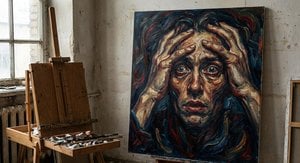
Figurative Expressionism: Emotional Intensity & Subjective Reality in 20th-Century Art
Explore the powerful world of Figurative Expressionism with ArtsDot. Discover key artists like Kirchner & Beckmann, understand its emotional depth, and learn how to collect this influential 20th-century art movement.