
- Начало

- Принт върху платно
- Ел Греко
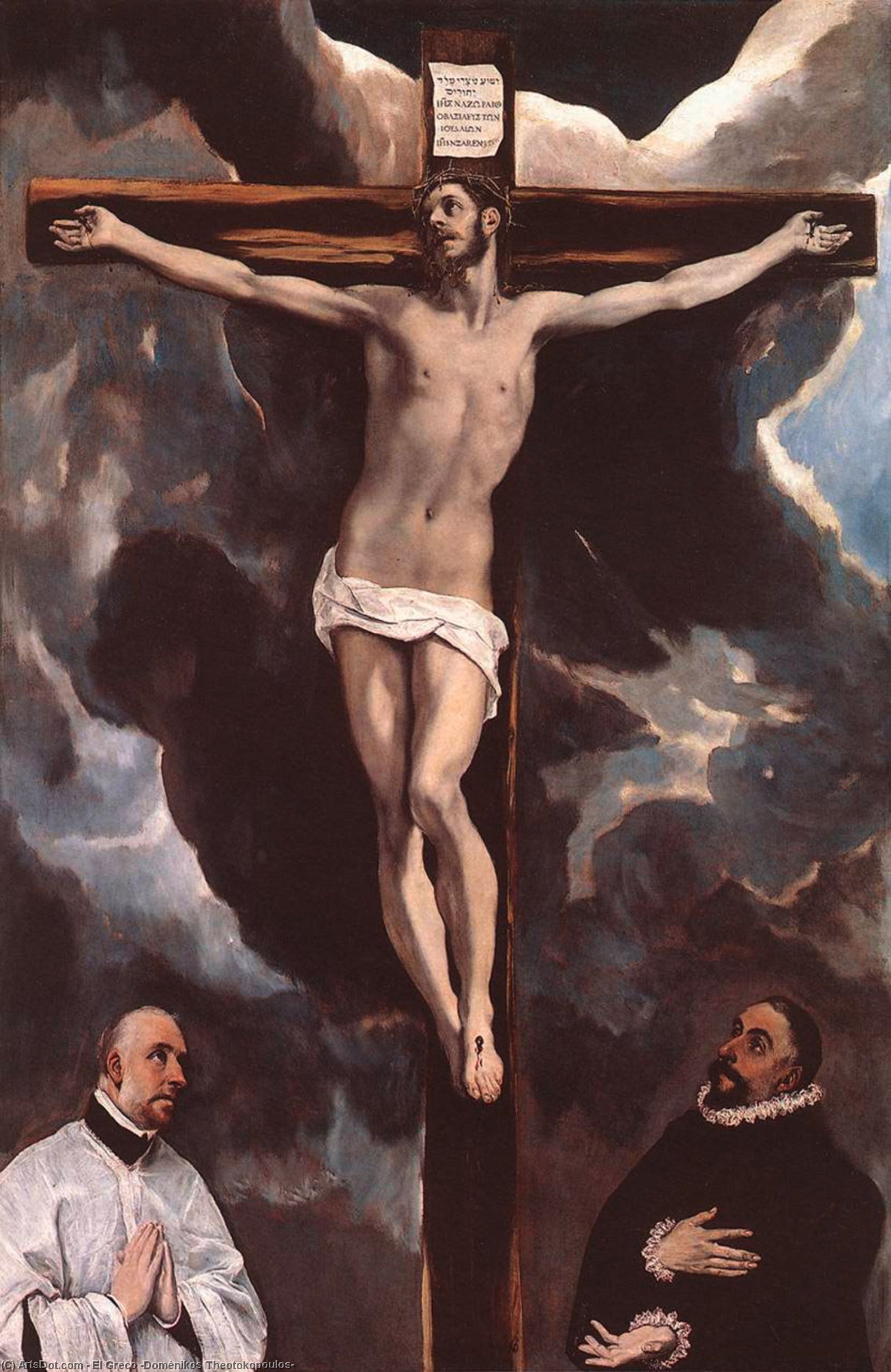
- Christ on the Cross Adored by Donors
 Купи картина
 Изпрати
 Сподели
 Details

 Изтегляне
 Подобни
 X-Ray
X-Ray Слайдшоу
Christ on the Cross Adored by Donors


Жикле / Художествен принт
Giclée печат или принт върху платно с музейно качество, бързо производство и гъвкави опции за завършен вид.
 Прочетете повече



P118B $10

P118H $10

P118W $10

P438Z $10

P508JH $12

P508YH $12

P805H $10

P805Z $10

P919BZ $10

P919G $10

P919XJ $10

P959ZH $10

P968JZ $12

W106C $8

W218G $10

W218JH $8

W218Y $10

W307PJ $10

W316G $10

W316PJ $8

W316Y $10

W398PJ $8

W4111J $10

W500HY $15

W500JH $15

W692G $12

W849H $8

W940BG $15

W953PJ $8




Изберете от предварително зададените размери, които съответстват на оригиналните пропорции на произведението.

Можете да въведете собствени размери, за да паснат на конкретна рамка или пространство. Ако избраният от Вас размер не съвпада с пропорциите на оригиналното изображение, ние ще изрежем произведението или ще разширим изображението с огледален или едноцветен ръб. Дигитален макет ще бъде изпратен за Ваше одобрение преди започването на производството.
Моля, имайте предвид, че предпрегледът на екрана не отразява реалното изрязване или разширяване. Само макетът ще покаже точно финалната композиция.
Въпреки че са налични персонализирани размери, препоръчваме да изберете размер от предварително дефинирания списък, за да запазите оригиналните пропорции.
Доставка по целия свят () в рамките на 2 седмици вместо стандартните 4/5 седмици. (1 Юли)

Безплатна експресна доставка по целия свят

Висококачествено ленено платно

Пълно застраховане при доставка

Гаранция за възстановяване на митнически такси

Гаранция за цветова точност

60-Дневен период за връщане (Само при дефекти)

100% Гаранция за връщане на парите

Предложение за отстъпка при поръчка на едро
 Стъклото е налично само в размери под 110 см

Christ on the Cross Adored by Donors
Жикле / Художествен принт
Размер на репродукцията
-


Обща цена
-
Описание на колекционерския предмет
Christ on the Cross Adored by Two Donors
Doménikos Theotokópoulos, universally known as El Greco (meaning “The Greek”), stands as one of the most singular figures in the annals of Western art. His dramatic and intensely expressive works bridged the gap between the Renaissance and the Baroque periods, simultaneously forging a distinctly personal style that continues to captivate audiences today.
Artistic Style and Influences
El Greco’s artistic vision was profoundly shaped by his formative years in Byzantium, where he honed his skills in icon painting—a discipline characterized by meticulous detail and symbolic color palettes rooted in Orthodox tradition. However, his journey to Italy around 1567 irrevocably altered his trajectory, exposing him to the burgeoning humanist ideals of the Renaissance and fostering a fascination with classical sculpture.
His distinctive style – often termed Mannerism – distinguishes itself from its predecessors through elongated figures, distorted proportions, and heightened emotional intensity. Unlike the idealized forms prevalent in earlier art movements, El Greco embraced expressive distortions that conveyed psychological depth and spiritual fervor. This stylistic choice reflects a deliberate rejection of Renaissance conventions, prioritizing subjective experience over objective representation.
A significant influence on El Greco’s oeuvre was Michelangelo Buonarroti—whose monumental sculptures at St Peter's Basilica in Rome would have undoubtedly resonated with the young artist. As evidenced by El Greco’s sketches for Saint Peter and Saint Paul, he meticulously studied Michelangelo’s anatomical precision and sculptural dynamism, incorporating elements of classical form into his own compositions.
- The painting’s use of color and light creates a sense of depth and emotion, drawing the viewer into the scene.
- The composition is characterized by a balance and harmony, with the figures arranged in a triangular formation—a compositional device frequently employed in Byzantine art to convey stability and spiritual significance.
- El Greco’s masterful manipulation of chiaroscuro – the interplay between light and shadow – enhances the dramatic impact of the artwork, emphasizing Christ's suffering and conveying a palpable atmosphere of solemn contemplation.
Historical Context
Created in 1590 during El Greco’s period in Toledo, Spain, “Christ on the Cross Adored by Two Donors” embodies the spirit of the Spanish Renaissance—a time marked by intellectual curiosity and artistic innovation. The painting was commissioned by Dionisio Melgar and an unknown inhabitant of Toledo, members of the Hieronymite monastery, reflecting the religious fervor prevalent in Spain during the Habsburg era.
The artwork’s iconography draws upon established Christian symbolism—the cross representing sacrifice and redemption, while the donors embody piety and devotion. The depiction of Christ's serene gaze upward suggests contemplation of divine grace, underscoring the painting’s spiritual message.
Handmade Oil Paintings Reproductions
ArtsDot offers exceptional reproductions of “Christ on the Cross Adored by Two Donors,” meticulously crafted by skilled artisans using archival pigments and techniques. These reproductions capture the essence of El Greco's artistic vision, allowing art enthusiasts to appreciate this masterpiece in a stunningly realistic format.
Explore other captivating artworks by El Greco at ArtsDot.com, including “An Elderly Gentleman” and “Portrait of Antonio de Covarrubias y Leiva.” For more information about the artist and his legacy, visit /art/list/?Filter=el+greco,greco,doménikos+theotokopoulos,doménikos,theotokopoulos.
Furthermore, admire “Christ” by El Greco at the National Gallery in Prague, Czech Republic—a testament to his ability to convey profound emotion through masterful brushstrokes and vibrant color palettes. You can find more details about this iconic painting here: /art/list/?Filter=8XX6QW-El-Greco-(Domenikos-Theotokopoulos)-Christ.
Подобни произведения


Биография на художника
Doménikos Theotokópoulos, Known As El Greco – A Pioneer Of Expressionism And Cubism
Doménikos Theotokópoulos, universally recognized as El Greco – “the Greek” – stands apart in the annals of Western art history. Born in Crete, Greece, around 1541, his artistic journey was marked by constant movement and transformation, culminating in a singular style that anticipated the revolutionary impulses of Expressionism and Cubism centuries later. He wasn’t merely responding to trends; he fundamentally reshaped visual language, forging a path toward modern art while retaining an unwavering devotion to Byzantine spiritual traditions.Early Training And Cretan Roots
El Greco's formative years were steeped in the Orthodox faith of Crete, then under Venetian rule. His early artistic training focused on mastering the meticulous techniques of icon painting – a practice deeply rooted in Byzantine aesthetics—characterized by precise detail and symbolic representation. This foundational understanding profoundly influenced his subsequent work, informing his compositional choices and his use of color. The influence of Byzantine art is palpable in his earliest paintings, demonstrating an acute sensitivity to spiritual themes and a commitment to conveying profound emotion through visual imagery. His signature “Krḗs” – Cretan – served as a defiant assertion of his heritage, signaling both pride and artistic distinction amidst the cosmopolitan currents of Venice and Rome.Venice And The Renaissance Masters
Around 1567, El Greco relocated to Venice, immersing himself in the vibrant artistic milieu of the Venetian Renaissance. This pivotal move exposed him to the towering figures of Titian, Tintoretto, and Veronese—masters who had revolutionized painting with their mastery of color, perspective, and dramatic lighting. He diligently studied their techniques, absorbing their expressive power and adapting them to his own distinctive vision. The Venetian influence is particularly evident in *St. Sebastian* (1600), where anatomical accuracy merges seamlessly with theatrical staging – a testament to El Greco’s ability to synthesize disparate artistic traditions. He skillfully employed oil paint, embracing its sensual qualities and experimenting with innovative compositional approaches.Rome And Mannerism: A Difficult Embrace
A subsequent journey to Rome presented El Greco with a contrasting aesthetic landscape—the Mannerist style. While he demonstrated considerable talent in capturing the elegance and sophistication of Mannerist art, he struggled to gain acceptance within the competitive Roman artistic community. The elongated figures and distorted perspectives characteristic of Mannerism posed challenges to his ingrained Byzantine sensibilities, highlighting the difficulties inherent in reconciling tradition with innovation. Nevertheless, El Greco persevered, refining his technique and exploring new expressive possibilities—a testament to his unwavering determination as an artist.Toledo And Spiritual Intensity
His final artistic home was Toledo, Spain – a city pulsating with religious fervor during the Counter- Reformation. This relocation provided El Greco with both patronage and an environment conducive to developing his intensely spiritual paintings. He found inspiration in the austere beauty of Toledo’s churches and monasteries, channeling his faith into monumental works that conveyed profound emotion and spiritual transcendence. *The Burial of the Count of Orgaz* (1586-1588), arguably his masterpiece, exemplifies this culmination of artistic vision—a breathtaking fusion of realism and mysticism that solidified El Greco's reputation as one of Spain’s greatest painters. The painting’s dramatic lighting, elongated figures, and symbolic imagery continue to captivate viewers today, embodying the enduring legacy of a truly singular artist.A Lasting Impact On Art History
El Greco’s distinctive style—characterized by elongated figures, intense emotion, and theatrical lighting—anticipated the expressive fervor of Expressionism and Cubism centuries later. Artists like Picasso and Braque recognized him as a precursor to modern art, admiring his innovative use of form and color. His paintings resonated with the spirit of the avant-garde, demonstrating that artistic innovation could emerge from unexpected sources. El Greco’s legacy extends far beyond his own lifetime—he remains an icon of spiritual artistry and a testament to the transformative power of creative vision. He is remembered not merely as a painter but as a prophet of modern art, whose work continues to inspire artists and scholars alike.
Ел Греко
1541 - 1614 , Гърция
Бързи факти
- Artistic Movement Or Style: Ренесанс и Барокко
- Artists Who Influenced This Artist:
- Тициан
- Тинторетто
- Date Of Birth: 1541 г.
- Date Of Death: 1614 г.
- Full Name: Doménikos Θεοτοκόπουλος
- Nationality: Гръцки-Испански
- Notable Artworks:
- Погребението на граф Оргоз
- Панорама над Толедо
- Разделен Христосъбитие
- Place Of Birth: Крета, Гърция
Всички статии

Domenico Beccafumi: A Sienese Master Between Mannerism & Baroque Anticipation
Explore the captivating world of Domenico Beccafumi, a pivotal figure bridging Mannerism & Baroque art. Discover his unique style, religious masterpieces, and lasting legacy with ArtsDot.


El Greco: Spirituality, Style & Innovation – A Renaissance Master's Legacy
Explore the captivating world of El Greco! Discover his unique style, spiritual intensity, and lasting impact on art history. Learn about this Renaissance master's life, iconic paintings & legacy.

Топ 10 шедьоври на Барока: История, артисти и великолепие за вашия дом
Разгледайте 10 шедьовъра на Барока от Караваджо, Рембрандт и Рубенс! Открийте историите зад тези емблематични картини и скулптури. Вдъхновете се за вашия интериор с ArtsDot.com – луксозни репродукции и изкуство за дома.

The Golden Age Reforged: Dramatic Realism & Religious Zeal in Spanish Baroque Art
Explore the dramatic world of Spanish Baroque art! Discover masters like Zurbarán & the powerful influence of religious zeal on painting techniques – a guide for collectors and enthusiasts.

Топ 25 шедьовъра на Ел Греко: Духовност и гений в изкуството за вашия дом
Разгледайте топ 25 шедьовъра на Ел Греко – икони на Ренесанса и испанското изкуство. Открийте историите зад духовните му картини, уникалната техника и символиката във всяка творба. Купете висококачествени репродукции за вашия дом на ArtsDot.com!



