

 Преглед в реален мащаб
 Изпрати
 Сподели
 Детайли
 Ръководство

 Изтегляне
 Подобни артикули
 Рентгенова снимка
 Слайдшоу
 Въпроси и отговори
 Статистика
Cantoria (detail)


 Прочети повече
Жикле / Художествен принт
Giclée печат или принт върху платно с музейно качество, бързо производство и гъвкави опции за завършен вид. ( Купете ръчно рисувана картина Превключване към дигитално изображение)




P118B €10

P118H €10

P118W €10

P438Z €10

P508JH €12

P508YH €12

P805H €10

P805Z €10

P919BZ €10

P919G €10

P919XJ €10

P959ZH €10

P968JZ €12

W106C €8

W218G €10

W218JH €8

W218Y €10

W307PJ €10

W316G €10

W316PJ €8

W316Y €10

W398PJ €8

W4111J €10

W500HY €15

W500JH €15

W692G €12

W849H €8

W940BG €15

W953PJ €8




Изберете от нашите предварително зададени размери, които съответстват на оригиналните пропорции на произведението.

Въведете необходимата ширина и височина, за да паснат на вашата рамка или стена. Принтовете могат само да се изрязват, но никога не могат да бъдат по-големи от оригиналната картина, така че при размер с различен формат част от изображението ще бъде загубена. Преди да започнем печат, ще ви изпратим дигитален мок업 за одобрение. Изображението, показано на тази страница, не показва реалното изрязване — само мок업ът го показва.
Доставка по целия свят () в рамките на 2 седмици вместо стандартните 4/5 седмици. (4 Ноември)

Безплатна експресна доставка по целия свят

Висококачествено ленено платно

Пълно застраховане на доставката

Гаранция за възстановяване на митнически такси

Гаранция за пълно съответствие на цветовете

Политика за връщане в рамките на 100 дни (само при дефекти)

100% Гаранция за връщане на сумата

Оферта за отстъпка при поръчка на повече бройки
 Опцията със стъкло е налична само за размери под 110 см

Cantoria (detail)
Жикле / Художествен принт
Размер на репродукцията
-


Обща цена
€ 56
The Echoes of Florence: Donatello’s Cantoria
Donatello's "Cantoria," a breathtaking detail from the larger marble relief adorning the south sacristy doors of the Duomo in Florence, isn’t merely a sculpture; it’s a vibrant snapshot of Renaissance exuberance and spiritual aspiration. Crafted between 1433 and 1439 during a pivotal moment in Florentine art history, this fragment captures the dynamism of a celestial choir – angels dancing with an almost ecstatic joy, their forms rendered with a masterful blend of classical restraint and intensely expressive emotion. The sheer scale of the original work—a monumental frieze spanning nearly sixty feet—is immediately apparent even in this detailed section, hinting at the grandeur and ambition of Cosimo de’ Medici, who commissioned it as a testament to his patronage of the arts.
The technique employed is nothing short of revolutionary for its time. Donatello masterfully utilized a complex layering of materials: gleaming white marble forms the foundation, punctuated by strategically placed glass paste – a shimmering, iridescent substance that catches and refracts light with astonishing effect – and lavish inlays of gold. These elements aren’t simply decorative; they contribute to an overall sense of ethereal beauty, elevating the scene beyond mere representation and into the realm of pure visual delight. The subtle gradations of color achieved through the manipulation of these materials create a remarkable depth and luminosity, drawing the viewer into the heart of this animated tableau.
A Symphony of Movement and Symbolism
What immediately strikes the eye is the sheer energy contained within the figures. Donatello abandons the static formality often associated with early Renaissance sculpture, opting instead for a dynamic choreography of movement. The angels aren’t posed; they *dance*, their limbs outstretched in graceful arcs, their faces alight with expressions ranging from joyous laughter to rapturous contemplation. This deliberate embrace of motion reflects the humanist ideals that were gaining momentum during this period – a shift towards celebrating earthly experience and human potential. The composition itself is carefully balanced, creating a sense of visual harmony while simultaneously conveying a feeling of unrestrained vitality.
Beyond the purely aesthetic, “Cantoria” is rich in symbolic meaning. The angels themselves represent the heavenly choir, singing praises to God. Their gestures – holding instruments, raising their hands in adoration – are direct references to biblical texts and musical traditions. The swirling patterns of their movement evoke a sense of divine harmony and the interconnectedness of all things. The inclusion of children amongst the angelic figures suggests innocence, purity, and the promise of eternal life—a potent message for a society grappling with questions of faith and morality.
Contextualizing a Florentine Masterpiece
To fully appreciate “Cantoria,” it’s crucial to understand its historical context. Donatello was a pivotal figure in the transition from the Gothic to the Renaissance style, rejecting the elongated figures and stylized poses of his predecessors in favor of a more naturalistic and emotionally charged approach. His work profoundly influenced subsequent generations of artists, including Michelangelo and Raphael. The Cantoria itself was intended for the Duomo’s sacristy doors, a space dedicated to prayer and reflection – a fitting setting for such a visually arresting and spiritually evocative artwork.
The commission by Cosimo de' Medici underscores the importance of patronage in shaping Florentine art during this era. The Medici family were avid collectors and supporters of the arts, playing a key role in fostering an environment where creativity could flourish. “Cantoria” stands as a testament to their commitment to beauty, innovation, and the celebration of human achievement – a legacy that continues to resonate today.
A Timeless Vision
Even in this detailed fragment, “Cantoria” retains its power to captivate and inspire. Donatello’s masterful use of light, color, and movement creates an immersive experience for the viewer, transporting them to the heart of Renaissance Florence. The sculpture's enduring appeal lies not only in its technical brilliance but also in its profound exploration of human emotion and spiritual aspiration – a timeless vision that continues to resonate with audiences centuries later. Reproductions offer a remarkable opportunity to bring this extraordinary artwork into your home or office, allowing you to experience the beauty and energy of Donatello’s masterpiece firsthand.
Въпроси и отговори
Кой е преобладаващият нюанс в "Cantoria (detail)"?
"Cantoria (detail)" клони към Ochre to Sepia нюанс.
Каква ориентация има „Cantoria (detail)“ на Донятелло?
„Cantoria (detail)“ на Донятелло е Landscape композиция. Пропорциите си заслужават да бъдат проверени преди избор на размер на принта.
„Cantoria (detail)“ на Донятелло светла или тъмна творба?
Записаните стойности за „Cantoria (detail)“ на Донятелло са: яркост balanced, луминанс Soft Shadow.
Подобни произведения


Биография на художника
Early Life and Artistic Beginnings
Donatello di Niccolò di Betto Bardi, universally known as Donatello, was born in the vibrant heart of Florence around 1386 – a period of immense artistic ferment and burgeoning Renaissance ideals. His early life remains shrouded in some mystery, yet it’s clear that his formative years were steeped in the rich traditions of Florentine craftsmanship and classical learning. He wasn't born into a family of artists; rather, his father, Niccolò di Betto Bardi, was a wool carder – a modest profession that nonetheless provided Donatello with access to the bustling commercial center of Florence and its skilled artisans. It’s believed he began his artistic journey as an apprentice in the workshop of Lorenzo Ghiberti, a master sculptor renowned for his groundbreaking bronze doors for the Baptistery of San Giovanni in Florence. This apprenticeship proved crucial, exposing him not only to technical skills but also to the prevailing aesthetic sensibilities of the time – a synthesis of Gothic elegance and nascent Renaissance humanism. Donatello’s early works, such as the marble *Saint John the Evangelist*, demonstrate this transitional phase, showcasing an increasing awareness of anatomical accuracy and a subtle shift away from the stylized forms of medieval sculpture. The statue's deliberate aging and expressive features marked a significant departure from traditional depictions of the saint, hinting at Donatello’s burgeoning ability to imbue his figures with psychological depth.Key Innovations and Artistic Style
Donatello’s genius lay not merely in replicating existing styles but in forging a distinctly new approach to sculpture – one that would profoundly influence generations of artists. He was a pioneer in several key areas, fundamentally altering the course of Renaissance art. Perhaps most notably, he is credited with reviving the tradition of freestanding nude male sculpture, a practice largely abandoned since antiquity. His monumental *David*, commissioned by the Medici family, stands as a testament to this bold innovation – a powerfully realistic and emotionally charged depiction of the biblical hero that captured the imagination of viewers and established a new standard for human representation in art. Beyond his subject matter, Donatello’s style was characterized by an unprecedented level of naturalism and expressiveness. He meticulously studied anatomy, employing techniques borrowed from classical sculpture to achieve remarkable accuracy in depicting the human form. However, he didn't simply imitate antiquity; instead, he infused his sculptures with a palpable sense of emotion – capturing fleeting expressions of joy, sorrow, fear, and determination. This dramatic intensity was further enhanced by his masterful use of *rilievo schiacciato* – a technique involving shallow relief that created an illusion of depth and volume, drawing the viewer into the scene. His work wasn't immediately embraced; it challenged established conventions and provoked debate, yet it ultimately became the most popular style among Italian courts and European artists alike.Major Works and Artistic Development
Donatello’s career spanned several distinct phases, each marked by a unique stylistic evolution. His early works, such as *Saint Louis of Toulouse* (now housed in the Basilica di Santa Croce) and *The Sacrifice of Isaac*, demonstrate a refined mastery of classical forms and a growing sense of dramatic composition. These pieces showcase his ability to integrate elements of both Byzantine and Renaissance aesthetics, creating figures that are simultaneously monumental and intimately human. A pivotal moment in Donatello’s artistic development occurred during his time in Padua (1423-1453), where he created the colossal equestrian statue of Gianfrancesco Gonzaga, a military commander – a daring undertaking that revived an ancient Roman tradition of monumental bronze sculpture. This ambitious project demonstrated Donatello's technical prowess and his willingness to experiment with new materials and techniques. His later works, including *Judith Slaying Holofernes* (located in the Palazzo Vecchio) and the dramatic bronze reliefs depicting the Passion of Christ on the pulpits of San Lorenzo, reflect a deepening engagement with religious themes and a heightened sense of emotional intensity. These late sculptures are characterized by their dynamic compositions, powerful gestures, and unflinching portrayal of human suffering – hallmarks of Donatello’s mature style.Legacy and Influence
Donatello's impact on the course of Western art is immeasurable. He was not merely a skilled craftsman but a true innovator who fundamentally reshaped the possibilities of sculpture. His emphasis on realism, emotional expression, and classical inspiration paved the way for subsequent generations of Renaissance artists, including Michelangelo Buonarroti and Leonardo da Vinci. Donatello’s influence can be seen in their works – from the anatomical precision of Michelangelo's figures to the psychological depth of Leonardo's portraits. Furthermore, Donatello’s work served as a crucial bridge between the Gothic and Renaissance periods, demonstrating the potential for artistic renewal while retaining elements of tradition. His legacy extends beyond Florence and Italy, inspiring artists across Europe to embrace new approaches to sculpture and to explore the full range of human experience through their art. Museums around the world continue to display his masterpieces, ensuring that Donatello’s contributions to the history of art will be celebrated for centuries to come.
Донятелло
1386 - 1466 , Италия
Бърза информация
- Artistic Movement Or Style: Ранен Ренесанс
- Artists Or Movements Influenced By This Artist: ['Италиански Ренесанс']
- Artists Who Influenced This Artist: ['Класическа скулптура']
- Date Of Birth: c. 1386
- Date Of Death: 1466
- Full Name: Donatello di Niccolò
- Nationality: Италианец
- Notable Artworks:
- Давид
- Свети Луис
- Жертва на Исаак
- Place Of Birth: Флоренция, Италия
Свързани статии

Топ 10 Бронзови Скулптури, Променили Изкуството завинаги | ArtsDot.bg
Разгледайте топ 10 легендарни бронзови скулптури, променили изкуството! От Роден до Микеланджело – истории на гении и вечни шедьоври. Вдъхновете се за вашия дом с ArtsDot.bg. Разгледайте пълната колекция онлайн!

The Enduring Form: Sculpture Across History, Technique & Emotional Resonance
Explore the rich history of sculpture with ArtsDot. Discover key techniques, influential artists & investment potential for discerning collectors. Expert insights into valuing and collecting timeless masterpieces.

The Enduring Form: Exploring Themes & Techniques in Sculpture Across Historical Periods
Explore the rich history of sculpture from ancient masterpieces to contemporary innovations. Discover key techniques, influential artists & investment potential for discerning art collectors.

Топ 10 легендарни бронзови шедьоври, променили изкуството завинаги | ArtsDot.com
Разгледайте топ 10 легендарни бронзови шедьоври, променили изкуството! От скулптурите на Роден до Микеланджело – историите зад вечните произведения. Висококачествени репродукции и идеи за интериор в ArtsDot.com.
The Enduring Allure of Marble in Art History: From Classical Sculpture to Modern Abstraction
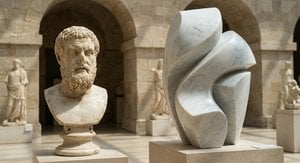
Explore the captivating history of marble sculpture from ancient Greece to modern art. Discover renowned artists like Canova & Michelangelo, carving techniques, and investment insights at ArtsDot.
