
- Начало

- Принт върху платно
- Корнелис Ван Поленбърх
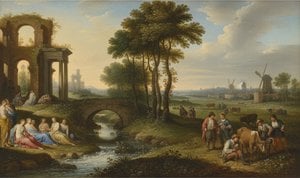
- Landscape with Diana and Callisto

 Купи картина
 Изпрати
 Сподели
 Details

 Изтегляне
 Подобни
 X-Ray
X-Ray Слайдшоу
Landscape with Diana and Callisto
 Oil On Canvas
- WallArt
- Baroque
 54.0 x 82.0 cm
 Ермитаж
Жикле / Художествен принт
Giclée печат или принт върху платно с музейно качество, бързо производство и гъвкави опции за завършен вид.
 Прочетете повече



P118B $10

P118H $10

P118W $10

P438Z $10

P508JH $12

P508YH $12

P805H $10

P805Z $10

P919BZ $10

P919G $10

P919XJ $10

P959ZH $10

P968JZ $12

W106C $8

W218G $10

W218JH $8

W218Y $10

W307PJ $10

W316G $10

W316PJ $8

W316Y $10

W398PJ $8

W4111J $10

W500HY $15

W500JH $15

W692G $12

W849H $8

W940BG $15

W953PJ $8




Изберете от предварително зададените размери, които съответстват на оригиналните пропорции на произведението.

Можете да въведете собствени размери, за да паснат на конкретна рамка или пространство. Ако избраният от Вас размер не съвпада с пропорциите на оригиналното изображение, ние ще изрежем произведението или ще разширим изображението с огледален или едноцветен ръб. Дигитален макет ще бъде изпратен за Ваше одобрение преди започването на производството.
Моля, имайте предвид, че предпрегледът на екрана не отразява реалното изрязване или разширяване. Само макетът ще покаже точно финалната композиция.
Въпреки че са налични персонализирани размери, препоръчваме да изберете размер от предварително дефинирания списък, за да запазите оригиналните пропорции.
Доставка по целия свят () в рамките на 2 седмици вместо стандартните 4/5 седмици. (1 Юли)

Безплатна експресна доставка по целия свят

Висококачествено ленено платно

Пълно застраховане при доставка

Гаранция за възстановяване на митнически такси

Гаранция за цветова точност

60-Дневен период за връщане (Само при дефекти)

100% Гаранция за връщане на парите

Предложение за отстъпка при поръчка на едро
 Стъклото е налично само в размери под 110 см

Landscape with Diana and Callisto
Жикле / Художествен принт
Размер на репродукцията
-


Обща цена
-
Описание на колекционерския предмет
Landscape with Diana and Callisto – A Baroque Masterpiece
Cornelis van Poelenburch’s “Landscape with Diana and Callisto,” painted circa 1630, stands as a testament to the burgeoning artistic fervor of the Dutch Golden Age and embodies the stylistic hallmarks of its era. More than just a depiction of a serene Italian hillside—though undeniably inspired by the picturesque landscapes favored during van Poelenburch’s formative years in Rome—the painting delves into profound mythological themes, exploring notions of divine retribution and human vulnerability within a meticulously crafted visual framework.Composition and Technique: Embracing Dynamic Movement
The artwork's composition is remarkably balanced, prioritizing a central group of figures – Diana and Callisto – nestled amongst rocky outcrops that dominate the mid-ground. These figures are positioned strategically to draw the viewer’s gaze upwards towards a hazy horizon line, creating an illusion of depth that anchors the scene in its surroundings. Van Poelenburch skillfully employs linear perspective, subtly diminishing size as objects recede into the distance, reinforcing this sense of spatial realism. Furthermore, he utilizes layering and blending techniques with oil paint on canvas—a technique common for his time—to achieve smooth transitions between colors and tones. Visible brushstrokes contribute to textural richness, particularly in the depiction of foliage and rock surfaces, hinting at the artist’s dedication to capturing natural detail.Historical Context: Roman Influence and Mythological Narrative
Van Poelenburch's journey to Rome profoundly impacted his artistic sensibilities, aligning him with a cohort of painters who sought inspiration from classical traditions. Like many artists of his generation, he embraced the Italianate landscape style—characterized by idealized vistas populated by diminutive figures enacting biblical or mythological narratives—demonstrating an awareness of artistic precedents and a desire to elevate his work beyond mere topographical representation. The scene portrays Diana, goddess of the hunt, confronting Callisto, Zeus’s wife who was seduced by Jupiter and subsequently impregnated – a tale rife with symbolism concerning divine justice and mortal transgression.Symbolism: Reflections on Time and Divine Judgment
The inclusion of ruined architectural structures—likely Roman columns—adds another layer of significance to the composition. These remnants serve as visual reminders of past glories, symbolizing the inevitable decay of civilizations and prompting contemplation about mortality. The figures’ expressions convey a palpable sense of vulnerability alongside serene observation, suggesting an emotional resonance that transcends the narrative itself. Diana's gaze is directed towards Callisto, embodying divine scrutiny and hinting at the consequences of defying celestial law.Emotional Impact: Tranquility Amidst Dramatic Narrative
Ultimately, “Landscape with Diana and Callisto” succeeds in conveying a captivating blend of tranquility and drama. Despite the weighty mythological subject matter—the confrontation between goddess and mortal—the painting’s muted color palette and diffused lighting evoke a feeling of contemplative stillness. It invites viewers to immerse themselves in the beauty of the Italian landscape while simultaneously pondering the timeless themes of morality, retribution, and human experience – qualities that continue to resonate with audiences today.Подобни произведения


Биография на художника
ранен живот и обучение
Cornelis van Poelenburgh, един от най-видните нидерландски пейзажисти, се ражда през 1594 г. в Утрехт, Нидерландия. Неговите първи стъпки в изкуството започват под наставничеството на Abraham Bloemaert, прочут творец на епохата. Това фундаментално обучение полага основите за бъдещия триумф на ван Поленбърх, формирайки неговото изкуствено зрение и техническо майсторство.артистична кариера и влияния
Пътешествията на ван Поленбърх до Рим в началото на XVII век оставят незаличима следа върху творчеството му, превръщайки го в водещ представител на първото поколение нидерландски пейзажисти, действащи в Италия. Неговите миниатюрни произведения, които често представят итализирани пейзажи с малки фигури, оживяващи библейски или митологични сцени, разкриват неговия неповторим стил. бележки за значими творби:- Сатири, подслушващи нимфи (след 1627 г.), класически пример за работата на ван Поленбърх, представящ архаични пейзажи с фигури, пребиваващи се в природата. (вижте в ArtsDot)
- Съветът на боговете (ок. 1630 г.), картина, демонстрираща идеализирания хълмист пейзаж и римски вдъхновени богини, която днес се намира в Mauritshuis (Хага, Нидерландия). (вижте в ArtsDot)
наследство и по-късен живот
Творчеството на ван Поленбърх се цени високо от неговите съвременници, включително от Великия херцог на Тоскана и нидерландския статхолдър. В края на своя път той се завръща в Утрехт, където почива през 1667 г., само няколко години след своя учител Abraham Bloemaert. ключови моменти:- роден в Утрехт, Нидерландия през 1594 г.
- обучаван от Abraham Bloemaert
- повлиян от престоя си в Рим
- известен с мащабни итализирани пейзажи с фигури
- починал в Утрехт през 1667 г. вижте произведенията на Cornelis van Poelenburch в ArtsDot научете повече за Cornelis van Poelenburgh във Wikipedia

Корнелис Ван Поленбърх
1594 - 1667 , Нидерландия
Бързи факти
- Artistic Movement Or Style: Dutch Landscape, Romanate
- Artists Or Movements Influenced By This Artist: ['Claude Lorraine']
- Artists Who Influenced This Artist: ['Abraham Bloemaert']
- Date Of Birth: 1594, Утрехт, Нидерландия
- Date Of Death: 1667, Утрехт, Нидерландия
- Full Name: Cornelis van Poelenburgh
- Nationality: Dutch
- Notable Artworks:
- Сатири подслушващи нимфи
- Съветът на боговете
- Place Of Birth: Утрехт, Нидерландия
Всички статии
Cornelis van Poelenburch: Bridging Mannerism & the Dutch Baroque Landscape
Discover Cornelis van Poelenburch, a pivotal Dutch Baroque landscape painter bridging Mannerism & Italianate styles. Explore his life, key works, and lasting influence on 17th-century art with ArtsDot.


The Dramatic Vista: Exploring Emotion, Power & Technique in Baroque Landscape Painting
Explore the dramatic power of Baroque landscape painting! Discover Rembrandt, Vermeer & Caravaggio's techniques, symbolism & lasting influence. Expert insights for art lovers & collectors at ArtsDot.

Victor Vasnetsov: Myth, Nationalism & the Revival of Russian Fairy Tale Painting
Explore the captivating world of Victor Vasnetsov, a co-founder of Russian folklorist painting. Discover his iconic works, influence on national identity, and lasting legacy in this expert guide.

Echoes of Olympus: Mythological Narratives in Western Art Through the Ages
Explore the captivating history of mythological narratives in Western art! From ancient Greece to modern masterpieces, discover iconic artworks & symbolism. Expert analysis and high-quality reproductions at ArtsDot.

The Visceral Stage: Exploring Dramatic Narratives & Emotional Intensity in Baroque Art
Explore the dramatic world of Baroque art! Discover iconic masters like Caravaggio & Rembrandt, their techniques, and the movement's lasting impact. Expert insights for collectors & enthusiasts at ArtsDot.

