Преглед в реален мащаб
 Сподели
 Сподели
 Подробности
 Ръководство

 Изтегляне
 Подобни артикули
 Рентгенова снимка
 Слайдшоу
 Статистика
Swnage


 Разгърни целия текст
Жикле / Художествен принт
Giclée печат или принт върху платно с музейно качество, бързо производство и гъвкави опции за завършен вид. ( Поръчайте ръчно рисувано репродукция на този колекционерски предмет Превключване към дигитално изображение)




P118B $10

P118H $10

P118W $10

P438Z $10

P508JH $12

P508YH $12

P805H $10

P805Z $10

P919BZ $10

P919G $10

P919XJ $10

P959ZH $10

P968JZ $12

W106C $8

W218G $10

W218JH $8

W218Y $10

W307PJ $10

W316G $10

W316PJ $8

W316Y $10

W398PJ $8

W4111J $10

W500HY $15

W500JH $15

W692G $12

W849H $8

W940BG $15

W953PJ $8




Изберете от нашите предварително зададени размери, които съответстват на оригиналните пропорции на произведението.

Можете да въведете собствени размери, за да паснат на конкретна рамка или пространство. Ако избраният от Вас размер не съвпада с пропорциите на оригиналното изображение, ние ще изрежем произведението или ще разширим изображението с огледален или едноцветен ръб. Дигитален макет ще бъде изпратен за Ваше одобрение преди започването на производството.
Моля, имайте предвид, че предпрегледът на екрана не отразява реалното изрязване или разширяване. Само макетът ще покаже точно финалната композиция.
Въпреки че са налични персонализирани размери, препоръчваме да изберете размер от предварително дефинирания списък, за да запазите оригиналните пропорции.
Доставка по целия свят () в рамките на 2 седмици вместо стандартните 4/5 седмици. (21 Септември)

Безплатна експресна доставка по целия свят

Висококачествено ленено платно

Пълно застраховане на доставката

Гаранция за възстановяване на митнически такси

Гаранция за пълно съответствие на цветовете

Политика за връщане в рамките на 100 дни (само при дефекти)

100% Гаранция за връщане на сумата

Отстъпка при поръчка на повече произведения
 Опцията със стъкло е налична само за размери под 110 см

Swnage
Жикле / Художествен принт
Размер на репродукцията
-


Крайна цена
$ 62
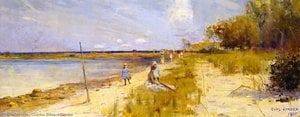
Charles Edward Conder’s “Swnage”: A Coastal Symphony of Light and Leisure
“Swnage,” painted by Charles Edward Conder in approximately 1901, isn't merely a depiction of a beach scene; it’s an immersive experience of the Australian coastline captured with Impressionistic fervor. This captivating work, now housed within the Tate Britain collection, transports the viewer to a moment of serene leisure amidst the rugged beauty of South Wales – specifically, Swnage Bay. Conder, a pivotal figure in Australia's Heidelberg School movement, masterfully employed light and color to evoke not just a visual representation but also a palpable sense of atmosphere and emotion.
Conder’s artistic journey began in England, yet it was his relocation to Sydney in 1884 that truly ignited his creative spirit. He quickly abandoned surveying for the more immediate allure of landscape painting, finding inspiration in the vibrant hues and dramatic light of the Australian bush. “Swnage” reflects this newfound passion, showcasing a deliberate shift away from rigid realism towards a looser, more expressive style. The brushstrokes are visible, creating a textured surface that seems to shimmer with reflected sunlight. Notice how Conder doesn’t meticulously render every detail; instead, he focuses on capturing the essence of the scene – the play of light on water and sand, the suggestion of figures enjoying the day.
Impressionistic Techniques and Color Palette
The painting's strength lies in its masterful use of Impressionistic techniques. Conder’s approach mirrors that of his contemporaries like Monet and Renoir, prioritizing the fleeting effects of light and atmosphere over precise detail. He employed broken color – applying small dabs of paint side-by-side rather than blending them seamlessly – to create a vibrant, luminous quality. The dominant colors are warm ochres, yellows, and blues, reflecting the intense sunlight bathing the beach. These hues aren’t applied uniformly; Conder strategically uses darker tones in the shadows to heighten the sense of depth and volume, particularly in the foreground dunes. The subtle gradations of color create a dynamic visual experience, as if the scene is constantly shifting with the movement of light.
Furthermore, Conder’s use of atmospheric perspective—a technique where distant objects appear paler and less distinct—effectively conveys the vastness of the coastline. The figures in the painting are small and indistinct, emphasizing their insignificance against the grandeur of nature. This compositional choice invites the viewer to become part of the scene, sharing in the feeling of peaceful contemplation.
Symbolism and Context
“Swnage” is more than just a pretty beach scene; it’s imbued with symbolic meaning rooted in Conder's personal experiences and artistic philosophy. As an expatriate Englishman living in Australia, Conder often explored themes of displacement and the search for belonging. The painting can be interpreted as a yearning for a simpler life, a retreat from the complexities of urban existence. The figures on the beach represent leisure, friendship, and connection with nature – values that were particularly appealing to artists of the Heidelberg School.
Considering Conder’s background, it's also important to note the painting’s context within the broader artistic landscape. The Heidelberg School, which emerged in Melbourne during the late 19th century, challenged traditional academic art by embracing a more informal and subjective approach. Conder’s work exemplifies this shift, prioritizing personal observation and emotional expression over strict adherence to classical conventions. The influence of Impressionism is undeniable, but Conder infused it with his own unique Australian sensibility.
A Legacy of Light and Landscape
“Swnage” remains a powerful testament to Charles Edward Conder’s artistic vision. It's a painting that invites viewers to slow down, breathe deeply, and appreciate the beauty of the natural world. Reproductions of this evocative work capture not only its visual splendor but also the spirit of leisure and connection with nature that defined the Heidelberg School. Whether displayed in a contemporary home or a prestigious gallery, “Swnage” continues to resonate with audiences today, reminding us of the enduring power of art to transport us to another time and place.
Свързани произведения


Биография на художника
Early Life and Artistic Journey
Charles Edward Conder (1868 – 1909) was an English-born painter, lithographer and designer. He emigrated to Australia and was a key figure in the Heidelberg School*, arguably the beginning of a distinctively Australian tradition in Western art.
Conder was born in Tottenham, Middlesex, the second son, of six children, of James Conder, civil engineer and Mary Ann Ayres.
He spent several years as a young child in India before the death of his mother on 14 May 1873 in Bombay, aged 31 years; he was then sent back to England and attended a number of schools including a boarding school at Eastbourne, which he attended from 1877. He left school at 15, and his very religious, non-artistic father, against Charles's natural artistic inclinations, decided that he should follow in his footsteps as a civil engineer.
Artistic Career in Australia
In 1884, at the age of 16, he was sent to Sydney, Australia, where he worked for his uncle, a land surveyor for the New South Wales government. However he disliked the work, much preferring to draw the landscape rather than surveying it. In 1886, he left the job and became an artist for the “Illustrated Sydney News”, where he was in the company of other artists such as Albert Henry Fullwood, Frank Mahoney and Benjamin Edwin Minns.
He also attended the painting classes of Alfred James Daplyn and had joined the Art Society of New South Wales.
Short of cash, Conder apparently paid off his landlady by sexual means, catching syphilis in the process, which was to plague the later years of his life.
The Heidelberg School and Notable Works
Conder’s masterpiece, Departure of the Orient – Circular Quay (1888) showcased his newfound mastery of form and brushwork.
This dockside scene, depicting the bustling harbour at sydney cove, was quickly purchased by the Art Gallery of New South Wales, making it Conder’s first work to enter a public collection.
A holiday at Mentone (1888), a fun-loving painting showcasing men and women relaxing on the beach, is another notable example of Conder's work.
Conder’s association with G. P. Nerli, an itinerant italian painter, significantly influenced his development as an artist.
His contributions to the 9 by 5 impression exhibition in melbourne, alongside tom roberts and arthur streeton, solidified his position within the Heidelberg School movement.
Legacy and Later Life
Conder’s later years were plagued by poor health, including paralysis and a bout of delirium tremens.
Despite this, he continued to paint, leaving behind a legacy as a key figure in the heidelberg school. His art was better received in england than in paris, with his portrait being painted by Henri de Toulouse-Lautrec in 1892.
View Conder’s works at the Art Gallery of New South Wales or explore more about the Heidelberg School on ArtsDot's charles edward conder page.
Discover more about Conder's life and works on wikipedia's charles conder page. Explore ArtsDot's collection of Conder's paintings, including A Holiday at Mentone (1888) and Departure of the Orient – Circular Quay (1888), on ArtsDot's website.

Чарлз Едуард Кондер
1868 - 1909 , Великобритания
Бързи факти
- Artistic Movement Or Style: Heidelberg School
- Artists Who Influenced This Artist:
- Alfred Daplyn
- Victor Mann
- Julian Ashton
- Date Of Birth: October 24, 1868
- Date Of Death: February 9, 1909
- Full Name: Charles Edward Conder
- Nationality: British
- Notable Artworks:
- Departure of the Orient – Circular Quay
- A holiday at Mentone
- Under The Southern Sun
- Place Of Birth: Tottenham, United Kingdom
Свързани статии

The Sublime Landscape: Exploring the Hudson River School Movement
Explore the captivating world of the Hudson River School! Discover the history, artists, and defining characteristics of this iconic American art movement. Learn about Romanticism's influence & find inspiration for your collection.

Evoking Nature's Sublime: A Comprehensive Exploration of 19th-Century Landscape Painting
Explore the captivating world of 19th-century landscape painting! Discover renowned artists like Friedrich & Monet, key movements, and find the perfect artwork to bring nature's serenity into your home. Expert insights at ArtsDot.

Evocations of Place: A Historical Journey Through Landscape Art
Explore the rich history of landscape art with ArtsDot. Discover renowned artists, movements like Impressionism & Romanticism, and expert guidance for collecting timeless pieces. Find your perfect serene escape today!

Топ 10 шедьовъра на Романтичния пейзаж: Изкуство за вашия дом от ArtsDot.com
Открийте 10 шедьовъра на Романтичния пейзаж – Фридрих, Търнър и други! Разгледайте историите зад картините, техниките и емоциите. Репродукции с музейно качество от ArtsDot.com. Вдъхновете се за вашия дом!

Evocations of Place: A Historical Journey Through Landscape Art
Explore the rich history of landscape art with ArtsDot. Discover renowned artists, movements like Impressionism & tonalism, and expert guidance for collecting timeless pieces. Find your perfect serene escape today!