

 Преглед в реален мащаб
 Изпрати
 Сподели
 Детайли
 Ръководство

 Изтегляне
 Подобни артикули
 Рентгенова снимка
 Слайдшоу
 Въпроси и отговори
 Статистика
neubrandenburg

 Прочети повече
Жикле / Художествен принт
Giclée печат или принт върху платно с музейно качество, бързо производство и гъвкави опции за завършен вид. ( Купете ръчно рисувана картина Превключване към дигитално изображение)




P118B €10

P118H €10

P118W €10

P438Z €10

P508JH €12

P508YH €12

P805H €10

P805Z €10

P919BZ €10

P919G €10

P919XJ €10

P959ZH €10

P968JZ €12

W106C €8

W218G €10

W218JH €8

W218Y €10

W307PJ €10

W316G €10

W316PJ €8

W316Y €10

W398PJ €8

W4111J €10

W500HY €15

W500JH €15

W692G €12

W849H €8

W940BG €15

W953PJ €8




Изберете от нашите предварително зададени размери, които съответстват на оригиналните пропорции на произведението.

Въведете необходимата ширина и височина, за да паснат на вашата рамка или стена. Принтовете могат само да се изрязват, но никога не могат да бъдат по-големи от оригиналната картина, така че при размер с различен формат част от изображението ще бъде загубена. Преди да започнем печат, ще ви изпратим дигитален мок업 за одобрение. Изображението, показано на тази страница, не показва реалното изрязване — само мок업ът го показва.
Доставка по целия свят () в рамките на 2 седмици вместо стандартните 4/5 седмици. (12 Ноември)

Безплатна експресна доставка по целия свят

Висококачествено ленено платно

Пълно застраховане на доставката

Гаранция за възстановяване на митнически такси

Гаранция за пълно съответствие на цветовете

Политика за връщане в рамките на 100 дни (само при дефекти)

100% Гаранция за връщане на сумата

Оферта за отстъпка при поръчка на повече бройки
 Опцията със стъкло е налична само за размери под 110 см

neubrandenburg
Жикле / Художествен принт
Размер на репродукцията
-


Обща цена
€ 56
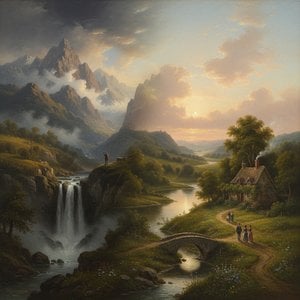
A Vista of Quietude: Exploring Caspar David Friedrich’s *neubrandenburg*
This evocative landscape by Caspar David Friedrich transports viewers to a serene yet subtly melancholic world. *neubrandenburg* is not merely a depiction of a town and its cathedral; it's an exploration of humanity’s place within the vastness of nature, a hallmark of the Romantic era. The painting presents a distant view of Neubrandenburg, dominated by the imposing spire of its cathedral, set against a dramatic skyscape.Style & Historical Context
Friedrich was a pivotal figure in the German Romantic movement (early 19th century), a period characterized by an emphasis on emotion, individualism, and the sublime power of nature. Rejecting the Enlightenment’s focus on reason, Romantics sought spiritual truth through experiencing the natural world. *neubrandenburg* exemplifies this ethos. The painting's style leans heavily into Romantic ideals – it isn’t a precise topographical rendering but rather an emotional response to the landscape. This was a time of significant societal shifts; the rise of industrialization and urbanization led many to yearn for a connection with the unspoiled beauty of nature, which Friedrich masterfully captures. His work often served as a counterpoint to the increasingly materialistic world.Composition & Technique
The composition is powerfully structured around horizontal lines – the horizon dividing the scene into foreground, middle ground and background. This reinforces the sense of expansive space. The small figures in the lower right corner are crucial; they provide a scale reference, emphasizing the immensity of the landscape and subtly suggesting human insignificance within it. Friedrich’s technique is characterized by loose brushstrokes and a muted color palette. He expertly employs atmospheric perspective – colors become paler and less saturated with distance – to create a convincing illusion of depth. The oil on canvas medium allows for rich texture and nuanced tonal variations, particularly in the swirling clouds that dominate the sky.Symbolism & Interpretation
The cathedral spire is arguably the focal point, rising above the town as a symbol of faith and spiritual aspiration. However, its distance and relative smallness within the vast landscape suggest a questioning of traditional religious authority. The dramatic sky, transitioning from dark greys to golden hues, can be interpreted as representing both hope and uncertainty – the transient nature of life itself. The figures in the foreground, seemingly lost in contemplation, invite viewers to share their quiet introspection. Friedrich frequently used landscapes not just as representations of places but as mirrors reflecting inner emotional states.Emotional Impact & Legacy
*neubrandenburg* evokes a sense of peaceful solitude and contemplative melancholy. It’s a painting that encourages viewers to pause, reflect, and connect with the natural world on a deeper level. The work's enduring appeal lies in its ability to tap into universal human emotions – awe, wonder, and a longing for something beyond the material realm. Friedrich’s influence can be seen in subsequent artistic movements, including Symbolism and Expressionism, and his landscapes continue to inspire artists and viewers alike today. A reproduction of this painting would bring a sense of tranquility and intellectual depth to any interior space.Въпроси и отговори
За какво се препоръчва използването на принт от "neubrandenburg"?
Препоръчителното използване на принт от „neubrandenburg“ е Accent.
Къде мога да купя дигитален образ на „neubrandenburg“ на Каспар Давид Фридрих?
За да получите цифров файл на „neubrandenburg“ на Каспар Давид Фридрих, поръчайте дигитално изтегляне на изображение с висока резолюция от неговата страница Дигитален образ.
Какво е общото настроение на „neubrandenburg“ на Каспар Давид Фридрих?
„neubrandenburg“ на Каспар Давид Фридрих се характеризира с Romantic настроение. Тази класификация може да помогне за съчетаването на творбата с подходяща обстановка.
Подобни произведения


Биография на художника
Единично видение
Роден през 1774 г. в балтийския пристанищен град Грайфсвалд, Каспар Давид Фридрих прекарва ранните си години, оформени от дълбоко чувство за загуба. Смъртта на майка му и съсиновете му хвърлят дълга сянка върху младостта му, насърчавайки чувствителност към смъртността, която се превръща в централна тема в творчеството му. Той започва своето обучение под ръководството на брат си Кристиан, преди да се насочи към изкуство и теология в Лейпцигския университет. Въпреки че не завършва нито една от двете степени, този двоен интерес към визуалното и духовното определя неговия творчески път. Техническите му умения са допълнително отшлифовани в Копенхаген, където е запознат с пейзажните традиции, които по-къснее трансформира в средство за изразяване на вътрешни емоционални състояния.
Неговият подход към пейзажа се отдалечава от прецизната детайлност, предпочитана от неговите предшественици. Вместо това, той се стреми да вдъхне на сцените символично значение, използвайки природните елементи, за да представи човешката душа. Често е използвал Rückenfiguren — фигури, изобразени от гърба — за да покани зрителя да сподели в съзерцателен опит. Палитрата му, състояща се често от приглушени сини, сиви и кафяви тонове, засилва настроението на интроспекция и тържественост, което пронизва цялото му творчество. Той не просто е рисувал това, което вижда; той е рисувал вътрешната природа на човешкия дух.
Езикът на възвишеното
Творчеството на Каспар Давид Фридрих акцентира върху възвишеното, търсейки духовна връзка чрез мащаба на природния свят. Неговите композиции често поставят самотни фигури на фона на огромен, често поразяващ пейзаж. В „Скитник над море от мъгла” (около 1818 г.) силуетираната фигура се изправя срещу вихряща се море от мъгла, олицетворявайки напрежението между човешкото присъствие и безкрайността. „Морски лед” (1824 г.) представя леден Арктически пустинен свят, описание на огромната мощ на природата и нейното безразличие към човешката съдба. Тези произведения отразяват загрижеността за крехкостта на съществуването и търсенето на смисъл в рамките на пейзажа.
Неговите картини често използват специфични елементи, за да предадат тези вътрешни състояния:
Наследство и преоткриване
Траекторията на кариерата на Фридрих не е била постоянно възходяща. Въпреки че постига признание по времето на живота си, популярността му намава, когато художествените вкусове се изместват към други движения. Той умира в Дрезден през 1840 г. и за известно време името му избледнява от предната линия на арт света. Неговата репутация преминава през значително преоткриване в края на XX век, когато той е разпознат като централна фигура в германския романтизъм. Неговият акцент върху субективния опит и емоционалното изразяване проправя път за по-късните движения, включително символизма и сюрреализма.
Неговото влияние се простира до художници, които се стремят да изследват вътрешния свят чрез визуални средства. Отхвърляйки рационализма на Просвещението в полза на емоцията и въображението, той улавя духа на една епоха. Неговите пейзажи служат като символи на националната идентичност по време на период на политическа фрагментация в Германия. Днес неговото творчество продължава да резонира, напомняйки на публиката за дълбоката връзка между човечеството и природния свят.

Каспар Давид Фридрих
1774 - 1840 , Германия
Бърза информация
- Artistic Movement Or Style: Романтизъм
- Artists Or Movements Influenced By This Artist:
- Символисти
- Сюрреалисти
- Artists Who Influenced This Artist:
- Холандски майстори
- Й. К. Дал
- Date Of Birth: 1774
- Date Of Death: 1840
- Full Name: Каспар Давид Фридрих
- Nationality: Германец
- Notable Artworks:
- Аббатството в дъбовата гора
- Скитник над море от мъгла...
- Мелничарските скали на Рюген
- Морето от лед
- Place Of Birth: Грейфсвалд, Германия
Свързани статии

Evoking Nature's Sublime: A Comprehensive Exploration of 19th-Century Landscape Painting
Explore the captivating world of 19th-century landscape painting! Discover renowned artists like Friedrich & Monet, key movements, and find the perfect artwork to bring nature's serenity into your home. Expert insights at ArtsDot.

The Sublime and the Picturesque: Exploring Emotion & Nature in Romantic Landscape Painting
Explore the emotional power of Romantic landscape painting! Discover the sublime & picturesque traditions, key artists like Friedrich & Cole, and find your perfect artwork at ArtsDot.

Топ 10 шедьовъра на Романтичния пейзаж: Изкуство за вашия дом от ArtsDot.com
Открийте 10 шедьовъра на Романтичния пейзаж – Фридрих, Търнър и други! Разгледайте историите зад картините, техниките и емоциите. Репродукции с музейно качество от ArtsDot.com. Вдъхновете се за вашия дом!
The Sublime and the Picturesque: Exploring Emotion & Nature in Romantic Landscape Painting
Explore the emotional power of Romantic landscape painting! Discover the sublime & picturesque aesthetics, key artists like Friedrich & Cole, and lasting influence on art history. Find your perfect piece at ArtsDot.

Caspar David Friedrich: Romanticism's Master of Landscape & the Sublimity of Inner Experience
Explore the profound landscapes of Caspar David Friedrich, a master of German Romanticism. Discover the symbolism, themes & enduring influence of this iconic artist. A deep dive into his life and work.


