


 Преглед в реален мащаб
 Сподели
 Сподели
 Подробности
 Ръководство

 Изтегляне
 Подобни артикули
 Рентгенова снимка
 Слайдшоу
 Статистика
Rustic Ewer


 Разгърни целия текст
Жикле / Художествен принт
Giclée печат или принт върху платно с музейно качество, бързо производство и гъвкави опции за завършен вид. ( Поръчайте ръчно рисувано репродукция на този колекционерски предмет Превключване към дигитално изображение)




P118B €10

P118H €10

P118W €10

P438Z €10

P508JH €12

P508YH €12

P805H €10

P805Z €10

P919BZ €10

P919G €10

P919XJ €10

P959ZH €10

P968JZ €12

W106C €8

W218G €10

W218JH €8

W218Y €10

W307PJ €10

W316G €10

W316PJ €8

W316Y €10

W398PJ €8

W4111J €10

W500HY €15

W500JH €15

W692G €12

W849H €8

W940BG €15

W953PJ €8




Изберете от нашите предварително зададени размери, които съответстват на оригиналните пропорции на произведението.

Въведете необходимата ширина и височина, за да паснат на вашата рамка или стена. Принтовете могат само да се изрязват, но никога не могат да бъдат по-големи от оригиналната картина, така че при размер с различен формат част от изображението ще бъде загубена. Преди да започнем печат, ще ви изпратим дигитален мок업 за одобрение. Изображението, показано на тази страница, не показва реалното изрязване — само мок업ът го показва.
Доставка по целия свят () в рамките на 2 седмици вместо стандартните 4/5 седмици. (23 Октомври)

Безплатна експресна доставка по целия свят

Висококачествено ленено платно

Пълно застраховане на доставката

Гаранция за възстановяване на митнически такси

Гаранция за пълно съответствие на цветовете

Политика за връщане в рамките на 100 дни (само при дефекти)

100% Гаранция за връщане на сумата

Отстъпка при поръчка на повече произведения
 Опцията със стъкло е налична само за размери под 110 см

Rustic Ewer
Жикле / Художествен принт
Размер на репродукцията
-


Крайна цена
€ 54
Bernard Palissy’s Rustic Ewer: A Testament to Renaissance Naturalism
Bernard Palissy, born around 1510 in Saintes, France, stands as a singular figure within the tapestry of Renaissance art – an artist who seamlessly blended artistic vision with scientific curiosity. His legacy resides not merely in his mastery of ceramic craftsmanship but also in his pioneering role as a naturalist and innovator whose distinctive style profoundly influenced subsequent generations of artists. This terracotta ewer exemplifies Palissy’s groundbreaking approach, encapsulating the spirit of his era and offering a glimpse into his unwavering belief in observing and replicating the beauty of the natural world.The Rustic Style: Embracing Organic Forms
Palissy's artistic philosophy centered on what he termed *rustiques figulines*, or rustic vessels – ceramics deliberately designed to mimic the textures and patterns found in nature. Unlike the idealized forms favored by many contemporary artists, Palissy sought to capture the essence of organic life through meticulously sculpted reliefs depicting animals, plants, and shells. The ewer’s surface is a testament to this ambition; it's not polished or smoothed but deliberately roughened to resemble weathered stone – an intentional stylistic choice that reflects Palissy’s fascination with geological formations and his desire to imbue his creations with a sense of timelessness.Technique: Fire as Medium, Observation as Inspiration
The creation of these rustic vessels demanded considerable technical skill. Palissy employed a unique firing process—known as *terre cuite à réserve*—that involved applying a layer of slip (liquid clay) to the surface of the terracotta before introducing molds containing sculpted reliefs. These molds were then fired in kilns at high temperatures, resulting in durable ceramics adorned with remarkably detailed depictions. The artist’s meticulous attention to detail extended beyond mere sculptural representation; he painstakingly recreated the textures and colors of natural materials – bark, moss, lichen – achieving an astonishing level of realism that surpassed many of his peers.Historical Context: Reformation and Scientific Inquiry
Palissy's artistic endeavors coincided with a period of significant upheaval in Europe—the Protestant Reformation. Driven by religious conviction, Palissy championed the use of vernacular language in art and literature, rejecting the Latin conventions prevalent among humanist scholars. Simultaneously, he embraced scientific observation as a path to understanding God’s creation. His anatomical studies informed his sculptural representations, demonstrating an unprecedented commitment to accuracy and detail. The ewer itself serves as a tangible symbol of this intellectual fervor—a product of both artistic creativity and scientific inquiry.Symbolism: Echoes of Marine Life and Divine Order
The decorative motifs adorning the ewer – shells, marine creatures like crabs and starfish – resonate with biblical imagery and convey profound symbolic meaning. Shells were considered emblems of purity and resurrection in Christian iconography, representing divine grace and eternal life. The artist’s deliberate selection of these symbols underscores Palissy's belief that art could illuminate spiritual truths and inspire contemplation. Furthermore, the overall composition reflects a humanist worldview—a conviction that humanity possesses inherent dignity and is capable of perceiving beauty and order within the natural world.Emotional Impact: A Connection to Earthly Beauty
Ultimately, Bernard Palissy’s Rustic Ewer transcends mere decorative artistry; it embodies an emotional response to the grandeur of nature. The piece invites viewers to pause and appreciate the subtle nuances of texture and color—to contemplate the enduring power of observation and the transformative potential of artistic expression. Like many Renaissance artworks, it speaks to a fundamental human desire for connection with the natural world – a legacy that continues to inspire artists and collectors alike.Въпроси и отговори
Къде може да бъде видяно „Rustic Ewer“ на Bernard Palissy днес?
„Rustic Ewer“ на Bernard Palissy е изложена в Лувър, Paris, France. Информацията за музея се отнася за оригиналното произведение, а не за репродукции.
Коя е датата на създаване на „Rustic Ewer“ на Bernard Palissy?
Създаването на „Rustic Ewer“ на Bernard Palissy датира от 1556.
Каква е техниката и датата на създаване на „Rustic Ewer“ на Bernard Palissy?
„Rustic Ewer“ е създадена през 1556 г. с Acrylic On Canvas.
Свързани произведения


Биография на художника
A Life Forged in Fire and Faith
Bernard Palissy, a name resonating through the annals of French Renaissance art, was far more than simply a potter. He was an artist, a scientist, a craftsman, and a steadfast Protestant whose life unfolded as a testament to unwavering dedication—to his craft, to his faith, and to the relentless pursuit of knowledge. Born around 1510 in Saintes, France, into humble circumstances, Palissy’s early years offered little indication of the artistic and intellectual heights he would eventually attain. His initial education focused on practical skills – geometry and surveying – laying a foundation for the meticulous observation that would later characterize his scientific inquiries. He served as a land surveyor before turning to glass painting, an apprenticeship that ignited within him a passion for color, texture, and the transformative power of fire. This period was marked by extensive travel throughout France, Burgundy, the Loire Valley, the Low Countries, and Italy, broadening his artistic horizons and exposing him to the burgeoning humanist spirit of the age.The Quest for Porcelain and the Birth of Rusticware
A pivotal moment arrived around 1540 when Palissy encountered a white-enameled cup, likely of Italian or Chinese origin. This encounter sparked an ambitious, sixteen-year quest to unlock the secrets of its creation—to replicate the luminous glaze and delicate form that captivated him. Though he ultimately failed to reproduce true porcelain, this very failure proved to be his greatest triumph. The relentless experimentation, the countless hours spent analyzing materials and manipulating kilns, led Palissy down an entirely new path: the development of “rusticware.” This distinctive style, utterly unique in its time, involved using colored lead glazes and creating three-dimensional reliefs of animals and plants, often molded directly from life. He famously cast live specimens – fish, crustaceans, reptiles, ferns, and flowers – in plaster to create molds for his ceramic decorations, imbuing his work with a startling naturalism. This wasn’t merely decorative embellishment; it was an attempt to capture the very essence of the natural world within the enduring medium of clay.Science Intertwined with Art
Palissy's artistic endeavors were inextricably linked to a profound scientific curiosity. He didn’t simply *represent* nature; he sought to *understand* it. His workshop became a laboratory, filled with meticulously documented observations on the composition of clays, glazes, and minerals. These investigations extended far beyond the practical concerns of pottery-making, touching upon geology, hydrology, and fossil formation – areas of study that were only beginning to emerge as distinct disciplines. He recognized the layered history embedded within the earth itself, observing the presence of marine fossils in inland regions and formulating theories about ancient seas and geological change. His detailed notebooks, filled with drawings and observations, foreshadowed later developments in these fields, marking him as a true pioneer of scientific inquiry. He wasn’t content to merely create beautiful objects; he wanted to decipher the underlying principles governing their creation and the world around him.Persecution, Patronage, and an Enduring Legacy
Palissy's talent eventually garnered recognition from the French nobility. He secured commissions from Anne, Duke of Montmorency, creating decorative elements for the châteaux d’Écouen and Meudon – wild gardens and ceramic sculptures that echoed the grandeur of Italian masters like Vasari and Cellini. However, his life took a tragic turn with his conversion to Huguenotism around 1546. During the tumultuous French Wars of Religion, his faith brought him into direct conflict with Catholic authorities. Despite periods of royal favor, he was repeatedly imprisoned for his beliefs. In 1588, he was arrested and sentenced to death, a fate he faced with unwavering resolve, refusing to renounce his convictions even when offered freedom by King Henry III. He died in the Bastille prison in 1590 (or possibly 1589), a martyr to both his art and his faith. Despite this tragic end, Bernard Palissy’s influence endured. His distinctive style profoundly impacted the development of Victorian majolica in the 19th century, with Mintons Ltd producing “Palissy ware” at the Great Exhibition of 1851. He remains recognized as a pioneer in ceramic art, pushing the boundaries of technique and subject matter. His use of life-casting was groundbreaking, and his scientific contributions, though often overlooked, were remarkably prescient for their time. More than just an artist or a scientist, Bernard Palissy stands as a symbol of unwavering commitment—a testament to the power of faith, perseverance, and the enduring human spirit.Key Achievements
- Development of Rusticware: Pioneered a unique ceramic style featuring lifelike animal and plant reliefs.
- Life-Casting Technique: Revolutionized ceramic decoration by casting directly from living specimens.
- Scientific Observations: Made significant contributions to geology, hydrology, and fossil formation.
- Royal Commissions: Created decorative elements for prominent French châteaux, gaining recognition from the nobility.
- Influence on Victorian Majolica: Inspired the development of “Palissy ware” by Mintons Ltd in the 19th century.

Bernard Palissy
1510 - 1590 , France
Бързи факти
- Full Name: Bernard Palissy
- Nationality: French
- Date Of Birth: 1510
- Date Of Death: 1590
- Place Of Birth: Saintes, France
- Notable Artworks:
- Foot-bowl in Rustic Style
- Rustic Basin
- Artistic Movement Or Style: Rusticware, Renaissance
- Artists Or Movements Influenced By This Artist: ['Victorian Majolica']
Свързани статии

Thomas Luny (1759–1837): Maritime Mastery & the Evolution of British Marine Painting
Explore the captivating world of Thomas Luny (1759–1837), a celebrated British marine artist. Discover his dramatic naval scenes, detailed ship portraits & lasting legacy. Learn about his life, influences & artworks.

The Alchemy of Clay: A Collector's Guide to the Mastery, Texture, and Timeless Form of Ceramic Art
Discover the profound beauty of ceramic art. Our expert guide explores the alchemy of clay, texture, and glaze, offering collectors deep insights into mastering earth and fire to create timeless, sculptural masterpieces for any curated collection.

Navigating the Depths of Representation: A Historical Exploration of Marine Painting
Explore the rich history of marine painting with ArtsDot. Discover Dutch Masters, Romantic seascapes & renowned artists like Wyllie and Harris. Expert guidance for collectors & custom reproductions.
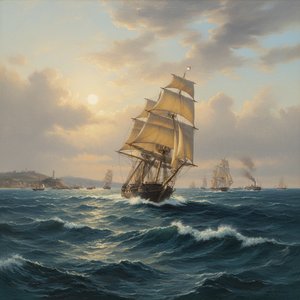
James E. Buttersworth: Navigating the Seas of Victorian Marine Painting
Explore the captivating world of James Edward Buttersworth, a foremost Victorian marine painter. Discover his meticulous ship portraits, America's Cup chronicles & enduring legacy in museums worldwide. Learn about his technique and style.
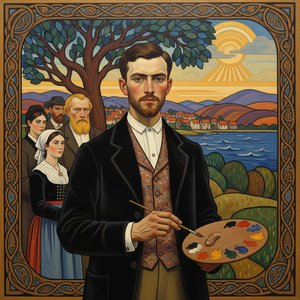
Émile Bernard: Pioneering Synthetism & the Post-Impressionist Quest for Essence
Explore the life & work of Émile Bernard, a pivotal Post-Impressionist pioneer of Synthetism. Discover his influence on Van Gogh & Gauguin and learn about collecting his art with ArtsDot.