


 Сподели
 Сподели
 Подробности
 Ръководство

 Изтегляне
 Подобни артикули
 Слайдшоу
 Статистика
Rhythmic Form


 Разгърни целия текст
Изкуството, представено на тази страница, е защитено от законите за авторско право, което означава, че не можем законно да създаваме или продаваме идентични репродукции. Тази защита се прилага съгласно международни споразумения като Бернска конвенция и от националното законодателство, включително разпоредбите на Закон за авторското право на САЩ – Раздел 17.
Този метод е напълно съвместим с законите за авторско право, тъй като не включва копиране или дублиране на защитеното произведение. Вместо това става въпрос за творческа реинтерпретация – нова картина, която е вдъхновена от оригинала, но не е идентична с него.
Жикле / Художествен принт
Giclée печат или принт върху платно с музейно качество, бързо производство и гъвкави опции за завършен вид. ( Поръчайте ръчно рисувано репродукция на този колекционерски предмет Превключване към дигитално изображение)




































Изберете от нашите предварително зададени размери, които съответстват на оригиналните пропорции на произведението.

Въведете необходимата ширина и височина, за да паснат на вашата рамка или стена. Принтовете могат само да се изрязват, но никога не могат да бъдат по-големи от оригиналната картина, така че при размер с различен формат част от изображението ще бъде загубена. Преди да започнем печат, ще ви изпратим дигитален мок업 за одобрение. Изображението, показано на тази страница, не показва реалното изрязване — само мок업ът го показва.
Доставка по целия свят () в рамките на 2 седмици вместо стандартните 4/5 седмици. (24 Октомври)

Безплатна експресна доставка по целия свят

Висококачествено ленено платно

Пълно застраховане на доставката

Гаранция за възстановяване на митнически такси

Гаранция за пълно съответствие на цветовете

Политика за връщане в рамките на 100 дни (само при дефекти)

100% Гаранция за връщане на сумата

Отстъпка при поръчка на повече произведения
 Опцията със стъкло е налична само за размери под 110 см

Rhythmic Form
Жикле / Художествен принт
Размер на репродукцията
-


Крайна цена
€ 54
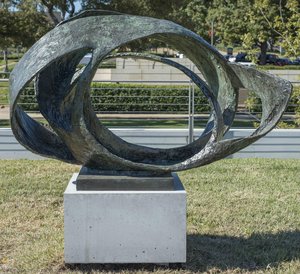
Rhythmic Form: A Dialogue Between Space and Spirit
Barbara Hepworth’s “Rhythmic Form,” created in 1949, stands as a testament to the profound influence of Surrealist ideas on British sculpture during World War II. More than just an aesthetically pleasing object, it embodies Hepworth's unwavering belief that sculpture could translate thought into tangible form—a conviction deeply rooted in her engagement with artists like Arp and Brancusi who championed direct carving and explored the relationship between art and nature. The piece itself is a striking example of Hepworth’s signature style: monumental forms sculpted from wood, meticulously shaped to evoke movement and resonance. Its central hole isn't merely an incision; it’s a deliberate gesture that seeks to unify opposing forces—a visual metaphor for Hepworth’s exploration of duality and balance within the creative process.- Material & Technique: Crafted from Rosewood, “Rhythmic Form” utilizes a technique honed during Hepworth's formative years in Paris – a method characterized by careful consideration of material properties and an intuitive understanding of how form interacts with space. The sculptor’s hand meticulously removes wood shavings to reveal the underlying structure, resulting in a surface that is both smooth and subtly textured.
- Historical Context: Hepworth's work emerged from a period marked by significant artistic experimentation and intellectual ferment. The Unit One group—which included Nicholson, Gabo, and Nash—challenged conventional sculptural approaches, prioritizing abstraction and responding to the anxieties of wartime Britain with an embrace of geometric forms and organic shapes.
- Symbolism & Inspiration: Hepworth drew inspiration from Neolithic Menhirs – monolithic stones erected as memorials to ancient rituals – recognizing their ability to convey timelessness and spiritual significance. She likened her sculptures to these stones, emphasizing the desire for them to “furnish a means of egress for the soul,” reflecting her belief in sculpture’s capacity to transcend mere visual representation.
- Hepworth's Philosophy: Hepworth famously described sculpture as "the plastic projection of thought," highlighting its role in capturing intangible ideas and emotions. She insisted that the work should “put no pressure on anything,” signifying a rejection of didacticism and an affirmation of art’s autonomy—a stance that aligns with her broader philosophical commitment to embracing spontaneity and responding authentically to the material at hand.
- Legacy & Influence: Hepworth's pioneering approach to sculpture continues to inspire artists today, particularly those interested in exploring spatial relationships and investigating the interplay between form and gesture. Her enduring impact is evident in the work of subsequent sculptors who adopted similar techniques and pursued similar conceptual concerns—a legacy cemented by her inclusion in Tate’s collection and celebrated as a cornerstone of British Modernism.
Въпроси и отговори
Колко светлина изглежда, че отразяват цветовете на "Rhythmic Form"?
Цветовете на „Rhythmic Form“ показват Luminous яркост.
В коя година е създадено „Rhythmic Form“ на Барбара Хепворт?
Създаването на „Rhythmic Form“ на Барбара Хепворт датира от 1949.
Какъв размер трябва да бъде печатът на "Rhythmic Form", за да пасва на моята стая?
За Living Room се препоръчва печат на „Rhythmic Form“ с размер Large.
Свързани произведения



Биография на художника
ранен живот и образование
дама Барбара Хъпърт, прочутата английска художничка и скулптор, е родена на 10 януари 1903 г. във Уейкфилд, Йоркшир. Нейният творчески път започва в Лондон, след като през 1920 г. посещава школата за изкуства в Лийдс, а по-късно печели държавна стипендия за обучение в Кралския колеж по изкуства (RCA), където се дипломира през 1924 г.артистична кариера
- Творчеството на дама Барбара Хъпърт е емблематично за модернизма, по-конкретно за модерната скулптура. Тя е една от малкото жени художници, които успяват да постигнат международна слава.
- През 1933 г. тя съвместно с Бен Николсън, Пол Наш и други съратници основава артистичното движение „Unit One“, стремейки се да обедини сюрреализма и абстракцията в британското изкуство.
- Ранните творби на Хъпърт са белязани от абстрактен дух и нейното активно участие в паричната артистична група „Abstraction-Création“.
бележки творби и изложби
- Oval Form (Trezion), бронзова скулптура, е част от колекцията на Музея за изкуства Кимбел във Форт Уорт, САЩ. (вижте в ArtsDot)
- Two Forms, скулптура, е експонирана в The Hepworth Wakefield във Уейкфилд, Обединено кралство. (вижте в ArtsDot)
- Totem, мраморна скулптура, също е част от колекцията на The Hepworth Wakefield. (вижте в ArtsDot)
наследство и музейни колекции
Творчеството на Барбара Хъпърт е широко признато, като нейните скулптури и картини попълват различни музейни колекции по целия свят. Музеят The Hepworth Wakefield, кръстен на името на художничката, притежава множество шедьоври от прочути творци, включително и собствени произведения на Хъпърт. (открийте повече за The Hepworth Wakefield в ArtsDot)заключение
Пионерската работа на дама Барбара Хъпърт в модерната британска скулптура остави незаличима следа в света на изкуството. Нейното наследство продължава да вдъхновява както художници, така и ценители на изкуството, като нейните произведения остават свидетелство за нейния иновативен дух и артистичен гений. прочетете повече за Барбара Хъпърт във Wikipedia
Барбара Хепворт
1903 - 1975 , Великобритания
Бързи факти
- Artistic Movement Or Style: Модернизъм
- Artists Or Movements Influenced By This Artist: ['Бен Ничиолсън']
- Artists Who Influenced This Artist:
- Хенри Мор
- Наум Габо
- Date Of Birth: 10 януари 1903
- Full Name: Jocelyn Barbara Hepworth
- Nationality: Английска
- Notable Artworks:
- Овална форма
- Две форми
- Place Of Birth: Уейкфийд, Англия
Свързани статии

Топ 25 шедьоври на Василий Кандински: Абстрактно изкуство за вашия дом | ArtsDot.com
Разгледайте топ 25 шедьоври на Василий Кандински – пионер на абстрактното изкуство и експресионизма. Открийте историите зад цветните композиции, техниките и вдъхновението му. Купете висококачествени репродукции на картини Кандински за вашия дом на ArtsDot.com!

The Enduring Form: Exploring Themes & Techniques in Sculpture Across Historical Periods
Explore the rich history of sculpture from ancient masterpieces to contemporary innovations. Discover key techniques, influential artists & investment potential for discerning art collectors.

Топ 10 шедьовъра на геометричната абстракция за Вашия дом | ArtsDot.com
Разгледайте топ 10 шедьовъра на геометричната абстракция – Кандински, Мондриан и други! Открийте историите зад тези емблематични картини и добавете елегантност към дома си с репродукции от ArtsDot.com. Разгледайте пълната колекция онлайн!

Топ 10 Бронзови Скулптури, Променили Изкуството завинаги | ArtsDot.bg
Разгледайте топ 10 легендарни бронзови скулптури, променили изкуството! От Роден до Микеланджело – истории на гении и вечни шедьоври. Вдъхновете се за вашия дом с ArtsDot.bg. Разгледайте пълната колекция онлайн!

Barbara Hepworth: A Sculptural Dialogue with Form, Space & the Human Condition
Explore the profound world of Barbara Hepworth's sculpture. Discover her artistic evolution, iconic forms, and lasting influence on modern art. A guide for collectors & enthusiasts.


