


 Представи си го
 Изпрати
 Сподели
 Детайли

 Изтегляне
 Подобни
 Рентгенова снимка
 Слайдшоу
 Stats
StatsRed Table


 Прочетете повече
Жикле / Художествен принт
Giclée печат или принт върху платно с музейно качество, бързо производство и гъвкави опции за завършен вид. ( Купете ръчно рисувана картина Switch to Digital Image)




P118B $10

P118H $10

P118W $10

P438Z $10

P508JH $12

P508YH $12

P805H $10

P805Z $10

P919BZ $10

P919G $10

P919XJ $10

P959ZH $10

P968JZ $12

W106C $8

W218G $10

W218JH $8

W218Y $10

W307PJ $10

W316G $10

W316PJ $8

W316Y $10

W398PJ $8

W4111J $10

W500HY $15

W500JH $15

W692G $12

W849H $8

W940BG $15

W953PJ $8




Изберете от предварително зададените размери, които съответстват на оригиналните пропорции на произведението.

Можете да въведете собствени размери, за да паснат на конкретна рамка или пространство. Ако избраният от Вас размер не съвпада с пропорциите на оригиналното изображение, ние ще изрежем произведението или ще разширим изображението с огледален или едноцветен ръб. Дигитален макет ще бъде изпратен за Ваше одобрение преди започването на производството.
Моля, имайте предвид, че предпрегледът на екрана не отразява реалното изрязване или разширяване. Само макетът ще покаже точно финалната композиция.
Въпреки че са налични персонализирани размери, препоръчваме да изберете размер от предварително дефинирания списък, за да запазите оригиналните пропорции.
Доставка по целия свят () в рамките на 2 седмици вместо стандартните 4/5 седмици. (8 Септември)

Безплатна експресна доставка по целия свят

Висококачествено ленено платно

Пълно застраховане при доставка

Гаранция за възстановяване на митнически такси

Гаранция за цветова точност

Политика за връщане в рамките на 100 дни (само при дефекти)

100% Гаранция за връщане на парите

Предложение за отстъпка при поръчка на едро
 Стъклото е налично само в размери под 110 см

Red Table
Жикле / Художествен принт
Размер на репродукцията
-


Обща цена
$ 62
A Symphony in Ochre and Shadow
This captivating artwork transports viewers back to the early years of the 20th century, specifically 1907, capturing a moment frozen in time—a still life tableau dominated by hues of ochre and shadowed browns. Painted by Alexej von Jawlensky, a pivotal figure within Expressionism, this piece embodies the movement’s core ethos: an unflinching exploration of emotion rather than objective representation.
The Artist's Vision – Jawlensky’s Expressionist Style
Jawlensky’s artistic approach was deeply rooted in his belief that art should serve as a conduit for inner experience. Rejecting academic conventions, he embraced bold simplification and textural layering—techniques characteristic of Expressionism—to convey profound feelings of solitude and contemplation. His distinctive style prioritized color and form over meticulous detail, prioritizing the emotional resonance of the image above all else.
Technique: Thick Impasto and Color Harmony
The painting utilizes a technique known as impasto – applying paint thickly onto the canvas surface – creating palpable ridges and grooves that heighten visual interest. This textural approach is complemented by masterful color harmony, achieved through careful blending of earthy tones. The dominant ochre shade is punctuated by darker browns and subtle hints of crimson, generating a mood of quiet intensity.
Historical Context: Embracing Emotion Amidst Uncertainty
Painted during a period marked by significant social upheaval—the burgeoning anxieties surrounding the turn of the century—this artwork reflects the broader artistic preoccupation with psychological depth. Expressionism emerged as a reaction against Impressionism’s focus on capturing fleeting moments of beauty, instead prioritizing subjective perception and conveying inner turmoil. Jawlensky's work aligns perfectly with this movement's desire to express raw emotion.
Symbolism: Fruit as Embodiment of Resilience
The arrangement of fruit—apples, oranges, and bananas—holds symbolic significance beyond mere visual appeal. Apples, traditionally associated with knowledge and immortality, represent aspiration and enduring beauty. The oranges symbolize optimism and vitality, juxtaposed against the darker browns that evoke feelings of melancholy and introspection. Collectively, they speak to the complexities of human experience – confronting darkness while striving for illumination.
Emotional Impact: A Meditation on Quiet Contemplation
Ultimately, “Red Table” invites viewers into a meditative state. The subdued palette and textured surface encourage contemplation, prompting reflection on themes of solitude, resilience, and the beauty found within simplicity. It’s a piece that lingers in the mind long after viewing, resonating with an understated yet powerful emotional core—a testament to Jawlensky's ability to distill profound feeling into a single visual statement.
Подобни произведения


Биография на художника
A Life Painted in Emotion: The Journey of Alexej von Jawlensky
Alexej Georgewitsch von Jawlensky, surname also spelt as Yavlensky, was a Russian expressionist painter active in Germany. He was a key member of the New Munich Artist’s Association, Der Blaue Reiter group and later the Die Blaue Vier. His work is characterized by intense colors, simplified forms, and a profound exploration of spiritual themes. Jawlensky's artistic journey was shaped by a network of influential figures and movements, reflecting his dedication to pushing the boundaries of visual expression.Born in Torzhok, Russia’s Tver Governate on March 13, 1864, Alexej von Jawlensky’s early life was marked by frequent relocations. This itinerant upbringing likely instilled a sense of displacement and perhaps, a yearning for deeper connection—themes that subtly permeate his later artistic explorations. Initially drawn to a military career, a pivotal moment arrived during the 1880 Moscow World Exposition. Witnessing the vibrant world of art ignited within him an unyielding passion, ultimately superseding any commitment to duty. He secured a posting in St. Petersburg through his social connections, allowing him to formally study at the Art Academy from 1889 to 1896, balancing artistic pursuits with military obligations. It was during this period that he crossed paths with Ilya Repin, a prominent Russian realist painter, and more importantly, met Marianne von Werefkin.
Marianne von Werefkin, herself an accomplished artist of considerable means, became not only his mentor but also a crucial benefactor, providing him the financial stability to fully dedicate himself to his craft. Their relationship was complex, deeply intertwined with artistic ambition and mutual support, shaping the trajectory of both their careers. Werefkin’s influence extended beyond mere financial assistance; she introduced Jawlensky to key European art movements and fostered an environment conducive to experimentation. Following her father's death, Werefkin secured a substantial pension, ensuring Jawlensky’s continued artistic development.
Munich and the Seeds of Expressionist Innovation
The move to Munich in 1894 marked a transformative turning point for Jawlensky. He enrolled at Anton Ažbe’s private school, immersing himself in an environment that actively encouraged experimentation and challenged conventional academic approaches. This period witnessed his growing engagement with avant-garde ideas circulating within the European art world—influences from artists like Ferdinand Hodler, Jan Verkade, and Paul Sérusier proved particularly significant. These influences exposed him to principles of symbolism and synthetism, movements prioritizing subjective experience and emotional resonance over strict representational accuracy. Jawlensky’s artistic style began to evolve, moving away from the realism he had initially studied. He became increasingly interested in exploring the expressive potential of color and form, simplifying compositions and intensifying hues to convey inner states rather than merely depicting external appearances.
His involvement with groups like the Neue Künstlervereinigung München (NKvM) further solidified his commitment to artistic innovation, placing him at the heart of a burgeoning Expressionist movement. The NKvM, though short-lived, was a crucible for radical ideas, and Jawlensky’s participation demonstrated his willingness to challenge established norms and embrace new modes of visual language. The atmosphere within the NKvM fostered open debate and experimentation, allowing artists like Jawlensky to push against traditional boundaries.
The Mystical Heads: A Descent into Spiritual Essence
Around 1909, Jawlensky embarked on what would become his most iconic series—the “Mystical Heads.” These intensely colored portraits, often depicting faces reduced to essential forms, are not merely representations of individuals but rather explorations of spiritual essence and inner life. The heads possess a haunting quality, their simplified features and vibrant palettes conveying a sense of profound emotion and psychological depth. Works like Schokko with Red Hat (1909) and Portrait of Alexander Sakharoff (1909) exemplify this period, showcasing his mastery of color and composition. These weren’t portraits in the traditional sense; they were attempts to capture something beyond physical likeness—the soul, the inner landscape of the sitter.
Throughout the 1910s, Jawlensky continued to refine his style, moving towards an even greater degree of abstraction. His compositions became increasingly geometric, with forms distilled to their most fundamental elements. He developed a formulaic approach, often employing a limited range of colors arranged in carefully balanced configurations. The influence of Vincent van Gogh and Paul Gauguin is evident in this period, as Jawlensky sought to capture emotional intensity through the manipulation of color and form. Violet Turban (1911) demonstrates this stylistic evolution, showcasing his ability to create powerful visual statements through the interplay of color and shape.
Exile, Resilience, and Lasting Legacy
The outbreak of World War I brought upheaval to Jawlensky’s life. Expelled from Germany in 1914 due to his Russian origins, he sought refuge in Switzerland, where he encountered Emmy Scheyer. Scheyer became a devoted champion of his work, tirelessly promoting it in the United States and securing him recognition on an international stage. Despite facing increasing health challenges—including severe arthritis that progressively limited his ability to paint—Jawlensky continued to create until his death in Wiesbaden, Germany, on March 15, 1941. His later works, created under immense physical hardship, are a testament to his unwavering dedication to artistic expression.
Today, Alexej von Jawlensky is celebrated as a key figure in the development of Expressionism. His paintings are held in prominent museum collections worldwide, including the Museum Ostwall in Dortmund and the Städtische Galerie im Lenbachhaus in Munich. His exploration of color, form, and spiritual themes continues to resonate with audiences, solidifying his place as one of the most important artists of the early twentieth century. He left behind a body of work that is both visually striking and emotionally profound, offering a glimpse into the inner world of an artist who dared to challenge conventions and embrace the power of subjective expression.
Influences and Artistic Associations
Jawlensky’s artistic journey was shaped by a network of influential figures and movements:
- Ilya Repin: Early mentor providing foundational training in realist techniques.
- Marianne von Werefkin: Crucial benefactor, mentor, and artistic partner who supported his development.
- Ferdinand Hodler: Influenced Jawlensky’s use of simplified forms and symbolic imagery.
- Jan Verkade & Paul Sérusier: Introduced him to the principles of symbolism and synthetism, shaping his approach to color and composition.
- Wassily Kandinsky & Franz Marc: Collaborators within Der Blaue Reiter, fostering a shared commitment to artistic innovation.

Алексей Вавленски
1864 - 1941 , Русия
Бързи факти
- Artistic Movement Or Style: Експресионизъм
- Artists Or Movements Influenced By This Artist: ['Нов немски експресионизъм']
- Artists Who Influenced This Artist:
- Иля Репин
- Мариане фон Веревкин
- Date Of Birth: 13 март 1864
- Date Of Death: 15 март 1941
- Full Name: Alexej Georgewitsch von Jawlensky
- Nationality: Руски
- Notable Artworks:
- Schokko с червена шапка
- Виолетова забрадка
- Автопортрет
- Place Of Birth: Торжок, Русия
Всички статии

Silent Narratives: Exploring the Enduring Appeal of Still Life Painting Across Centuries
Explore the rich history of still life painting with ArtsDot. Discover Dutch Masters, decode vanitas symbolism & learn about collecting timeless art. Expert insights and museum-quality reproductions.

Severin Roesen: Evoking National Identity Through American Still Life Painting
Explore the captivating world of Severin Roesen, a major American still life painter influenced by Dutch masters. Discover his lush compositions and the symbolism within his art – a window into 19th-century America.
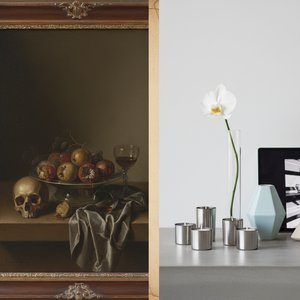
The Enduring Appeal of Still Life: A Historical & Contemporary Exploration
Explore the rich history & symbolism of still life painting with ArtsDot. Discover masterpieces from the Dutch Golden Age, learn about vanitas art, and find expert guidance for collecting timeless artworks.

The Bountiful Still Life: Symbolism & Artistic Representation of Fruit Across Art History
Explore the rich history of still life painting & the symbolism of fruit across art movements. Discover masterpieces from Caravaggio to Cézanne with ArtsDot – expert guidance & museum-quality reproductions.

Clyfford Still's Abstract Expressionism: A Study of Color, Form & the Existential Landscape
Explore the profound world of Clyfford Still's Abstract Expressionism with ArtsDot. Discover his unique style, existential themes & investment potential. Expert analysis for discerning collectors.


